
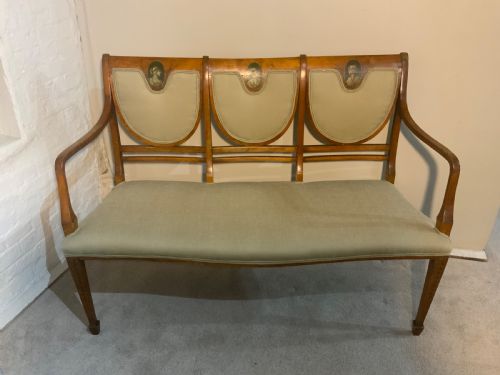
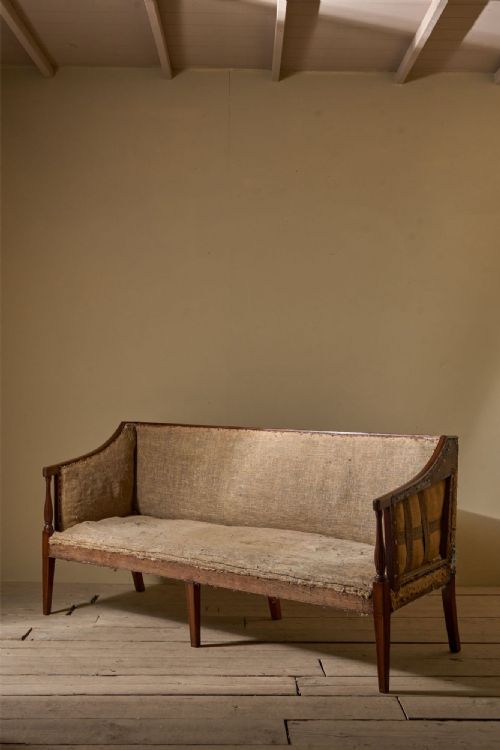


Georgian Wooden Settee
A georgian wooden settee offers solid timber construction and historic seating forms, bringing period character and practical seating to a traditional interior.
Georgian Wooden Settee
When searching for a georgian wooden settee, buyers encounter formal timber seating designed for domestic reception rooms, ranging from authentic eighteenth-century examples to later revival pieces. The selection includes multi-back designs such as double and triple chair back configurations alongside solid timber benches and framed sofas.
The most common forms on this page span eighteenth-century originals, nineteenth-century interpretations, and early twentieth-century revival pieces modelled on earlier aesthetic movements. These pieces utilise traditional timber frameworks, often paired with upholstered drop-in seats or exposed wood grain surfaces.
Stylistic influences across the selection reflect classic cabinet-making vocabularies including Chippendale, Hepplewhite, and Queen Anne designs. Such seating ranges from simple ladderback and shield back structures to heavily carved mahogany and walnut frames.
Materials and construction methods
Makers constructed these settees using dense hardwoods, predominantly mahogany and walnut, alongside satinwood and oak for specific decorative or structural elements. Timber selection dictated the weight and durability of the frame, allowing for intricate hand-carved details along the crest rails and splats.
Upholstery materials such as fabric, hessian, and secondary padding were integrated into seat bases, often supported by drop-in frames or webbing. Brass fittings occasionally appear as castors or structural reinforcements on larger framed sofas and chaise longue forms.
Distinguishing quality in timber settees
Quality in these settees rests upon the crispness of hand-carved details in the wood and the integrity of the timber grain. Finer examples display deeply sculpted splats, balanced proportions, and careful timber selection rather than flat mechanical cutting.
The sophistication of the joinery and the fidelity of the period style determine the standing of each piece. Original eighteenth-century construction exhibits different joint tolerances and timber ageing compared to later nineteenth-century and Edwardian revival interpretations.
The Georgian Wooden Settee Glossary
- Splat
- The vertical wooden strip down the centre of a chair back, frequently pierced or carved in Chippendale designs.
- Shield back
- A chair back shape resembling an upturned shield, popularised by Hepplewhite in the eighteenth century.
- Ladderback
- A chair back featuring horizontal slats stacked vertically between the upright stiles.
- Drop-in seat
- A removable wooden frame upholstered in fabric that drops into the seat rail rebate of the settee.
Georgian Wooden Settee: Frequently Asked Questions
How do I date a wooden settee?
Dating relies upon examining the timber species, construction joints, and stylistic motifs carved into the frame. Cabinet-makers of different periods applied distinct carving techniques and structural assemblies.
Comparing the secondary timbers and the wear patterns on the feet helps distinguish an eighteenth-century original from a later nineteenth-century revival piece.
Are these settees comfortable for daily use?
Many wooden settees were designed primarily for formal posture rather than lounging, possessing upright wooden backs and firm upholstered seats. Their comfort level depends heavily on the padding and suspension used in the seat base.
Adding appropriate support or selecting models with upholstered sofa frames provides a more relaxed seating experience for modern living spaces.
Which wood types are most common?
Mahogany is the predominant timber found across these listings, valued for its strength and dark reddish-brown tone. Walnut and satinwood appear in specific high-status or decorative examples.
Country house pieces and regional variants occasionally utilise alternative local hardwoods such as oak or stinkwood.