

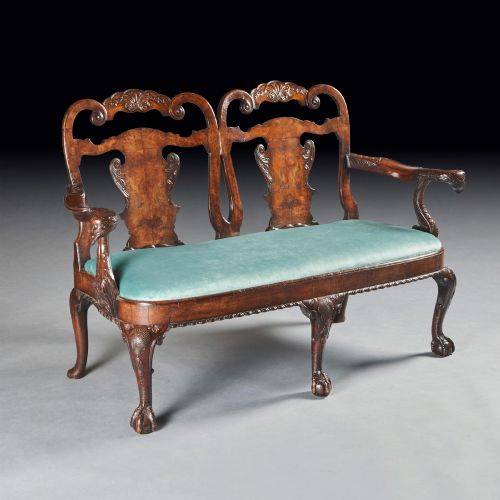
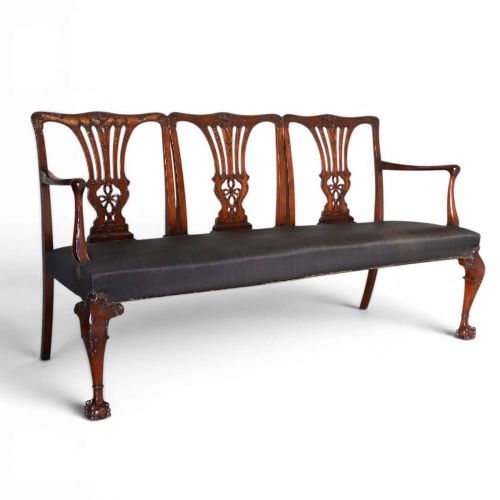


Antique Double Chair Bench
An antique double chair bench offers double the seating with distinct backrests, blending the grandeur of formal dining chairs into a unified salon settee.
Antique Double Chair Bench
When you search for an antique double chair bench, you encounter seating built to mimic two or three side chairs joined into a single frame. These pieces appear in forms such as twin chair back sofas, triple-back settees, and conversation seats, drawing heavily on Georgian and Chippendale aesthetics.
The version you are most likely to meet on this page is a mahogany or walnut settee from the nineteenth or early twentieth century. Makers frequently adopted earlier eighteenth-century revivals, producing chair-back settees with carved splats and open frames.
Originating across Britain, Europe, and Asia, these double seats span formal salon sofas to simpler wooden benches. Walnut and oak examples from the Victorian and Edwardian eras sit alongside earlier eighteenth-century designs and regional variations.
Materials and construction methods
Carpenters built these frames predominantly using solid hardwoods like mahogany, walnut, and oak, often shaping the timber to form interconnected chair backs. Cabinetmakers relied on traditional joinery to secure the dual or triple uprights to the seat rails.
Upholstered versions incorporate drop-in or padded seats covered in materials such as velvet, damask, or woven fabric. Carved details, including ribbon backs or pierced splats, required skilled hand-carving directly into the wood of the top rail and frame.
Some conversation seats feature opposing curves so two people can whisper secrets while staring straight into each other's ears.
Factors determining the quality of execution
The depth and crispness of the hand-carved ornamentation dictate the distinction between standard production and superior craftsmanship. Pierced splats and carved cabriole legs show greater artisan input when the relief work remains sharp and well-defined.
Timber selection and frame integrity separate basic constructions from exceptional survivals. Dense grains in figured mahogany or walnut, combined with tight, enduring joinery across the interconnected backrests, define the upper tier of these pieces.
The Antique Double Chair Bench Glossary
- Chair-back settee
- A sofa whose back is constructed to look like two or more individual chair backs joined together. This layout mimics the appearance of dining chairs ranged side by side.
- Splat
- The vertical central strip of wood in the middle of a chair or settee back. It is often shaped, carved, or pierced in revival designs.
- Cabriole leg
- A furniture leg that curves outward at the knee and tapers inward toward the foot, inspired by animal limbs. It appears frequently on eighteenth-century and revival seating.
- Giltwood
- Wood that has been coated with a thin layer of gold leaf or gilt. This finish is found on high-status decorative seating.
- Tete-a-tete
- A specialised conversation seat designed for two people to sit facing opposite directions while maintaining proximity. The frame usually forms an S-shape.
Antique Double Chair Bench: Frequently Asked Questions
Where were double chair benches placed in a home?
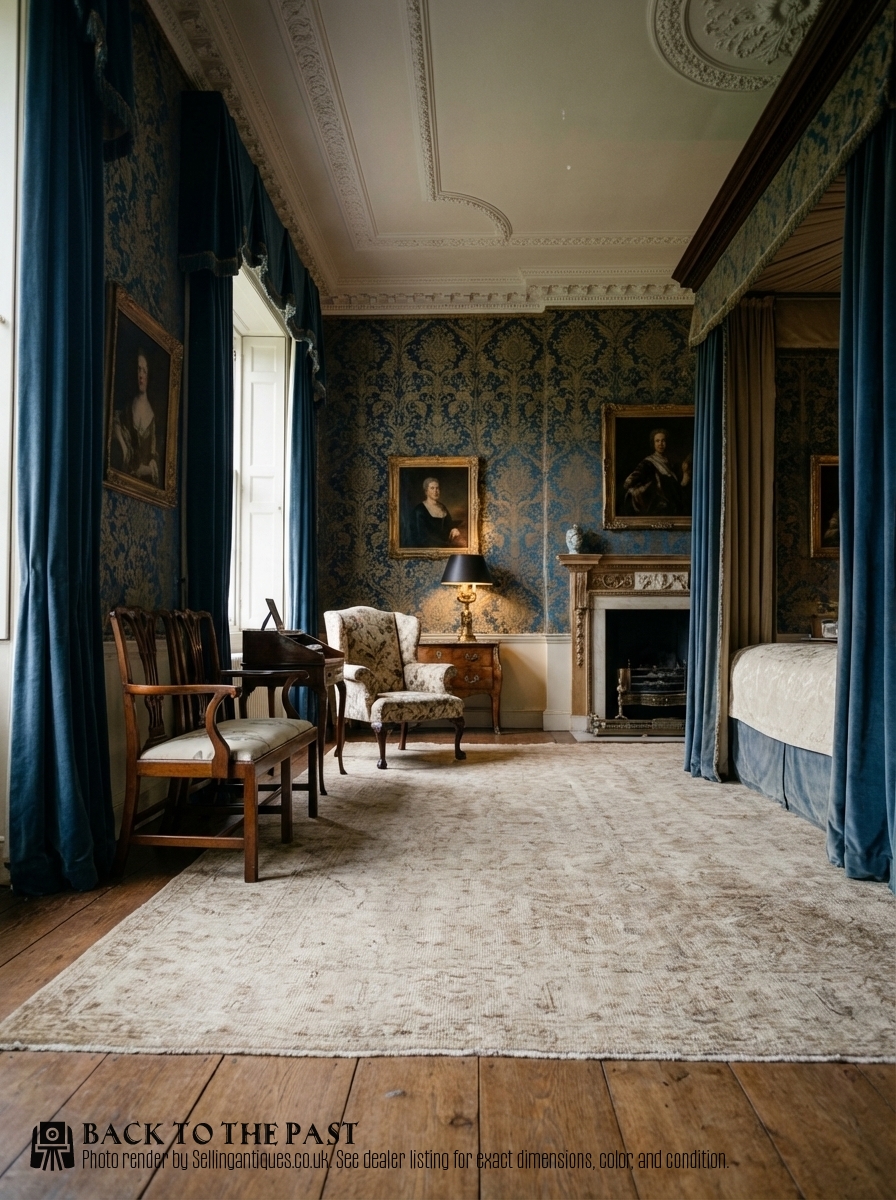
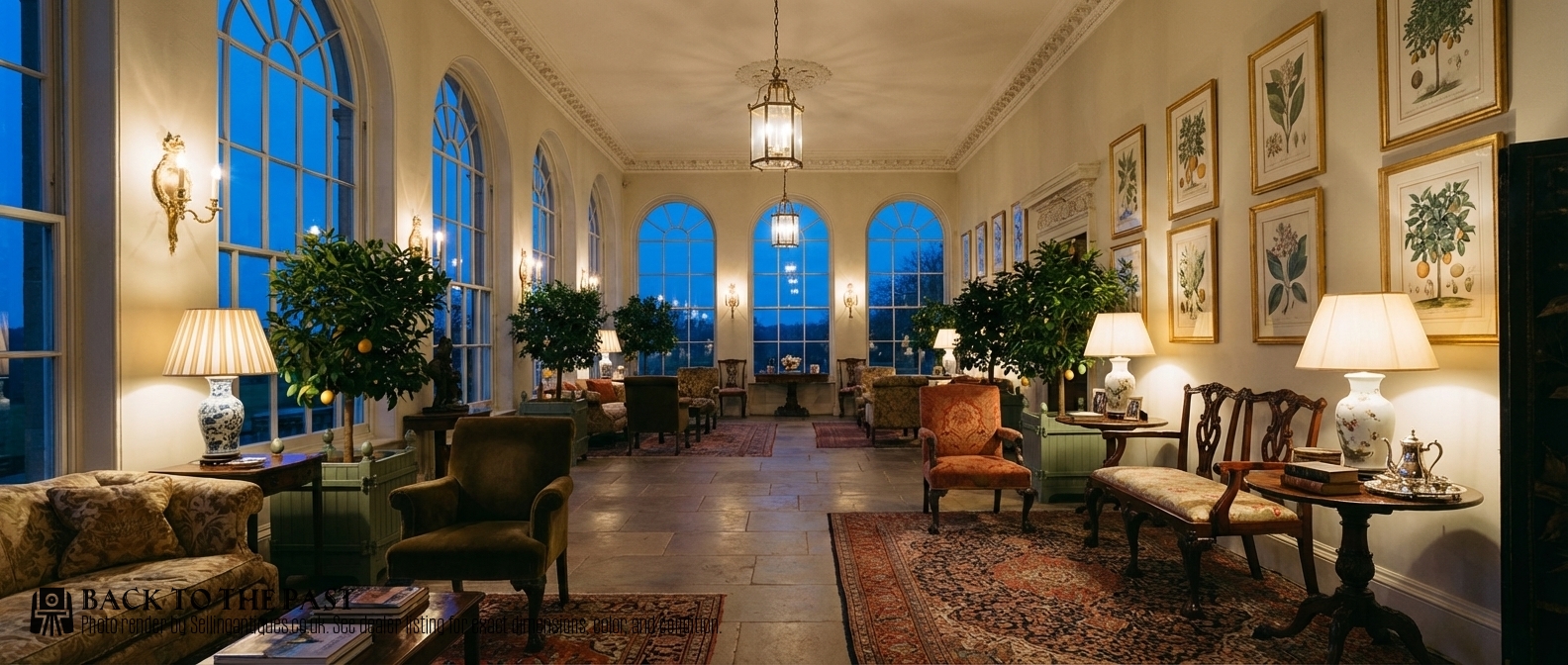
These pieces traditionally stood in hallways, parlours, or large drawing rooms where guests gathered. Their narrow profiles allowed them to sit flush against walls without obstructing pathways.
In larger reception rooms, conversational variants were positioned away from walls to facilitate social interaction. Their dual backrests provided formal seating while serving as decorative focal points.
How do I distinguish a revival piece from an earlier original?
Examine the tool marks, timber ageing, and secondary woods used in the interior frame construction. Revival pieces from the Victorian and Edwardian eras often display machine-assisted precision alongside older hand-carving styles.
Hardware, joinery methods, and the uniformity of the wood finish also offer clues to the true period of manufacture. Makers of revival furniture deliberately copied eighteenth-century proportions using nineteenth-century workshop practices.
How should I care for the exposed wood on these benches?
Dust the carved wooden elements regularly with a soft, dry cloth to prevent dirt accumulation in the recessed details. Avoid commercial silicone polishes that can build up and soften the historic finish over time.
Maintain stable room humidity to prevent the solid mahogany, walnut, or oak from drying out and splitting. Occasional applications of appropriate wax help nourish the vintage polish.