
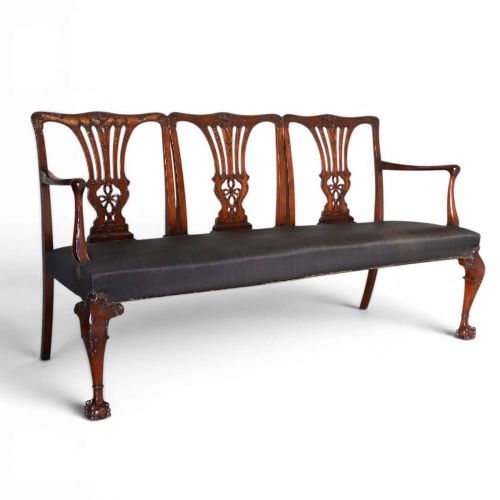


Mahogany Double Chair Back Settee
These mahogany double chair back settee pieces unite back-to-back joinery with figured timber, bringing refined seating into a room.
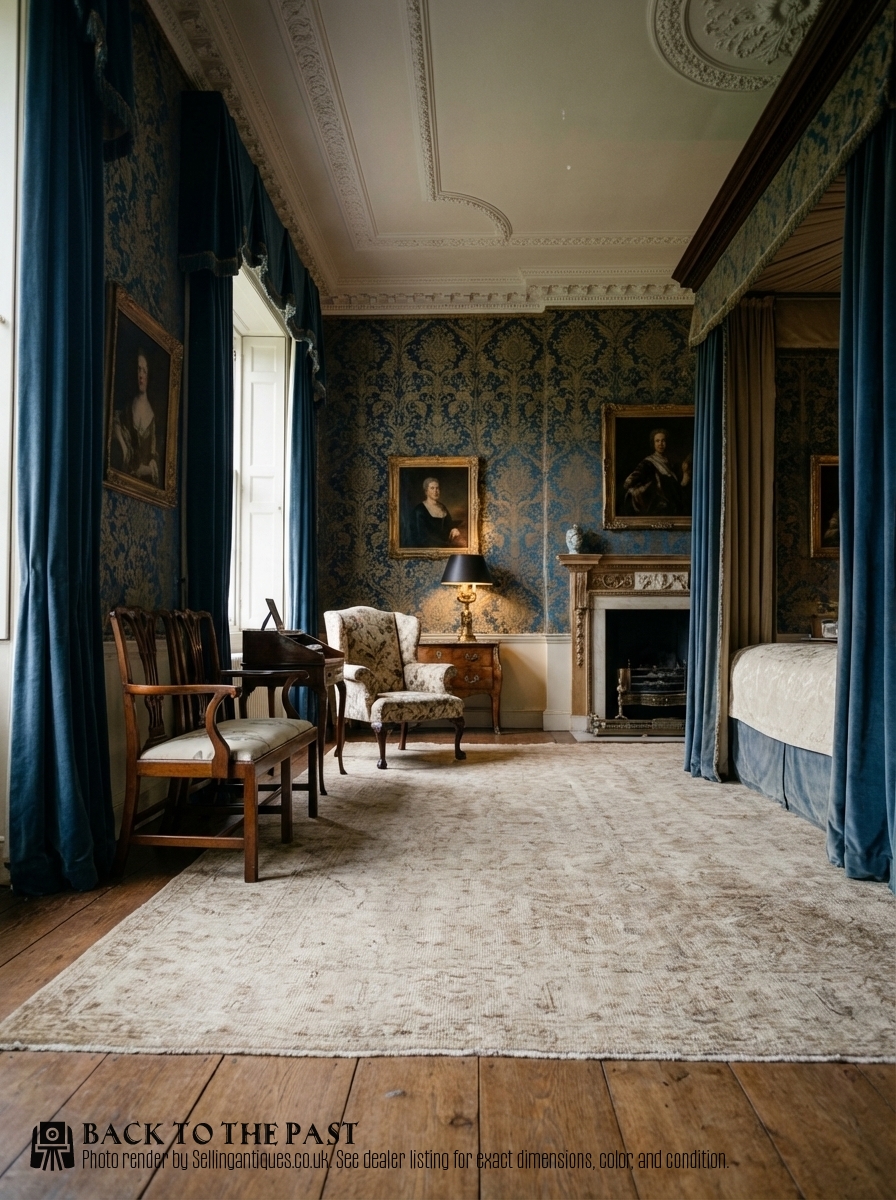
Mahogany Double Chair Back Settee
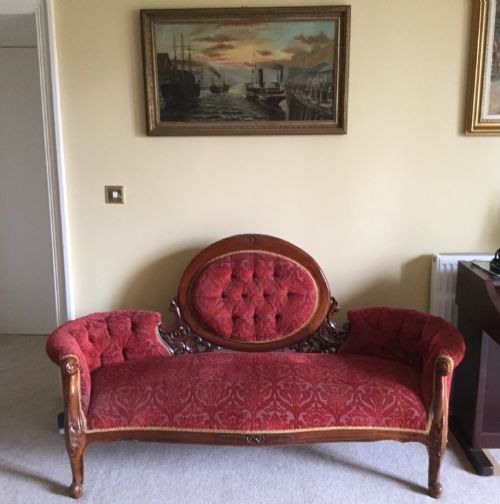
A mahogany double chair back settee combines the open carved splats of dining chairs into a continuous multi-seat frame. The form draws upon Georgian, Victorian and Edwardian revivals of Chippendale and Hepplewhite designs.
Buyers encounter examples spanning the eighteenth century through to the early twentieth century, including George II and George III revival pieces alongside Victorian and Edwardian interpretations. These settees function as principal drawing room or hallway seating.
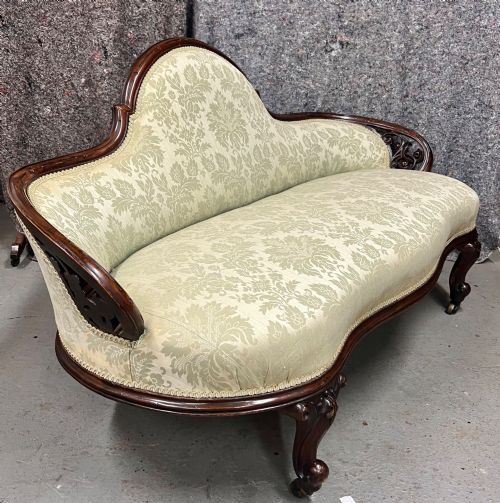
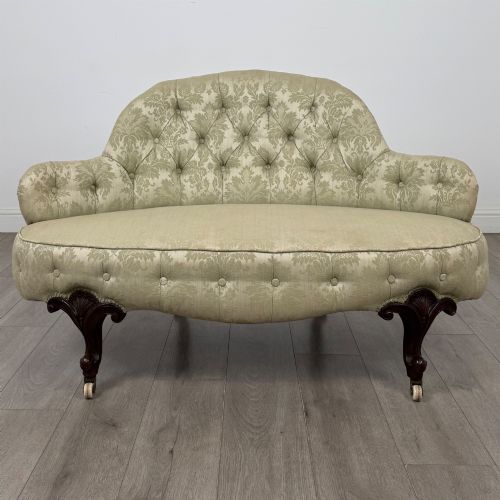
The layout typically unites two or three conjoined chair backs with scroll arms and an upholstered seat pad, supported on cabriole or square legs. Mahogany remains the constant structural timber across these diverse periods.
How they were made
Makers shaped the structural frames using solid and veneered mahogany, often carved by hand along the top rails and splats. Brass castors or ceramic feet occasionally support the legs.
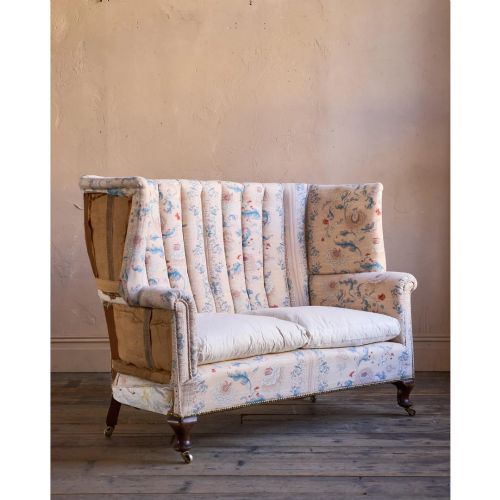
Seats utilise traditional upholstery methods involving hessian, springs, and stuffing covered in damask, brocade, or standard fabric. Showwood frames expose polished timber borders around the padded elements.
Listings span from the eighteenth century through to the Edwardian era, featuring Chippendale and Hepplewhite revival styles executed in mahogany with various fabric upholsteries.
What varies in quality
Execution of the carved splats distinguishes finer workshop output from simpler commercial production, where crisp piercing and undercut foliage denote skilled joinery. Timber selection also matters, as rich figuring in the mahogany elevates the visual weight of the frame.
Proportion and structural integrity define the remaining differences, since narrow proportions and tight joinery at the arm joints ensure lasting stability. Original showwood finishes retain patination that heavy stripping tends to diminish.
The Mahogany Double Chair Back Settee Glossary
- Chippendale Style
- A design vocabulary originating in the eighteenth century defined by carved ribbonbacks, interlaced splats, and cabriole legs ending in claw and ball feet. Revival pieces from the Victorian and Edwardian eras recreate these motifs.
- Hepplewhite Revival
- A late nineteenth or early twentieth century reinterpretation of George Hepplewhite's light, neoclassical furniture designs. These pieces often feature shield-back or heart-shaped chair backs.
- Showwood
- Uncovered polished timber forming part of the visible frame around an upholstered seat or back. It allows the grain and carving of the mahogany to remain prominent.
- Splat
- The vertical wooden strip running from the centre of the seat up to the top rail of a chair back. Elaborate piercing and carving on this element identify the style.
Mahogany Double Chair Back Settee: Frequently Asked Questions
What is a double chair back settee?
A double chair back settee is a form of seating where two distinct chair backs are joined together to create a wide single bench. The frame incorporates dual carved splats within a unified top rail.
Such pieces date from the eighteenth century onwards, with numerous examples produced during nineteenth and early twentieth century revival periods.
How do I date a mahogany settee?
Dating relies on stylistic clues, construction methods, and timber characteristics. Eighteenth century originals display hand-cut joinery and period specific carving details.
Revival pieces from the Victorian or Edwardian eras often show machine-sawn components and softer secondary timbers alongside characteristic period revival motifs.
Where should I place a settee?
These settees suit hallways, drawing rooms, or large landings where the carved backrests can be viewed from multiple angles. Their relatively slender profiles allow placement against walls or behind freestanding tables.
Consider pairing the fabric upholstery with existing room textiles while keeping the mahogany frame clear of direct sunlight.
What styles are common?
Chippendale and Hepplewhite revivals dominate the available selection, reflecting eighteenth century tastes adapted by Victorian and Edwardian makers. George II and Georgian style influences appear frequently.
These styles emphasise carved splats, open armrests, and polished mahogany frames.