
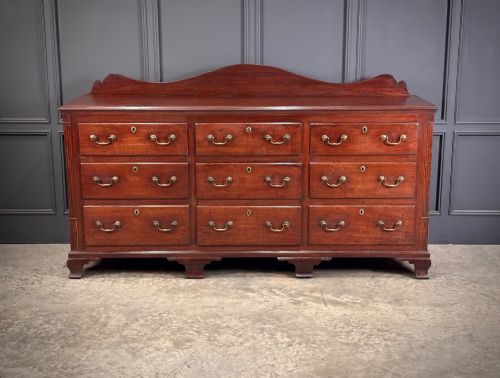
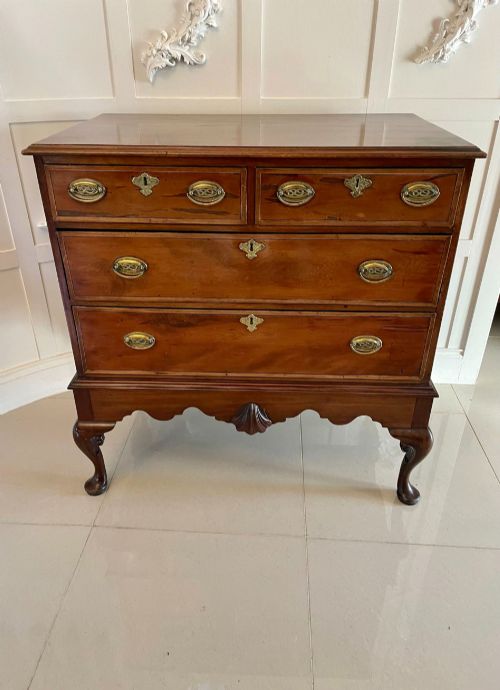
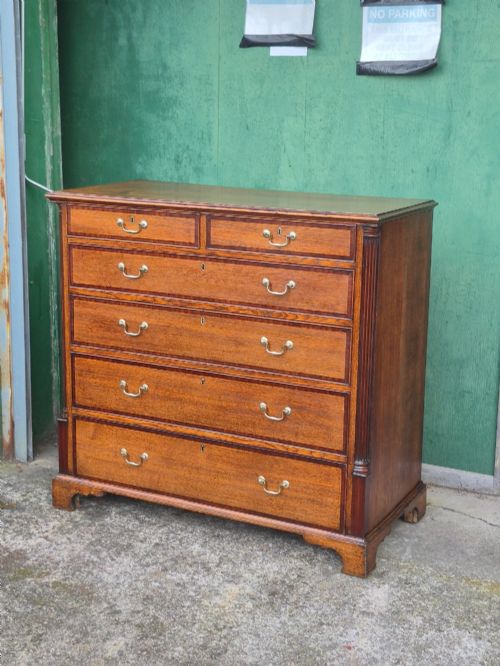
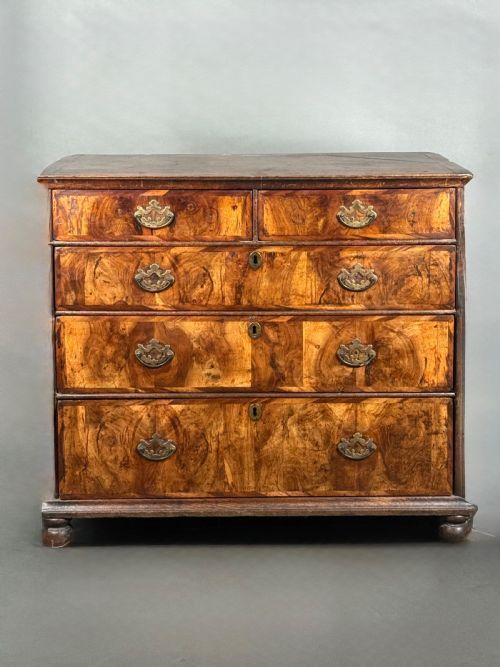
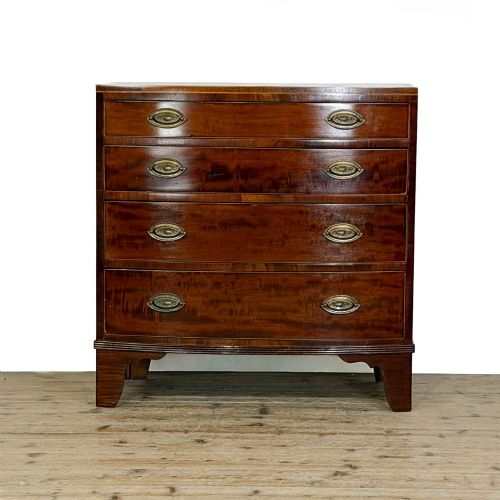
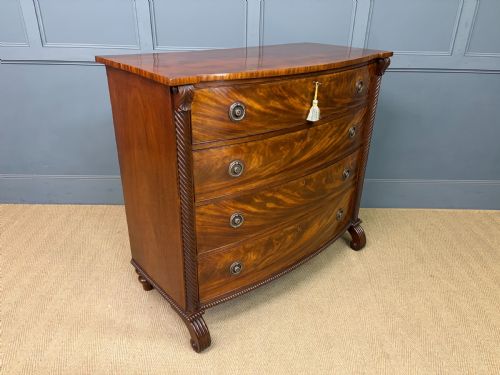
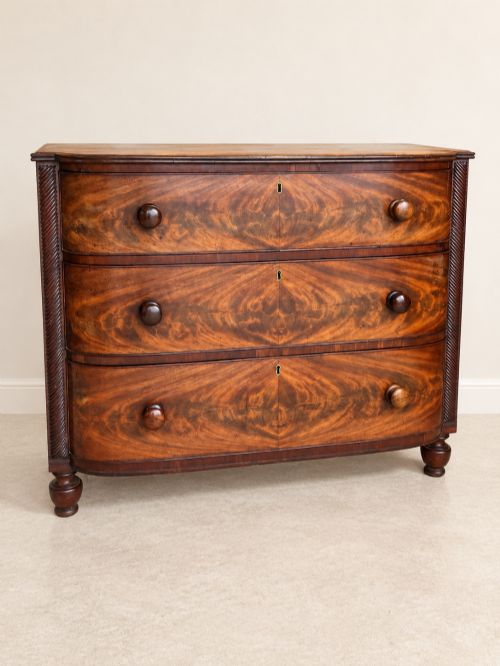
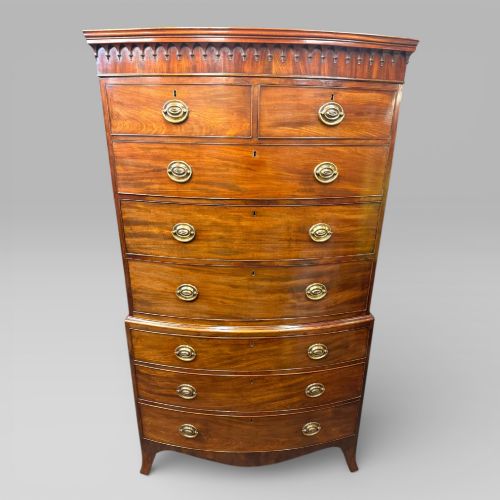
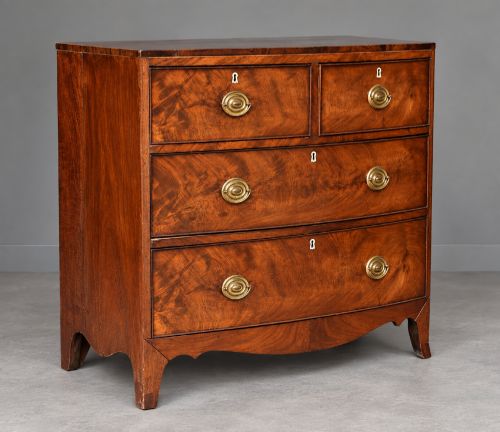


Georgian Wooden Chest Drawers
A georgian wooden chest drawers delivers practical storage with distinct period timber grain and brass hardware.
Georgian Wooden Chest Drawers
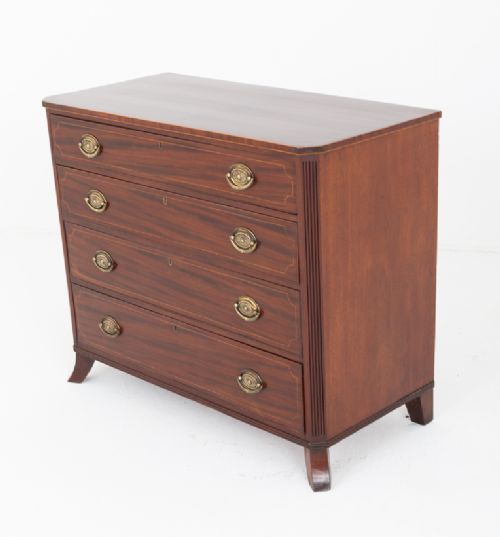
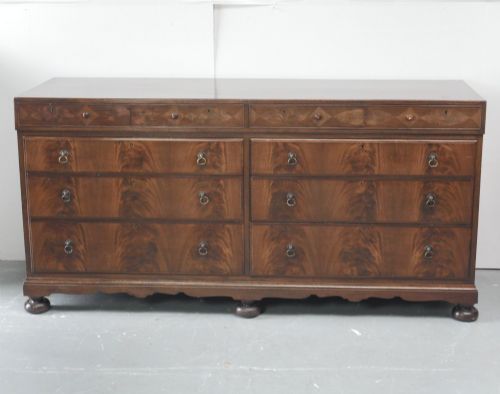
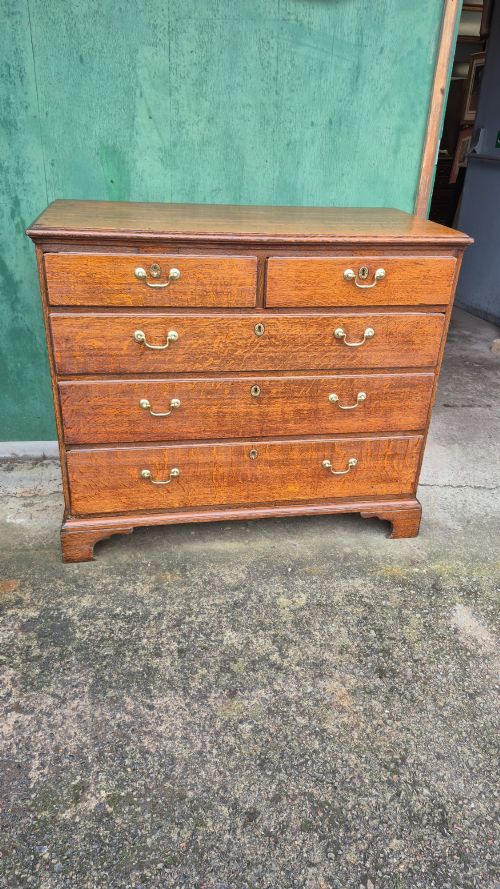
A georgian wooden chest drawers stands as a foundational piece of period furniture designed for domestic storage. These items present rectilinear or serpentine carcases fitted with multiple graduated horizontal drawers.
The versions most frequently met on this page date from the eighteenth and nineteenth centuries, spanning periods such as George III, Regency, and Queen Anne. Formats range from standard low four-drawer pieces to taller chests on chests, tallboys, and compact bow fronts.
Originating largely from British and Dutch workshops, these storage items utilise domestic and imported hardwoods shaped by cabinet makers. Smaller scale variations and miniature apprentice pieces also appear alongside standard domestic proportions.
Materials and Construction
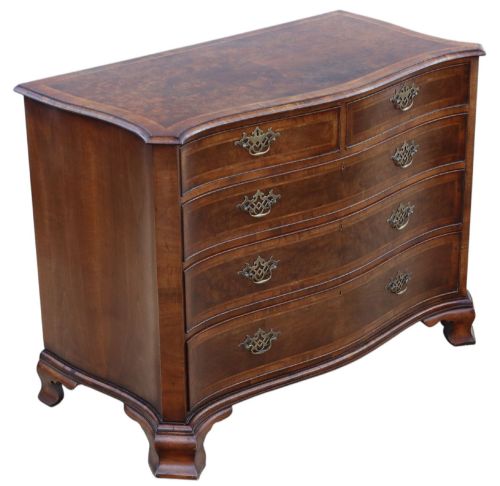
Makers constructed these carcases primarily using solid timbers and applied veneers of mahogany, oak, and walnut. Flame mahogany veneer and burr walnut provided decorative figured surfaces across drawer fronts and top panels.
Cabinet makers utilised crossbanding and stringing to frame primary surfaces, contrasting lighter satinwood against darker ground timbers. Drawer interiors incorporated secondary woods assembled with traditional joinery methods.
Fittings relied on cast brass drop handles, backplates, and key escutcheons secured directly through the drawer woodwork. Structural support came from bracket feet, plinth bases, or short bracketed legs.
Hardware details range from cast brass drop handles to integrated brushing slides and cockbeaded drawer edges.
Evaluating Quality
The standard of a georgian wooden chest drawers rests upon the choice of timber figure and the precision of its arrangement. Matched veneers and carefully selected burr walnut or flame mahogany elevate the visual harmony of the facade.
Construction details differentiate standard workshop production from finer cabinet work. Hand-cut dovetails on drawer boxes, integrated dust boards between tiers, and original cast brass hardware indicate higher execution.
Proportion and scale dictate the desirability of surviving examples. Clean serpentine shaping, well-defined cockbeading around drawer edges, and untouched patination distinguish superior pieces.
Whytock and Reid·J Moorcroft
The Georgian Wooden Chest Drawers Glossary
- Bow front
- A convex curved cabinet front popular during the Georgian and Regency periods. This shaping softens the heavy rectangular profile of standard storage pieces.
- Serpentine
- A horizontally undulating front edge featuring a convex centre flanked by concave curves. This complex contour requires specialist woodworking skill.
- Crossbanding
- A border of veneer laid with the grain running perpendicular to the main panel. It frames drawer fronts and table tops to provide visual contrast.
- Tallboy
- A tall chest of drawers constructed in two stacked sections, often combining a lower chest with a deeper upper chest. These units maximise vertical storage capacity.
- Brushing slide
- A pull-out shelf integrated above the top drawers. It provided a clean surface for sorting garments or grooming without opening the main storage.
Georgian Wooden Chest Drawers: Frequently Asked Questions
What is a brushing slide used for?
A brushing slide functions as a pull-out shelf positioned just beneath the top surface of the carcase. Owners utilised this surface for folding garments or temporary sorting.
Cabinet makers integrated these boards smoothly into the framing so they remained hidden when closed.
How do I tell a bow front from a serpentine chest?
A bow front curves outward in a single continuous convex arc from side to side. This shape offers a rounded profile that projects into the room.
By contrast, a serpentine front curves outward in the middle and curves inward toward the outer edges, creating a wavy contour.
What woods are typical for these chests?
Makers relied heavily on mahogany, oak, and walnut for primary carcases and drawer fronts. Walnut dominated earlier pieces, while mahogany gained widespread popularity through the Georgian eras.
Decorative veneers such as burr walnut and flame mahogany added rich grain patterns to the exterior surfaces.
Where were these chests placed in a home?
Bedrooms and dressing rooms served as the primary locations for storing clothing and linens. Smaller scaled pieces also functioned in hallways and parlours.
Their decorative wood grains allowed them to sit in formal reception rooms as display surfaces.