





Georgian Wine Bottle Stands
Georgian wine bottle stands keep the dining table safe from rings while keeping the bottle close at hand.
Georgian Wine Bottle Stands
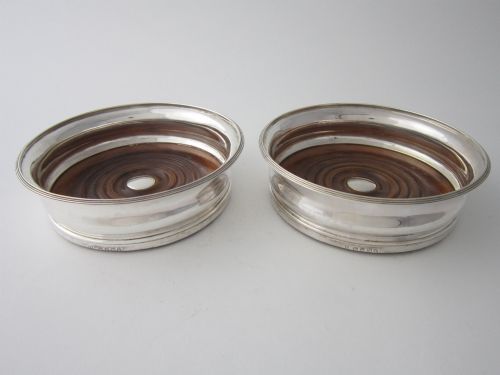
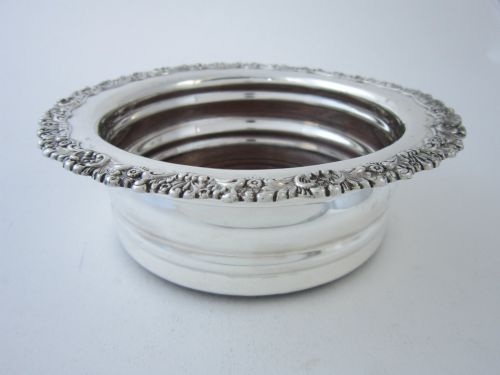
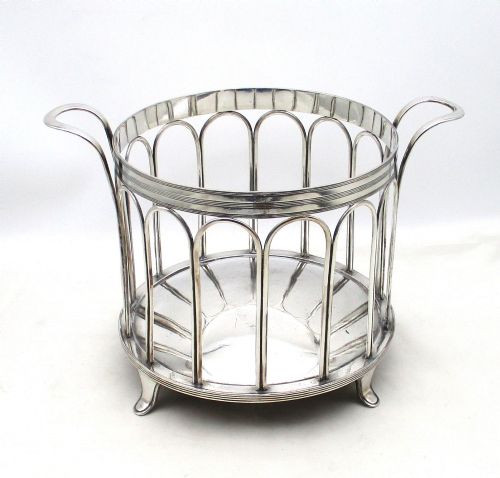
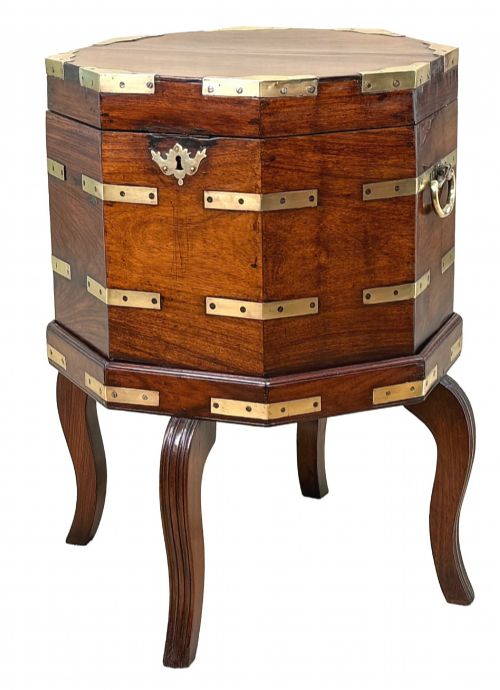
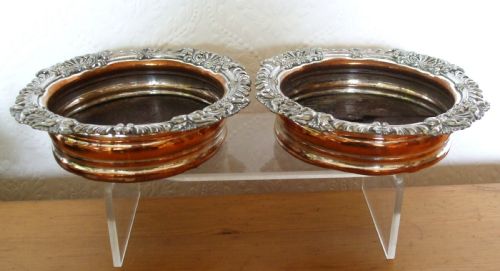
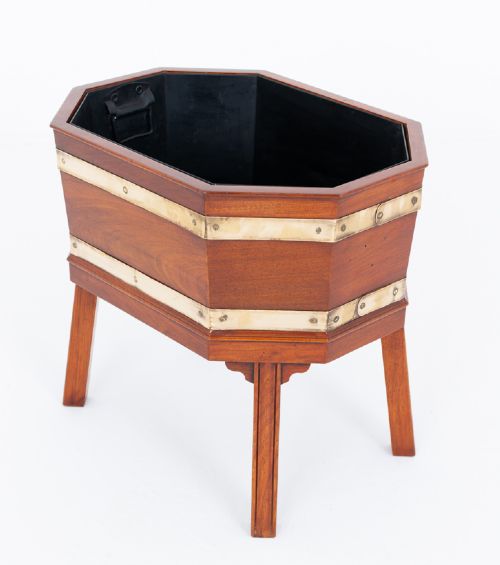
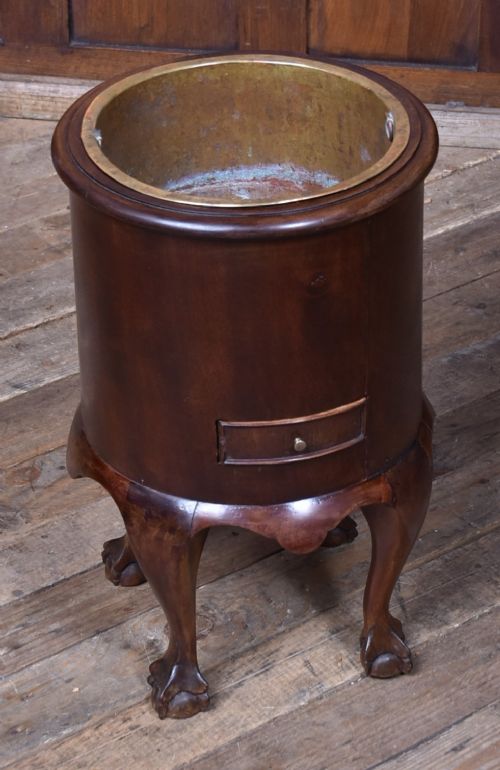
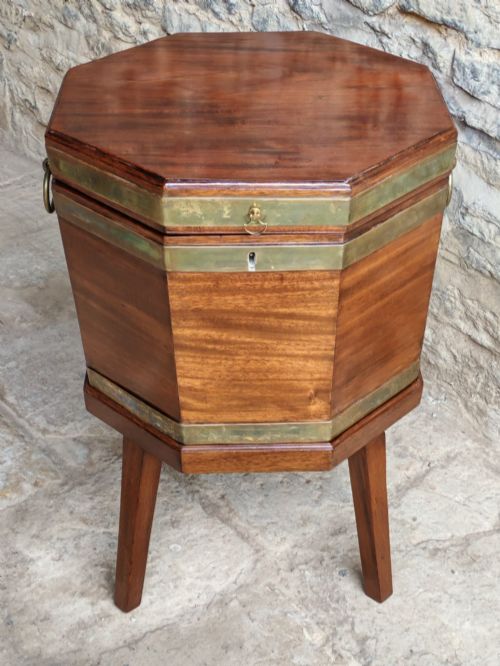
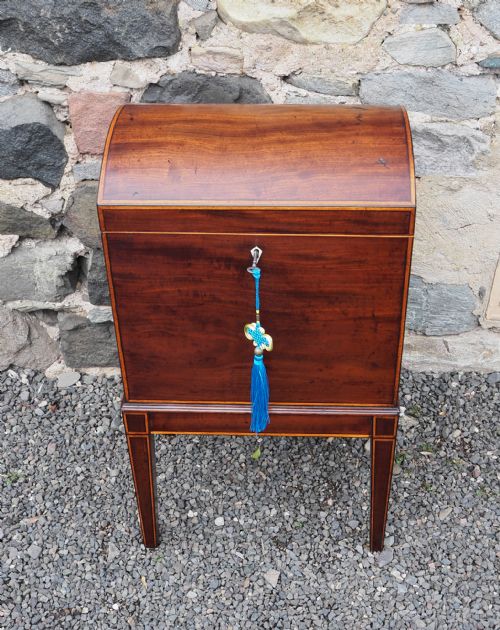
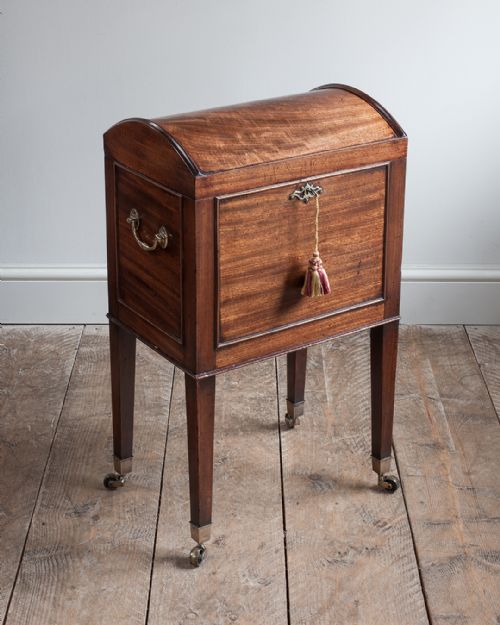
When you search for georgian wine bottle stands, you encounter various table accessories designed to hold bottles and decanters securely during dining. These pieces include single coasters, multi-bottle holders, and larger floor-standing or table cellarettes.
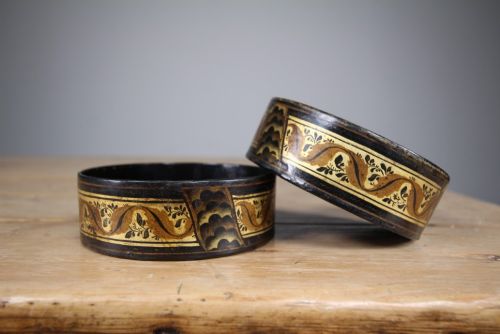
Mahogany and silver plate dominate the selection on this page, alongside sterling silver, brass, papier-mâché, and copper examples. Most specimens date from the Georgian and Regency periods, though Victorian and later reinterpretations also appear.
How they were made
Timber selection dictated the construction of wooden stands, with cabinetmakers utilising solid or veneered mahogany, oak, and padouk, frequently incorporating inlaid details and brass banding. Coasters often featured turned wooden bases inset with button liners or fitted with wicker and treen elements.
Metal vessels and coaster rims relied on sterling silver or Old Sheffield Plate, a technique of fusing a thin sheet of silver to a copper base. Silversmiths worked these metals through hammering, piercing, and embossing to create decorative borders and armorial crests.
Papier-mâché examples required layers of paper pulp compressed and dried before receiving dark lacquer finishes and hand-applied gilded decoration.
Several stands double as rolling bottle cradles designed to glide smoothly across the dining table during post-dinner port circulation.
What varies in quality
The refinement of the joinery and the crispness of metalwork separate standard examples from finer items. Superior mahogany pieces display rich natural patination, tight dovetailing, and precise brass bindings, whilst lesser specimens show heavy wear or unsympathetic repairs.
Silver and plated stands derive distinction from the depth of their chasing, clear hallmarks, and intact metal fusing where the copper core remains concealed. Simpler turned wood or basic plated items lack this intricate detailing but retain their functional form.
Gillows·Matthew Boulton·John and Thomas Settle·Asprey
The Georgian Wine Bottle Stands Glossary
- Cellarette
- A lockable cabinet or box designed to hold wine bottles safely beneath the dining table or sideboard. These larger containers often feature internal dividers and brass carrying handles.
- Old Sheffield Plate
- An early method of fusing silver to a copper base metal before electroplating became common. This technique leaves a thin layer of sterling silver over a warm copper substrate.
- Coaster
- A small portable tray or ring with a flat base meant to hold a single wine bottle or decanter. They protect polished table surfaces from moisture rings.
- Treen
- Small handmade wooden household objects turned or carved from timber. These items showcase traditional woodworking skills without metal mounts.
- Padouk
- A dense tropical hardwood known for its rich reddish-brown colour and durability. Cabinetmakers utilised this timber for imported colonial furniture and accessories.
Georgian Wine Bottle Stands: Frequently Asked Questions
What is the difference between a coaster and a cellarette?
Coasters are small, shallow trays designed to hold individual bottles and move easily across the dining table during a meal. They protect wood surfaces from drips and allow guests to pass the wine.
Cellarettes are much larger storage boxes or bins built to hold multiple bottles at once. They typically stay stationary near the sideboard or under the table.
How do I care for wooden wine stands?
Keep wooden stands away from direct heat sources and sudden humidity changes to prevent the timber from warping or splitting. Regular dusting with a soft cloth preserves the surface.
Apply a traditional wax polish occasionally to maintain the sheen of the mahogany or oak without building up heavy residues.
Can I use antique silver plate stands daily?
Old Sheffield Plate and silver items withstand normal domestic use provided you clean them with non-abrasive silver creams. Avoid harsh chemical dips that strip the plating.
Dry the metal thoroughly after use to prevent moisture spotting on the copper base beneath the silver layer.
How do I distinguish Regency styles from earlier Georgian pieces?
Regency designs often draw inspiration from classical Greek, Roman, and Egyptian motifs, featuring bolder architectural lines and specific brass mounts. The woods selected sometimes include rosewood alongside traditional mahogany.