



Georgian Walnut Vanity
Georgian walnut vanity items span lowboys, kneehole desks and dressing table mirrors that bring rich timber grain and period form to a room.
Georgian Walnut Vanity
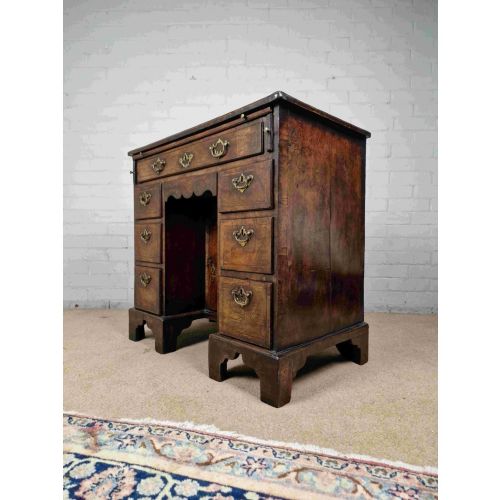
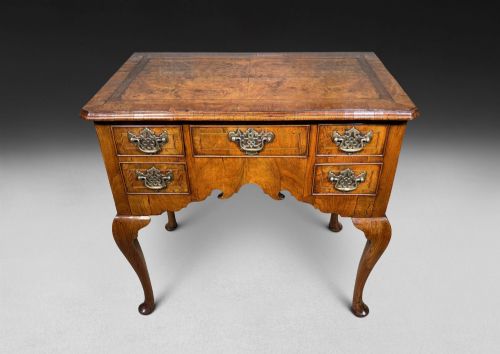
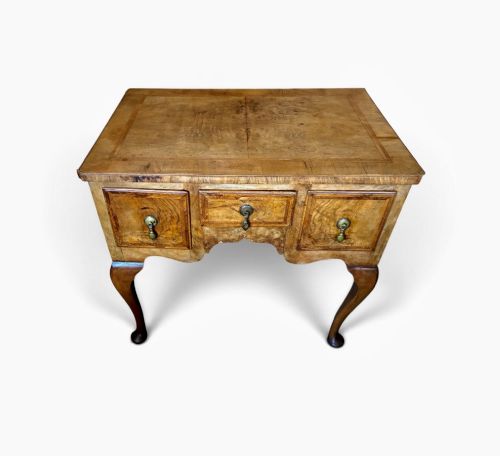
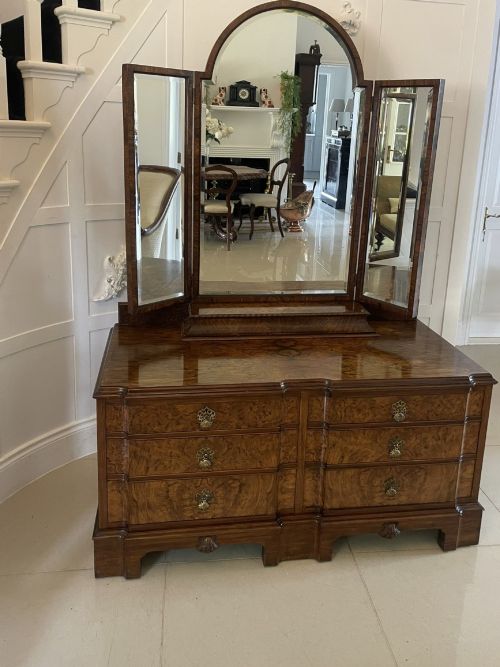
When you search for a georgian walnut vanity, you encounter a selection of dressing table mirrors, lowboys, and kneehole desks spanning the eighteenth century alongside later revival periods. These pieces combine compact writing surfaces, drawer storage, and tilting mirror glasses designed for personal grooming and correspondence.
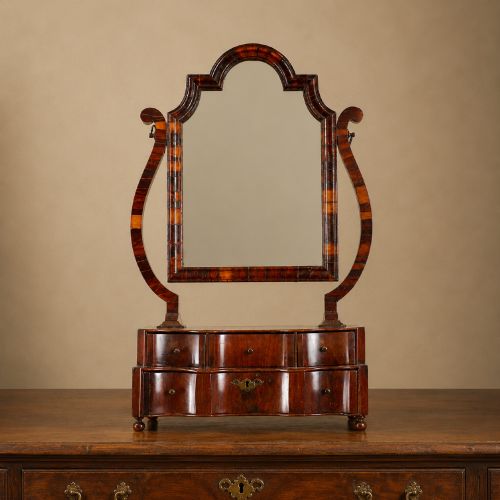
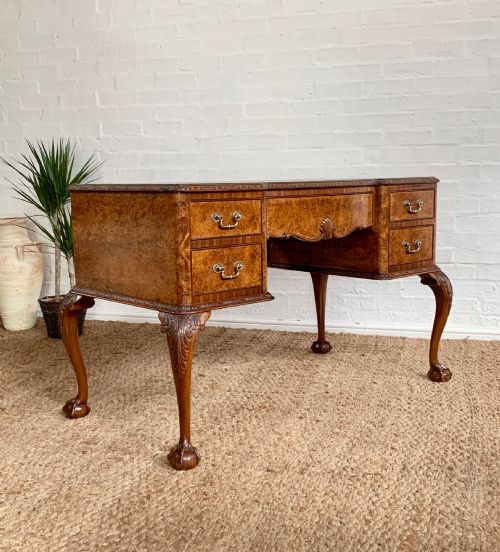
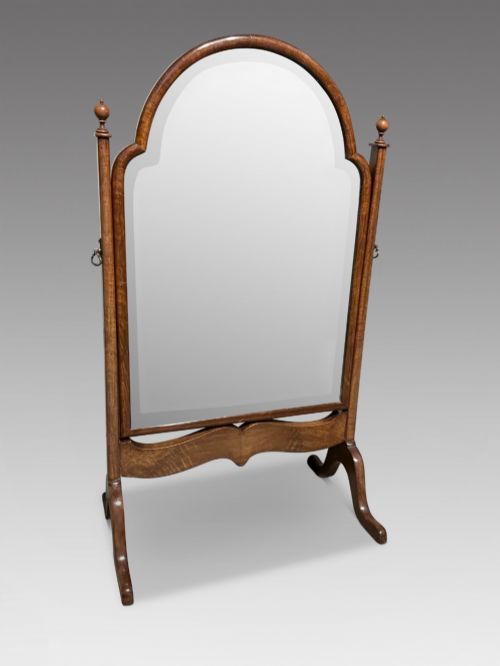
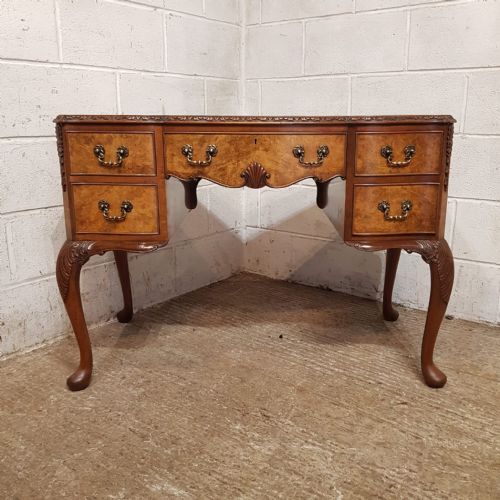
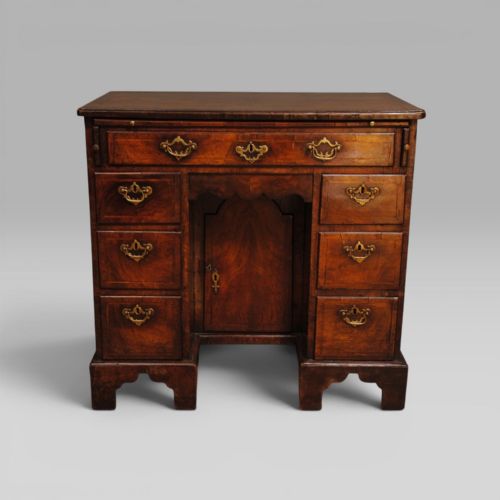
The most frequent pieces on this page are toilet mirrors and dressing mirrors featuring shaped plates, flanked by upright supports above small drawer bases. Lowboys and kneehole desks also appear frequently, offering multi-drawer configurations in figured timber.
How they were made
Cabinet makers utilised solid walnut and decorative burr walnut veneers laid over secondary woods, accented with brass drawer pulls and handles. Glass plates for mirrors were silvered and set into moulded frames.
Surfaces frequently feature green tooled leather inserts on writing desks and fine figuring across drawer fronts, matched with joinery methods typical of eighteenth-century and revival workshops.
Portable campaign mirrors allowed travellers to maintain their grooming standards on the move.
What varies in quality
The grade of walnut veneer determines much of the visual appeal, with richly figured burr patterns and matched grains marking out superior examples. Crispness in carved fretwork details and original brass hardware further separate standard production from finer pieces.
Construction depth, including the use of solid secondary timbers in drawer linings and the survival of original mirror glass and backing boards, distinguishes authentic period items from later revival interpretations.
maples of london
The Georgian Walnut Vanity Glossary
- Lowboy
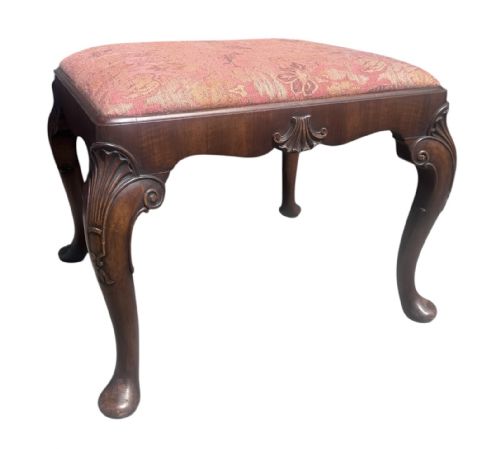
- A small table with drawers, typically used as a dressing table or side table in the eighteenth century. They frequently feature cabriole legs and shaped aprons.
- Toilet Mirror
- A small adjustable looking glass mounted on a box base containing small drawers. These sat atop chests of drawers or dressing tables.
- Kneehole Desk
- A compact desk featuring a central recessed space for the legs flanked by pedestals of small drawers. They often incorporate a concealed long drawer above the knee space.
- Burr Walnut
- Timber taken from the warted excrescences of walnut trees, yielding highly ornamental swirling grain patterns. Cabinet makers prized this for veneering prominent surfaces.
- Fret Mirror
- A wall mirror or dressing glass framed with pierced woodwork, often in architectural scroll designs. They gained popularity during the Georgian period.
Georgian Walnut Vanity: Frequently Asked Questions
What is a georgian walnut vanity?
A georgian walnut vanity encompasses dressing table mirrors, lowboys, and kneehole desks made from walnut during the eighteenth century or in later revival styles. They provide functional surfaces and storage designed for grooming and writing.
These items range from tabletop toilet mirrors with small drawers to freestanding desks and low tables featuring figured timber grains and brass hardware.
How were these pieces used?
Original owners utilised these items for morning toilet routines, applying cosmetics, arranging hair, and attending to personal correspondence. Dressing mirrors sat on chests or tables, while lowboys and kneehole desks provided seated writing stations.
The inclusion of small drawers allowed for the storage of brushes, powders, letters, and personal documents within easy reach.
How do I distinguish eighteenth-century pieces from revival versions?
Eighteenth-century examples display construction methods, timber patination, and wear consistent with age, including hand-cut dovetails and older secondary woods. Revival pieces, often dating from the late nineteenth or early twentieth century, utilise machine-sawn elements and different internal framing.
Examining the mirror glass, backing boards, and drawer linings provides further clues regarding whether a piece originates from the Georgian era or later periods.
How do I care for walnut veneer?
Walnut veneer benefits from stable room conditions away from direct sunlight and extreme humidity changes, which can cause timber to dry and veneers to lift. Gentle dusting with a dry, soft cloth preserves the polished surface.
Harsh chemical polishes and excessive moisture should be avoided to protect the historic finish and grain pattern of the wood.