


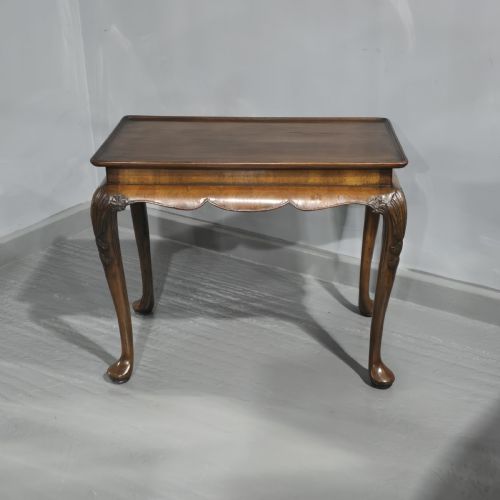


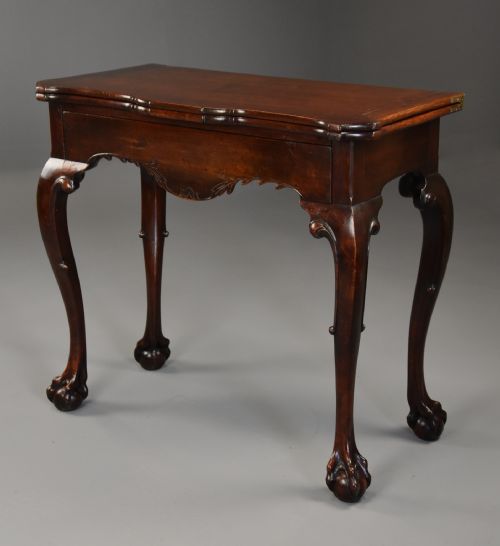

Georgian Walnut Tea Table
A georgian walnut tea table brings folding tops, figured grain, and mid-eighteenth-century proportion to a room.
Georgian Walnut Tea Table
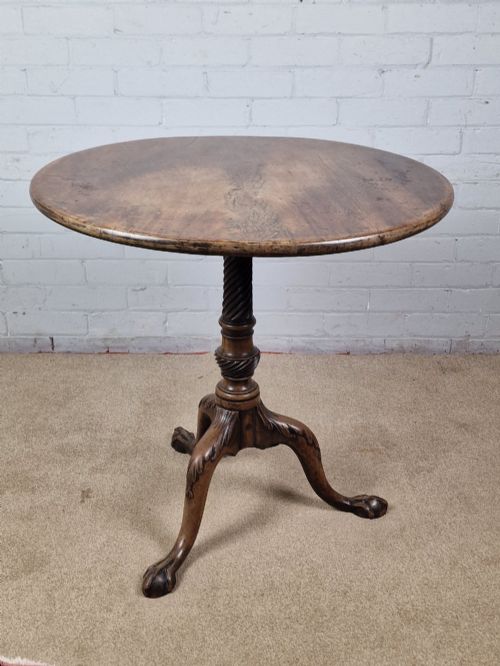
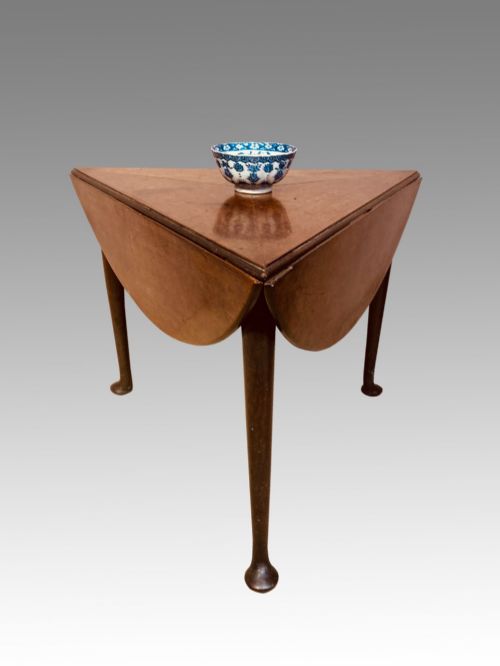
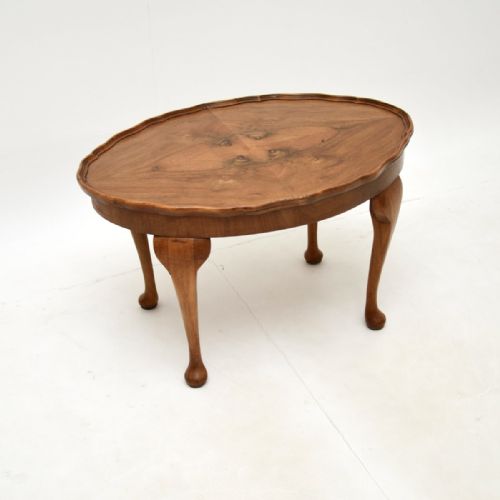
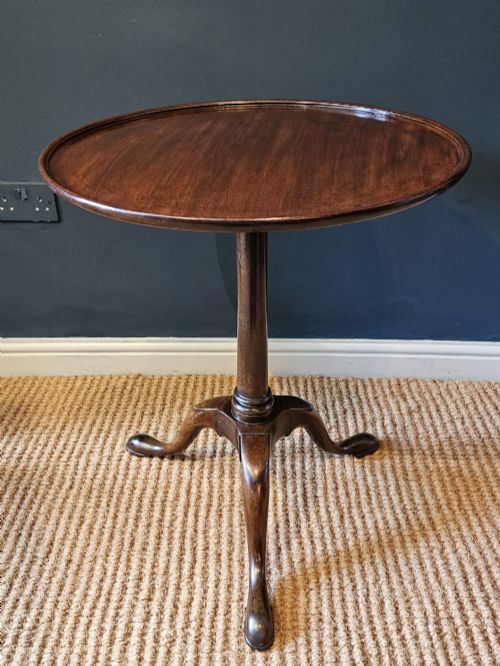
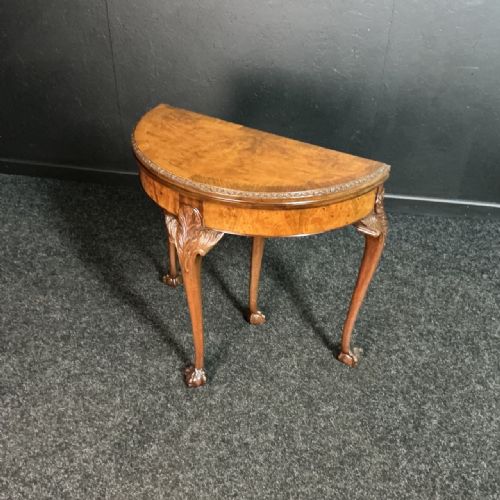
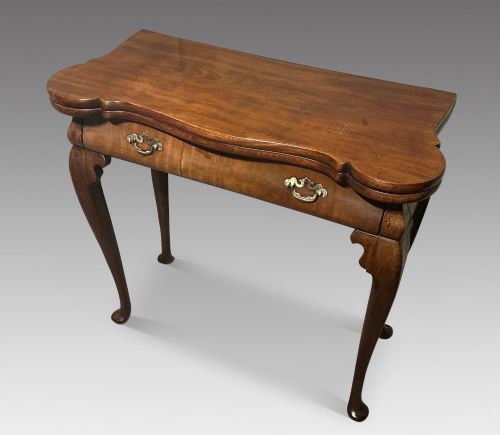
A georgian walnut tea table is a specific piece of antique furniture designed for the social ritual of serving tea, appearing most frequently in eighteenth-century forms alongside later revival interpretations from the early twentieth century. The selection spans straightforward folding designs, tilt-top tripod variations, and multi-functional games tables that double as card or silver surfaces. Eighteenth-century examples sit alongside 1920s revival pieces built in the same idiom.
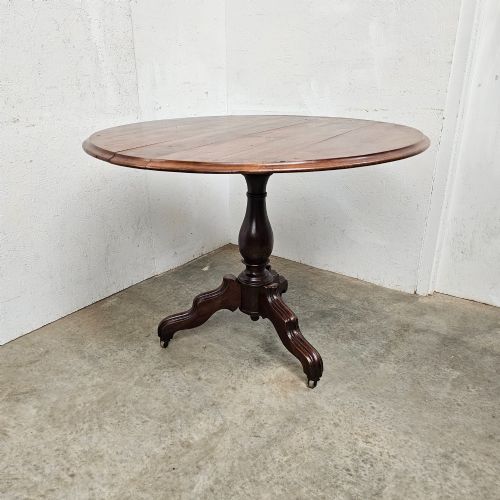
The primary forms include fold-over tea tables, snap-top tripod tables, and rectangular surfaces with raised edges. Makers constructed these items for domestic use in reception rooms, employing timber frames that fold, tilt, or remain stationary depending on the intended function. Buyers encounter both original eighteenth-century pieces and later interpretations inspired by George II designs.
Assessing Quality
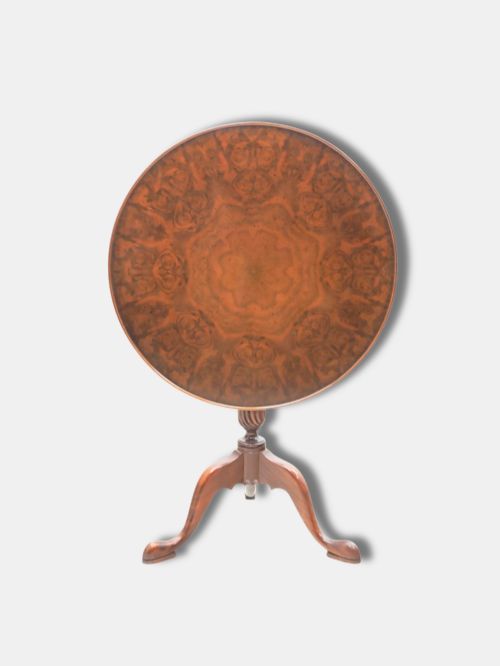
Quality rests in the choice of timber and the complexity of the veneer work, particularly where burr or figured walnut creates symmetrical patterns across a fold-over top. The depth of the natural patina and the crispness of edge moulding separate standard production from exceptional examples.
Structural integrity in the mechanism - whether a folding leaf, a rotating top, or a tilt-top tripod catch - determines how well the piece functions. Original hinges, uncompromised timber thickness, and refined carving on knees and feet distinguish superior pieces.
Georgian Walnut Tea Table Retail Price Guide 2026
Typical asking prices for georgian walnut tea table among the pieces listed under this phrase on Sellingantiques today, from the lower quarter to the upper quarter. They describe what is for sale here now, not the wider market.
Listings combine eighteenth-century originals with George II style revival pieces from the early twentieth century.
Maple and Co
The Georgian Walnut Tea Table Glossary
- Burr Walnut
- A specialised wood veneer taken from the wart-like growths on walnut trees, yielding highly decorative, swirling patterns. It is prized for high-status furniture tops.
- Snap Top
- A table mechanism featuring a catch that locks a tilting tabletop in a horizontal position or releases it to vertical storage. This allows the furniture to save space against a wall when not in use.
- Crossbanding
- A narrow strip of veneer laid around the border of a table top with the grain running perpendicular to the centre panel. This frames the primary timber.
- Pie Crust
- A carved, scalloped raised border running along the perimeter of a circular tabletop, resembling pastry work. It is typically found on mid-eighteenth-century occasional and tea tables.
- Tripod Table
- A piece supported by a central pillar resting on three curving legs. The design provides stability on uneven floors without requiring four straight legs.
Georgian Walnut Tea Table: Frequently Asked Questions
What is a georgian walnut tea table used for?
These tables served as functional surfaces for pouring and serving tea during the eighteenth century, featuring folding leaves or raised edges to secure porcelain.
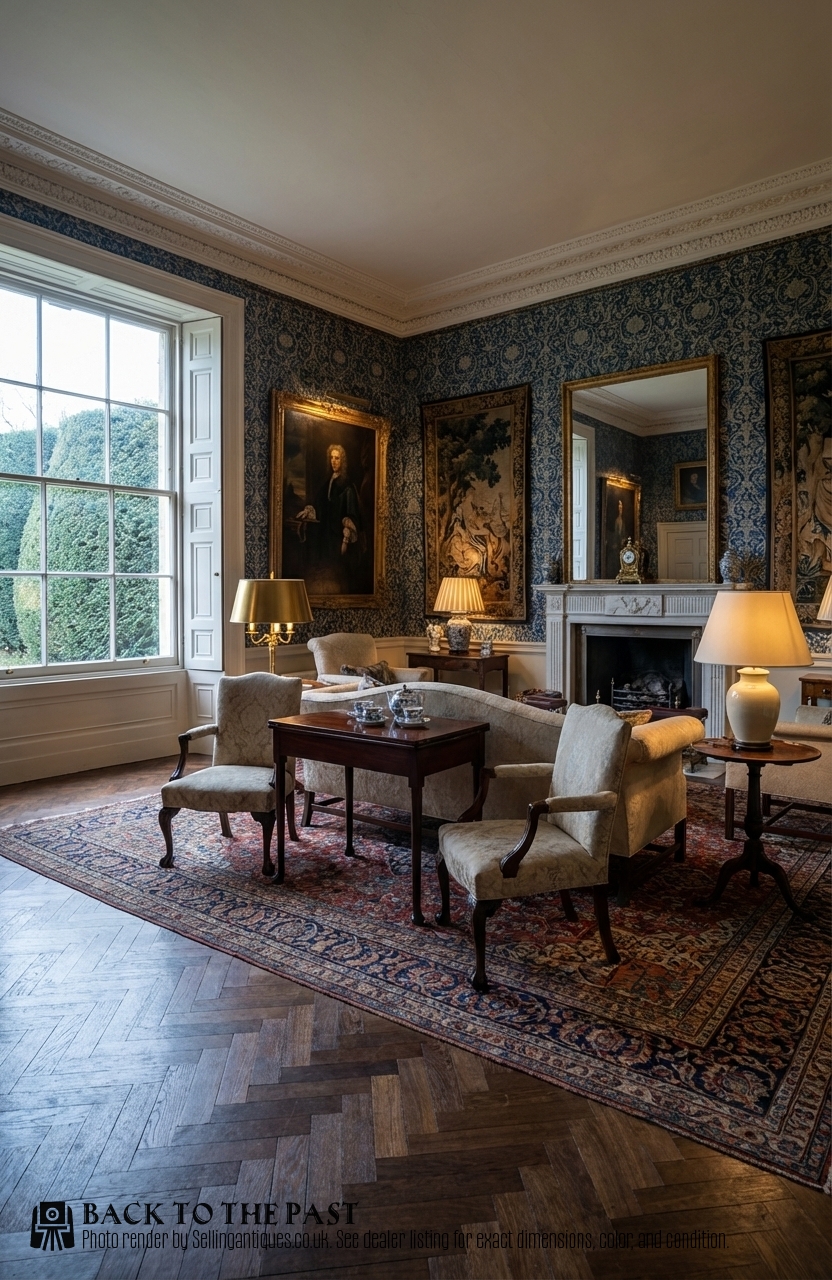
In modern rooms, they function as occasional tables, lamp stands, or display surfaces that highlight figured wood grain.
How do I tell an 18th-century table from a 1920s revival?
Original eighteenth-century pieces display natural timber ageing, hand-cut joinery marks, and specific secondary woods like oak inside the frame.
Revival pieces from the 1920s often use cleaner, standardised machine-cut joints and uniform veneer selection typical of twentieth-century cabinet making.
What is the difference between a tea table and a card table?
Tea tables generally feature rectangular fold-over tops or raised tray rims designed to hold cups and saucers securely during social gatherings.
Card tables incorporate folding leaves that open to reveal baize or wooden playing surfaces with corner wells for counters.
How should I care for walnut veneer?
Keep antique walnut away from direct sunlight and heat sources to prevent the underlying glues from drying and the thin veneers from lifting.
Apply a light application of appropriate wax polish periodically to maintain the lustre of the timber.