

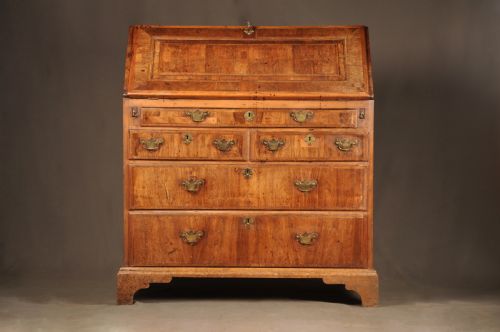
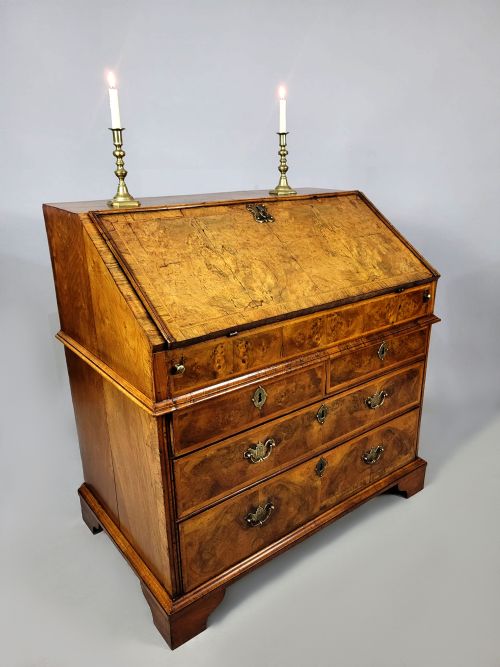
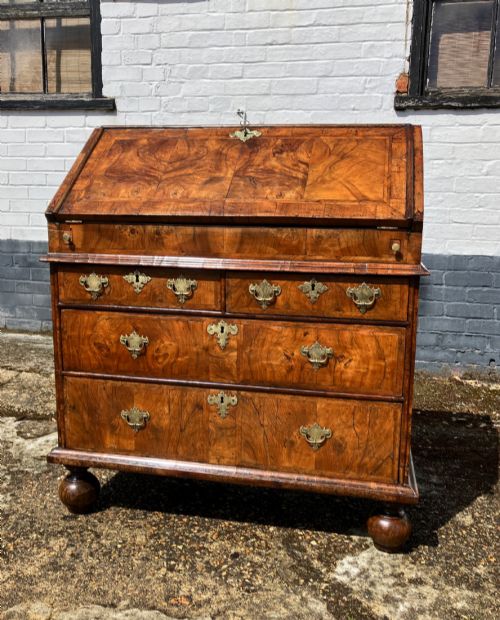
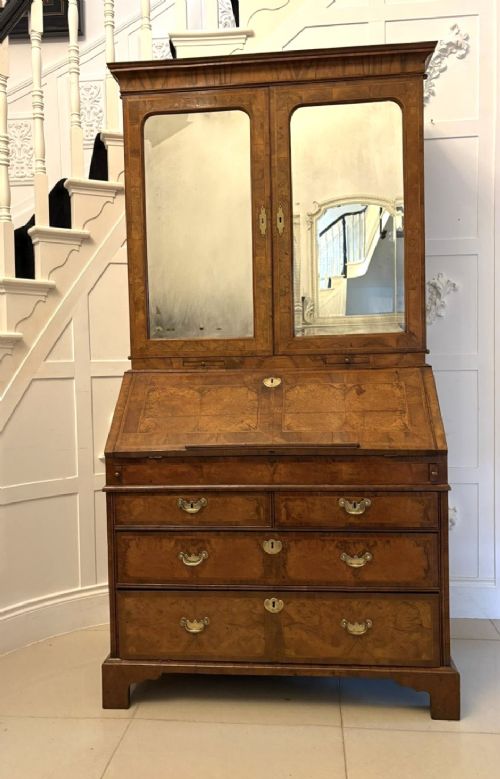

Georgian Walnut Slant Bureau
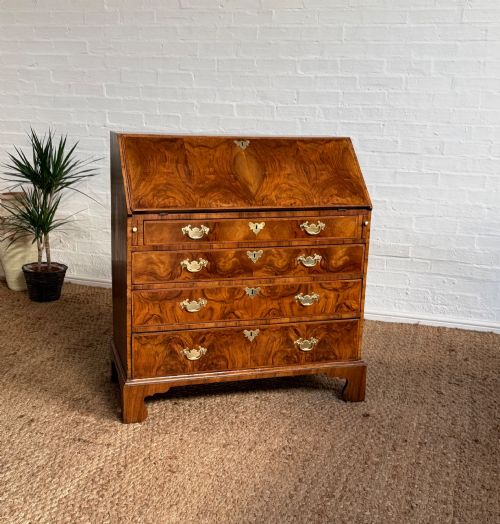
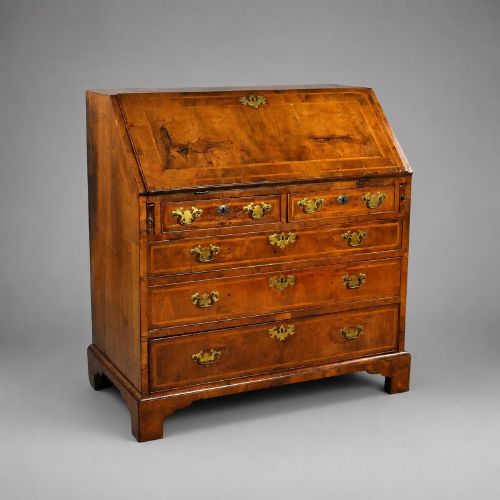
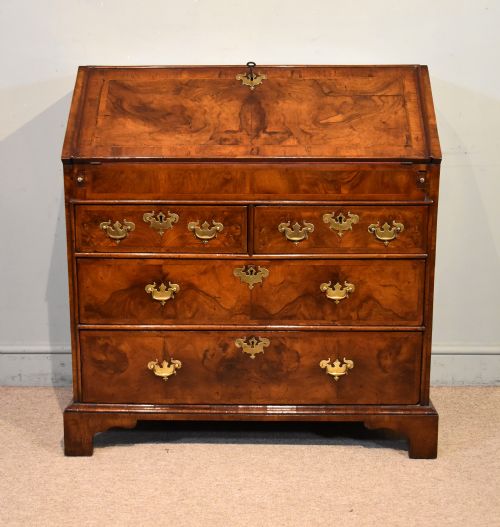
A georgian walnut slant bureau brings warmth and working order to a room, offering a fall front that opens to a fitted interior of small drawers and pigeonholes.
Georgian Walnut Slant Bureau
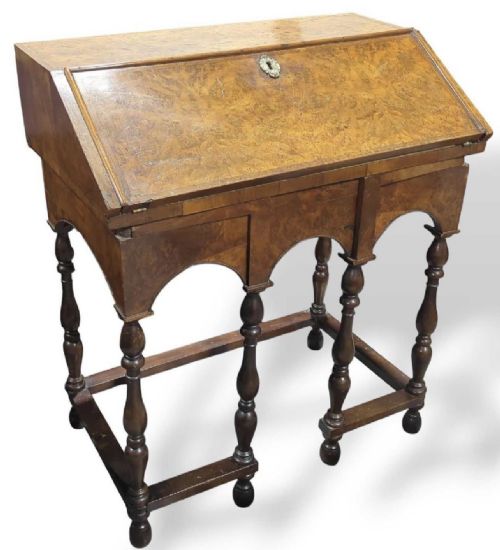
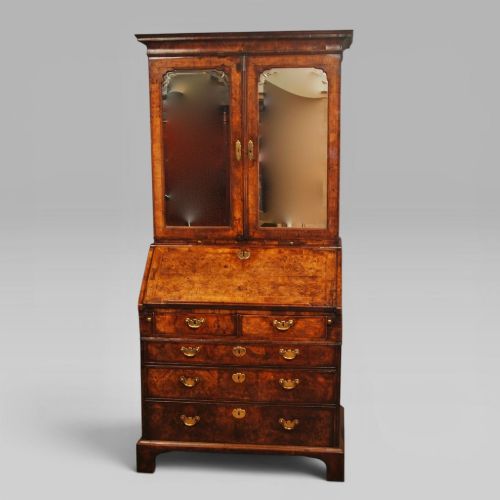
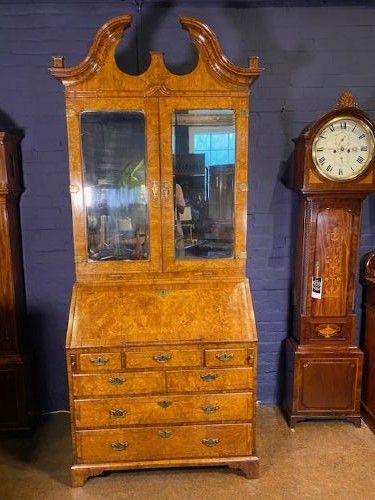
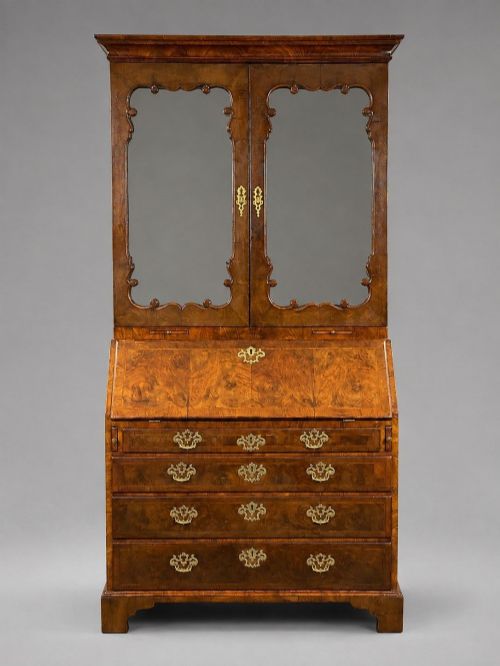
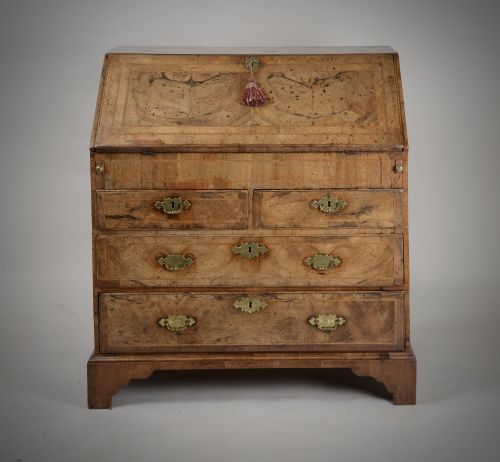
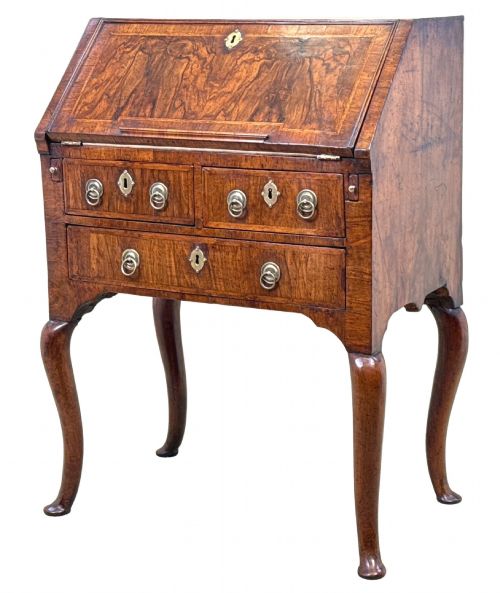
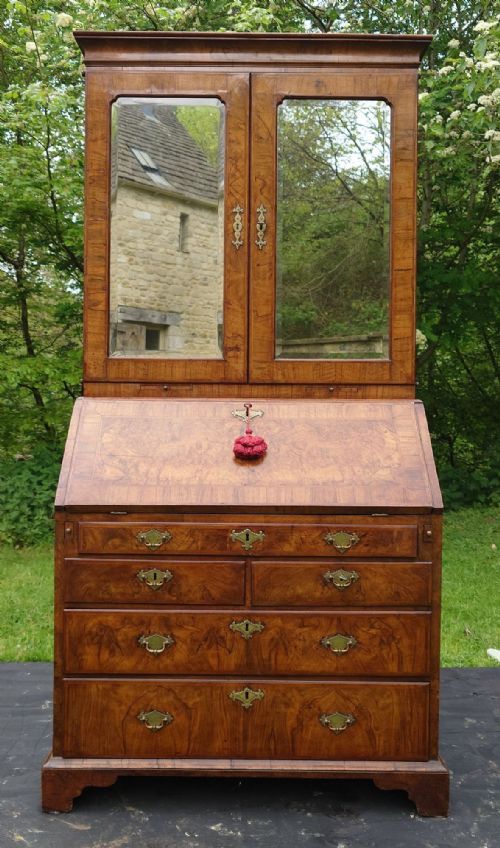
A georgian walnut slant bureau takes several distinct forms, ranging from compact fall-front desks on bracket feet to towering two-part bureau bookcases fitted with glazed upper cabinets. The most frequent examples belong to the early eighteenth century, spanning the reigns of Queen Anne and the early Georges, though later nineteenth-century revivals also appear.
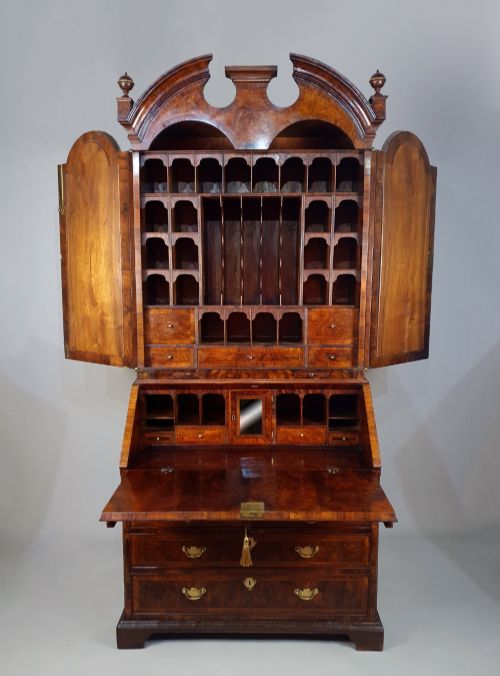
Makers constructed these pieces to serve as private writing cabinets, featuring a sloping hinged flap that lowers to create a leather-lined or plain wood writing surface. Interior compartments often include hidden document drawers and central well slides designed to secure correspondence and valuables.
Regional variations extend from simple English walnut carcass frames to elaborate Dutch marquetry inlaid designs and bombe front profiles. Bureau bookcases add upper display sections with candle slides for lighting while working at the desk after dark.
Materials and Construction
Cabinet makers utilised native walnut and highly figured burr walnut veneers applied over solid oak or pine carcass frames to achieve rich grain patterns. Drawer fronts frequently display decorative herringbone stringing inlaid into the timber to frame the rich burr surfaces.
Hardware consists of brass escutcheons, drop handles, and working iron or brass locks that secure the fall front and internal drawers. Construction relies on hand-cut dovetails for the drawer construction and pegged joints for the main housing frames.
Georgian Walnut Slant Bureau Retail Price Guide 2026
Typical asking prices for georgian walnut slant bureau among the pieces listed under this phrase on Sellingantiques today, from the lower quarter to the upper quarter. They describe what is for sale here now, not the wider market.
The selection includes both freestanding slant desks and tall bureau bookcases fitted with glass doors and candle slides.
Evaluating Quality
The standard of a bureau rests upon the choice of veneer and the symmetry of the wood grain matched across the fall front and drawer faces. Superior pieces retain their original patination, ironwork, and brass fittings without excessive modern restoration.
Internal complexity dictates much of the distinction between standard and exceptional pieces, particularly where stepped drawer arrangements, secret compartments, and carved prospect doors are present. The integrity of the secondary timbers underneath provides further indication of early craftsmanship.
The Georgian Walnut Slant Bureau Glossary
- Slant bureau
- A writing desk featuring an angled hinged writing flap that conceals an interior arrangement of small drawers and pigeonholes.
- Burr walnut
- Timber sliced from walnut tree growths that produces intricate, swirling grain patterns highly prized for cabinet veneers.
- Herringbone inlay
- Fine decorative banding of contrasting woods laid in a V-shaped pattern to border drawer fronts and panels.
- Bureau bookcase
- A tall two-part cabinet combining a lower slant-front writing desk with an upper shelving or display section.
- Candle slide
- A pull-out wooden board mounted beneath upper cabinet doors to support candlesticks for illumination.
- Bombe front
- A distinctly curved or swelling convex profile characteristic of continental and select high-status English case furniture.
Georgian Walnut Slant Bureau: Frequently Asked Questions
What is inside a slant bureau?
Opening the fall front reveals a fitted interior containing tiered banks of small drawers, pigeonholes for letters, and occasionally a central locking cupboard or hidden well.
Many examples include secret compartments designed to slide out or release behind the stationery drawers for storing sensitive papers.
How do I date a walnut bureau?
Dating relies on examining construction methods, timber choices, and hardware styles, such as bracket feet, drawer dovetailing, and brass backplates.
Early eighteenth-century pieces often feature feather banding, candle slides, and solid walnut framing, whereas later nineteenth-century revivals display machine-cut elements and softer secondary woods.
Where should I place a bureau?
These desks suit studies, living rooms, and large hallways where the depth of the cabinet and the projection of the open flap can be accommodated comfortably.
Keep walnut furniture away from direct sunlight and heat sources to prevent the burr veneers from drying out or splitting over time.
Are bureau bookcases one piece?
Bureau bookcases are almost universally constructed as two separate sections to facilitate transport and placement in a room.
The heavy upper glazed cabinet rests securely upon the lower desk base without permanent mechanical fastening.