
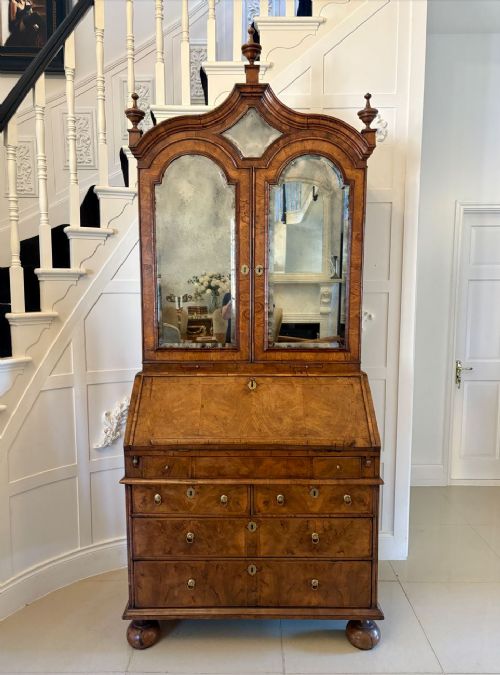
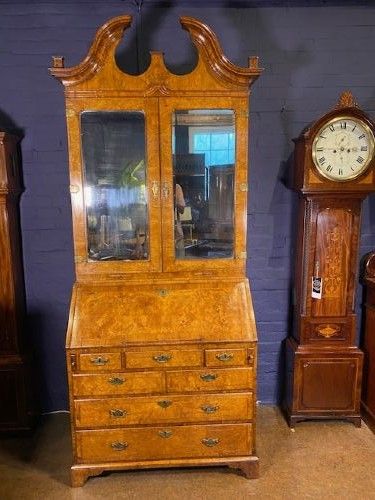
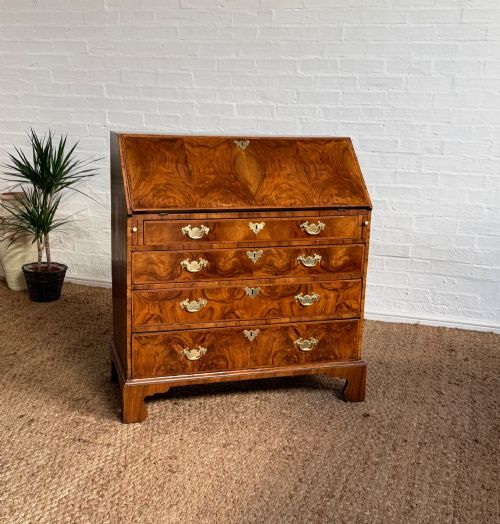
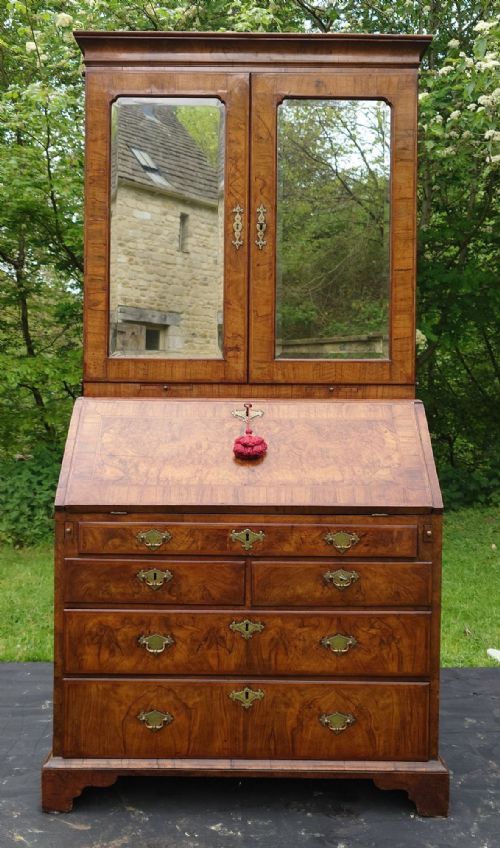


Georgian Walnut Secretary Cabinet
A georgian walnut secretary cabinet brings together the warmth of burr walnut and the practical design of a drop-front writing desk.
Georgian Walnut Secretary Cabinet
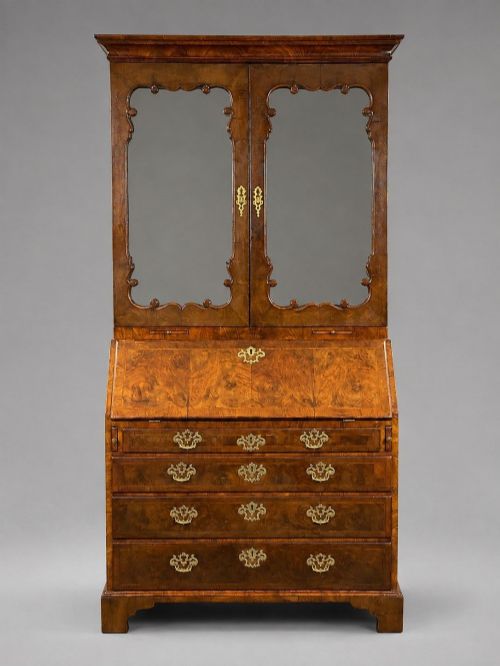
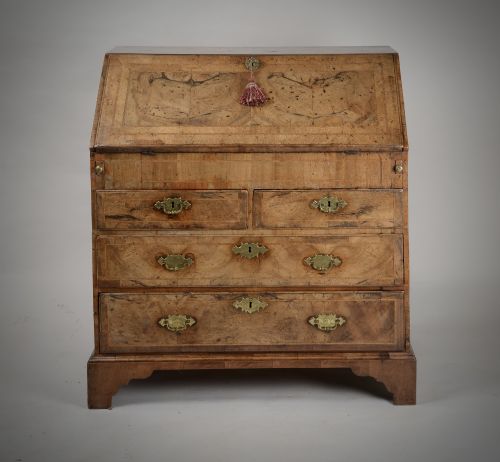
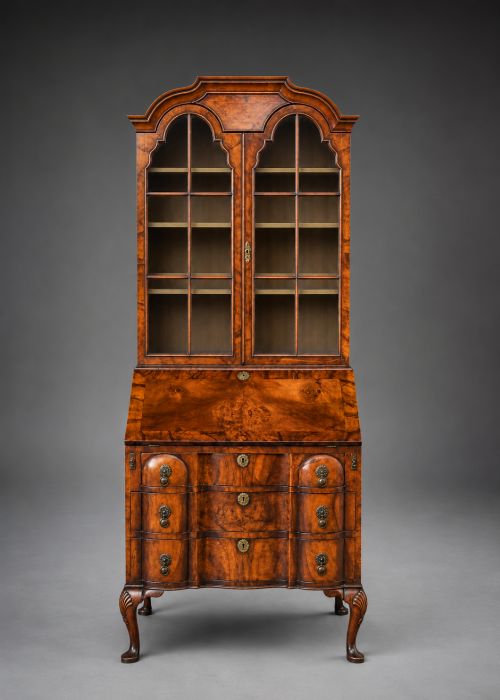
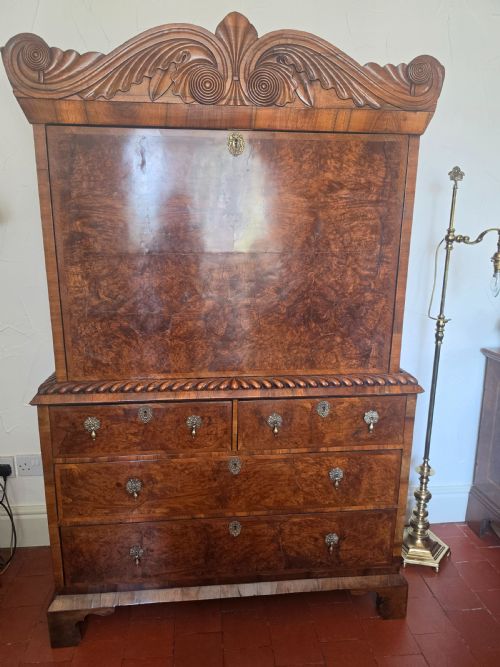
When you search for a georgian walnut secretary cabinet, you encounter pieces that combine a lower writing bureau with an upper bookcase or a tall escritoire form. The items meeting this description span the 17th century through the Georgian era, with later revivals appearing from the Edwardian period.
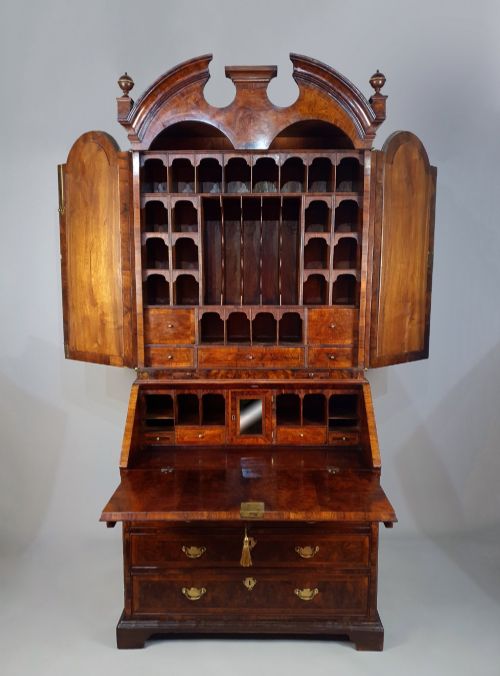
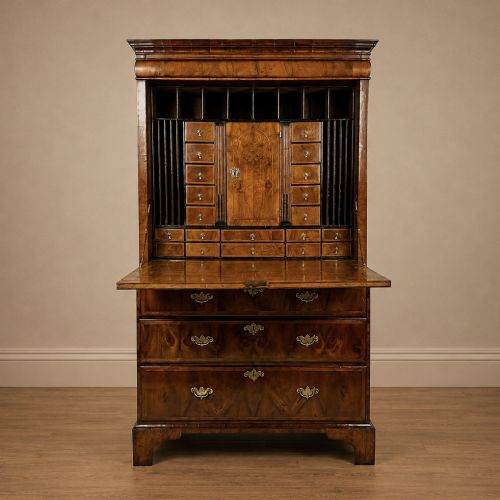
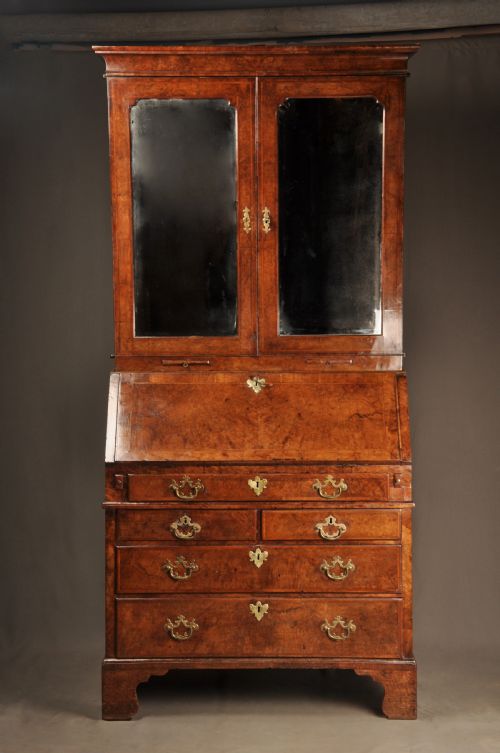
The dominant forms on this page include bureau bookcases in two or three sections, fitted with glazed doors, candle slides, and fitted desk interiors. Plain and figured walnut dominate the selection, alongside rarer examples featuring marquetry inlay or featherbanding.
Origins cluster around English workshops of the 18th century, alongside Dutch Baroque interpretations. Buyers most frequently meet pieces from the George I and George II periods, constructed to serve as private writing and storage cabinets in domestic interiors.
Materials and Construction
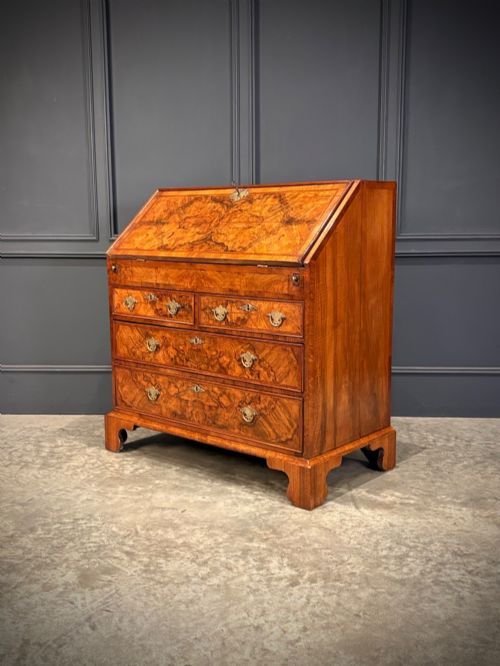
Cabinetmakers utilised solid walnut and decorative burr walnut veneers applied to oak or pine secondary timbers. Featherbanding and satinwood details often accent the exterior surfaces of the better examples.
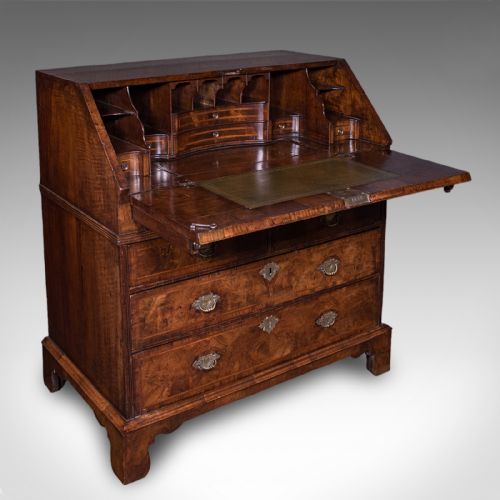
Glass is fitted into the upper bookcase doors, while interiors integrate leather writing surfaces, small pigeonholes, and secret compartments behind fall-front desks. Brass hardware, including drop handles and escutcheons, secures the drawers and fall fronts.
Listings span the 17th century through the Edwardian era, incorporating solid walnut, burr walnut veneers, oak, brass, and glass.
Factors of Quality
The choice of veneer defines the visual weight of a piece, with highly figured burr walnut and symmetrical grain patterns marking out superior examples. Crispness in the featherbanding and the retention of original patination separate untouched pieces from heavily restored ones.
Internal complexity dictates the utility of the desk, where fitted compartments, sliding candle supports, and multi-section construction demonstrate superior craftsmanship. The balance of proportions between the heavier lower bureau and the glazed upper cabinet determines the overall elegance of the form.
The Georgian Walnut Secretary Cabinet Glossary
- Escritoire
- A writing cabinet or desk, often tall in form with a fall-front writing surface concealing internal drawers. This term appears frequently among 18th-century English walnut pieces.
- Featherbanding
- A decorative inlay technique using small strips of veneer arranged in a herringbone pattern around drawer edges or panel borders. It adds refined contrast to walnut surfaces.
- Burr walnut
- Wood taken from a walnut tree growth, producing intricate, swirling grain patterns highly prized by cabinetmakers. It covers the primary facades of superior bureaus.
- Candle slide
- A pull-out wooden board positioned beneath the upper bookcase doors to hold illumination for the writer. These slides are characteristic of George I and George II secretary cabinets.
Georgian Walnut Secretary Cabinet: Frequently Asked Questions
What is a georgian walnut secretary cabinet?
A georgian walnut secretary cabinet is a dual-purpose furniture form featuring a lower desk with a sloping fall-front and an upper storage or bookcase section.
These pieces were designed for private correspondence and the housing of books, combining display space with concealed writing compartments.
How do I identify a George I piece?
George I pieces typically date from the early 18th century and display rich figured walnut veneers, often enhanced with delicate featherbanding.
Look for architectural elements such as glazed upper doors, candle slides, and well-fitted internal drawers behind the fall-front desk.
Where were these cabinets made?
The pieces listed originate primarily from English workshops, alongside Dutch interpretations featuring marquetry inlay.
Cabinetmakers of the 18th century utilised domestic and continental timbers to construct these multifaceted storage and writing units.
How do I care for walnut veneer?
Walnut veneer requires stable indoor humidity and protection from direct sunlight to prevent the wood from drying or fading.
Gentle dusting with a dry cloth maintains the surface, avoiding harsh polishes that can harm the historic patination.