
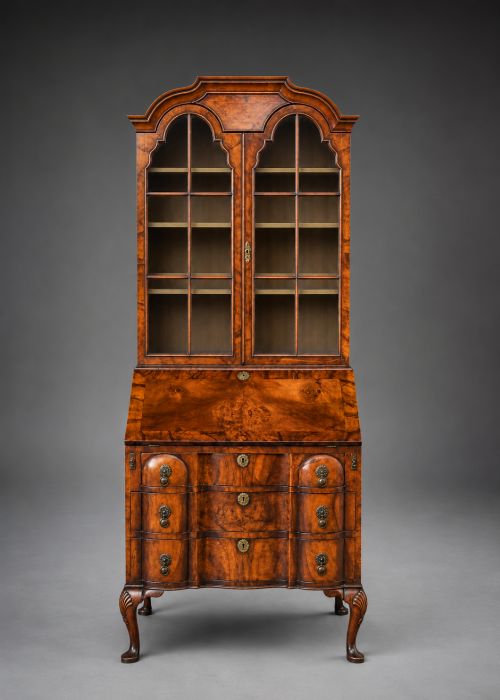
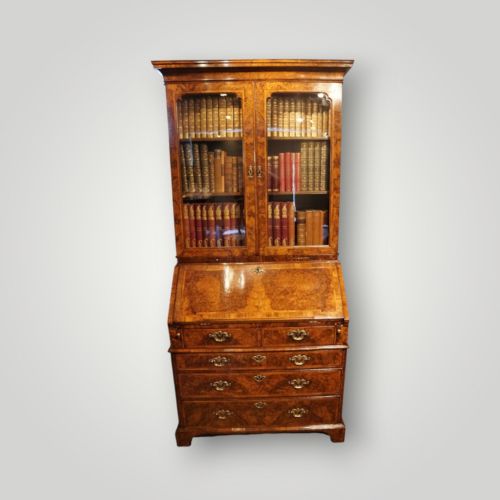
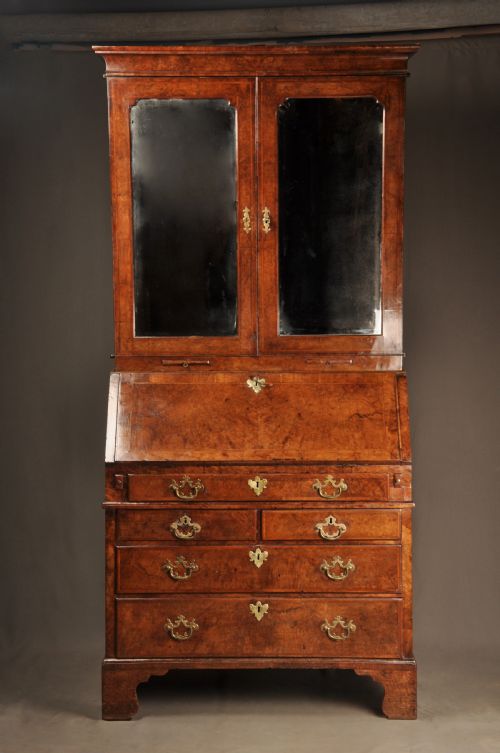
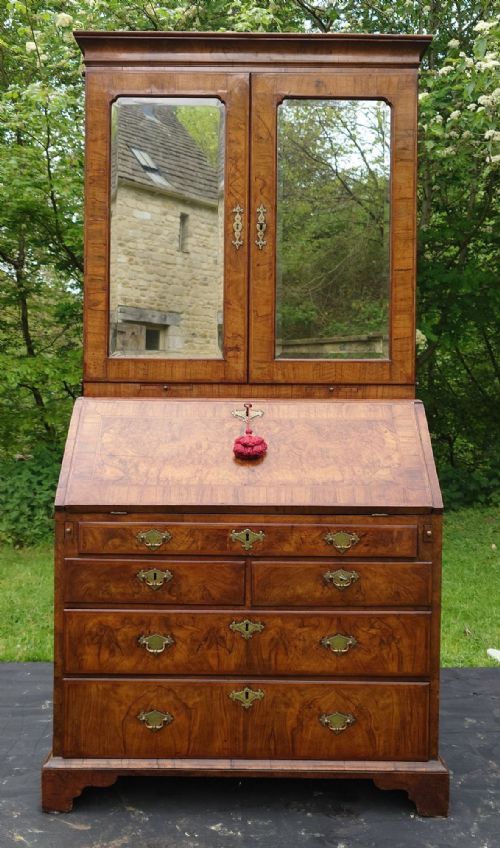


Georgian Walnut Bookcase
These pieces unite warmth of grain and architectural scale, offering a grand home for a library under the heading georgian walnut bookcase.
Georgian Walnut Bookcase
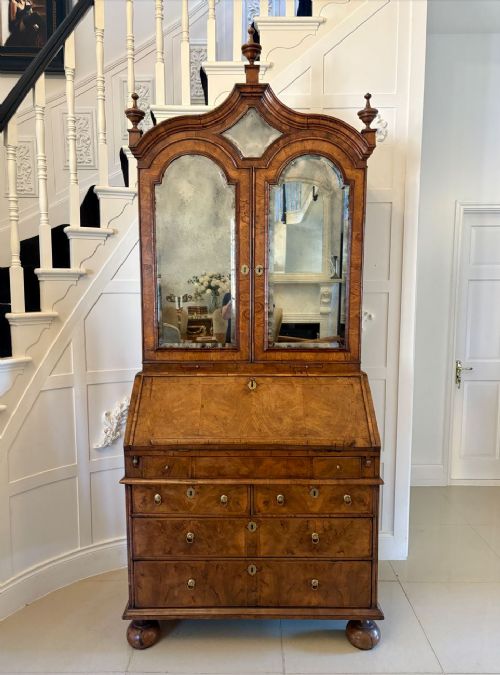
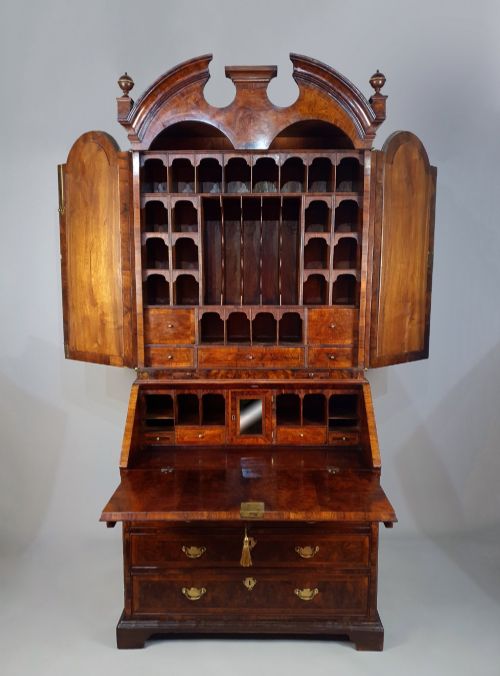
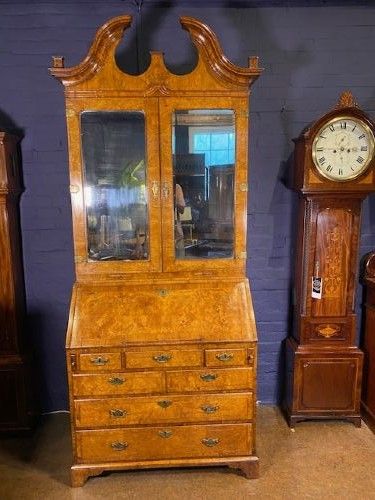
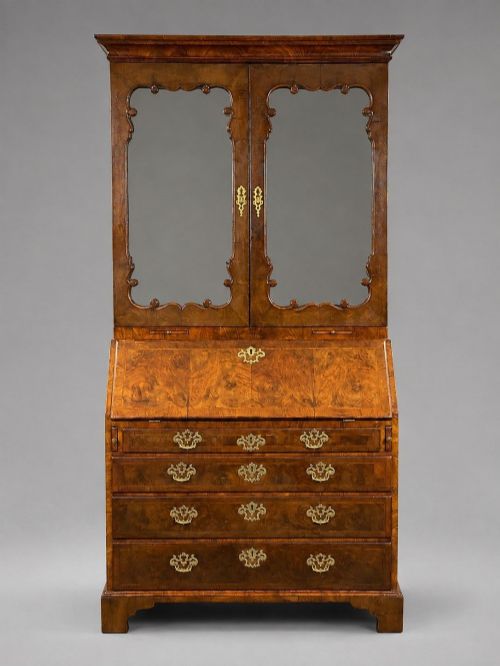
A georgian walnut bookcase brings together architectural presence and practical storage, most frequently appearing on this page as an 18th-century bureau bookcase with glazed upper doors and a sloping writing flap. These items combine a cabinet top for display with fitted drawers and pigeonholes below.
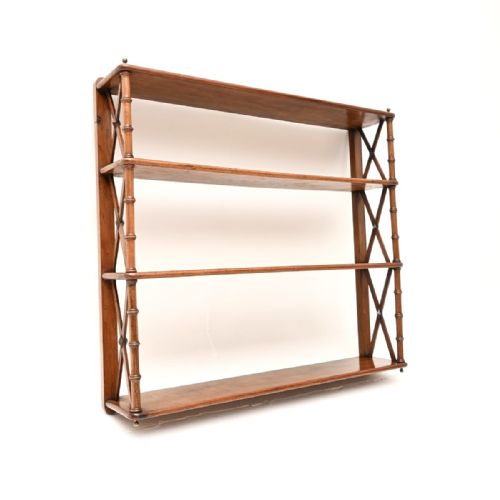
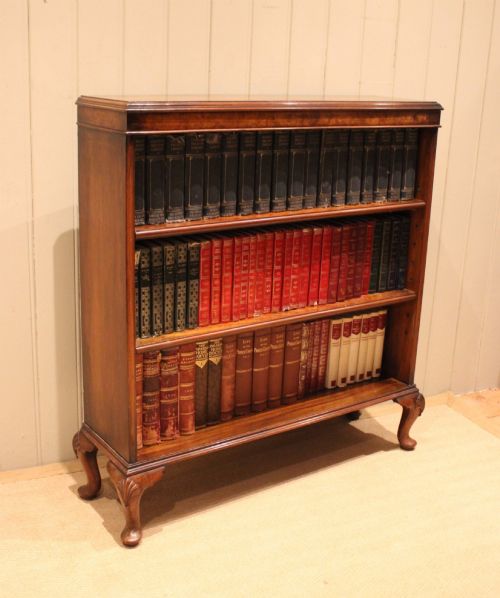
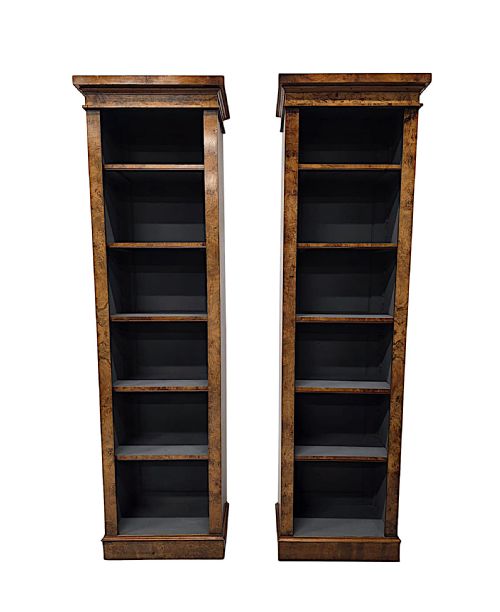
Beyond the standard bureau form, the selection includes open bookshelves, corner cabinets and display units spanning from the 17th century through the Georgian era and into later 20th-century revivals. Each iteration provides a substantial timber housing for books and papers.
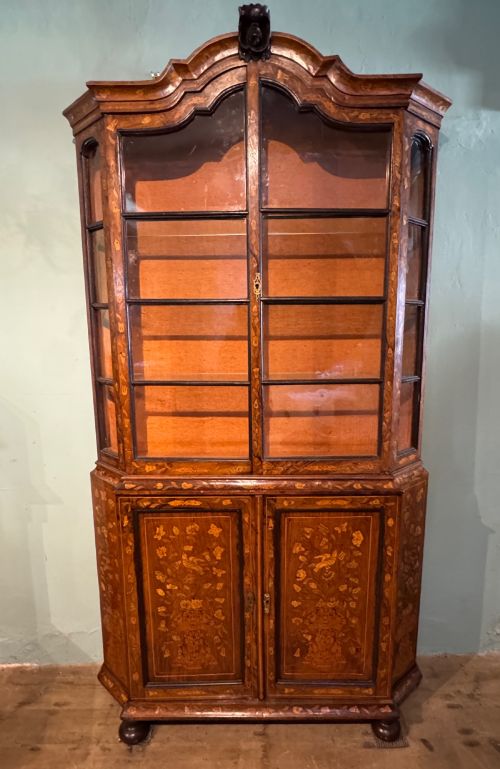
Makers working in the Dutch manner also contribute breakfront forms and marquetry inlaid display cabinets to the mix. The overarching category prioritises dark, figured woods configured for both domestic utility and formal display.
How They Were Made
Cabinet makers built these carcasses primarily from solid oak or pine, applying burr walnut veneer and featherbanding across the primary visible surfaces. Brass hardware, mirrored glass panels and leather writing surfaces complete the construction details.
Early pieces utilise sliced veneers laid in symmetrical patterns to exploit the natural figuring of the walnut timber. Crossbanding and stringing frame the drawer fronts and door panels to create geometric borders.
Pull out the tiny candle slides beneath the upper doors and imagine writing letters by the flicker of wax light.
What Varies in Quality
The sophistication of the timber figure dictates much of the visual hierarchy, with dense burr patterns and matched veneers commanding attention above plainer straight-grained boards. Crisp execution of featherbanding and marquetry inlay also separates standard production from finer output.
Structural complexity influences distinction, particularly in three-section builds featuring fitted interiors, candle slides and original glazed doors. Surviving surfaces with untouched patination retain greater character than heavily refinished examples.
Maple & Co.
The Georgian Walnut Bookcase Glossary
- Burr walnut
- Timber taken from a tree growth that produces swirling, highly decorative grain patterns. Cabinet makers prized these sections for veneering primary surfaces.
- Featherbanding
- A type of inlay formed from small pieces of veneer cut diagonally and laid in a herringbone pattern. It typically borders drawer fronts on 18th-century pieces.
- Astragal glazed
- Glass doors divided into smaller panes by wooden glazing bars. These frames form geometric patterns across the front of the bookcase.
- Candle slide
- A pull-out wooden board mounted beneath the upper doors to hold lighting. It provided illumination for the writing surface below.
Georgian Walnut Bookcase: Frequently Asked Questions
What is a bureau bookcase?
A bureau bookcase is a tall cabinet that combines a sloping desk compartment with shelving enclosed by doors above.
This form allowed owners to store books on top while keeping writing materials and stationery concealed within the lower section.
How do I style a large walnut bookcase?
Balance heavy leather-bound volumes with decorative objects, ceramics and framed prints across the adjustable shelves.
Allow breathing room around collections so the figured grain of the timber remains visible behind the books.
Are these bookcases suitable for modern homes?
The rich tones of walnut and classical proportions suit contemporary rooms as statement storage for libraries or collections.
Tall cabinets add vertical presence while offering enclosed lower cupboards to hide modern clutter.
How do I spot a later revival piece?
Revival pieces from the Edwardian era or the 1920s often use machine-cut veneers and standard modern hardware.
Examining the internal construction timber and carcass fixings helps distinguish 18th-century originals from later interpretations.