
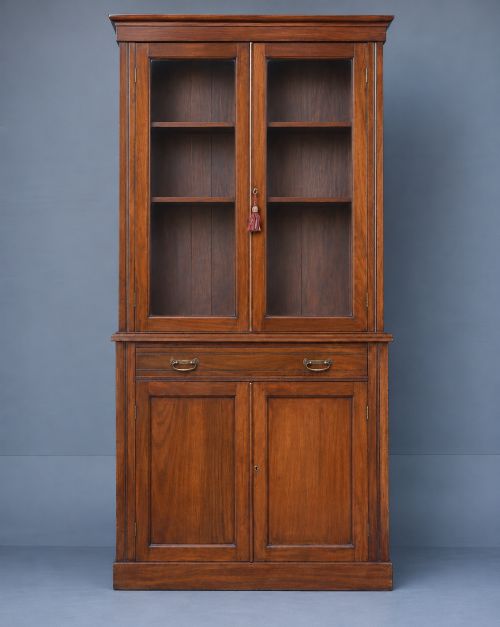
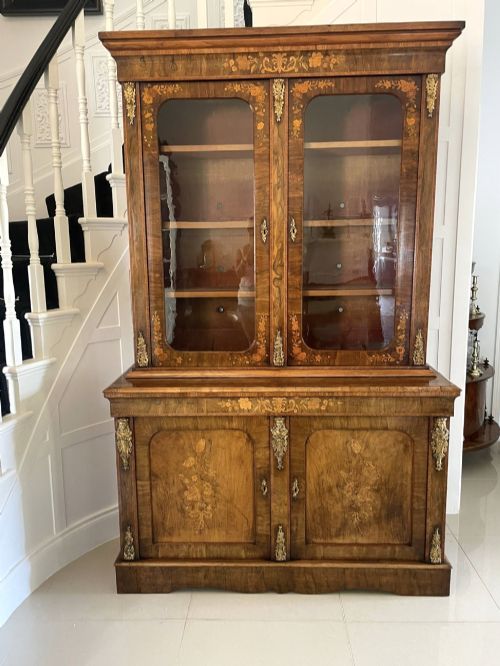
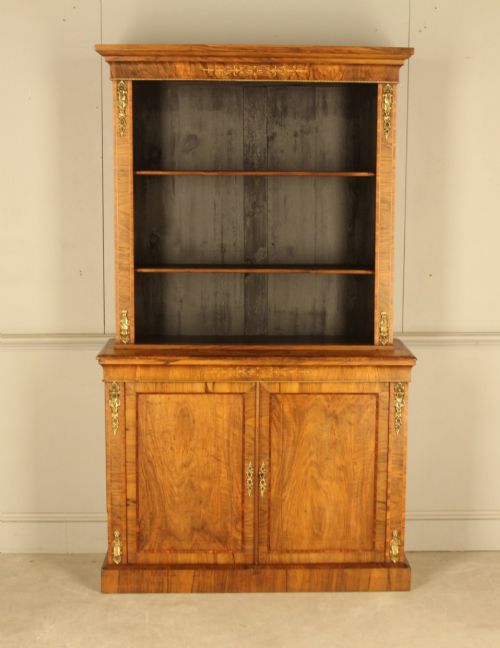


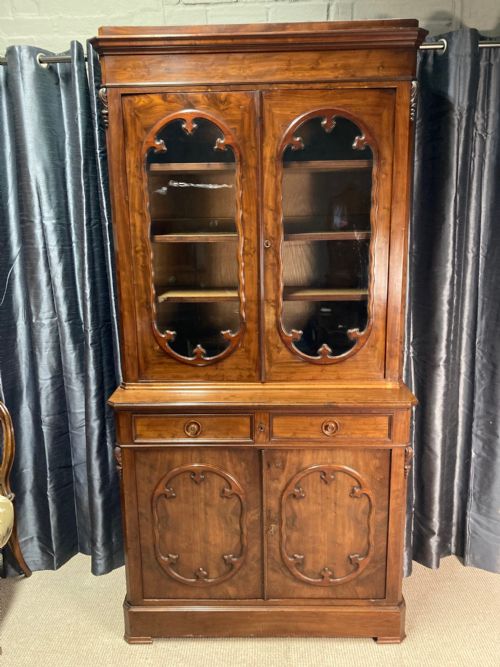
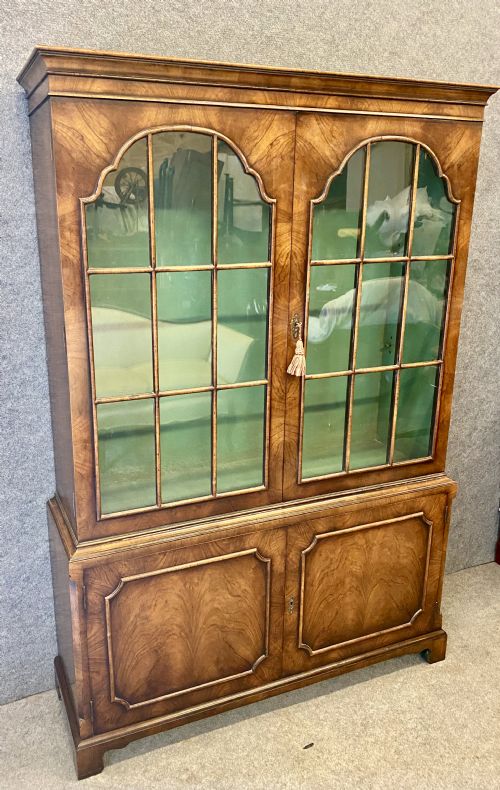

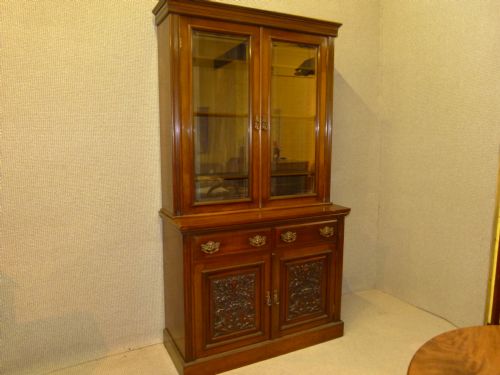
Two Tier Walnut Bookcase
A two tier walnut bookcase brings rich timber and practical shelving together, offering period presence and disciplined storage for any room.
Two Tier Walnut Bookcase
A two tier walnut bookcase provides stacked levels for display and storage, appearing primarily in Victorian, Edwardian and later twentieth-century iterations. These pieces emerge in styles ranging from straightforward Victorian formats to Georgian Revival interpretations and Arts and Crafts examples.
Makers utilised walnut, burr walnut, figured walnut and solid walnut, occasionally pairing the timber with sycamore, brass, glass, or ormolu mounts. Forms span standard bookcases, revolving designs, wall-mounted cabinets and combinations featuring cupboards beneath shelving.
How these pieces were constructed
Joiners selected figured, burr or plain walnut veneers alongside solid walnut carcasses, applying careful timber selection to achieve varied grain patterns across the visible surfaces. Structural elements frequently incorporated secondary woods, while metal fittings such as brass and ormolu provided functional and decorative accents.
Gilt mounts, marquetry inlay and glazed doors required specialist cabinetry techniques to integrate metalwork and glass into the wooden structures securely. Finishing methods preserved the natural warmth of the walnut while highlighting the characteristic figuring of burr and figured variations.
The current selection spans from the Victorian period through Edwardian, Arts and Crafts, and Art Deco eras, constructed primarily in walnut, burr walnut, and figured walnut.
What separates the finest examples
The selection of timber grain dictates much of the visual impact, with richly figured burr walnut and balanced book-matched veneers marking out superior cabinet work. Subtlety in execution, from the precision of marquetry inlay to the weight and cast of ormolu or brass mounts, distinguishes higher-tier production from standard workshop output.
Structural integrity relies on traditional joinery methods that keep tiers rigid and doors true over decades of use. The integration of secondary materials like sycamore stringing or glass panels reflects the deliberate ambition of the maker.
Holland and Sons
The Two Tier Walnut Bookcase Glossary
- Burr walnut
- A highly figured timber harvested from tree growths or burls, prized for its swirling grain patterns used in decorative veneer work.
- Ormolu
- Gilt-bronze decorative mounts applied to cabinetry, popular in nineteenth-century furniture for adding gilded architectural detail.
- Marquetry
- The art of applying pieces of veneer to a structure to form decorative patterns, often utilising contrasting woods like sycamore.
- Revolving bookcase
- A freestanding tiered bookcase engineered on a central pivot to allow rotation for easy volume access.
Two Tier Walnut Bookcase: Frequently Asked Questions
How do I style a walnut bookcase?
Pair the warm tones of walnut timber with neutral walls to let the natural grain and figuring remain the visual focus of the space.
Arrange books and display objects across the tiers with balanced spacing to maintain a clean, uncluttered appearance that suits period and revival styles.
Where should I place a revolving bookcase?
Position a revolving bookcase near a reading chair or in the corner of a room where its rotating tiers can be accessed freely from all sides.
Ensure adequate floor clearance around the base so the upper levels turn smoothly without striking adjacent walls or furniture.
How do I identify Victorian walnut furniture?
Look for characteristic nineteenth-century construction details, deeper timber colouration and decorative elements such as gilt mounts or marquetry inlay.
Victorian pieces often combine solid walnut frameworks with finely figured veneers, reflecting the period's preference for rich surface texture.
What is the difference between figured and burr walnut?
Figured walnut displays natural grain patterns and waves running through standard timber planks, offering a classic and consistent decorative surface.
Burr walnut comes from concentrated tree growths that produce dense, swirling, highly complex patterns intended for prominent display panels.