

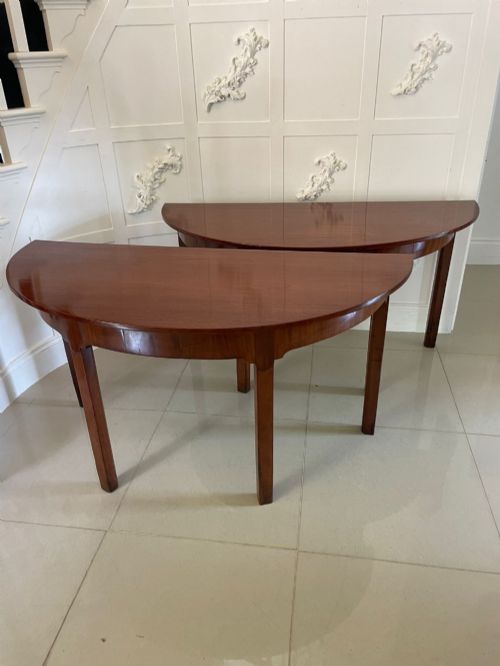
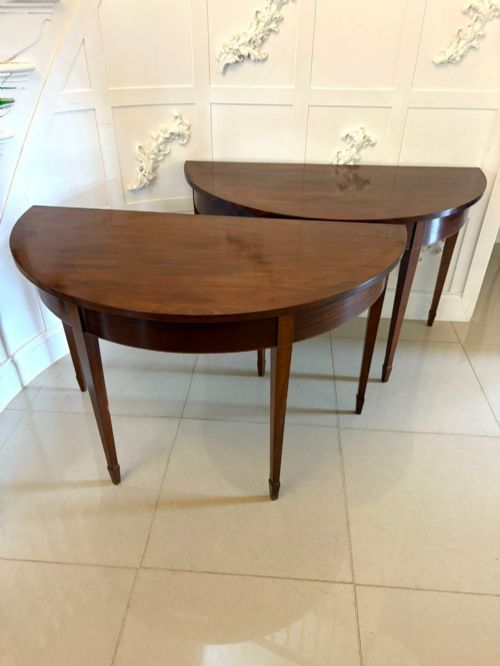
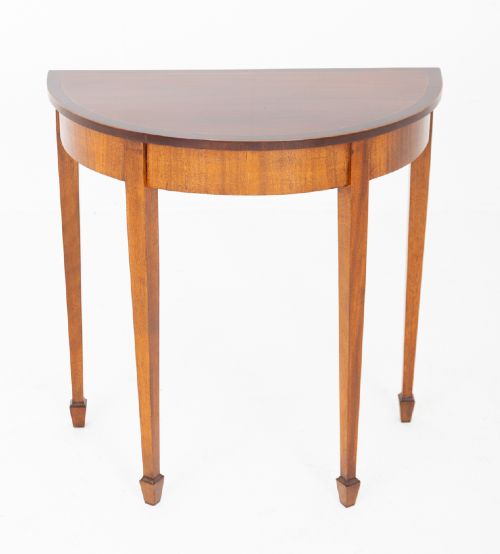
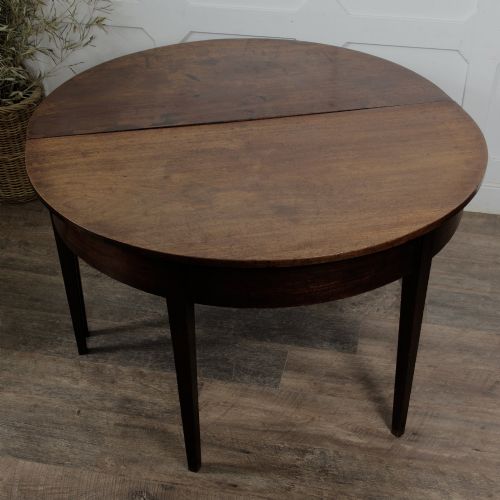
Georgian Wall Table
A georgian wall table anchors a room with understated symmetry, offering a surface designed to sit flush against panelling or plaster.

Georgian Wall Table
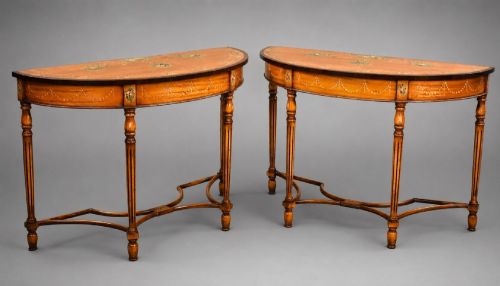
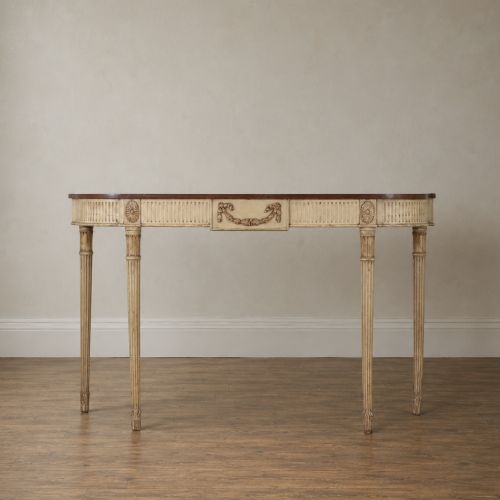
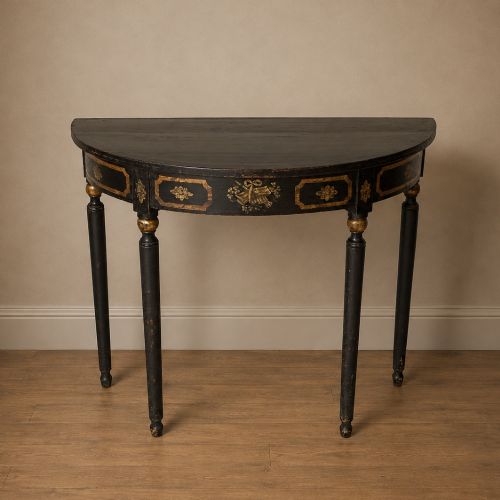
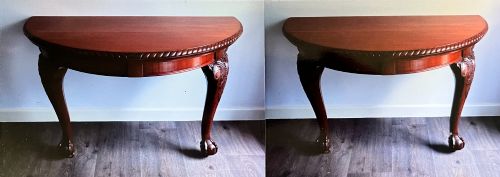
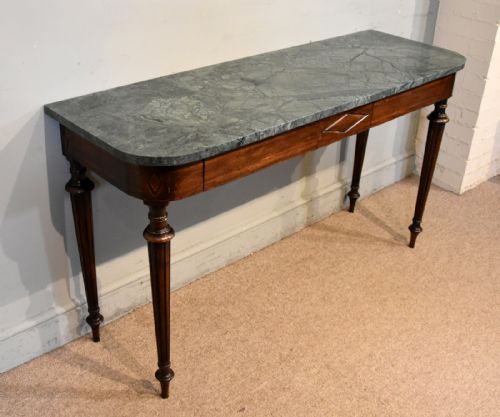
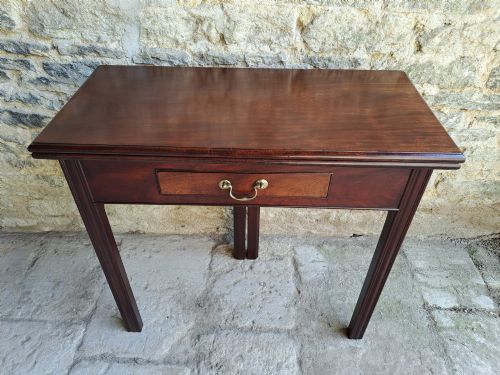
A georgian wall table primarily takes the form of a console or side table designed to stand against a room's perimeter, often paired with a mirror or painting above. The pieces gathered here span the eighteenth century and the subsequent revival periods, showing both authentic period construction and later interpretations.
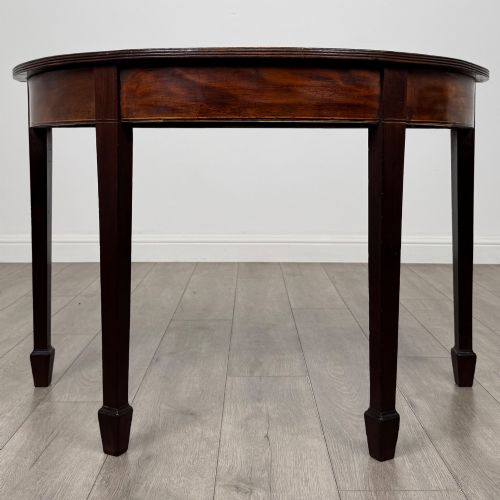
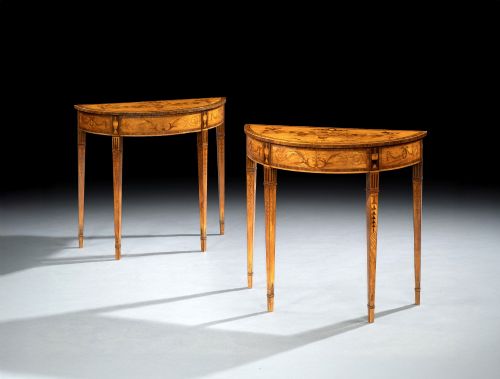
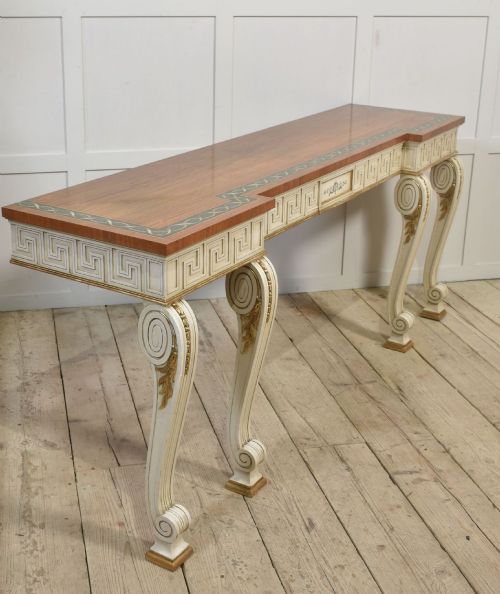
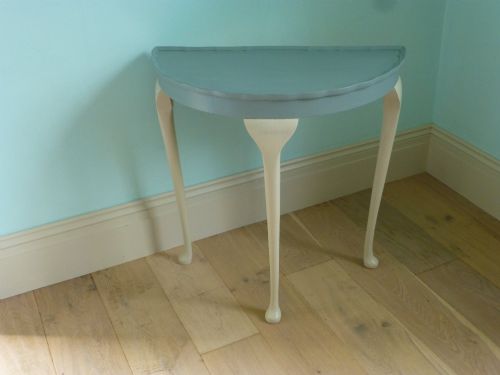
Forms range from demi-lune shapes intended for tight hall spaces to larger rectangular serving tables and pier tables. Mahogany, walnut, and satinwood dominate the wood choices, while painted and giltwood finishes appear alongside marble tops.
How they were made
Cabinetmakers utilised dense timbers such as Cuban and figured mahogany, burr walnut, and satinwood, often applying marquetry, inlay, or painted decoration to the primary surfaces. Carved giltwood and parcel gilt finishes required skilled gilders to apply gold leaf over prepared grounds on softwood or hardwood carvings.
Structural integrity relied on traditional joinery techniques, with some tables incorporating marble inserts or stone slabs fitted directly into the wooden frame. Turning, carving, and veneer work defined the execution of legs and aprons across both authentic eighteenth-century examples and later revival pieces.
Lady Elizabeth Shirley keeps watch from her porch beside a marble table, immortalised in oil paint centuries ago.
What varies in quality
The degree of refinement in timber selection and carving dictates the standing of an individual table, with highly figured mahogany veneers and intricate marquetry panels marking out superior workshops. Crispness in carved details, such as acanthus leaves or fluted legs, separates standard production from exceptional craftsmanship.
Proportion and structural balance also dictate quality, as pieces retaining their original marble tops, gilding, or integrated stretchers command greater visual coherence. Later revival pieces vary according to how closely they adhere to the cabinet-making standards of the original Georgian period.
John Davenport of Longport·Sir Godfrey Kneller·Windmills and Bennet·Cording of London
The Georgian Wall Table Glossary
- Demi-lune
- A half-moon shape used frequently for console and side tables designed to fit flat against a wall.
- Console table
- A table supported by brackets or legs against a wall, historically designed to hold decorative objects or mirrors.
- Marquetry
- Decorative veneer work formed by fitted pieces of various woods or other materials to create pictorial or geometric patterns.
- Giltwood
- Wood that has been coated with gold leaf or gold paint, common in decorative eighteenth-century furniture frames.
- Pier table
- A table designed specifically to stand against the wall space between two windows.
Georgian Wall Table: Frequently Asked Questions
What is a georgian wall table used for?
These tables served primarily as decorative and functional furniture placed against room perimeters to display porcelain, clocks, or lamps.
In hallways and reception rooms, they provided a narrow surface that did not obstruct foot traffic while adding formal symmetry to the interior.
How do I distinguish original pieces from later revivals?
Examination of timber shrinkage, secondary woods, and hand-cut joinery helps determine whether a piece dates to the eighteenth century or a later revival period.
Revival pieces often display machine-made uniformity or differing construction methods underneath the primary surfaces.
Where should I place a wall table?
A narrow console or demi-lune table fits well in entrance halls, narrow corridors, or beneath large mirrors and paintings in living spaces.
Because they sit flat against the vertical surface, they occupy minimal floor space while anchoring the visual composition of the wall.
What materials are typical for these tables?
Solid and veneered timbers such as mahogany, walnut, and satinwood form the majority of the structural and decorative surfaces.
Some examples incorporate marble tops, painted finishes, or giltwood carvings to align with neoclassical and baroque interior schemes.