
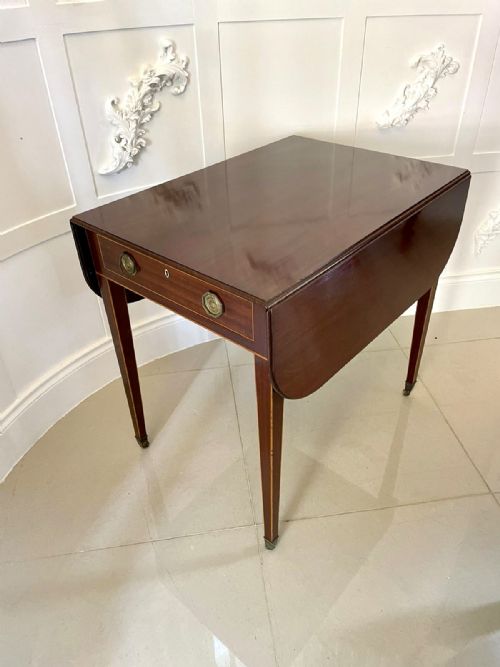
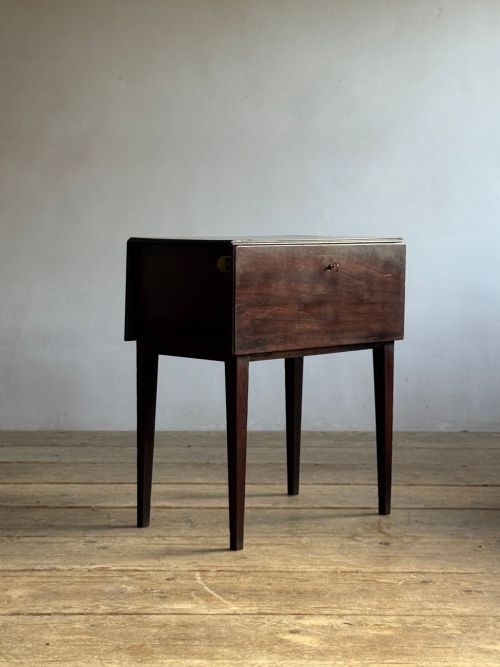


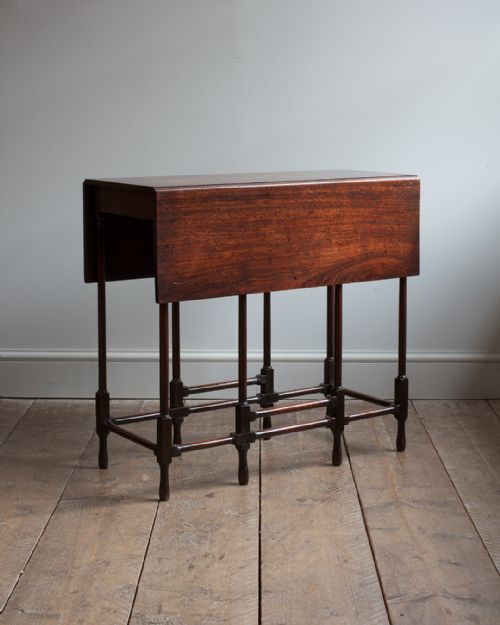


George III Flap Table
A george iii flap table offers ingenious folding leaves and rich timber surfaces that suit compact rooms as well as grand ones.
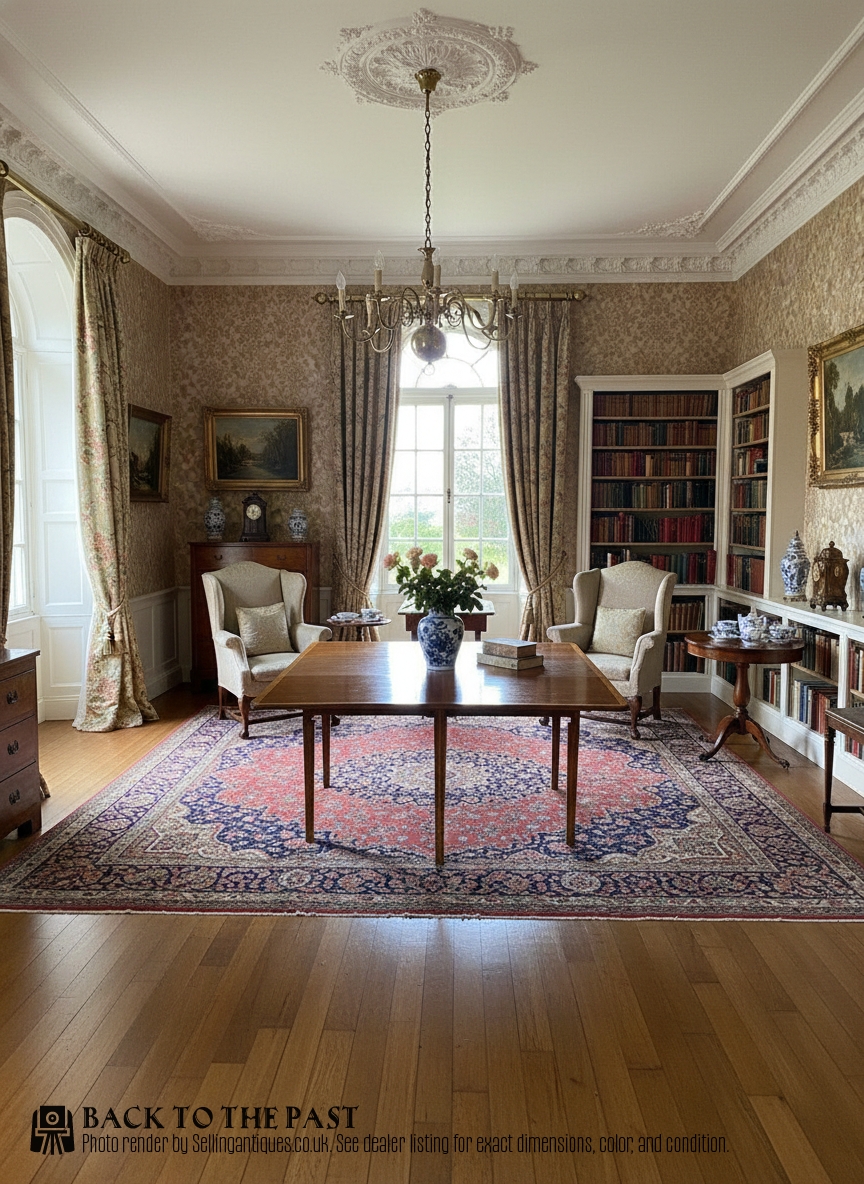
George III Flap Table
A george iii flap table is a versatile piece of furniture designed with hinged leaves that lift or drop to alter the surface area. The most common examples seen here are pembroke tables, drop-leaf tables, and tea or card tables dating from the Georgian period.
These tables served multiple functions in domestic interiors, moving easily from a corner to the centre of a room for dining, writing, or card games. Their proportions are typically elegant and restrained, reflecting the cabinet-making standards of the eighteenth century.
Makers produced these tables in various formats, including occasional pieces, dining tables, and side tables. Buyers will frequently encounter versions with drop leaves, flap tops, and clever folding mechanisms designed to save space.
Materials and construction
Mahogany and Cuban mahogany form the primary timber for the vast majority of these pieces, selected for strength and deep natural grain. Cabinet-makers also utilised oak and pine for secondary framing, alongside satinwood and boxwood for decorative banding and inlay.
Joinery techniques relied on precise mortise and tenon frames, hinged flaps supported by swing brackets or gatelegs, and delicate brass hardware. Wood inlay and stringing provided subtle geometric contrast without heavy ornamentation.
Some clever tables feature secret compartments or patience mechanisms designed for solo card games by the fireside.
Distinctions in quality
Quality rests on the choice of timber and the crispness of the cabinet-work rather than elaborate decoration. Pieces constructed from densely figured Cuban mahogany with fine boxwood and satinwood inlay stand apart from simpler country versions made of oak or pine.
The sophistication of the folding mechanism and the stability of the drop leaves dictate the success of the design. Superior examples feature robust hinges, well-fitted pivot joints, and original brasses that operate smoothly without sagging.
Hepplewhite
The George III Flap Table Glossary
- Pembroke table
- A small rectangular table with two hinged drop leaves on opposing sides. It often includes a single drawer and slender legs.
- Drop-leaf table
- A table featuring a fixed central section and hinged flaps that fold down at the sides. These tables expand significantly when supported by swing legs.
- Cuban mahogany
- A dense, heavy timber imported from the Caribbean known for its rich dark colour and striking grain patterns. Cabinet-makers favoured it for high-status eighteenth-century furniture.
- Stringing
- A narrow strip of contrasting wood inlaid into the surface to create delicate linear borders. This technique highlights the edges of tabletops and drawer fronts.
- Gateleg table
- A table with hinged legs that swing out like a gate to support the dropped leaves. This construction provides sturdy support for larger dining surfaces.
George III Flap Table: Frequently Asked Questions
What is a george iii flap table?
A george iii flap table is a collapsible wooden table featuring hinged leaves that can be raised or lowered. These tables were built during the Georgian era to adapt easily to different domestic uses.
They range from small pembroke and tea tables to larger dining and drop-leaf formats. The folding design made them practical for daily living in period homes.
How were these tables used originally?
These tables served flexible roles in eighteenth-century rooms, functioning as dining surfaces, card tables, or writing desks as needed. Dropping the leaves allowed them to sit flat against a wall when not in use.
Wealthy households used them in drawing rooms and parlours for tea service or leisure activities. Country variations met similar everyday needs in smaller homes and provincial settings.
Where should I place one today?
A george iii flap table fits well in a living room, hallway, or dining space where floor space changes. Raising one or both leaves creates an instant surface for lamps, books, or dining.
Their warm mahogany tones complement both traditional interiors and modern minimalist rooms. Placing them against a wall with the leaves down preserves walking space in narrower areas.
How do I spot a genuine period piece?
Look for traditional construction methods such as hand-cut dovetails in drawers and timber shrinkage consistent with age. Mahogany and secondary woods like oak or pine should show natural patination and wear.
Examine the hinges and pivot points for signs of hand-fitting rather than modern machine screws. Finer pieces will display careful wood inlay and balanced proportions characteristic of the eighteenth century.