
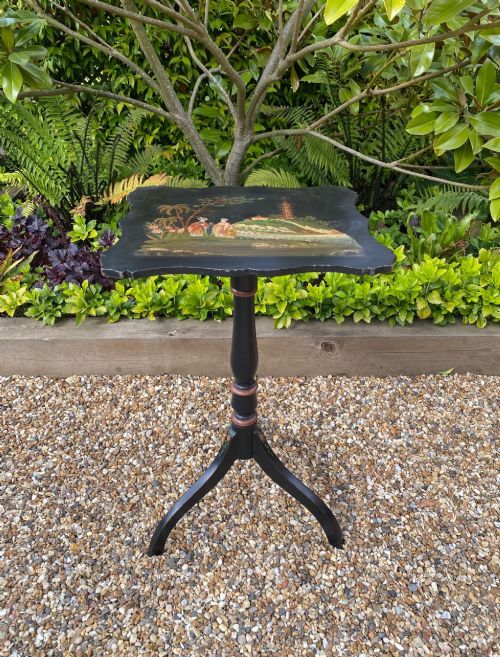
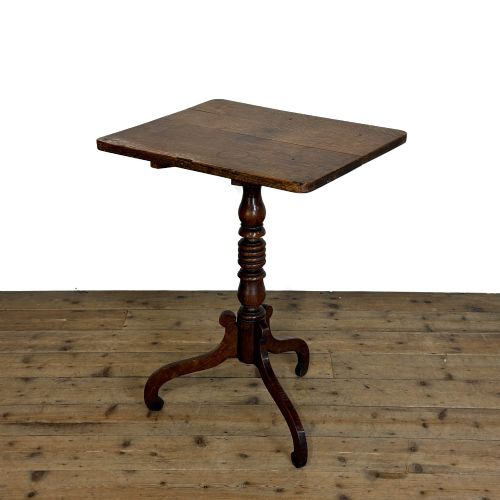
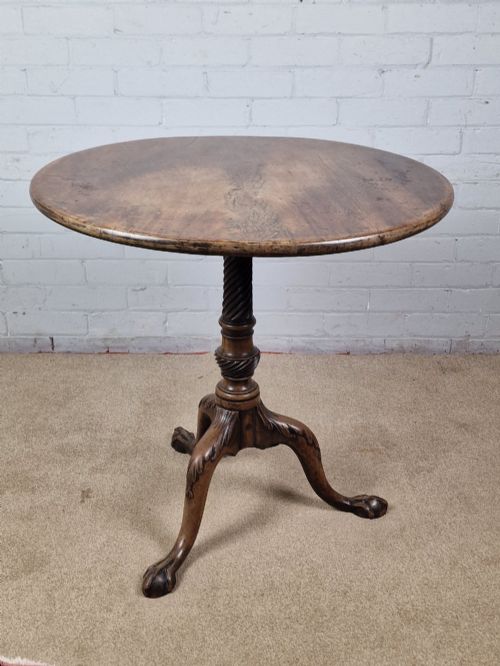
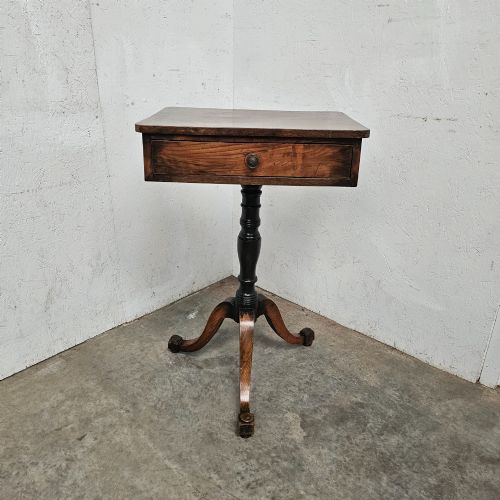
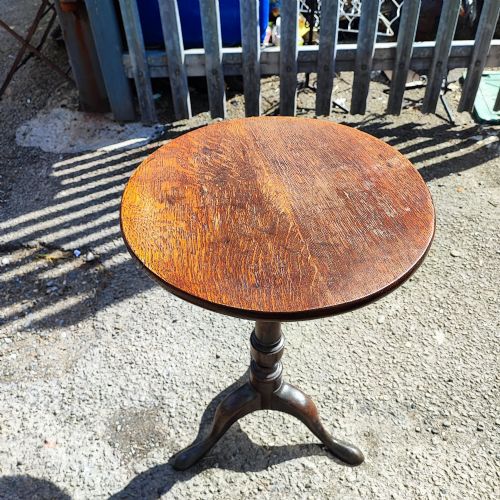
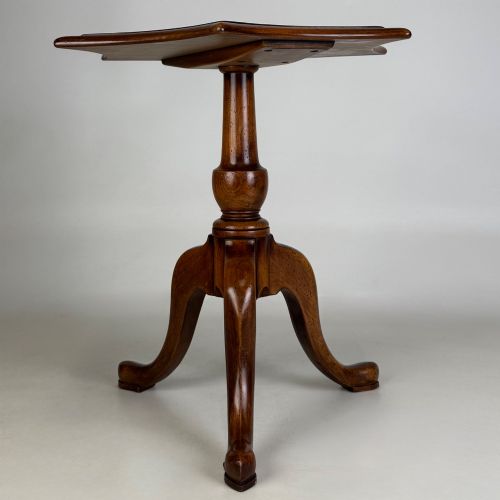
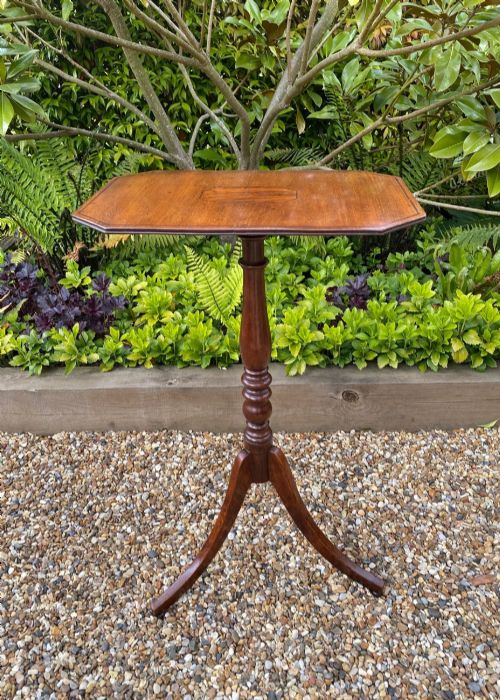
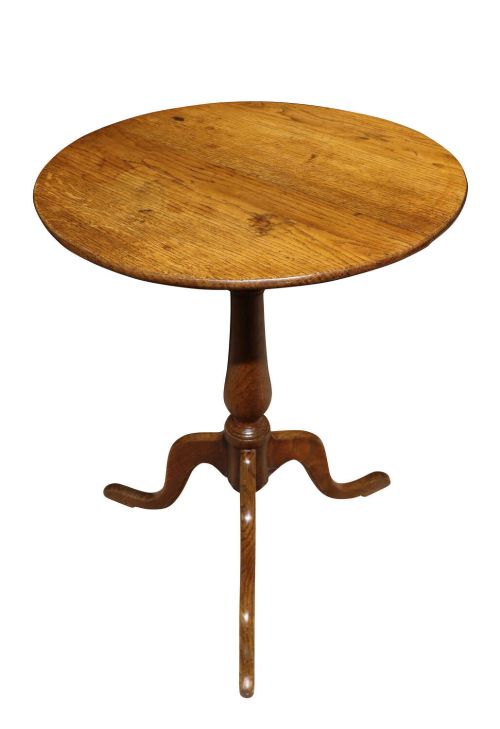
Georgian Tripod Accent Table
A georgian tripod accent table brings centuries of British domestic utility into a modern room through its slender pillar and three-legged base.
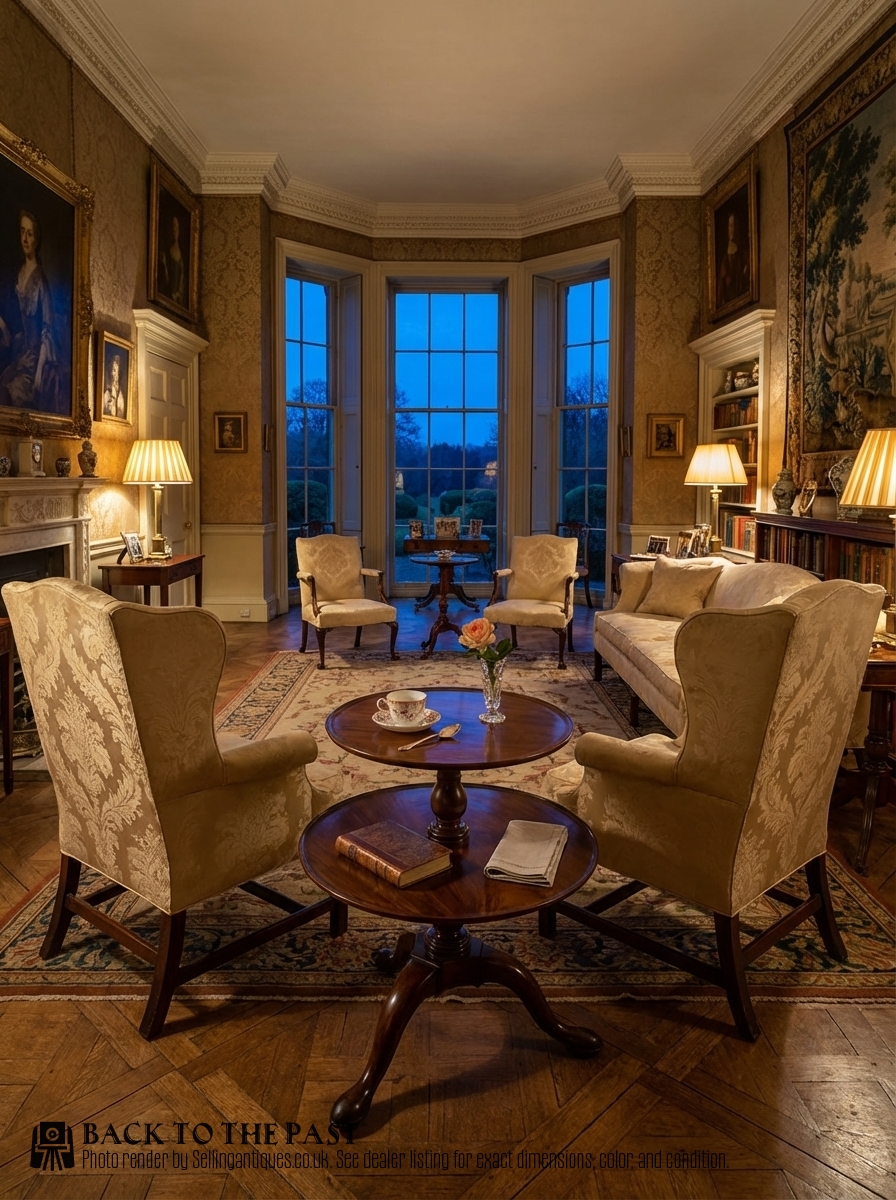
Georgian Tripod Accent Table
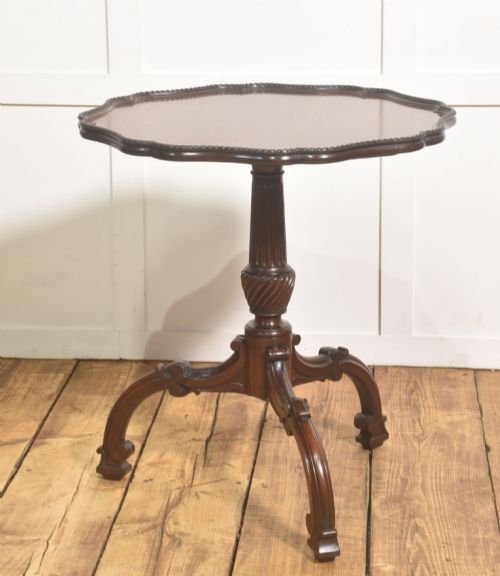
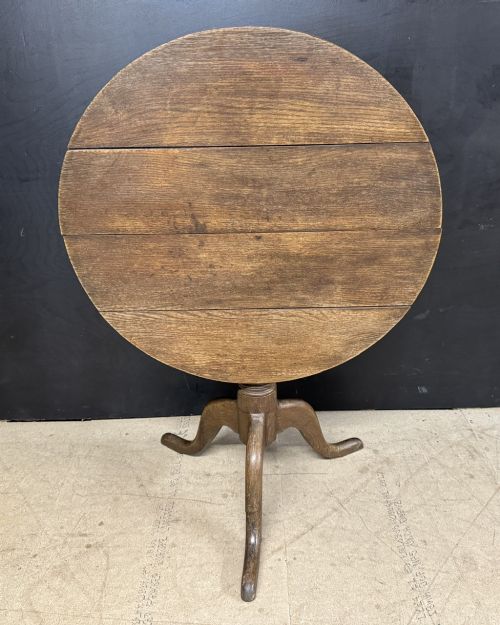
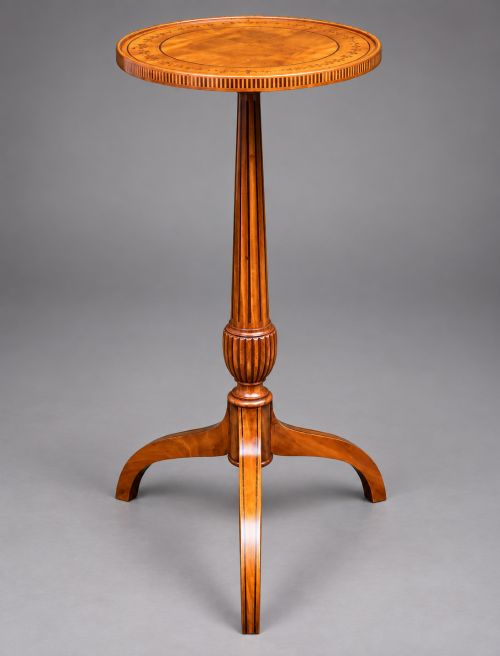
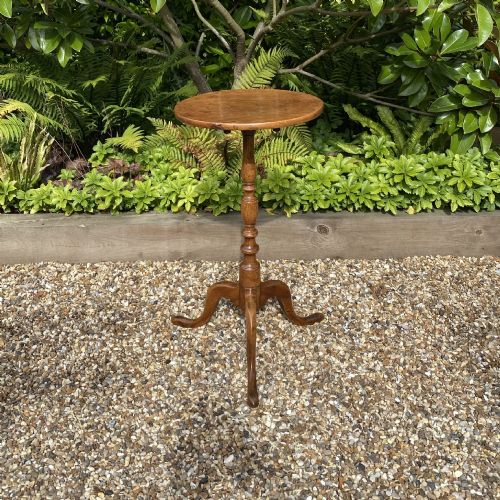
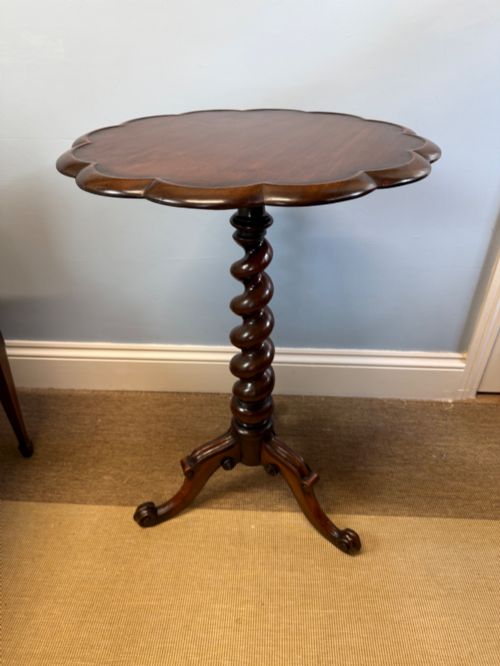
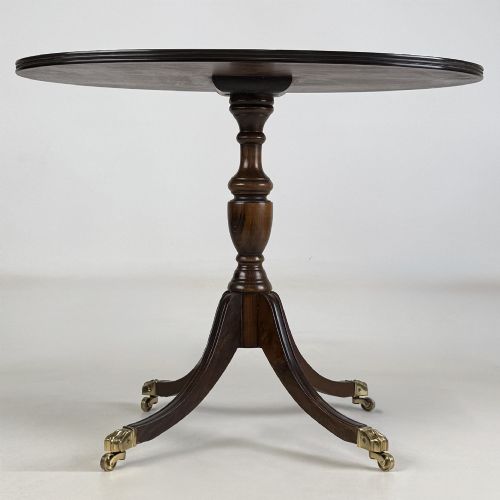
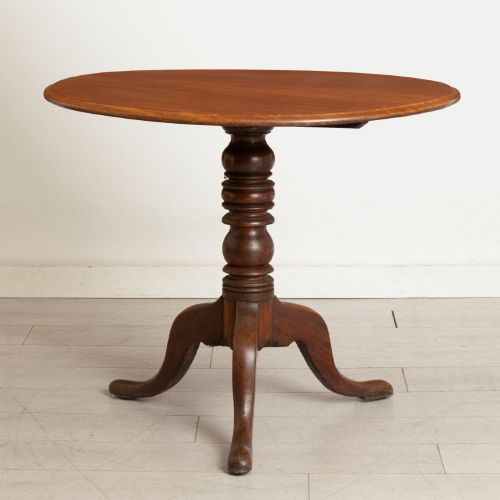
A georgian tripod accent table typically takes the form of a wine table, a candle stand or a tilt-top pedestal piece designed for easy movement around a parlour. The selection spans the eighteenth and nineteenth centuries, taking in vernacular pieces in oak and elm alongside more formal designs in mahogany and walnut.
Buyers will encounter tilting mechanisms, fixed tops, and occasional two-tier etageres supported on slender central columns. These tables served practical domestic purposes for holding drinks, books, or lighting before finding a permanent role as decorative accents.
Origins range from English country workshops producing sturdy fruitwood and oak examples to metropolitan cabinet makers working in mahogany and walnut during the Georgian and Regency periods.
Materials and Construction
Cabinet makers relied on dense timbers such as mahogany, walnut, oak, and elm, often turning the central pedestal on a lathe and shaping the three legs by hand. Tops were fashioned from solid planks or veneered boards, occasionally featuring shaped pie crust rims or tilt-top mechanisms utilising wooden catches and brass fittings.
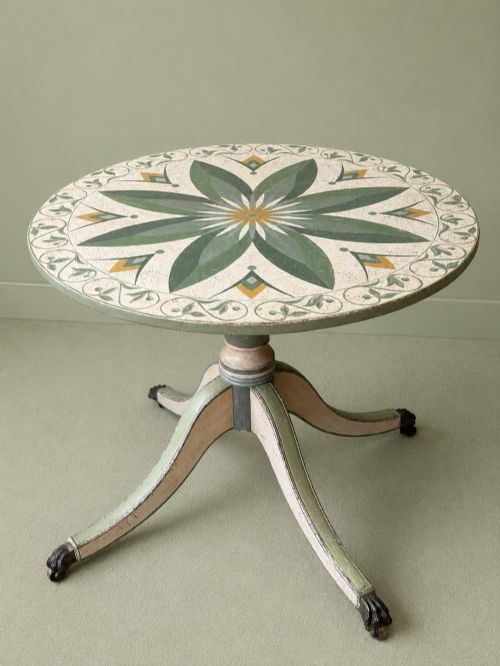
Joinery combined pegged mortise and tenon joints in vernacular frames with precise dovetailing and pivoting birdcage mechanisms in finer examples. Surfaces were finished with polish, wax, or historic paint layers that protected the wood while highlighting natural grain patterns in fruitwood, cherry, and burr oak.
Some walnut examples hide clever birdcage mechanisms that let the top spin like a lazy Susan.
Quality and Proportion
Quality rests upon the harmony of proportions between the top, the slender turning of the central column, and the sweep of the three legs. Superior examples display refined carving on the knees or feet and tight, original joinery in the tilting mechanism without excessive looseness.
The choice of timber heavily influences the character of the piece, with richly figured mahogany and burr oak sitting at the formal end while honest, sturdy elm and oak represent regional vernacular craftsmanship. Altered heights, replaced pedestals, or mismatched tops separate honest period survivals from heavily restored compositions.
The Georgian Tripod Accent Table Glossary
- Tilt Top
- A table mechanism allowing the top to pivot to a vertical position when not in use. This clever design saved valuable floor space in smaller period rooms.
- Birdcage
- A rotating wooden frame situated beneath the tabletop on a pillar table. It allowed the top to both tilt and revolve independently.
- Cricket Table
- A small three-legged vernacular table typically constructed from oak or elm. The three-legged design ensured stability on uneven farmhouse flagstone floors.
- Pie Crust Rim
- A raised, scalloped edge carved directly from the solid timber of a tabletop. This decorative feature prevented items from sliding off during use.
- Tripod Base
- A pedestal support resting on three radiating feet. It provides a stable footing on carpets or floorboards while leaving maximum legroom for seated users.
Georgian Tripod Accent Table: Frequently Asked Questions
How do I use one in a modern room?
These tables function well beside a sofa or armchair to hold a reading lamp, a cup, or small decorative objects. Their compact footprint makes them ideal for filling awkward corners without crowding the space.
The slender pillar design also allows them to sit neatly beside a bed as an alternative bedside surface.
Are these tables sturdy?
The three-legged base is designed to remain stable on even floors, though older joints can loosen over centuries of use. Careful handling ensures the pedestal and leg connections remain secure.
Original mechanisms should be operated gently to preserve the historic timber and joinery.
How do I spot an 18th century table?
Eighteenth-century examples often exhibit deep patination on native timbers like oak, elm, or early mahogany, alongside hand-turned central columns. Examination of the underside often reveals traditional pegging, hand-cut screws, and signs of tool marks from period workshops.
Stylistic cues such as plain or carved pad feet also point toward earlier Georgian craftsmanship.