
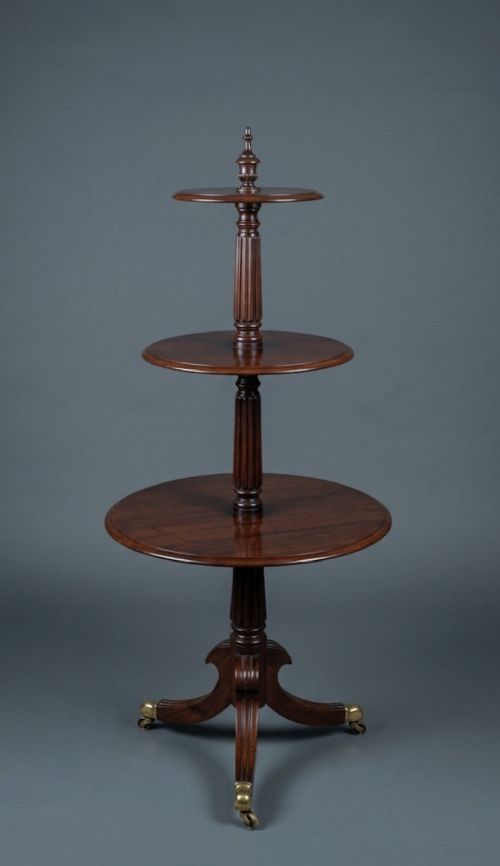
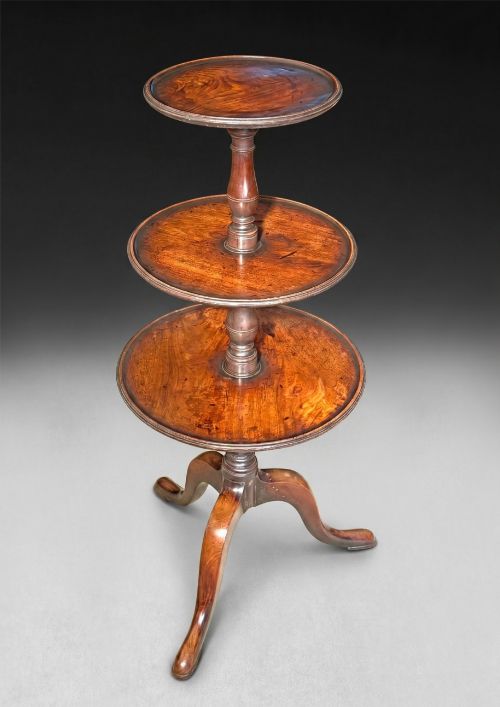
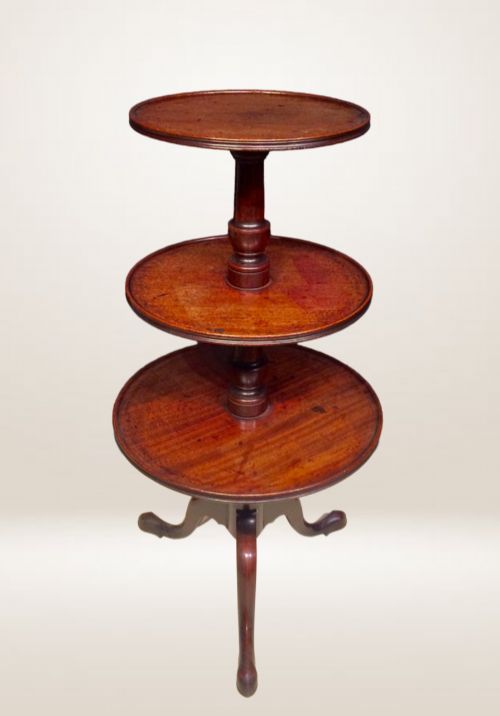
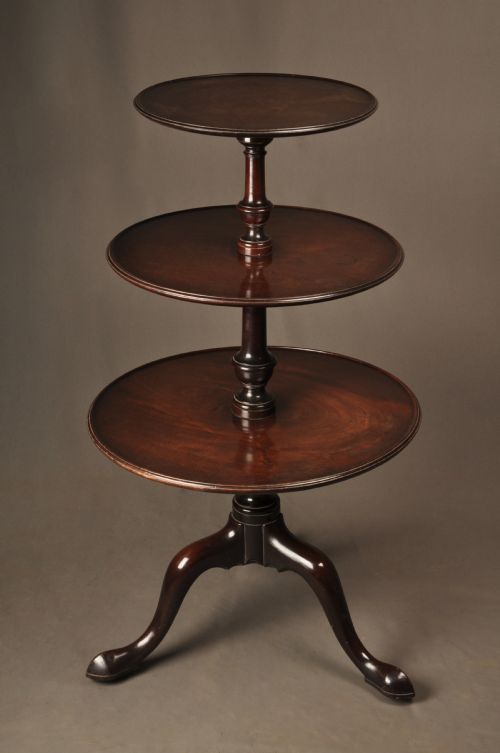
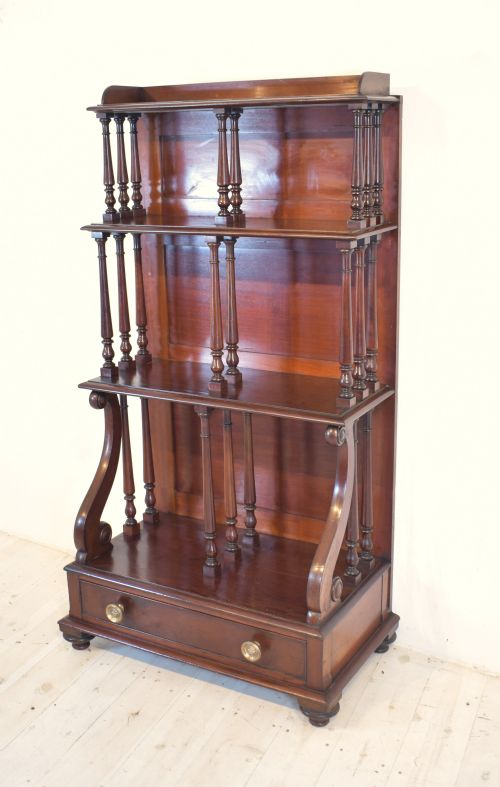


Graduated Tiered Stand
When you want a graduated tiered stand, you are looking for architectural display and storage that brings vertical order to a room.
Graduated Tiered Stand
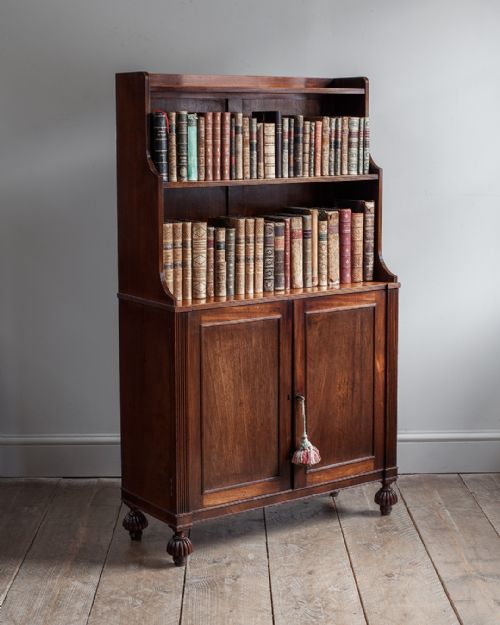
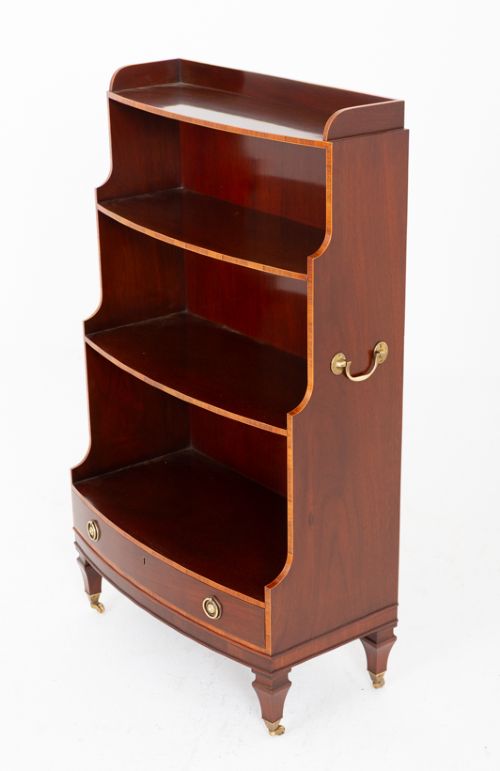
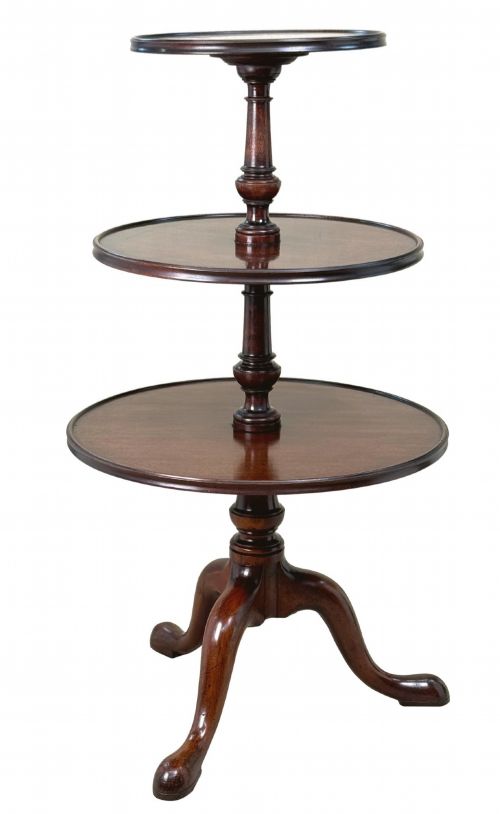
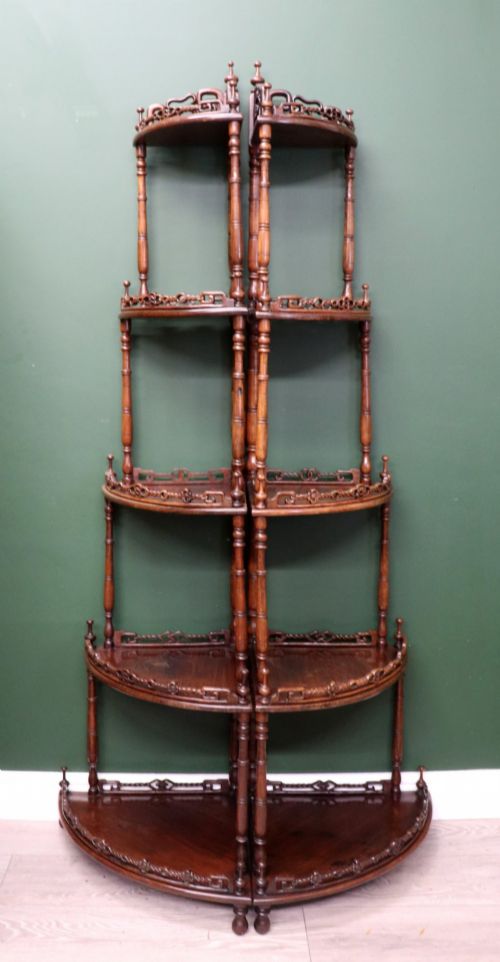
A graduated tiered stand on this page typically appears as a waterfall bookcase, a revolving bookcase, a multi-tiered dumbwaiter, or a corner whatnot. These items span the Georgian, Regency, Victorian, and Edwardian periods, stretching from the eighteenth century into the early twentieth century.
The most frequently met version is the mahogany waterfall bookcase, which steps back progressively from a deeper base to narrower upper shelves. Dumbwaiters with stacked circular tiers also feature strongly, alongside freestanding and corner display shelves built with multiple ascending stages.
Materials and construction
Cabinet makers relied primarily on mahogany, rosewood, walnut, and oak, occasionally selecting exotic woods such as teak or yew. Selected pieces feature fine details like cross banding, boxwood stringing, and wood veneer over solid timber foundations.
Structural hardware involves brass fittings, turning work such as barley twist columns, and wrought iron on utility pieces like saucepan racks. Stands are built to support weight progressively up their tiers, balancing broader bases against lighter upper platforms.
Listings feature pieces spanning the Georgian, Regency, Victorian, and Edwardian eras, constructed primarily from mahogany and rosewood.
Distinguishing quality
Quality rests in the harmony of the proportions and the grain selection of the timber. Finer examples display carefully matched veneers, crisp edge banding, and cleanly turned uprights that support the graduated levels without clumsiness.
Lesser pieces present standard joinery and plainer utility timbers, whereas top-tier pieces show considered design, such as folding mechanisms on dumbwaiters or delicate fretwork galleries framing the upper tiers.
Gillows
The Graduated Tiered Stand Glossary
- Waterfall bookcase
- A set of open shelves that steps back progressively from bottom to top, creating a cascading profile.
- Dumbwaiter
- A freestanding tiered stand with circular revolving or fixed trays, historically used for serving food or holding books.
- Whatnot
- A piece of furniture consisting of a set of open shelves for displaying ornaments, popular during the Victorian period.
- Cross banding
- A decorative border of veneer laid around the edges of a shelf so that the grain runs at right angles to the main surface.
- Stringing
- A thin inlay of contrasting wood used to outline panels, drawers, or shelf edges.
Graduated Tiered Stand: Frequently Asked Questions
How were graduated tiered stands originally used?
These tiered stands served varied domestic purposes depending on their form. Dumbwaiters held dishes and glassware in dining rooms, while waterfall bookcases and whatnots displayed books and decorative objects in sitting rooms.
Utility variants, such as multi-tiered racks, functioned in larger households for organising kitchen equipment. Their stepped design maximised vertical surface area within the room.
Where should I place a tiered stand in my home?
Corner whatnots fit neatly into unused angles of a room, while freestanding waterfall bookcases suit open wall spaces or act as room dividers. Circular dumbwaiters work well beside seating areas or as central accent tables.
Keep them away from direct heat sources and strong sunlight to protect polished timber surfaces and delicate wood veneers.
How do I identify a Regency tiered stand?
Regency stands often feature dense mahogany, crisp brass details, and classical proportions inspired by ancient Greek and Roman designs. Look for precise workmanship and restrained decorative banding.
They date from the early nineteenth century and possess a refined architectural weight distinct from later Victorian elaborations.