


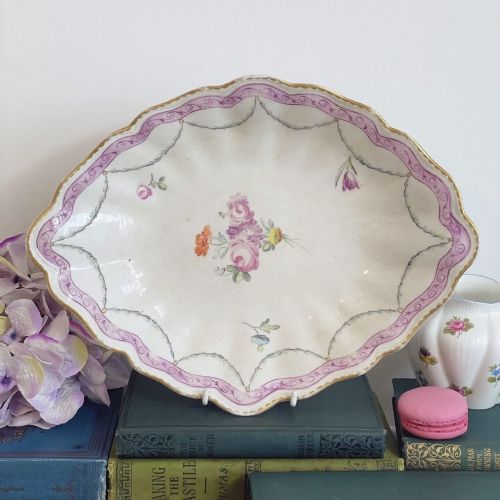
Georgian Tray
When you handle a georgian tray, you touch centuries of precise carpentry and hospitality.
Georgian Tray
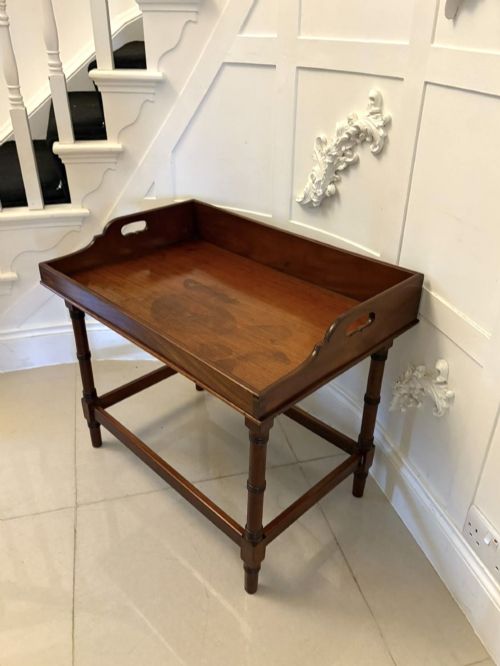
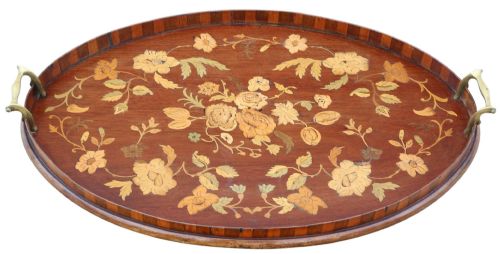
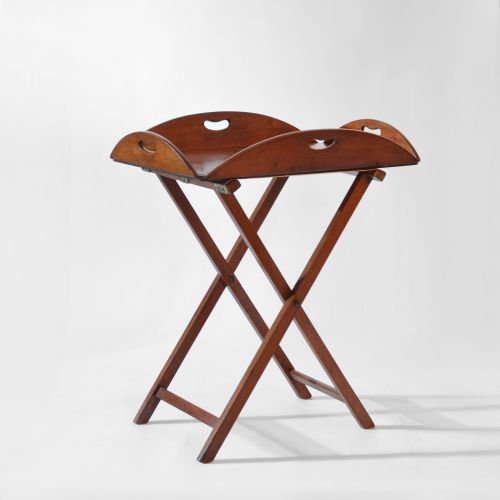
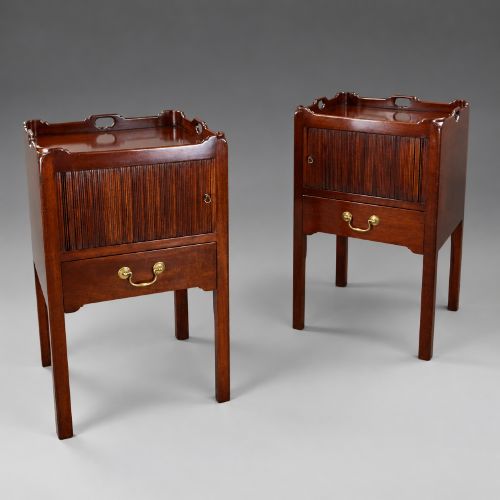
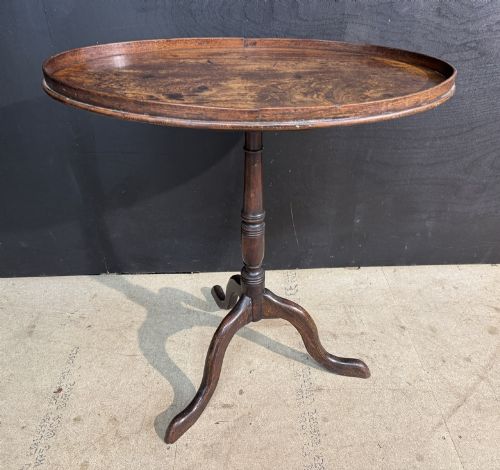
A georgian tray encompasses utilitarian serving pieces, deep cutlery trays, and grand butler trays mounted on folding stands. The most common examples found here are mahogany serving pieces, often featuring oval shapes, raised rims, and brass handles or coopered body construction.
Makers designed these items for domestic service, including tea delivery and table clearing, which explains the prevalence of sturdy timber and raised edges designed to secure glassware and silver. Many surviving examples pair the timber tray with a folding or fixed stand, turning a portable server into a convenient table.
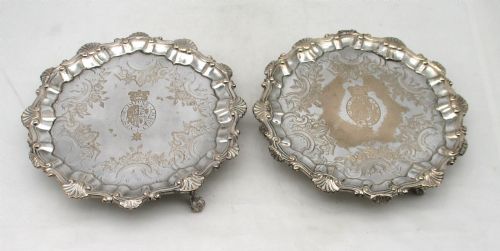
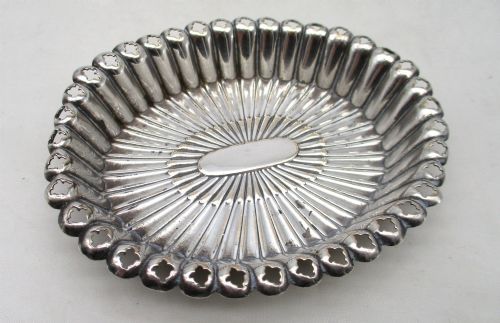
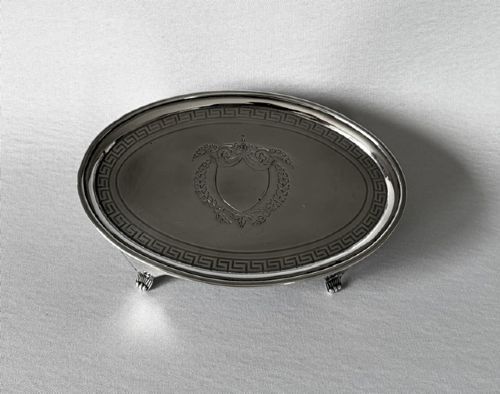
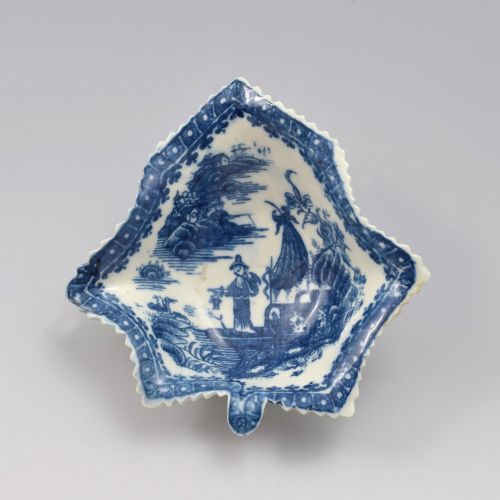
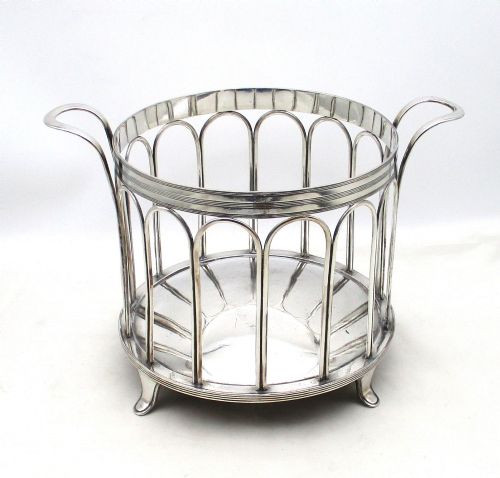
Alongside timber varieties, the category includes smaller sterling silver salvers, teapot stands, and Old Sheffield plated pin trays. These metal variants display crisp hallmarks and restrained borders typical of eighteenth and early nineteenth century silversmithing.
How they were made
Cabinetmakers relied heavily on solid mahogany, oak, and satinwood, frequently employing dovetail joints for the corners of cutlery trays and steam-bending or cooperage for oval walls. Timber surfaces often display fine grain highlighted by hand-rubbed wax finishes rather than heavy varnish.
Metal items utilise sterling silver or copper fused with silver plating, shaped through hammering, casting, and engraving. Silver salvers and stands feature applied cast borders and hand-chased surface decoration.
Inlaid versions incorporate contrasting timbers like satinwood and exotic veneers to form delicate shell motifs or geometric stringing around the perimeter.
What varies in quality
Quality rests primarily on the integrity of the timber selection and the sharpness of the joinery. Superior pieces display dense, figured mahogany with hand-cut dovetails and original brass hardware, whereas lower grades show replacement handles and crude repairs to split baseboards.
The weight of the metal and the crispness of the hallmarks dictate the standard for silver and Old Sheffield plated items. Thicker gauges of silver resist bending and retain deep, legible maker stamps.
Proportion and originality of the matching stand heavily influence the desirability of a piece. Trays retaining their original folding wooden bases command greater interest than those paired with later replacements.
S.C. Younge And Co·Gillows
The Georgian Tray Glossary
- Salver
- A flat metal plate or tray with feet, used for serving food or drinks. These silver pieces often feature decorative cast borders and engraved crests.
- Coopered
- Constructed from curved wooden staves joined tightly together, similar to barrel-making. This technique creates the rounded walls seen on oval serving trays.
- Stand
- A supporting frame of wood, designed to hold a removable tray at table height. Many butler trays feature folding versions for easy storage.
- Old Sheffield Plate
- An early method of fusing a thin sheet of sterling silver to a thicker copper base. This technique produced durable tableware before electroplating was invented.
- Stringing
- A narrow strip of contrasting wood inlaid into a channel on a furniture surface. Cabinetmakers used this linear detail to frame the edges of trays.
Georgian Tray: Frequently Asked Questions
How were butler trays used?
Staff used these portable trays to carry tea services, heavy tableware, and food from the kitchens to the dining room or drawing room. Once delivered, the tray often rested on a collapsible wooden stand to serve as a temporary side table.
In period households, the ability to lift the tray from its base allowed servants to clear tables efficiently without carrying bulky furniture through the hallways.
Are these trays water resistant?
Most eighteenth and nineteenth century timber trays possess traditional wax finishes rather than modern waterproof lacquer. Splashes of hot tea or alcohol could damage the polished surface if left to sit.
Owners should use coasters or liners and wipe away moisture promptly to protect the antique mahogany or oak grain from staining.
How do I spot a replacement stand?
Examine the timber species, patina, and wear marks on both the tray and the base to ensure they share the same age and origin. A matched stand often shows discrepancies in colour or finish where the pieces met over decades of use.
Original stands typically exhibit the same degree of oxidation and shrinkage cracks as the undersides of their corresponding trays.
Can I use a silver salver daily?
Sterling silver and Old Sheffield plated salvers tolerate gentle daily use provided cleaners avoid harsh abrasives that wear away thin plating. Soft cloths and specialised silver cream preserve the engraved details and hallmarks.
Regular handling actually prevents tarnish from building up in the intricate recesses of cast borders.