




Georgian Tray Top Cupboard
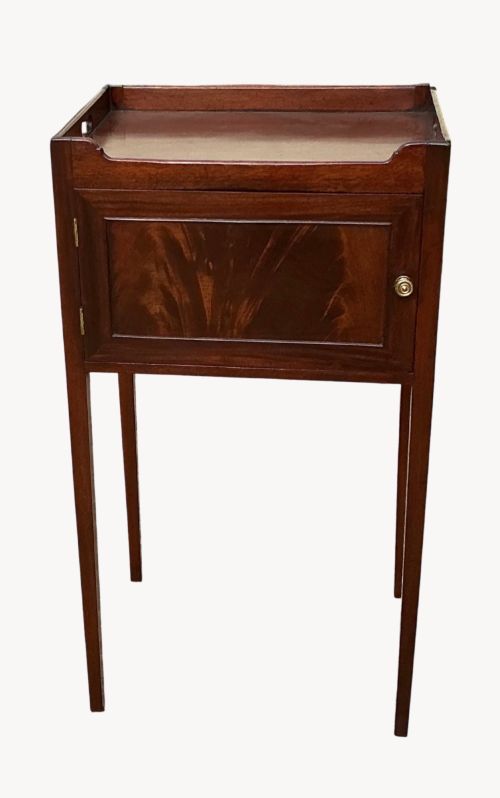
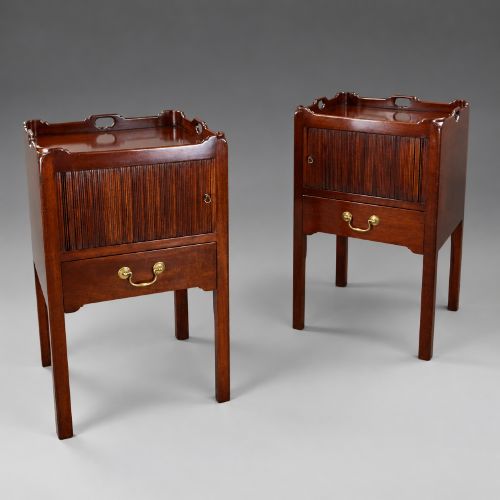
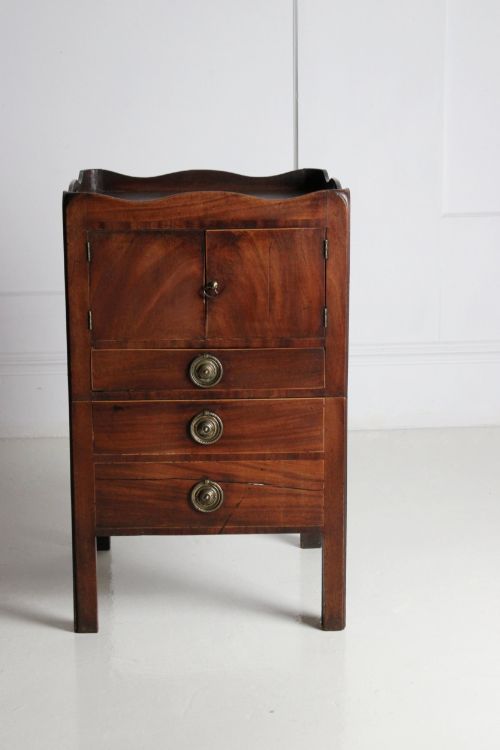
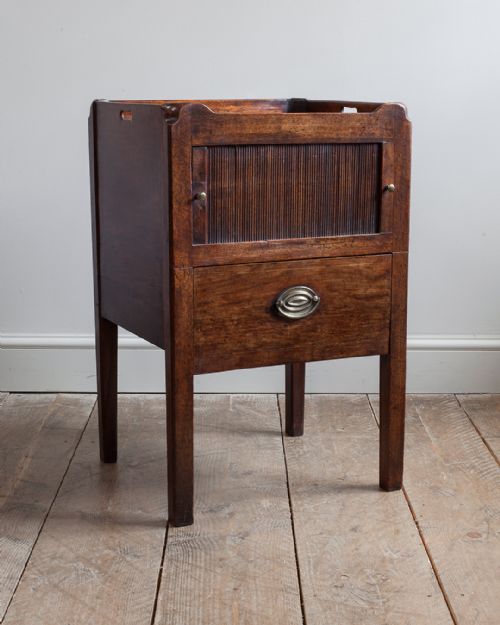
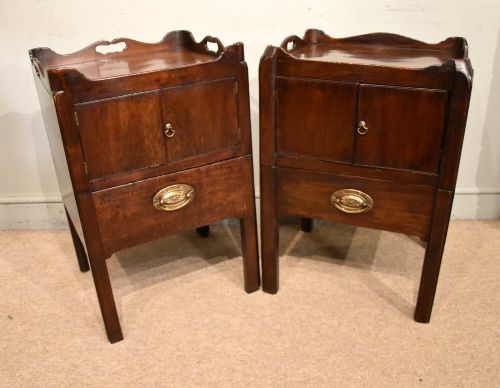
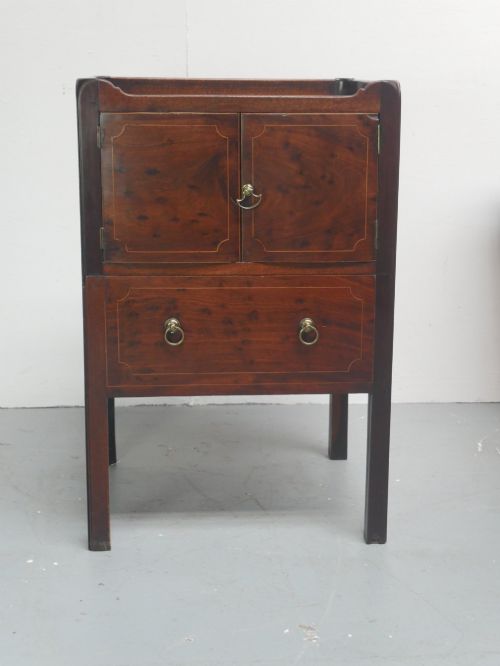
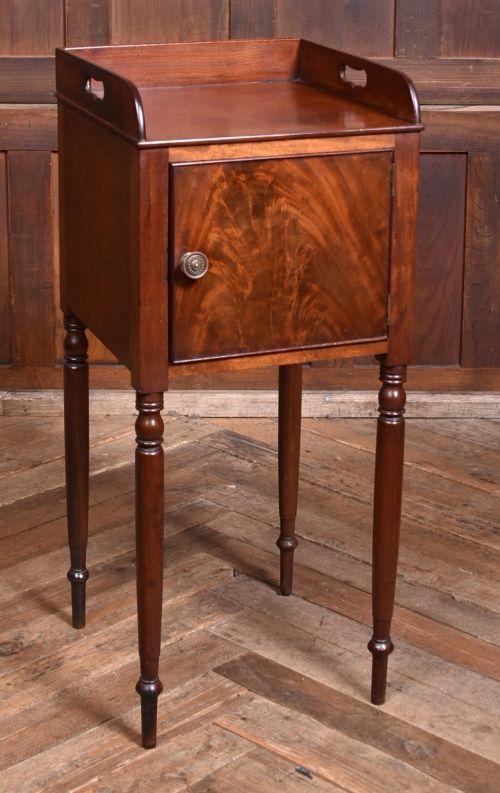
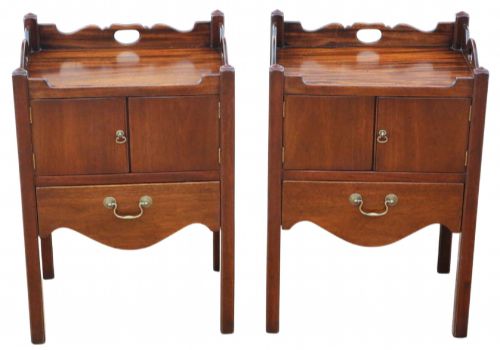
A georgian tray top cupboard is a practical bedside cabinet designed with a raised rim, offering both concealed storage and a secure surface.

Georgian Tray Top Cupboard
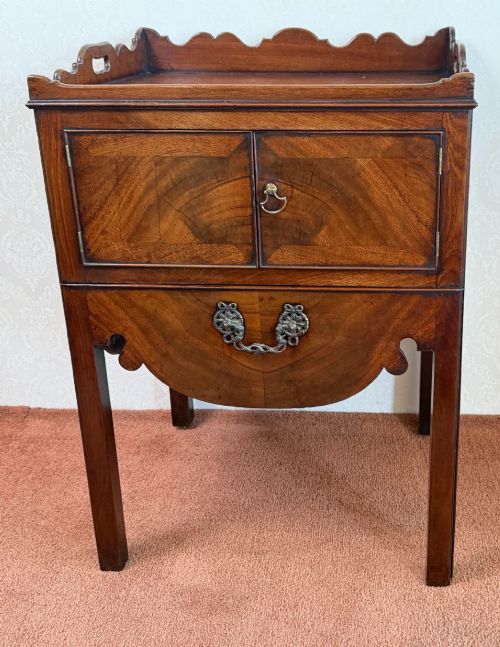
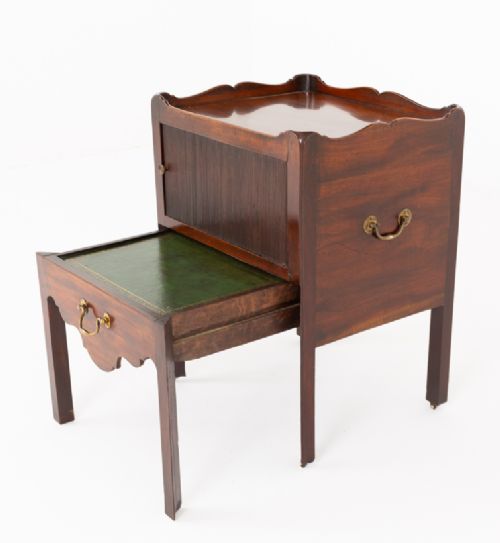
A georgian tray top cupboard sits beside a bed as a compact storage piece, often taking the form of a cabinet or commode. These pieces date principally from the eighteenth and nineteenth centuries, with later revivals appearing in the twentieth century.
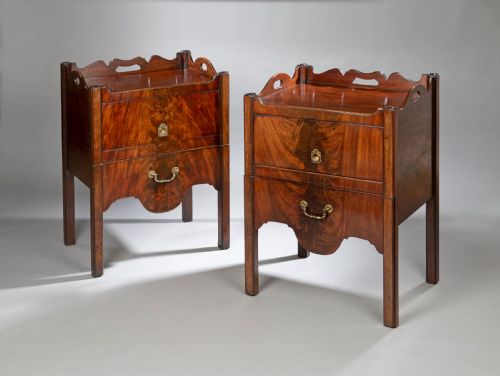
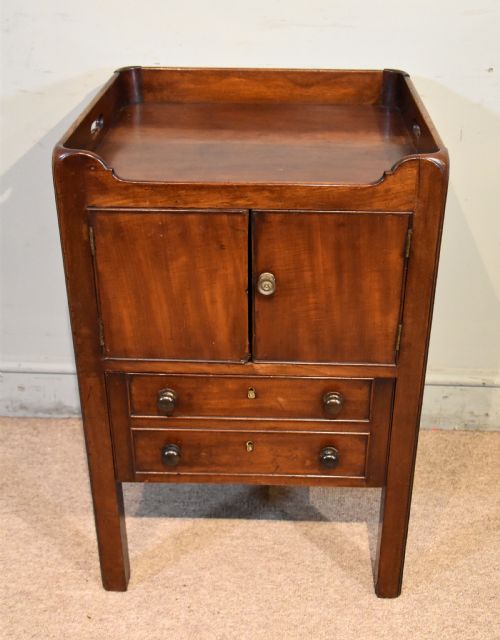
The defining feature across these listings is the raised gallery edge, or tray top, which keeps items from sliding off the surface. Most examples found here appear in forms such as bedside tables, nightstands, and pot cupboards.
Makers from the eighteenth century onwards produced these in matched pairs or single units, using timbers suited to domestic utility and display. The proportion remains modest, tailored to the scale of historic bedchambers.
How They Were Made
Cabinet makers built these pieces using solid mahogany and flame mahogany veneer, supported by secondary woods for interior framing. Joinery relied on precise dovetailing for drawers and mortise and tenon joints for the carcass.
Surfaces often incorporate decorative elements such as boxwood inlay, satinwood banding, and hand-painted detailing, particularly in revival pieces. Brass hardware, including drop handles and hinges, completes the functional structure of the doors and compartments.
Georgian Tray Top Cupboard Retail Price Guide 2026
Typical asking prices for georgian tray top cupboard among the pieces listed under this phrase on Sellingantiques today, from the lower quarter to the upper quarter. They describe what is for sale here now, not the wider market.
Listings span the eighteenth, nineteenth, and twentieth centuries, uniting Georgian originals with Sheraton revival pieces.
What Varies in Quality
Quality rests in the selection of timber figures, where symmetrical flame mahogany veneer and crisp boxwood inlay separate standard utility pieces from finer commissions. The execution of the tray top itself, whether shaped from a single solid board or joined with mitred corners, dictates the level of craftsmanship.
Internal construction, such as the depth of drawer linings and the preservation of original brass fittings, distinguishes untouched examples from those with replaced components.
The Georgian Tray Top Cupboard Glossary
- Tray Top
- A table or cabinet surface finished with a raised rim or gallery on three or four sides. This design prevents items placed on top from rolling off.
- Pot Cupboard
- A small bedside cabinet originally designed to enclose a chamber pot. They typically feature a cupboard door above an enclosed lower section.
- Commode
- In this context, a low cabinet with doors or drawers standing on legs. Eighteenth-century versions often include tray tops and enclosed compartments.
- Flame Mahogany
- A veneer cut from the fork of a mahogany tree where the branches meet the trunk. This produces a distinctive flickering flame pattern prized by cabinet makers.
- Inlay
- A technique where pieces of contrasting wood, such as boxwood or satinwood, are inserted into recesses in the primary timber to form decorative patterns.
Georgian Tray Top Cupboard: Frequently Asked Questions
What is a tray top cupboard used for?
These cabinets serve as bedside tables, holding lamps, books, and small personal items while keeping the surface secure through their raised edges.
The interior compartment provides hidden storage for nighttime necessities, maintaining a neat appearance in a bedroom.
How do I tell an 18th-century piece from a revival piece?
Eighteenth-century examples show natural wear, hand-cut dovetails, and timber ageing consistent with centuries of use. Secondary woods inside the drawers also help confirm the period.
Revival pieces from the twentieth century often display cleaner machinery marks, standardised fixings, and brighter satinwood or inlay contrasts typical of later craftsmanship.
Are these cabinets usually found in pairs?
While many original eighteenth-century pieces survive as single units, matched pairs appear frequently among both original and twentieth-century revival listings.
Pairs are particularly sought after for balancing the layout of a modern bedroom on either side of a bed.
What woods were used to make them?
Mahogany is the primary timber seen across the majority of these listings, often utilised as solid wood or as flame veneer over a stable core.
Accents of satinwood, boxwood, and ebony appear in the inlaid borders and decorative stringing.