
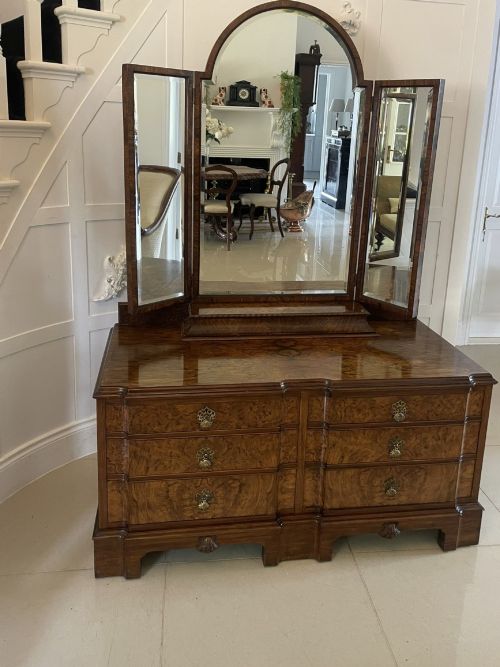
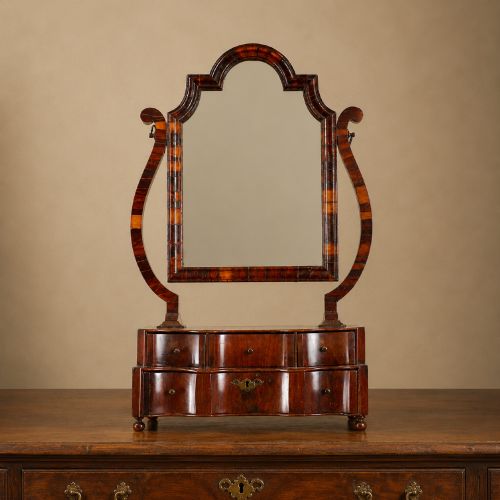
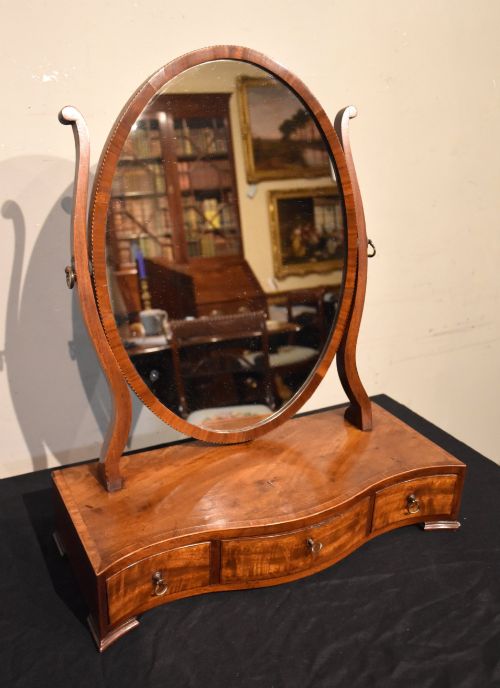
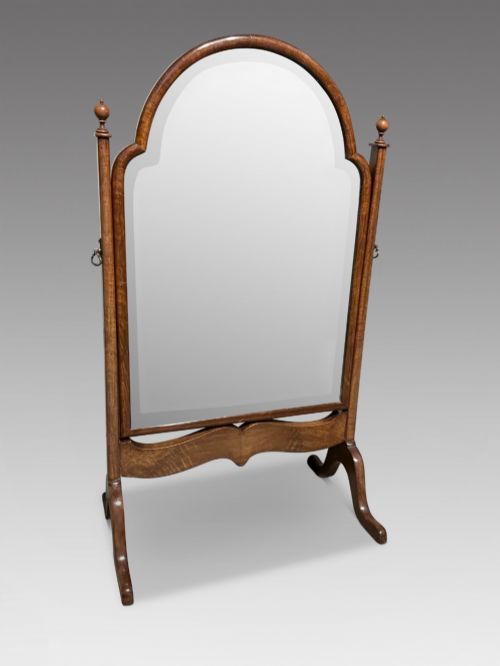
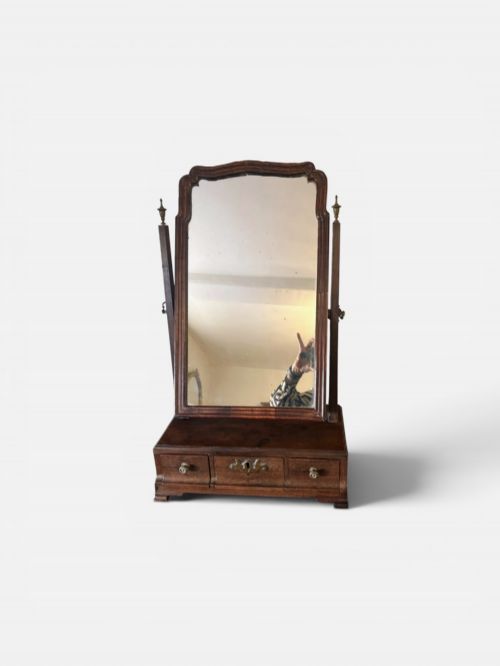
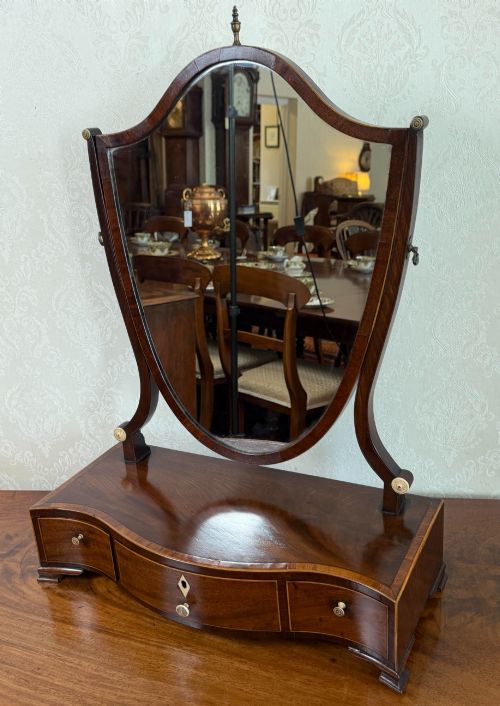
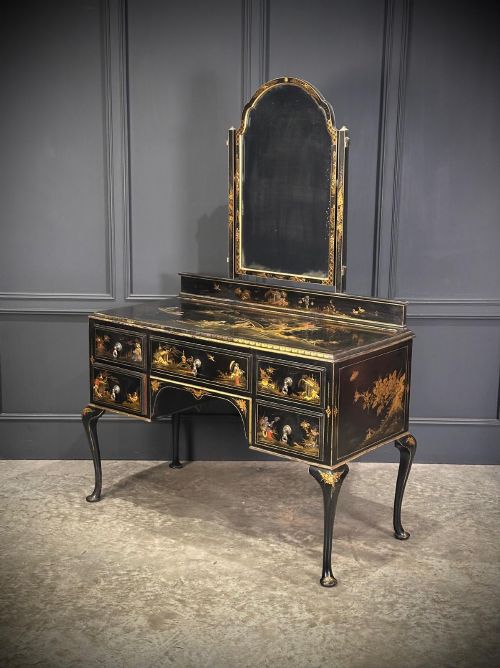
Georgian Table Mirror
These georgian table mirror pieces are classic wooden swing glasses designed for the dressing table, offering both practical reflection and period charm.
Identifying the georgian table mirror
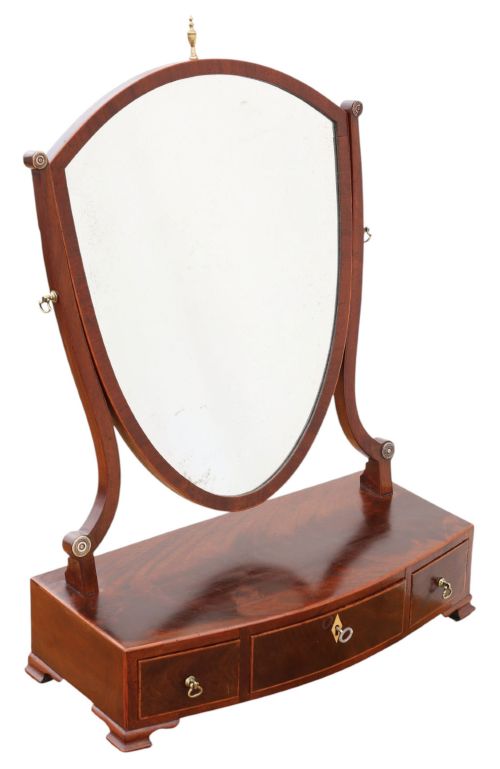
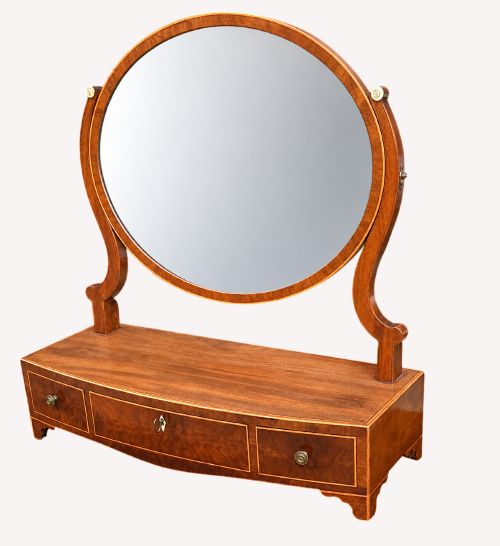
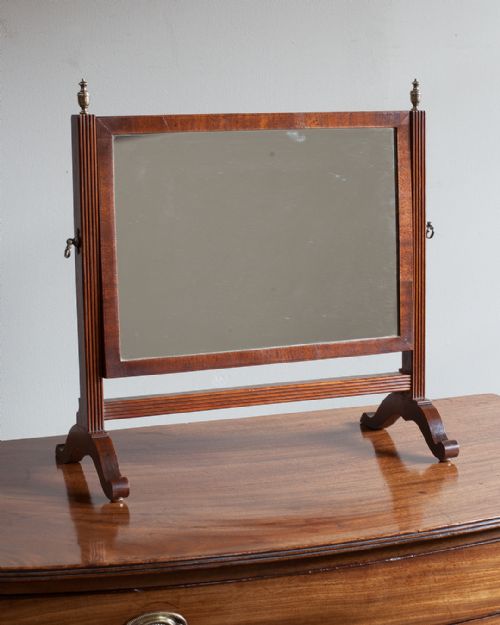
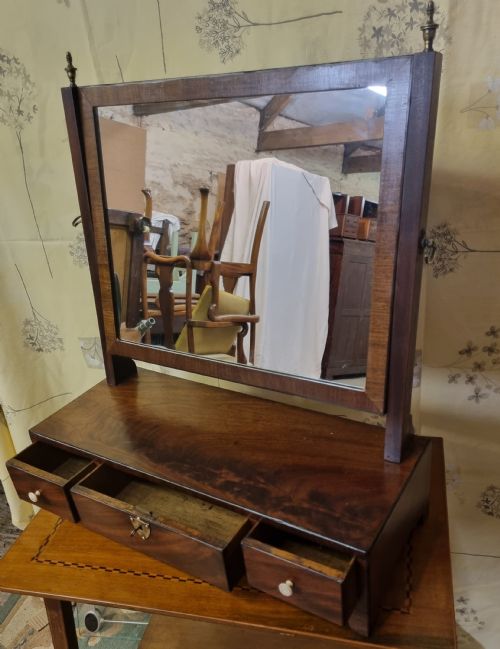
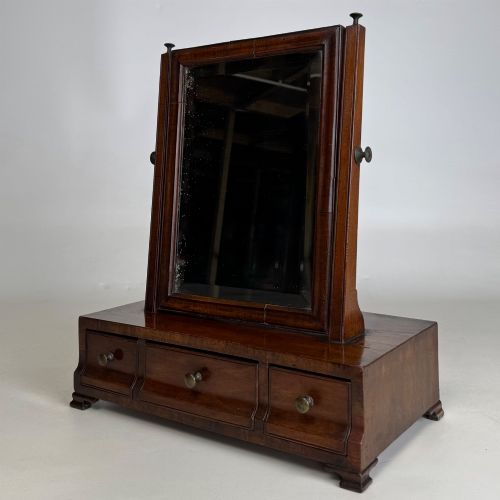
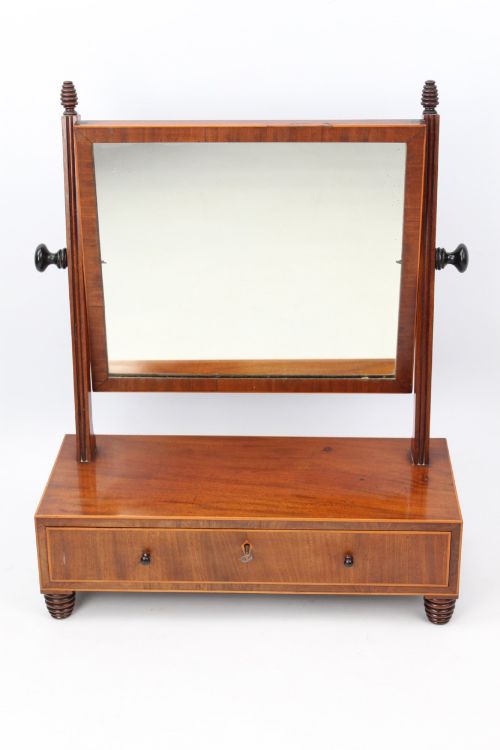
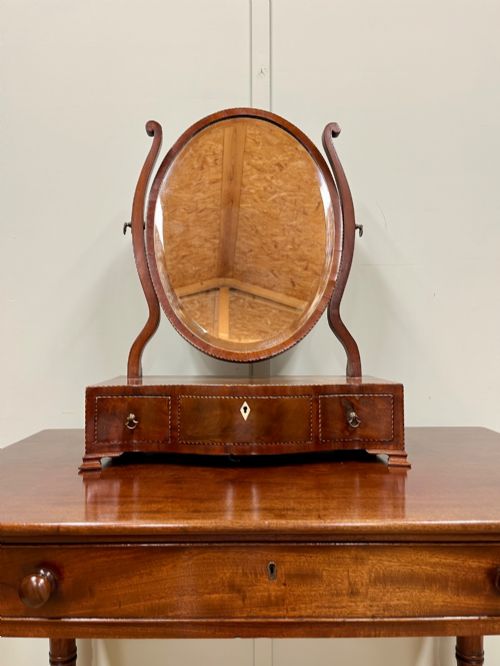
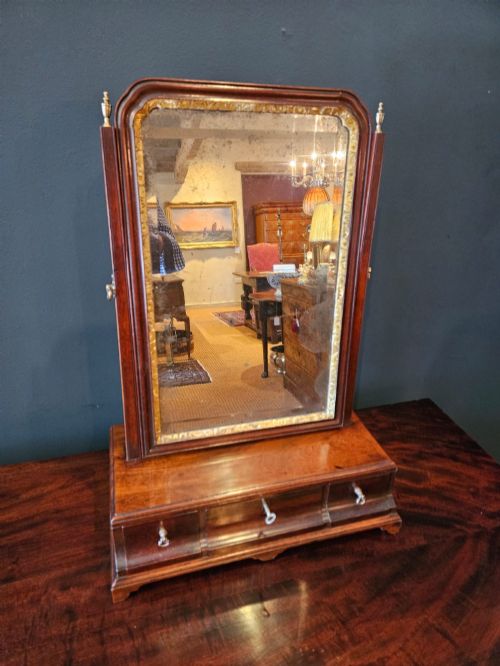
A georgian table mirror sits on a chest or dressing table, providing a swing glass mounted between upright frame posts. These items appear across the Georgian and Regency periods, alongside later revival pieces.
The primary forms include rectangular plates, shield-shaped glasses, and oval mirrors. Base units frequently incorporate small storage drawers within serpentine, concave, or straight front configurations.
Construction and Materials
Cabinet makers utilised solid timbers such as mahogany, walnut, and red walnut, often enhancing surfaces with boxwood and satinwood inlay. Giltwood and marble also feature in certain designs.
Hardware typically includes brass handles and pivots that allow the mirror plate to tilt. Glass plates are set into wooden frames, supported by upright arms extending from the base.
Retail Price Guide 2026
Typical UK retail prices for georgian table mirror, calculated from the Sellingantiques database of over a million retail prices indexed since 2003. This retail price guide relies exclusively on Sellingantiques data; no external sources or auction records are used, so the figures do not describe the wider market.
Some of these nimble little glasses survived centuries of bustling dressing routines while retaining their original brass handles.
Factors of Quality
Superior examples display finely figured timber veneers and precise stringing or inlay work, whereas simpler versions rely on plain mahogany boards. The proportion between the mirror frame and the drawer base dictates the visual balance.
Original brass fittings and clean, unwarped drawer construction elevate a piece. The presence of period glass plate with honest ageing adds distinction compared to modern replacements.
The Georgian Table Mirror Glossary
- Toilet mirror
- A smaller mirror designed to sit on a dressing table or washstand. These pieces often include small drawers in the base for personal items.
- Swing mirror
- A mirror plate hung on pivot screws between two upright posts, allowing the glass to tilt. This mechanism is central to the design of dressing mirrors.
- Shield-shaped plate
- A mirror glass cut into the curved outline of a heraldic shield. This shape became popular during the late eighteenth century.
- Serpentine front
- A furniture front curving outward in the centre and inward at the sides. This contour adds considerable elegance to the base box.
- Boxwood inlay
- Narrow strips of pale wood inserted into contrasting darker timbers to create decorative borders. It is frequently found on Sheraton style pieces.
Frequently Asked Questions
What is a georgian table mirror?
A georgian table mirror is a portable swing glass mounted on a wooden base with small drawers. It was designed to sit on top of a dressing table for grooming.
These pieces date from the eighteenth and early nineteenth centuries, reflecting styles such as Sheraton, George II, and Regency.
How do I date a table mirror?
Dating relies on timber choice, hardware, and frame shape. Walnut and red walnut point towards earlier eighteenth-century examples, while mahogany and satinwood inlay often indicate the later Georgian era.
Construction methods inside the small base drawers also help confirm the period of manufacture.
Were these mirrors used for shaving?
Many dressing and toilet mirrors served multiple purposes in the bedchamber, utilised by both women and men for daily grooming and dressing.
The adjustable pivot mechanism allowed users to alter the angle of the glass as needed.
What is the difference between toilet and dressing mirrors?
In period terminology, toilet and dressing mirrors generally refer to the same type of portable table glass. The terms were often used interchangeably in historical descriptions.
Both variants typically combine a swing mirror with a small drawer base designed to sit on a larger table.