




Georgian Swing Handle Basket
A georgian swing handle basket brings refined silver and plated metalwork to the table, offering a functional vessel prized for sugar, bread, or sweetmeats.
Georgian Swing Handle Basket
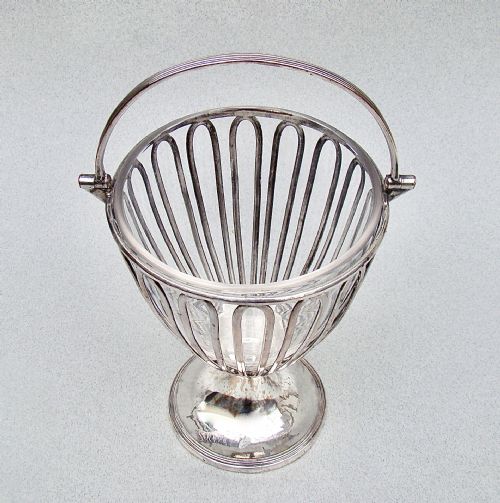
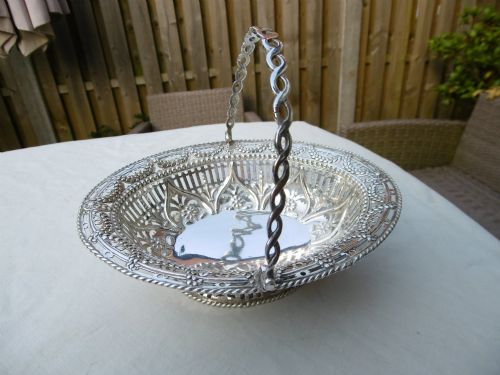
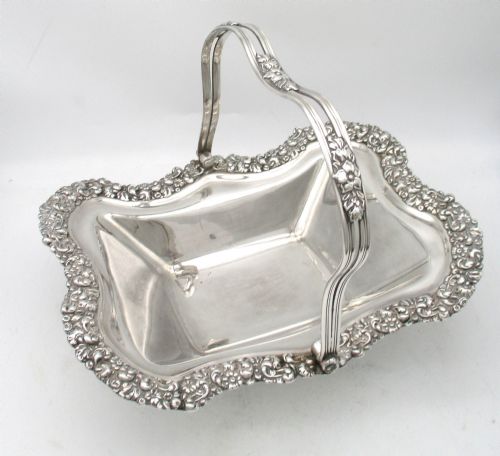
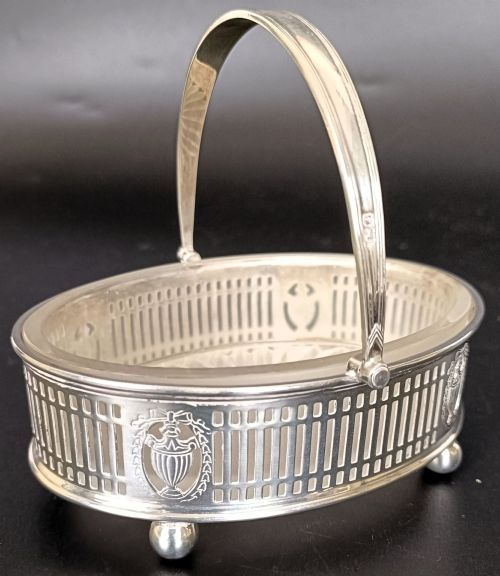
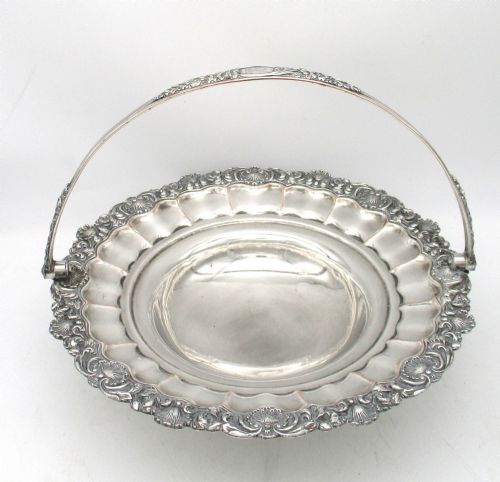
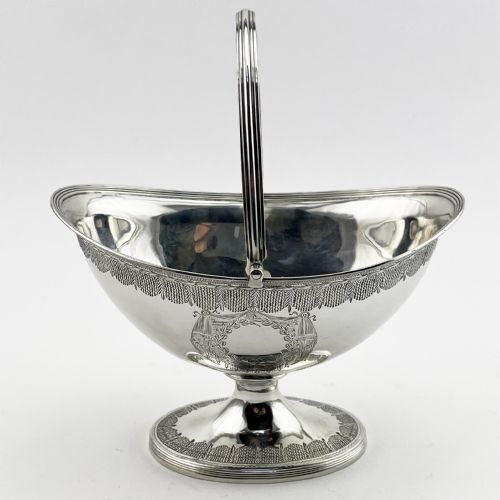
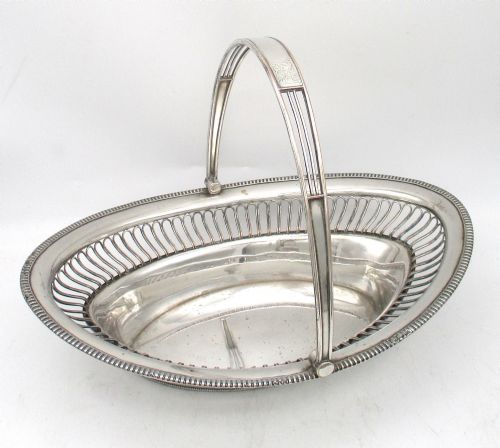
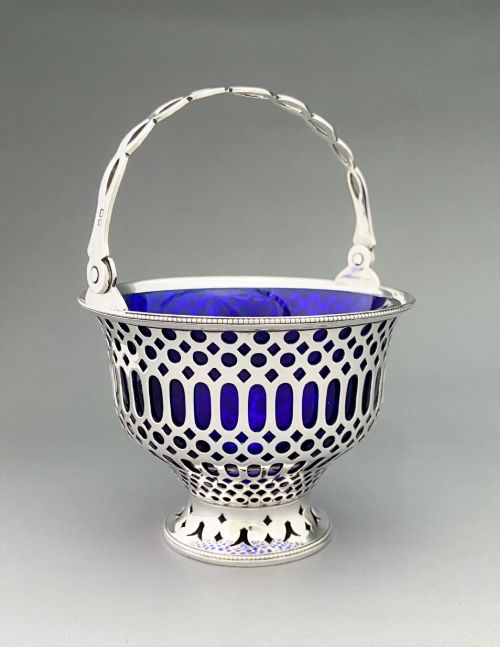
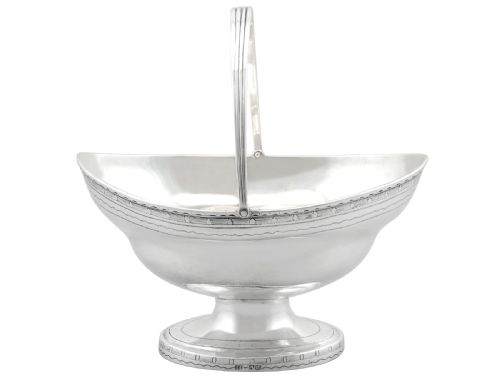
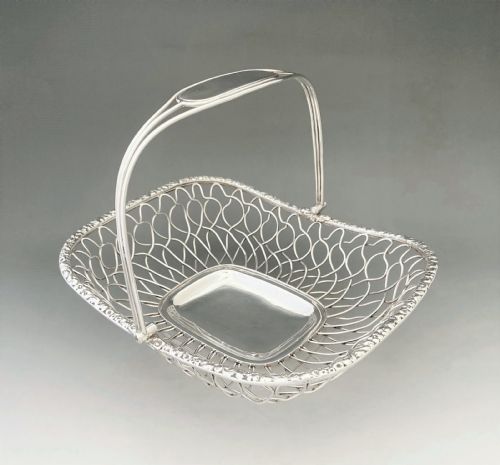
A georgian swing handle basket takes several functional forms across the tablewares of the period, appearing primarily as sugar basins, bread vessels, sweetmeat holders, and cream pails. The sugar basket stands out as the version most frequently encountered on this page, often accompanied by bread and cake baskets designed for formal dining.
These pieces emerge from the eighteenth and nineteenth centuries, spanning the Georgian, Regency, and Victorian eras through to later revivals. They showcase domestic metalwork from English, Scottish, and Irish makers, reflecting the changing tastes of dining tables across generations.
What varies in quality
The crispness of the piercing and the integrity of the wirework separate standard production from superior examples. Hand-pierced geometric and floral motifs demand steady precision, where sharp edges and balanced symmetry indicate skilled craftsmanship.
The weight of the metal and the retention of original gilding or plating influence the overall standard. Pieces that retain their structural balance at the handle hinges and show minimal wear to the underlying copper in plated items demonstrate better preservation.
Georgian Swing Handle Basket Retail Price Guide 2026
Typical asking prices for georgian swing handle basket among the pieces listed under this phrase on Sellingantiques today, from the lower quarter to the upper quarter. They describe what is for sale here now, not the wider market.
Aldridge and Green·Henry Chawner·George Fox·Samuel Herbert·William Bond·John Walton·Bateman·William Plummer·Solomon Houghman
The Georgian Swing Handle Basket Glossary
- Swing handle
- A movable arched metal handle attached to opposite sides of a basket rim by pins or pivots, designed to drop flat when the vessel rests on a table.
- Old Sheffield plate
- A composite material made by fusing a thin sheet of silver to a thicker copper base, popular for tableware before the invention of electroplating.
- Wirework
- An open lattice technique constructed from fine metal wires soldered together to form lightweight, decorative baskets and bowls.
- Sweetmeat basket
- A small tabletop vessel created specifically for holding confectioneries, nuts, or small sweet treats during formal courses.
- Silver gilt
- Silver coated with a thin layer of gold, sometimes applied to the interior of sugar baskets to protect the metal from corrosive contents.
Georgian Swing Handle Basket: Frequently Asked Questions
What were swing handle baskets used for?
These vessels served primarily on the dining table to hold loaf bread, cake, or refined sugar for tea and social gatherings. Smaller versions held sweetmeats or functioned as cream pails.
The movable handle allowed servants or guests to lift the basket easily when passing items across the table during formal meals.
How do I care for a silver basket?
Clean the metal gently with a soft cloth and dedicated silver polish, avoiding abrasive materials that can wear down thin plating or fine engraving. Store the piece in a dry environment away from direct sunlight.
For plated items, take particular care around raised edges where the underlying copper might be exposed through aggressive cleaning.
How can I tell a Georgian basket from a later one?
Examine the hallmarks stamped on sterling silver pieces, which indicate the assay office, date letter, and maker's mark. Stylistic clues such as Adam style neoclassical swags or pierced wirework point directly to the eighteenth century.
Later Victorian and Edwardian pieces often revive these earlier Georgian forms but carry nineteenth or twentieth-century hallmarks and heavier cast mounts.
What is Old Sheffield plate?
Old Sheffield plate is an early fusion material created by melting a sheet of silver onto a copper ingot before rolling them together into sheets. This technique produced durable tableware with the appearance of solid silver.
Items made this way often reveal a faint line of copper along cut edges or where wear has occurred over centuries of use.