



Pierced Lattice Silver Bowl
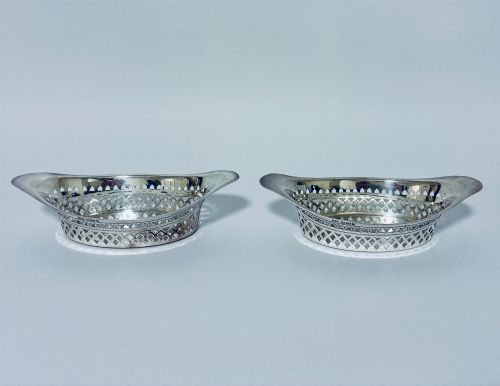
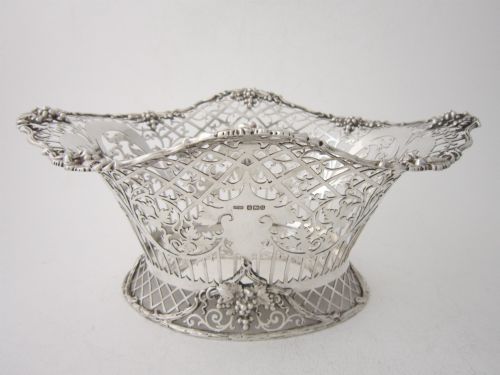
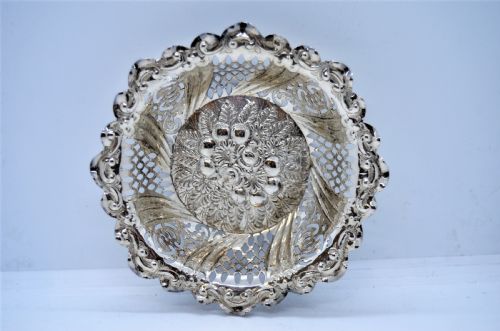
These pierced lattice silver bowl pieces bring openwork metalwork into a room, offering a decorative vessel for fruit or sweets.
Pierced Lattice Silver Bowl
A pierced lattice silver bowl combines openwork metal with traditional vessel forms, appearing across periods from the Georgian era through to the interwar years. Buyers exploring this phrase find centrepieces, bonbon dishes, and oval or footed baskets designed for display on a table or sideboard.
The pieces on this page span Victorian, Edwardian, and Georgian periods, alongside items dated from nineteen-ten, nineteen-twenty, and nineteen-thirty. Forms range from large pedestal fruit vessels to small bonbon dishes and handled baskets.
Makers recorded in the evidence include Joseph Rodgers, Fenton, William Comyns, Walker and Hall, and William Bond. Origins stretch across Sheffield, Birmingham, London, and Ireland.
How they were made
Silversmiths constructed these vessels using sterling silver, solid silver, and silver plate, shaping the metal into bowls and baskets. Techniques involved piercing and lattice work to create intricate openwork patterns across the body.
Makers applied pedestal bases, footed supports, and swing handles to secure the structure of the vessel. Individual silversmiths marked their output with assay office locations and maker stamps in the standard British manner.
Pierced Lattice Silver Bowl Retail Price Guide 2026
Typical asking prices for pierced lattice silver bowl among the pieces listed under this phrase on Sellingantiques today, from the lower quarter to the upper quarter. They describe what is for sale here now, not the wider market.
Listings span the Georgian, Victorian, and Edwardian periods, alongside interwar examples, utilising sterling silver, solid silver, and silver plate.
What varies in quality
Quality rests in the crispness of the piercing and the balance of the lattice design across the silver surface. Heavier gauge metal provides stability to larger centrepiece bowls and baskets.
Maker reputation and documented provenance distinguish standard production items from workshop pieces bearing identifiable silversmith marks.
Joseph Rodgers·Fenton·William Comyns·Walker and Hall·William Bond
The Pierced Lattice Silver Bowl Glossary
- Pierced
- Metalwork decorated by cutting or piercing holes through the surface to form decorative patterns. This technique creates the openwork lattice characteristic of these bowls.
- Lattice
- An interlaced framework of metal strips forming a regular open pattern. It provides structural integrity while keeping the vessel light.
- Bonbon dish
- A small vessel intended to hold sweets or confectionery. These often feature pierced decoration and footed supports.
- Centrepiece bowl
- A large decorative vessel designed to sit in the middle of a dining table. Examples in this category include extensive footed bowls and fruit vessels.
- Solid silver
- An item constructed from silver throughout rather than plated over a base metal. This term appears frequently alongside sterling silver in period pieces.
Pierced Lattice Silver Bowl: Frequently Asked Questions
What is a pierced lattice silver bowl used for?
These vessels were originally designed to hold fruit, bonbons, or small decorative items on a dining table or sideboard. Today, buyers use them primarily for display or as table centrepieces.
The openwork lattice construction makes them unsuited for holding liquids, focusing their purpose entirely on dry presentation.
How do I identify the period of a silver bowl?
Period identification relies upon the hallmarks stamped into the silver, which record the assay office, date letter, and maker's mark. Style attributes also point to eras such as Georgian, Victorian, or Edwardian.
Comparing the form and piercing style against documented pieces helps confirm the date of manufacture.
What is the difference between solid silver and silver plate?
Solid silver and sterling silver indicate that the vessel is made of silver metal throughout its structure. Silver plate involves a thin layer of silver applied over a base metal.
Hallmarks on the body usually clarify the metal standard used by the silversmith.
How do I care for antique silver bowls?
Care involves gentle cleaning with appropriate silver polish to maintain the shine without damaging the delicate pierced lattice work. Storing the piece in a dry environment prevents excessive tarnish build-up.
Avoid abrasive cloths that might catch on the openwork edges of the design.