


Georgian Silver Centerpiece
A georgian silver centerpiece commands the middle of the dining table, combining candelabra, baskets, and tureens to anchor the room.
Georgian Silver Centerpiece
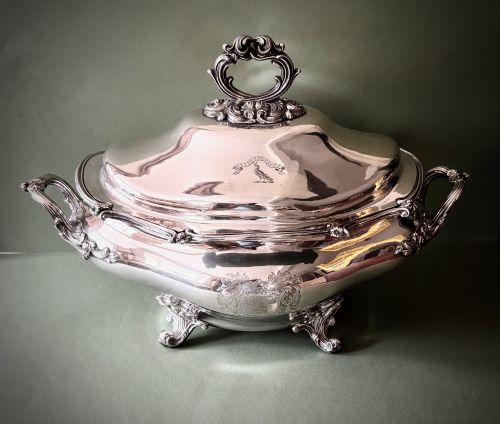
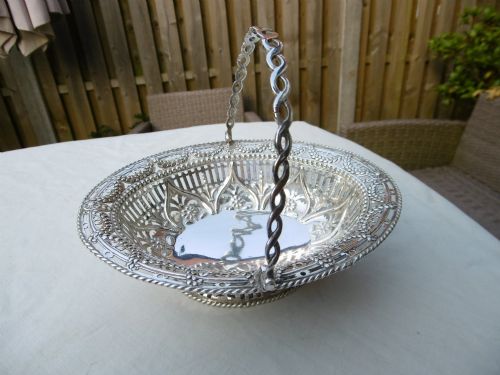
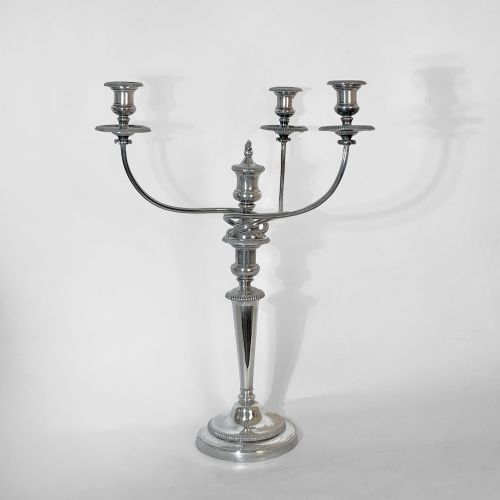
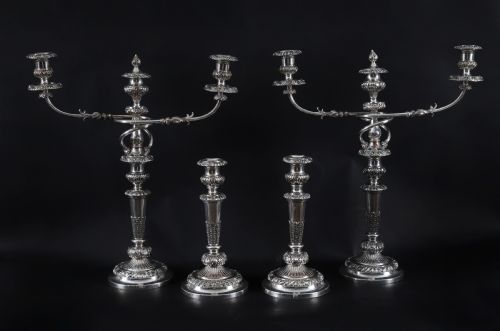
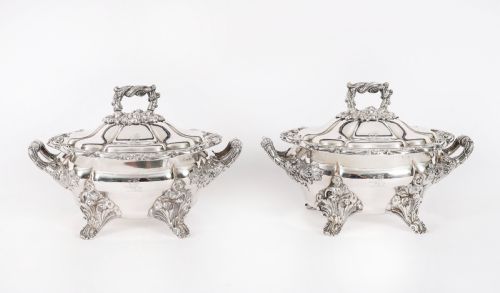
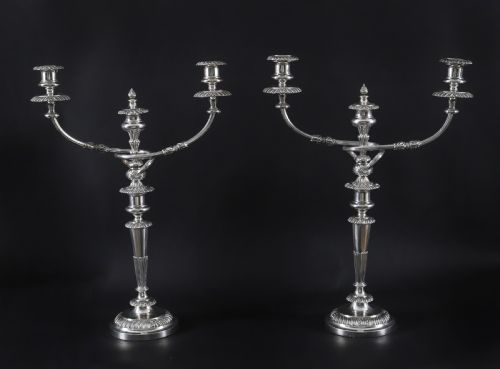
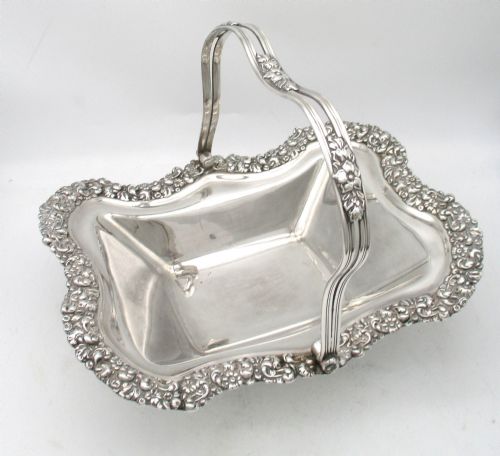
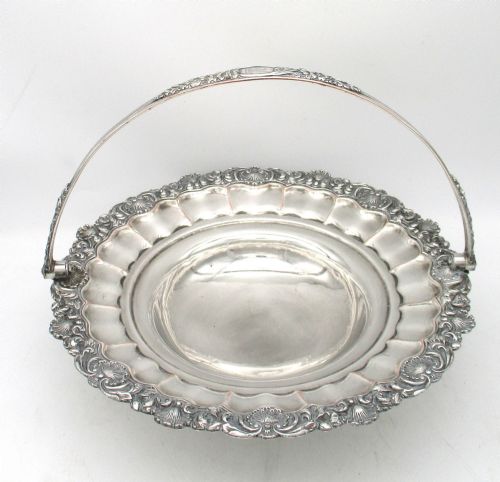
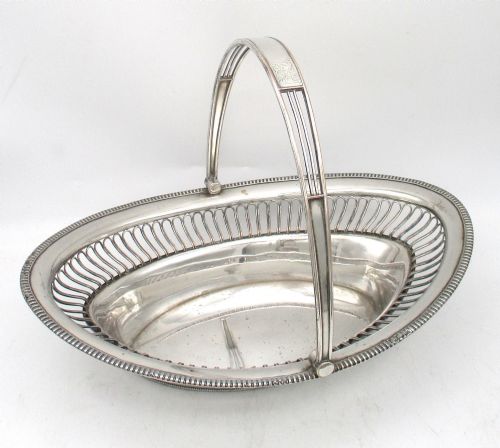
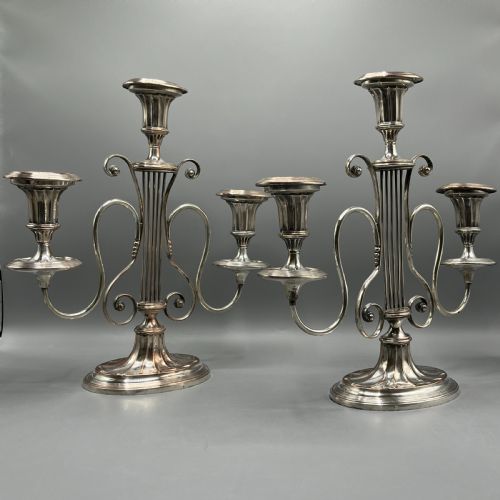
A georgian silver centerpiece brings together elaborate table service forms such as multi-light candelabra, swing-handled bread baskets, lidded sauce tureens, and glass-fitted epergnes. These objects originated to serve formal dining customs of the eighteenth and nineteenth centuries, dominating the dining table during multi-course meals.
The material record here spans solid sterling silver alongside Old Sheffield Plate, copper, silver plate, and cut glass components. Pieces range from authentic Georgian and Regency creations to later revivals from the twentieth century executed in Georgian styles.
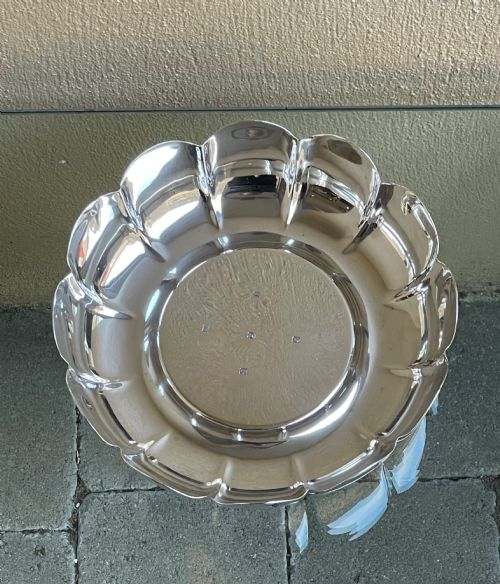
Buyers encountering this selection will find matching suites, pairs of sauce tureens, wirework sweetmeat baskets, and wine coolers. Each configuration reflects the grand scale and ornamental ambition of period dining.
Materials and construction methods
Silversmiths utilised sterling silver and Old Sheffield Plate, fusing thin layers of silver to copper bases to achieve durable tableware. Piercing, lattice work, and wirework defined baskets and sweetmeat dishes, requiring precise hand-sawing and soldering.
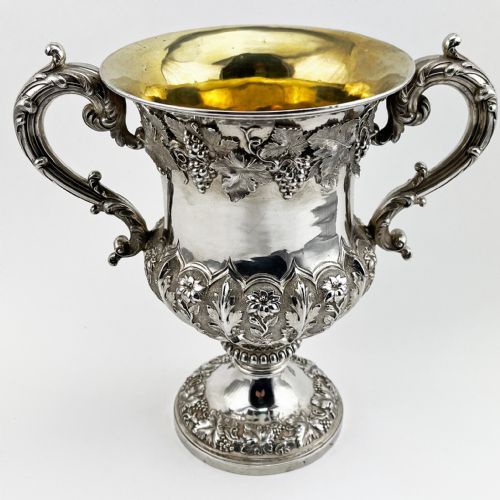
Candelabra and epergnes combined cast structural elements with hand-hammered bowls, dishes, and nozzles. Gilt interiors, known as vermeil, added colour contrast to pedestal dishes and sugar baskets.
Listings feature items spanning the 18th Century, Georgian period, Regency era, and twentieth-century revivals.
Assessing craftsmanship and execution
Quality rests on the crispness of cast ornamentation, such as Rococo revival scrolls or Adam style husks, and the integrity of pierced work. Superior examples exhibit clean solder joints, heavy gauge metal that resists flexing, and well-preserved original crests or engraving.
For plated items, the preservation of the silver layer over the underlying copper determines overall merit. Master silversmiths and workshops applied heavier silver fusion and more intricate hand-chasing, separating utilitarian items from elite dining table ornaments.
Matthew Boulton·John Hunt·Samuel Herbert·Fenton·John Walton·George Fox·James Dixon And Sons
The Georgian Silver Centerpiece Glossary
- Old Sheffield Plate
- A composite material made by fusing a sheet of silver to a copper ingot before rolling them into thin sheets. This technique predates electroplating and creates a warm, durable surface.
- Epergne
- A large table centrepiece featuring a central basket surrounded by smaller hanging baskets or arms for fruit, sweetmeats, or light. Cut glass bowls frequently accompany these multi-tiered structures.
- Sweetmeat basket
- A small, often swing-handled container designed for holding preserved fruits, nuts, or small confections. They display intricate wirework or pierced lattice designs.
- Vermeil
- Sterling silver plated with a thin layer of gold on the interior or exterior surfaces. This finish protected the silver from acidic foods and provided a decorative contrast.
- Candelabra
- A branched candlestick holding multiple lights on arms radiating from a central stem. Paired examples often anchored the ends of a dining table arrangement.
Georgian Silver Centerpiece: Frequently Asked Questions
What is a georgian silver centerpiece used for?
These large table accessories held fruit, sweetmeats, sauces, or provided illumination down the centre of formal dining tables. They served both decorative and functional roles during multi-course meals.
Today, collectors use them as focal points on dining tables, sideboards, or large entry consoles. Their varied components allow owners to separate candelabra or use baskets independently.
How do I identify Old Sheffield Plate?
Old Sheffield Plate reveals a subtle copper bleed along exposed edges where the outer silver layer wore down over generations of polishing. The weight feels substantial due to the copper core.
Unlike nineteenth-century electroplate, genuine Old Sheffield pieces show hand-finished construction marks and lack the uniform grey appearance of modern chemical plating.
Are these pieces solid silver or plated?
The listings include both solid sterling silver and Old Sheffield Plate items. Hallmarks stamped into sterling pieces indicate town, date, and maker, while plated items rely on copper construction beneath the silver surface.
Examining the underside and edges helps determine the underlying metal. Plated wares often display copper tones at high-wear points.
How do I care for silver and plated centerpieces?
Gentle cleaning with appropriate silver polish preserves the surface without removing remaining plating or fine hand-engraving. Soft cloths and non-abrasive pastes maintain the lustre of both sterling and plated items.
Avoiding harsh chemical dips protects delicate gilt interiors, wirework soldering, and fitted cut glass inserts from permanent damage.