







Georgian Style Mahogany Wardrobe
A georgian style mahogany wardrobe offers generous storage and deep timber tones, making it a commanding centrepiece for any traditional bedroom.
Georgian Style Mahogany Wardrobe
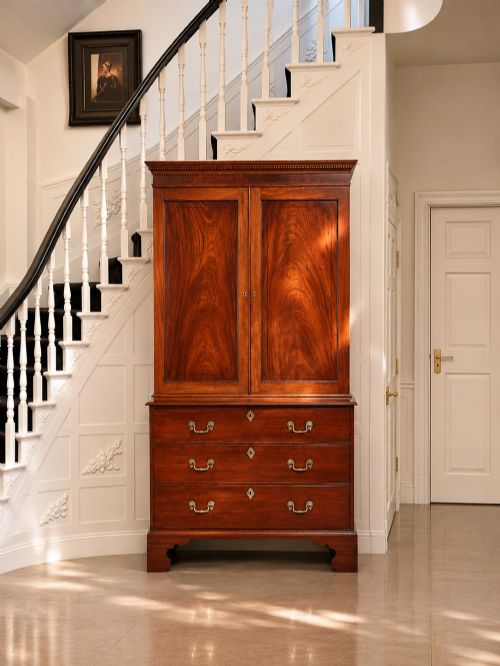
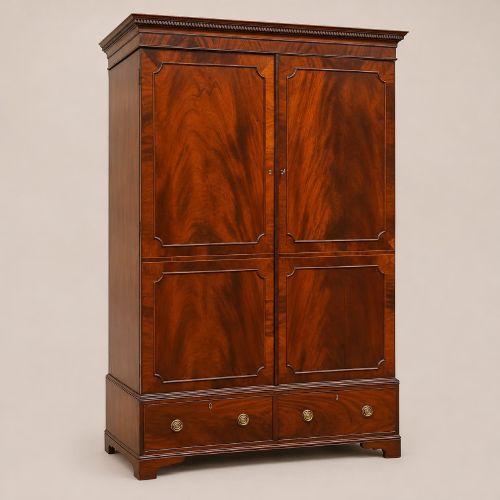
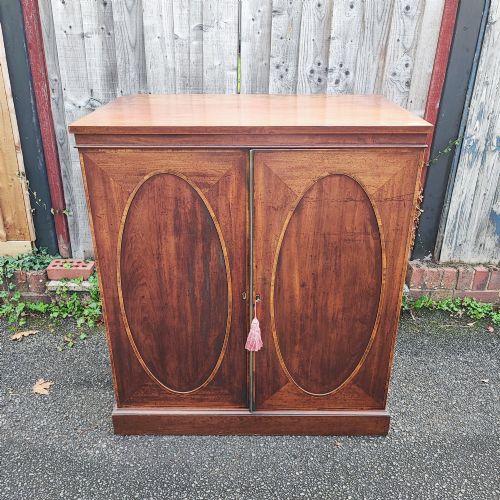
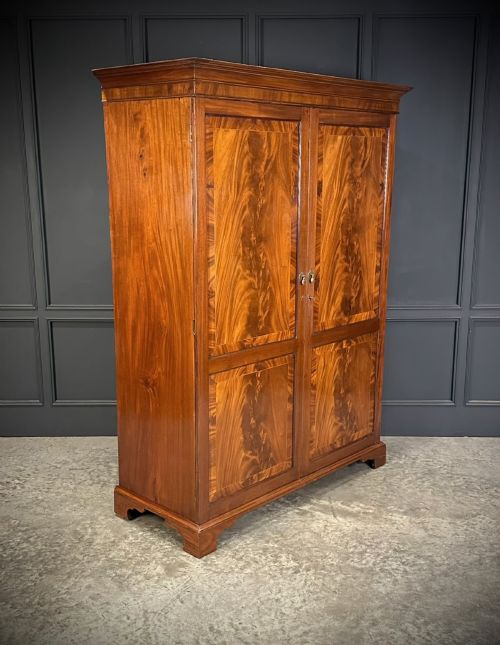
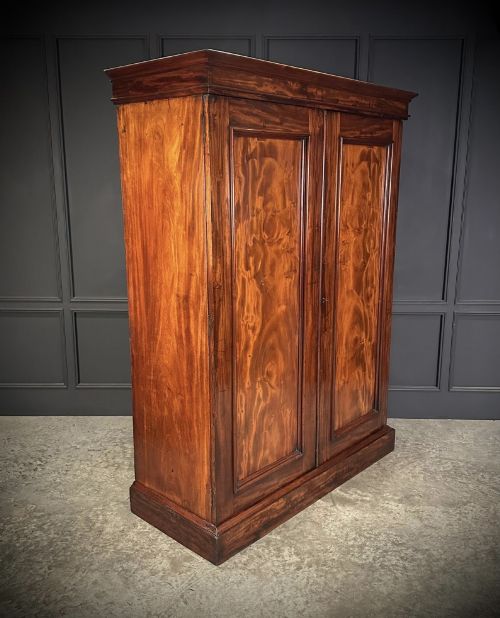
When you search for a georgian style mahogany wardrobe, you encounter robust timber constructions designed to store garments and linens with architectural presence. The pieces on this page span several eras, including genuine 18th-century originals, revival interpretations from the Edwardian period, and William IV iterations.
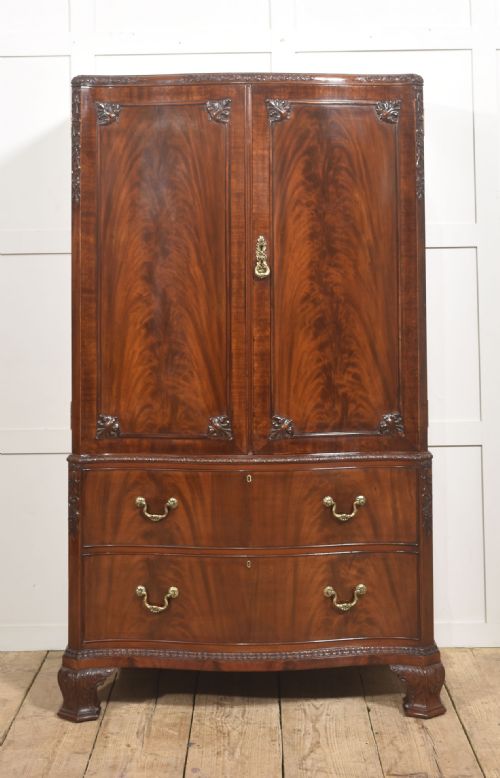
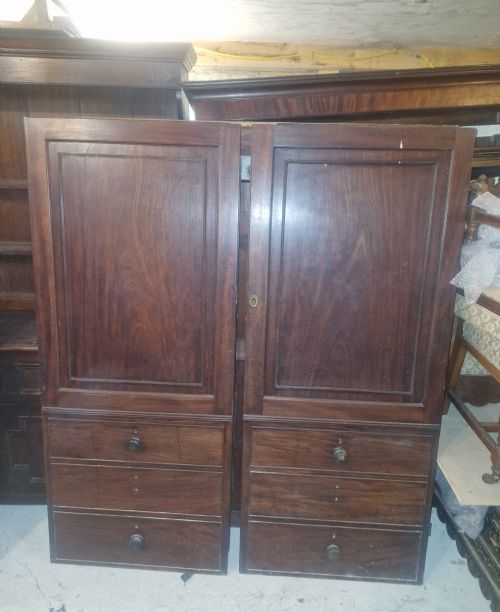
Forms vary significantly across the selection, ranging from two-door cupboards and hanging wardrobes to tallboy linen presses with sliding trays behind the upper doors. Many examples incorporate deeper cupboard bases or drawers, demonstrating the practical evolution of domestic storage furniture through the nineteenth and early twentieth centuries.
Origins stretch from regional British workshops to Irish commissions and Channel Island interpretations, each bringing subtle shifts in proportion and timber selection. Whether you choose a late Georgian linen press or a Sheraton Revival wardrobe, these items provide enduring utility and traditional craft.
Materials and construction
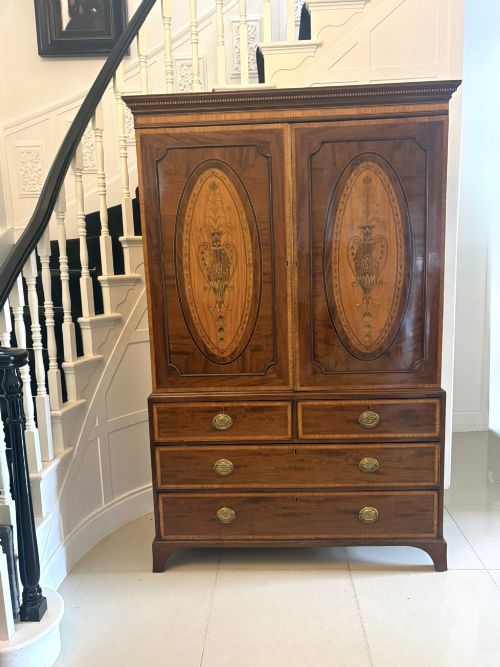
Makers relied primarily on solid mahogany and flame mahogany veneer, often enhanced by contrasting boxwood inlay and satinwood banding to define door panels and cornices. The rich grain patterns were selected carefully for the primary facade, while secondary timbers like pine or oak provided internal structural support for drawers and linen slides.
Hardware played a functional and decorative role, with cast brass handles and escutcheons securing doors and drawers. Joinery techniques such as dovetailed drawer boxes and frame-and-panel construction ensured the heavy timber carcasses remained stable over centuries of use.
Georgian Style Mahogany Wardrobe Retail Price Guide 2026
Typical asking prices for georgian style mahogany wardrobe among the pieces listed under this phrase on Sellingantiques today, from the lower quarter to the upper quarter. They describe what is for sale here now, not the wider market.
Listings feature items spanning the eighteenth, nineteenth, and early twentieth centuries, incorporating both solid mahogany and flame mahogany veneer.
Markers of distinction
Quality in a georgian style mahogany wardrobe is evident in the choice of timber figures and the precision of decorative inlays like boxwood and satinwood. Finer pieces display deeply figured flame mahogany veneers that have aged gracefully to a faded, warm patina over generations.
The sophistication of carved architectural details, such as dentil cornices, blind fretwork, or classical columns, separates standard production from exceptional cabinet work. Superior examples also retain original brass hardware, internal linen slides, and clean, unwarped door panels that close flush.
Thomas Chippendale·Gillows
The Georgian Style Mahogany Wardrobe Glossary
- Linen press
- A tall cabinet featuring upper doors that enclose sliding trays for folded textiles, mounted above a chest of base drawers. This form evolved to store household linens before modern wardrobe hanging space became standard.
- Flame mahogany
- A highly figured veneer cut from the fork of the mahogany tree where the branch meets the trunk. The resulting grain creates a dramatic, flame-like pattern across the timber surface.
- Tallboy
- A tall chest of drawers stacked upon another chest, providing substantial vertical storage capacity. These pieces often feature decorative cornices echoing architectural columns.
- Satinwood
- A pale, hard timber utilised for stringing and decorative inlay work on dark mahogany furniture. It provides a sharp, bright contrast against deep red-brown primary surfaces.
- Patina
- The surface sheen and softening of colour developed by wood and metal over decades of handling and exposure to light. A desirable aged appearance cannot be replicated artificially.
Georgian Style Mahogany Wardrobe: Frequently Asked Questions
What is a linen press?
A linen press is a large storage cabinet with upper doors that conceal pull-out sliding trays for textiles, traditionally set above a chest of drawers.
Over time, many of these pieces were converted internally by removing the trays to accommodate clothes hangers and modern garments.
How do I date a mahogany wardrobe?
Dating relies on examining construction methods, timber choice, and stylistic details such as cornices, bracket feet, and inlay motifs.
Earlier pieces from the eighteenth century typically feature hand-cut dovetails and solid timber carcasses, while Edwardian revivals often incorporate machine-sawn elements and lighter internal linings.
Where should I place a large wardrobe?
These substantial pieces require a room with adequate ceiling height and wall space to accommodate their deep cornices and projecting base drawers.
Position them away from direct heat sources and strong sunlight to protect the mahogany veneer and prevent the wood from drying out.
Are these wardrobes easy to dismantle?
Many larger wardrobes and linen presses were constructed in modular sections comprising a cornice, modular sides, central hanging or shelf compartments, and a base drawer unit.
This sectional design allowed historical craftsmen to transport and assemble heavy furniture within domestic rooms, though professional assistance is recommended for moving them today.