



Dark Wood Clothes Cupboard
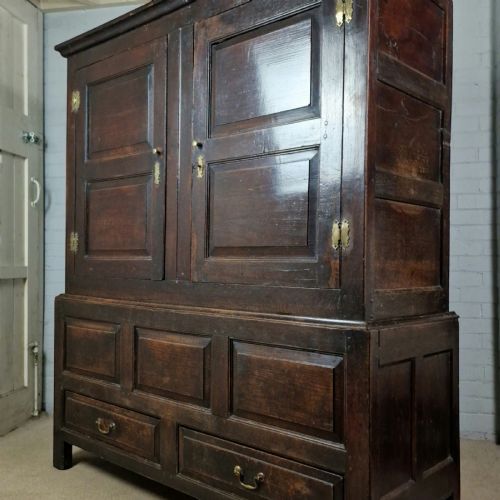
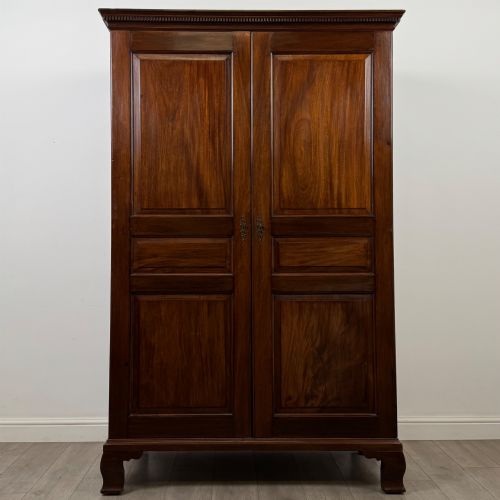
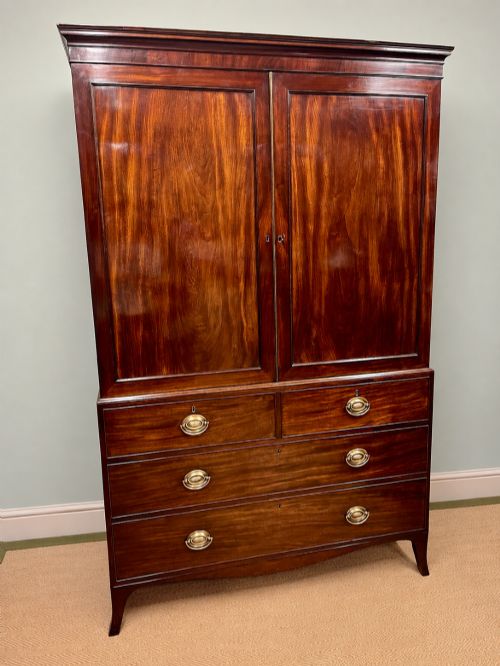
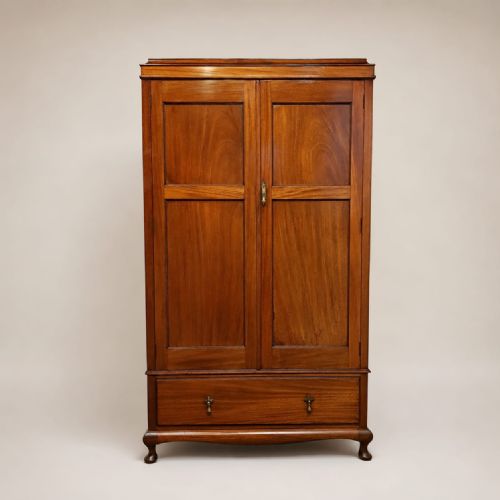
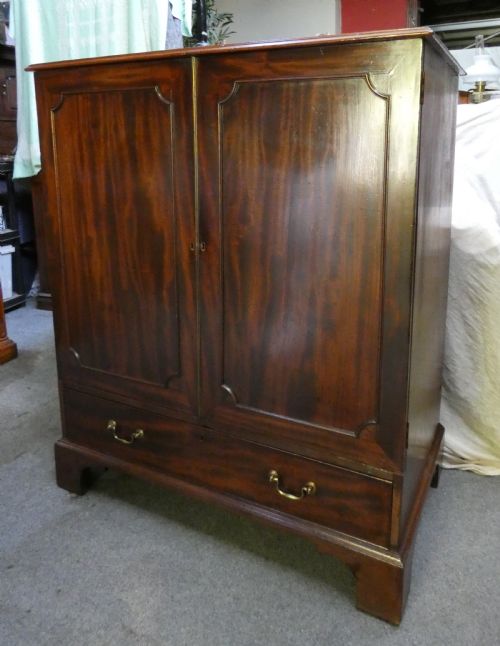
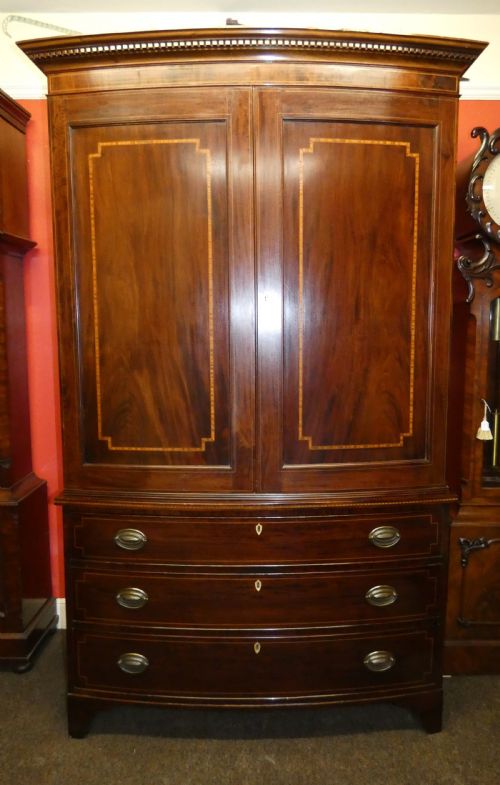
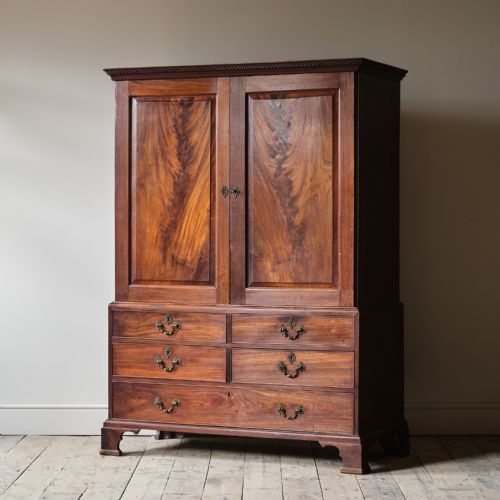
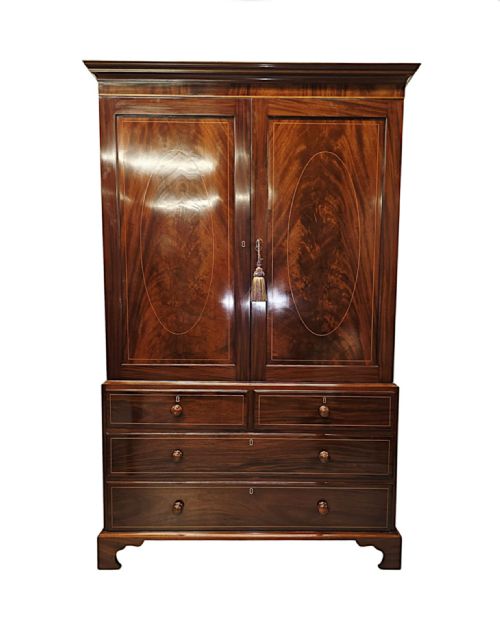
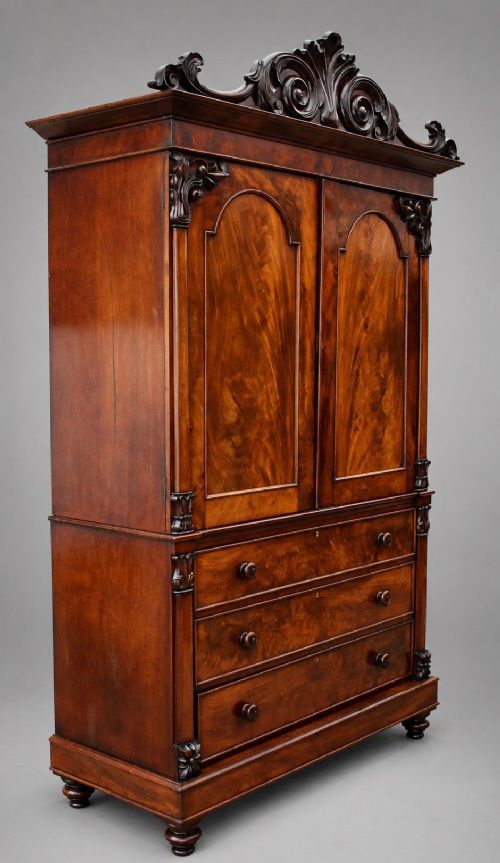
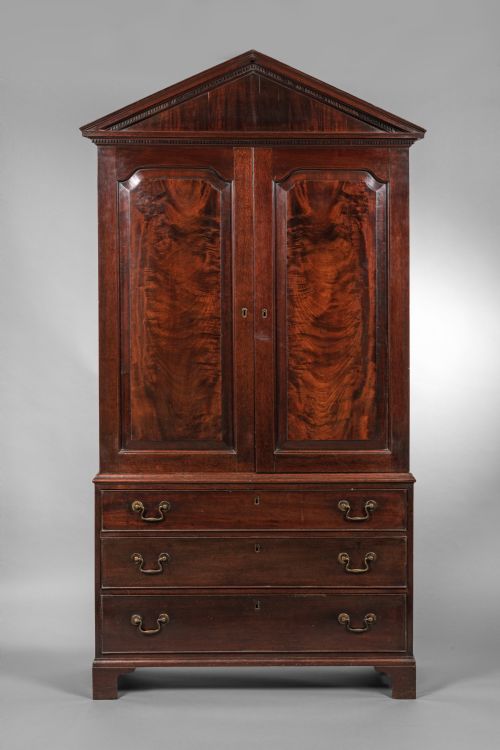
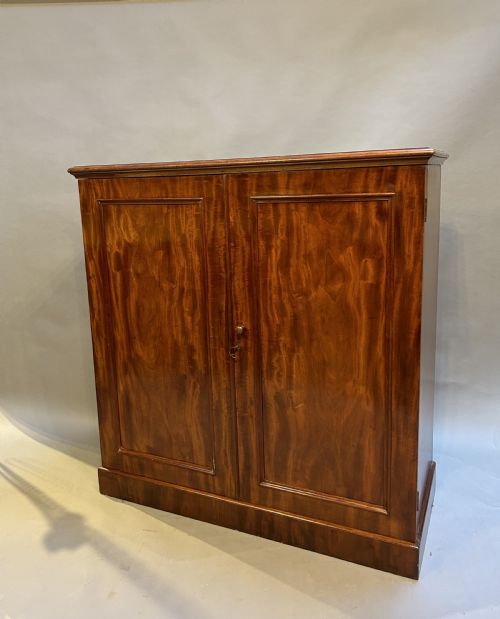
A dark wood clothes cupboard offers substantial storage through timber panels and brass hardware, bringing period presence to a bedroom.
Dark Wood Clothes Cupboard
A dark wood clothes cupboard encompasses forms such as linen presses, wardrobes, armoires, and press cupboards originating from periods including the Georgian, Victorian, Regency, and Edwardian eras. Buyers searching this phrase meet pieces designed to store garments and linens, utilising deep timbers like mahogany, oak, and rosewood.
The selection ranges from tall breakfront triple wardrobes to dwarf press cupboards and housekeepers cupboards. Construction spans the eighteenth and nineteenth centuries, often featuring internal sliding trays or hanging spaces behind panelled doors.
Materials and construction methods
Cabinet makers utilised solid timbers alongside veneers, applying flame mahogany, satinwood, and walnut to exterior surfaces. Brass hardware functions as key escutcheons and handles, while glass panels occasionally appear on door fronts.
Decorative techniques include marquetry inlay, rosewood crossbanding, and carved details aligned with Chippendale, Regency, and Gothic Revival styles. Internal compartments often combine oak and mahogany for structural integrity.
Channel Island workshops added distinct regional flair to wardrobes, proving that even clothes storage required a maritime twist.
Distinctions in craftsmanship
The standard of a dark wood clothes cupboard depends upon the selection of timber figures, such as symmetrical flame mahogany veneers or dense Cuban mahogany. Superior examples display precise marquetry inlay and careful crossbanding that align harmoniously across large door surfaces.
Structural refinement shows in the execution of internal sliding trays, close-fitting doors, and the integration of original brass fittings. Pieces attributed to documented makers demonstrate superior joinery compared to standard workshop production.
Francis Brodie·Thomas Chippendale·Heals·Edwards & Roberts
The Dark Wood Clothes Cupboard Glossary
- Linen Press
- A tall piece of furniture featuring upper doors enclosing sliding trays, placed above a base section with drawers. These were traditionally used for storing folded linen before hanging garments became standard.
- Crossbanding
- A decorative border technique where thin strips of veneer are laid with the grain running perpendicular to the surrounding wood. This frames panels on doors and drawer fronts.
- Breakfront
- A cabinet design where the central section projects forward from the flanking wings. This architectural arrangement adds depth to large wardrobes.
- Marquetry
- The art of applying pieces of veneer to a structure to form decorative patterns and pictures. Makers utilised varied timbers to achieve tonal contrast.
- Escutcheon
- A flat plate of brass surrounding a keyhole. It protects the surrounding wood from wear caused by the key.
Dark Wood Clothes Cupboard: Frequently Asked Questions
What is a linen press?
A linen press is a tall storage piece combining upper cupboard doors with lower drawers. The upper section traditionally houses sliding shelves for linens.
Over time, many of these interiors were converted with hanging rails to accommodate modern clothing requirements.
How do I date a mahogany wardrobe?
Dating relies on timber selection, structural proportions, and decorative motifs like bracket feet or cornice details. Georgian pieces often display restrained lines, while Victorian examples favor heavier breakfront proportions.
Hardware styles and secondary timbers inside drawers provide further chronological clues.
Will these cupboards fit modern rooms?
Many period wardrobes and presses are large freestanding items requiring adequate ceiling height and floor space. Double and triple variations offer substantial internal volume.
Buyers should measure access routes, as historical pieces often do not dismantle completely.