
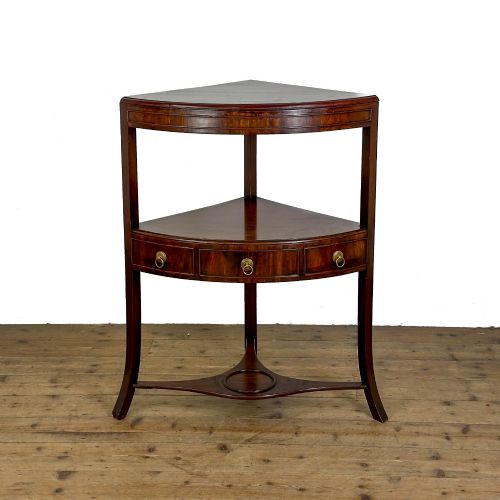
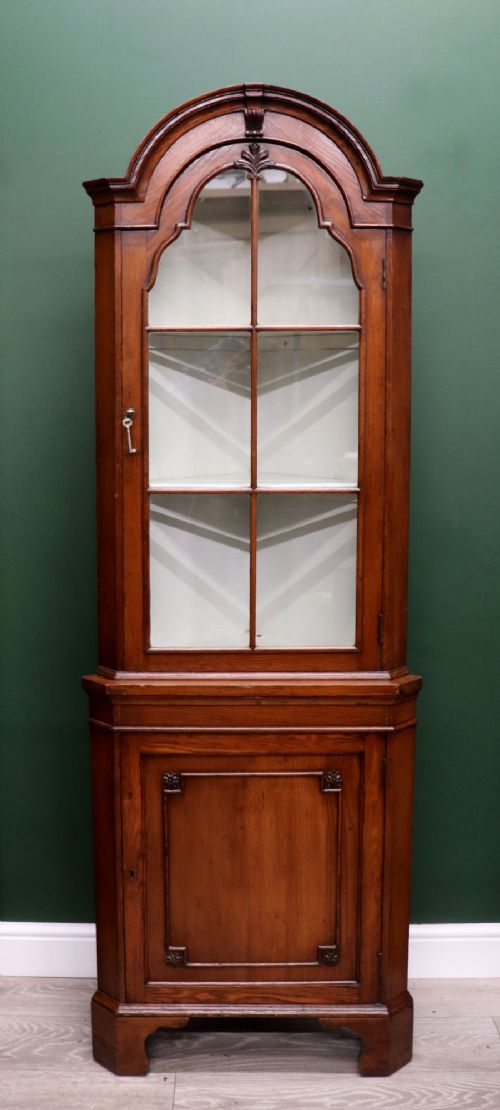
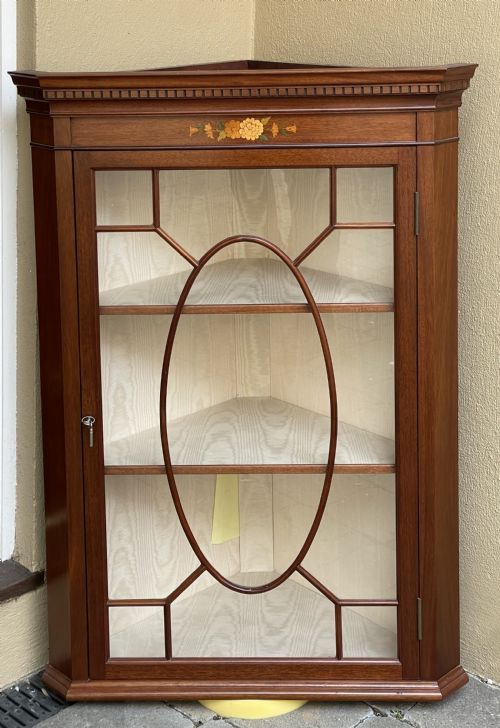

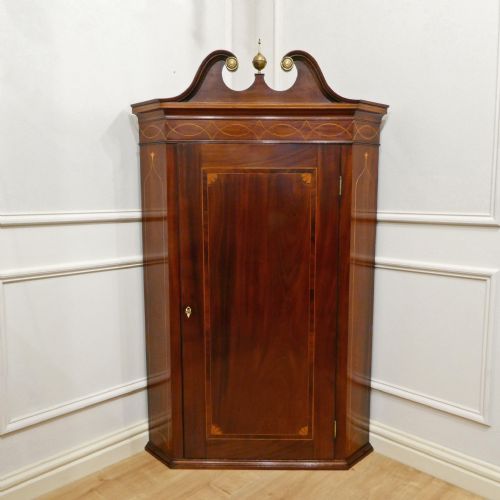


Georgian Style Corner Display
Georgian style corner display pieces combine practical storage with architectural lines, turning unused room junctions into focal points.
Georgian Style Corner Display
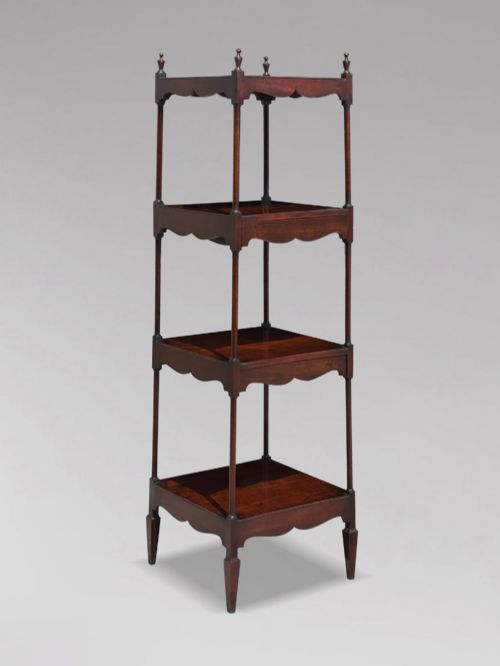
A georgian style corner display unit is typically a cabinet, cupboard, or tier stand designed to fit snugly into the intersection of two walls. These pieces make efficient use of difficult angles while providing enclosed shelving for china, books, or decorative objects.
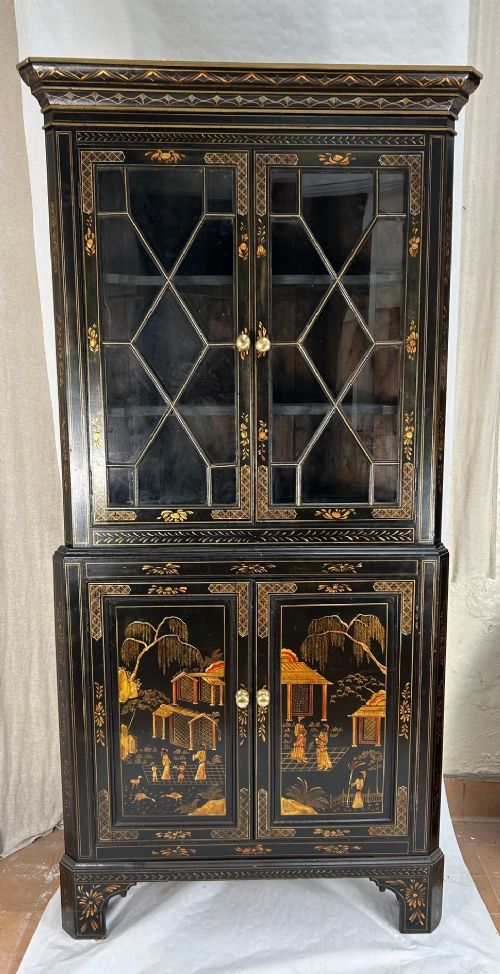
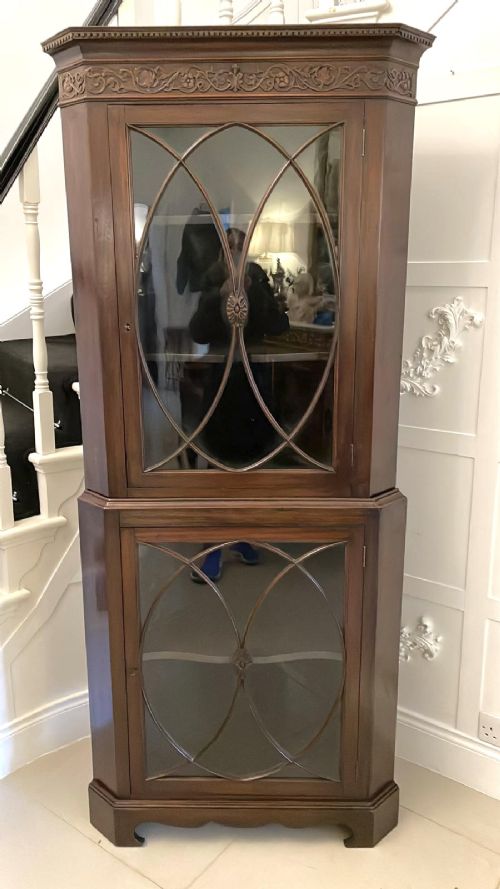
The selections available range from authentic eighteenth-century examples to later Edwardian and twentieth-century revivals. Mahogany and walnut predominate, often featuring bow fronts, glass doors, or intricate lacquerwork.
How they were made
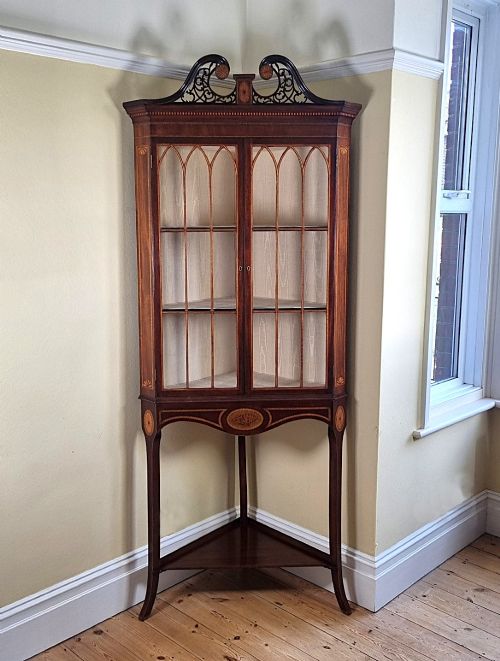
Cabinet makers constructed these items primarily in timber such as mahogany, walnut, and oak, frequently adding satinwood inlay or brass hardware for contrast. Glazed doors utilised individual wooden bars, known as astragals, to hold small panes of glass in geometric patterns.
Surface decoration extended to marquetry and Chinoiserie lacquer, requiring skilled application of painted and varnished motifs. Construction methods involved sturdy dovetail joints and solid timber backs shaped to meet room angles precisely.
Materials recorded include mahogany, walnut, oak, satinwood, brass, and lacquer finishes.
What varies in quality
Quality rests on the selection of timber figures, such as flame mahogany or burr walnut, and the precision of the marquetry or inlay work. Superior examples demonstrate finer joinery in the glazing bars and crisper hand-carved details.
The integration of original brass hinges, working locks, and well-balanced doors distinguishes better pieces. Age also plays a role, with eighteenth-century originals commanding different appreciation compared to later revival pieces.
Gillows
The Georgian Style Corner Display Glossary
- Astragal glazed
- A method of glazing where slim wooden bars divide a glass door into smaller panes, creating a light, grid-like appearance.
- Bowfront
- A convex, outwardly curved front facade that softens the corner angles and adds visual depth to a cabinet.
- Chinoiserie
- European decorative design inspired by Chinese artistic motifs, usually rendered in lacquer with painted figures and landscapes.
- Marquetry
- The art of applying decorative pieces of veneer to a structural surface to form intricate patterns or pictures.
- Tier stand
- An open shelving unit arranged in ascending levels, used for displaying objects rather than enclosing them.
Georgian Style Corner Display: Frequently Asked Questions
Where should a corner cabinet go?
These cabinets suit dining rooms, drawing rooms, or hallways where empty wall junctions require architectural interest. They maximise awkward spaces without obstructing room flow.
Position them away from direct heat sources to protect timber veneers and historic finishes from cracking.
How do I identify a revival piece?
Revival items often date from the Edwardian era or the twentieth century, mimicking earlier eighteenth-century proportions. Look at the timber grain, secondary woods, and construction marks to determine age.
Stylistic cues like Sheraton Revival point to nineteenth or twentieth-century reinterpretations rather than period originals.
What is the difference between standing and hanging cupboards?
Standing versions rest directly on the floor, sometimes featuring a lower cupboard section or standing on a base or legs. Hanging variants mount directly to the wall at eye level.
Both types serve the same function of corner display but create different spatial dynamics within a room.
How are these cabinets cleaned?
Dust timber surfaces regularly with a soft, dry cloth to maintain the polish. Avoid modern silicone sprays that can build up and damage antique finishes.
Glass panels require standard glass cleaner applied to a cloth rather than sprayed directly onto the cabinet to protect adjacent wood.