





Georgian Carved Display Cabinet
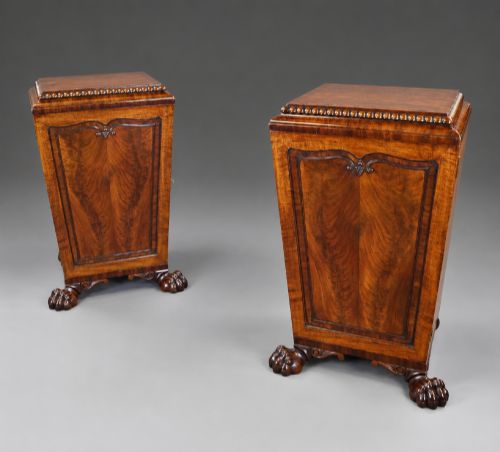
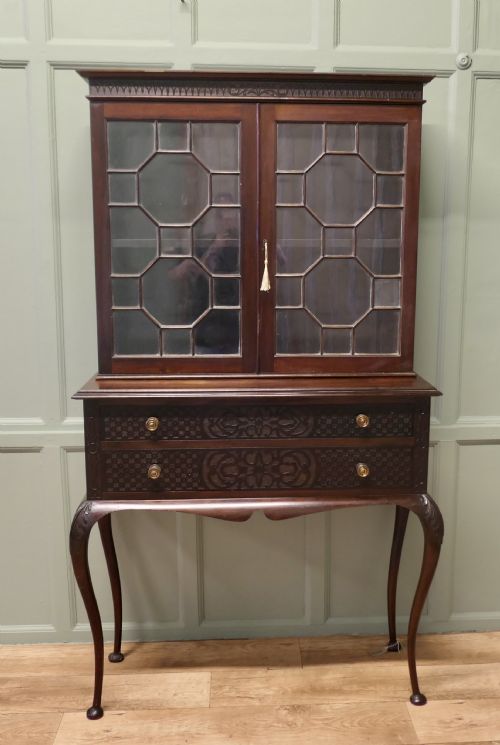
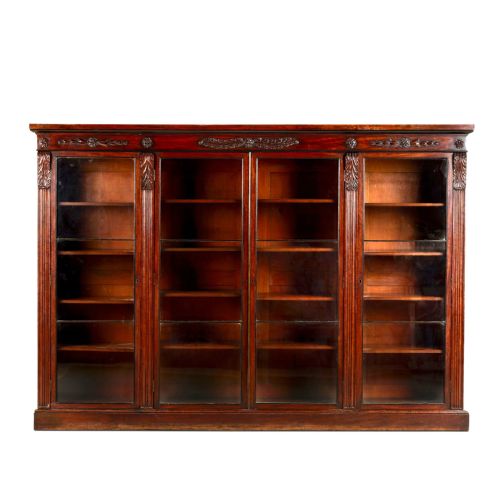
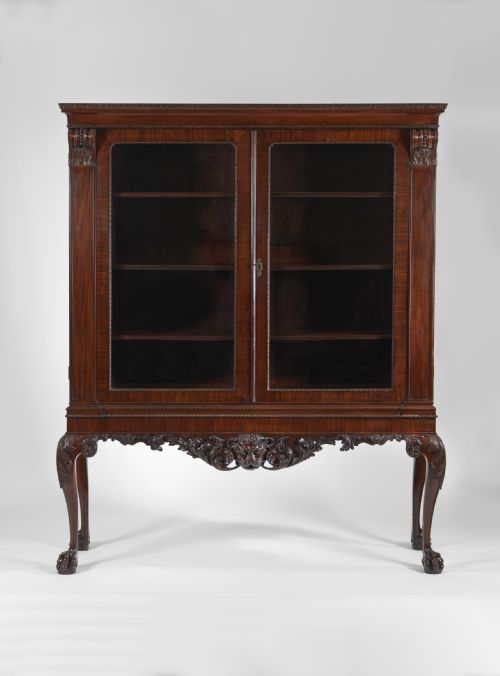
A georgian carved display cabinet brings architectural depth and timber warmth to a room, designed to showcase porcelain and books behind glazed doors.
Georgian Carved Display Cabinet
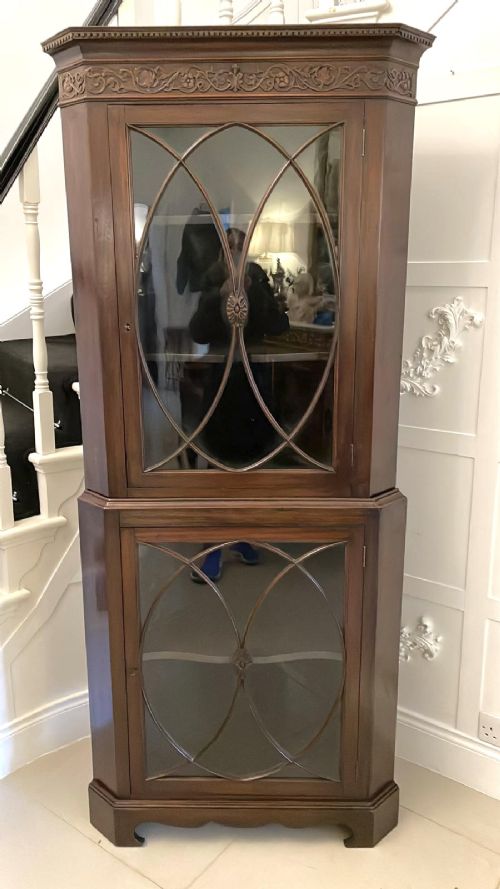
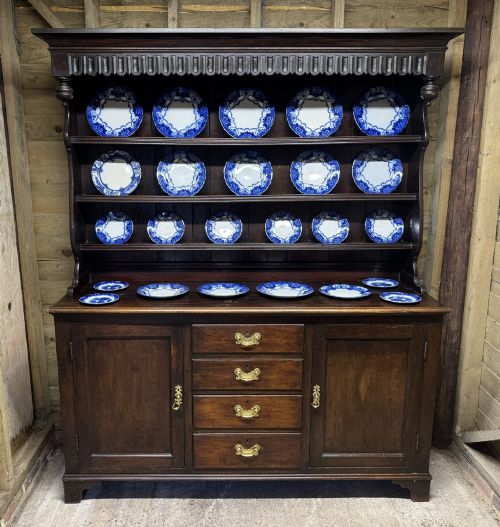
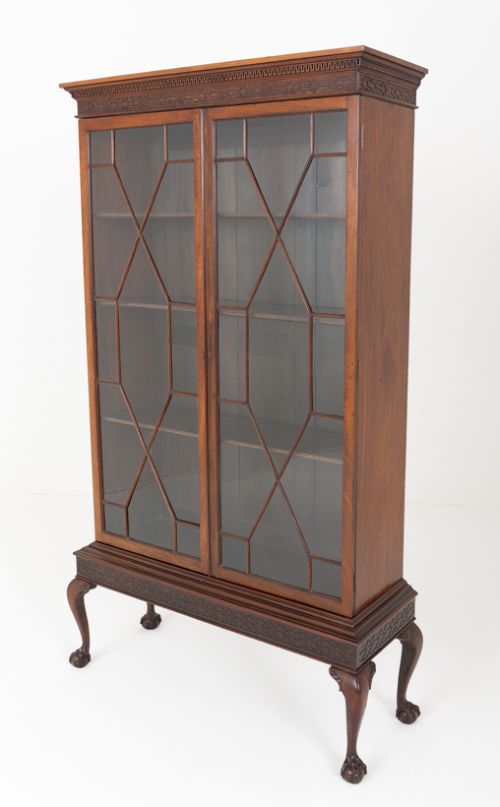
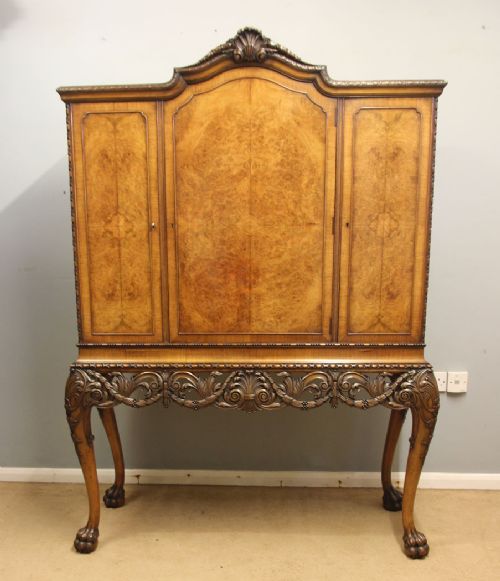
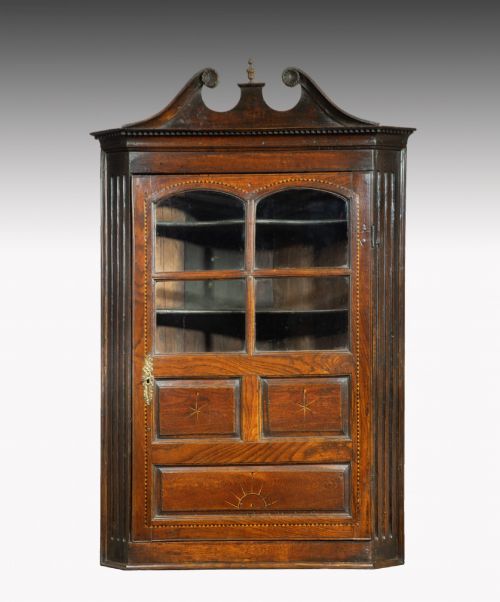
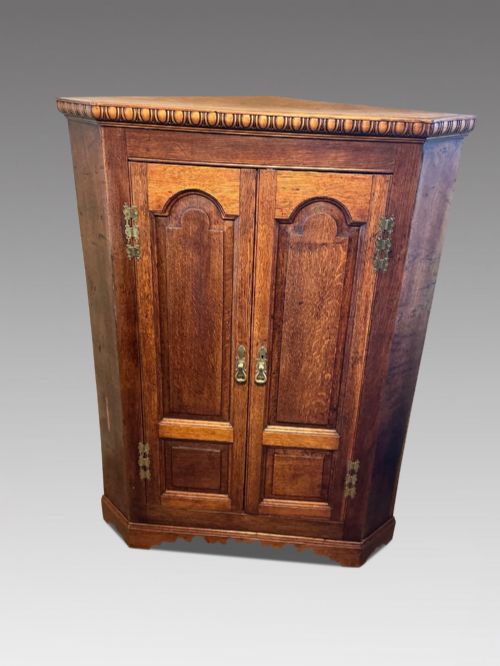
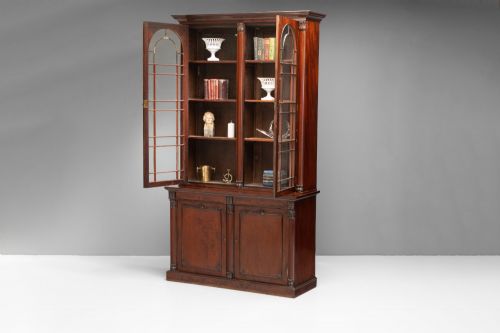
When you search for a georgian carved display cabinet, you encounter case furniture spanning the eighteenth and nineteenth centuries, alongside revival interpretations from later decades. These pieces take the form of tall bookcases, floor standing and corner cabinets, and dressers shaped from sturdy timbers.
The versions most likely to appear on this page include mahogany and oak bookcases with glazed doors, alongside corner cupboards and side cabinets originating from the eighteenth century, Regency period, and Victorian eras.
Materials and Technique
Cabinet makers relied on solid timbers such as mahogany, oak, walnut, and pine, frequently applying flame mahogany veneer or marquetry to create patterned surfaces on doors and friezes.
Glazing bars divided glass panes into geometric patterns, while brass hardware, fabric linings, and carved details finished the construction of these large case pieces.
Among the sturdy timbers and practical shelving, the archive preserves a pair of eighteenth century carved skulls of the damned.
Quality and Construction
The distinction between standard examples and the finest pieces rests on the choice of timber, such as figured flame mahogany or dense walnut, paired with crispness in the hand-carved ornamentation.
Proportion and interior arrangement also dictate standing, with superior cabinets displaying balanced breakfront layouts, fine astragal glazing bars, and well-figured secondary woods.
Waring & Gillow
The Georgian Carved Display Cabinet Glossary
- Astragal glazed
- A method of dividing glass panes within a door using wooden moulding bars. These bars form intersecting geometric patterns across the front of a bookcase or display cabinet.
- Breakfront
- A cabinet design where the central section projects forward from the flanking wings. This architectural arrangement creates depth and shadow across the facade.
- Marquetry
- The art of applying decorative veneer pieces in wood to form intricate patterns and pictures. It appears frequently on walnut and satinwood furniture.
- Pediment
- The triangular or arched decorative crowning feature positioned at the very top of a tall bookcase or cabinet. It provides a formal architectural finish to case furniture.
- Secretaire
- A cabinet incorporating a pull-down writing drawer fitted with small pigeonholes and internal compartments. This dual-purpose form combines storage with a writing surface.
Georgian Carved Display Cabinet: Frequently Asked Questions
Where should I place a cabinet?
These tall case pieces require stable wall space away from direct sunlight and heat sources that might dry out the timber or crack veneers. Corner cupboards fit neatly into unused angles of a room, while breakfront bookcases need an uninterrupted flat wall to command attention.
Ensure the floor level can support heavy hardwood construction, particularly with large oak or mahogany bookcases filled with books.
How do I clean the glass?
Clean the glass panes using a soft cloth and a mild glass cleaner applied to the cloth rather than sprayed directly onto the wood. Moisture running down onto historic timber or delicate astragal bars can damage the finish.
Dust carved woodwork gently with a dry, soft brush to prevent accumulation in recessed crevices without harming the patinated surface.
What is astragal glazing?
Astragal glazing refers to the wooden framework that holds individual small panes of glass together within a cabinet door. These slender bars create a grid pattern that protects the interior contents while offering clear visibility.
In finer examples, these bars feature delicate mouldings that enhance the overall elegance of the glazed facade.