


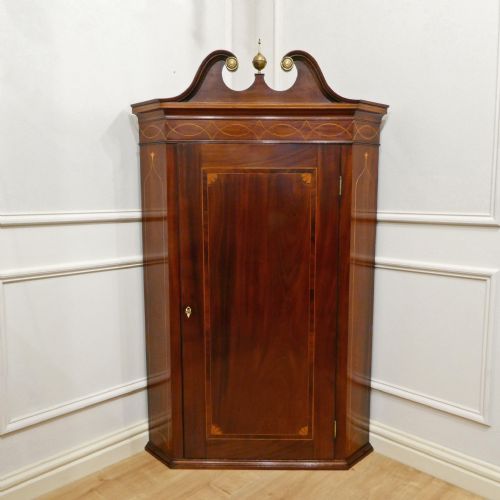


Vintage Standing Corner Cupboard
These vintage standing corner cupboards make use of forgotten angles, bringing timber and glass to rooms that would otherwise waste a corner.
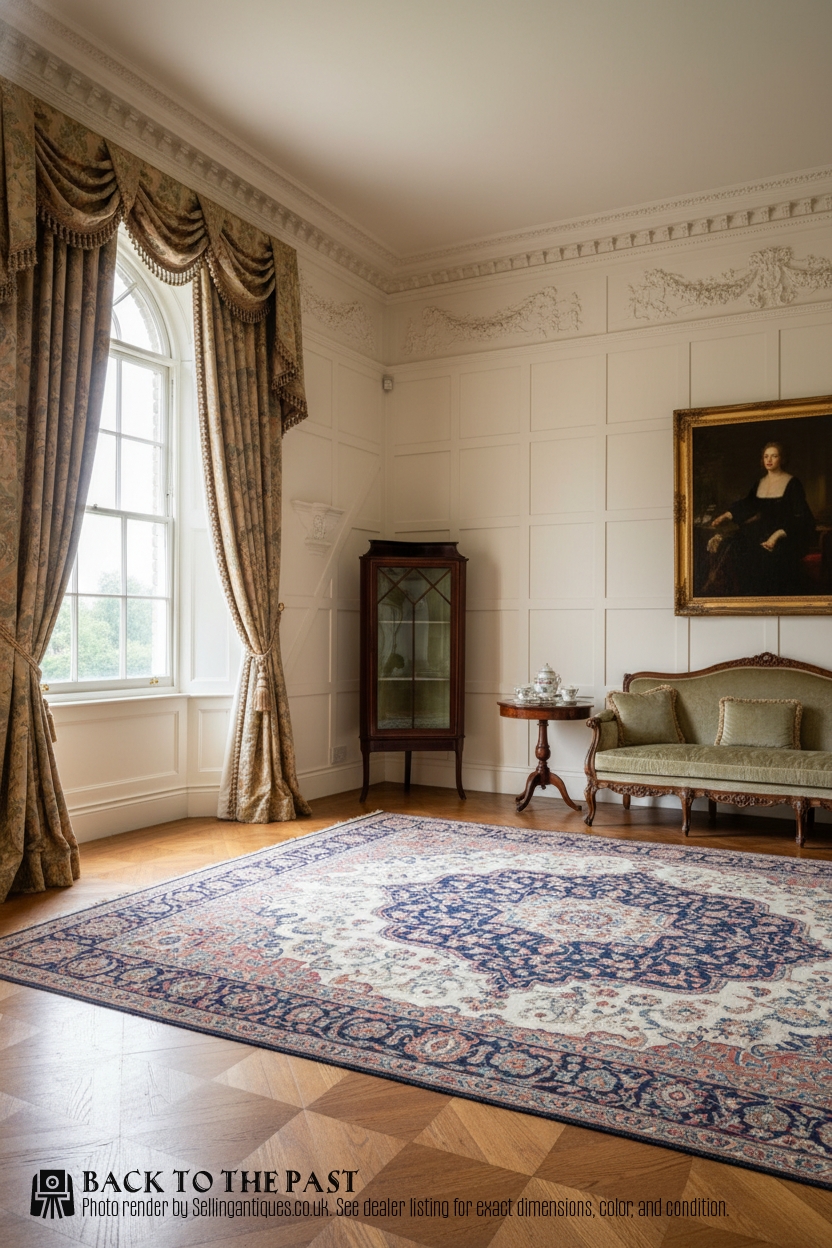
Vintage Standing Corner Cupboard
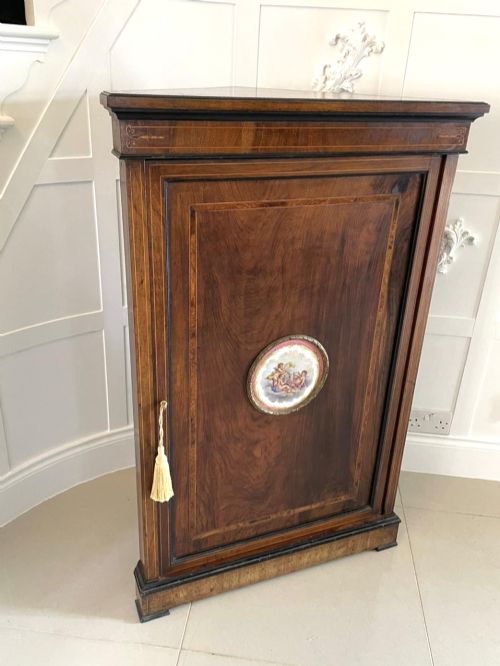
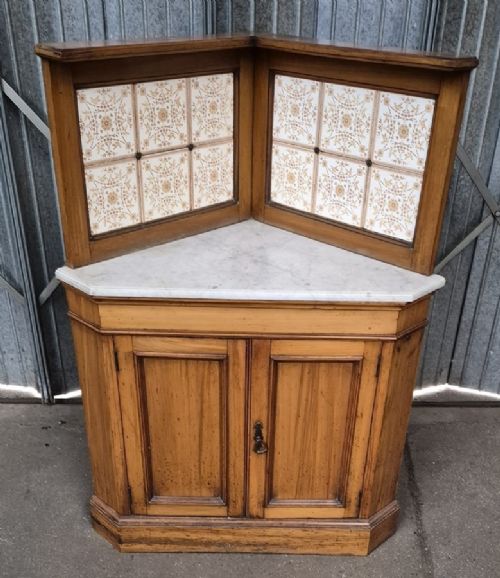
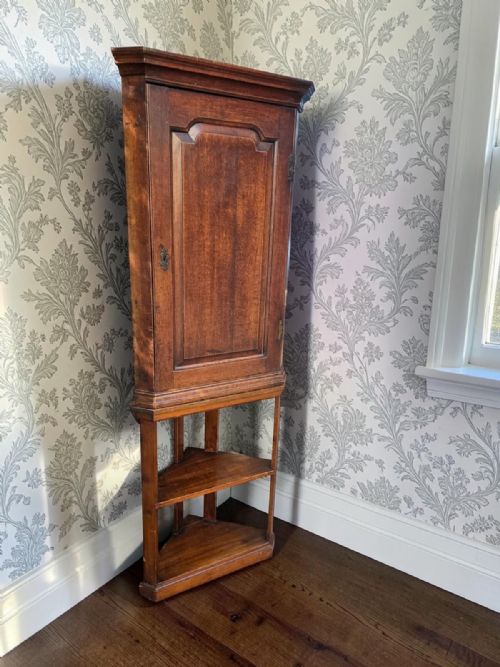
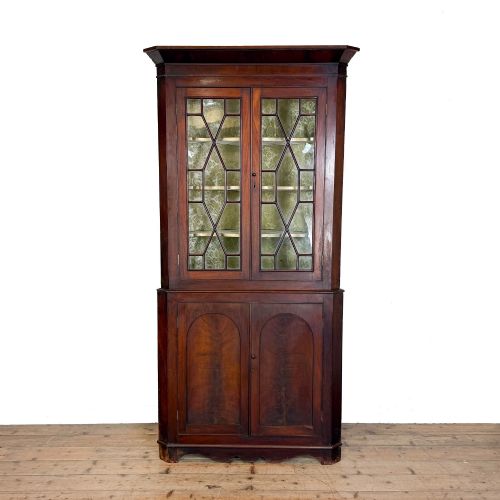
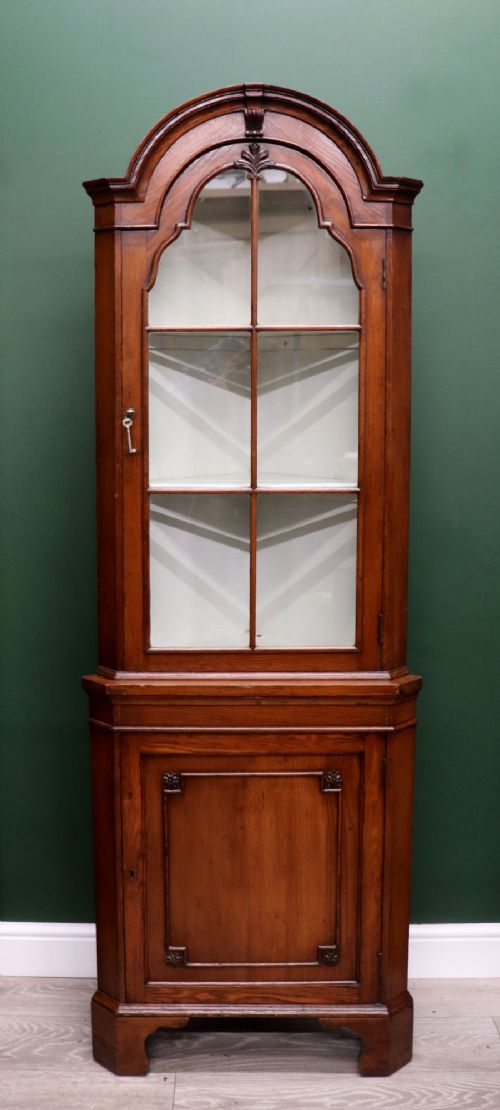
A vintage standing corner cupboard turns the awkward void of a room junction into a useful display or storage space. These pieces rise from the floor rather than hanging on a wall, standing tall enough to hold books, china or glassware behind timber or glazed doors.
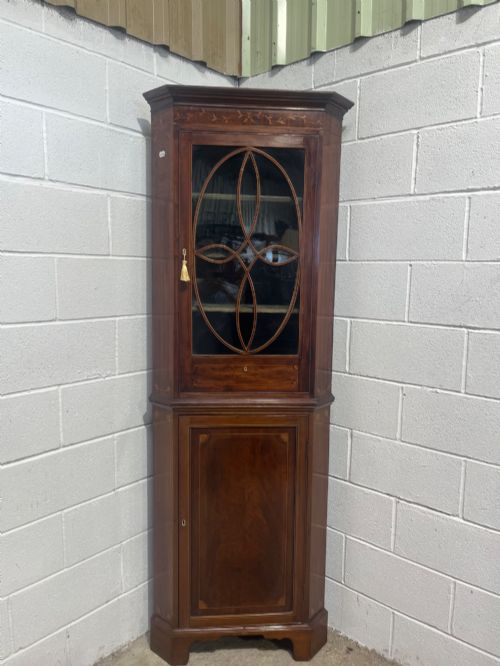
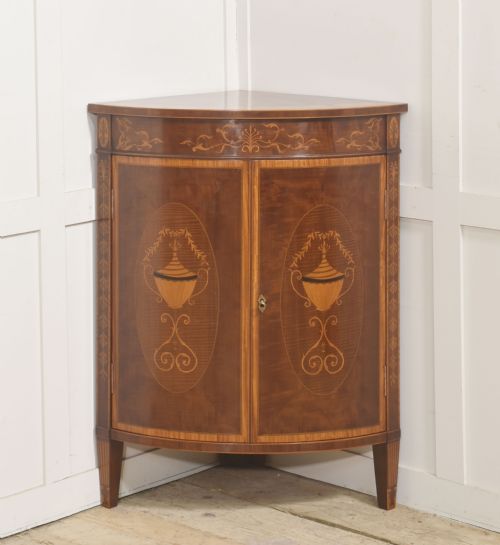
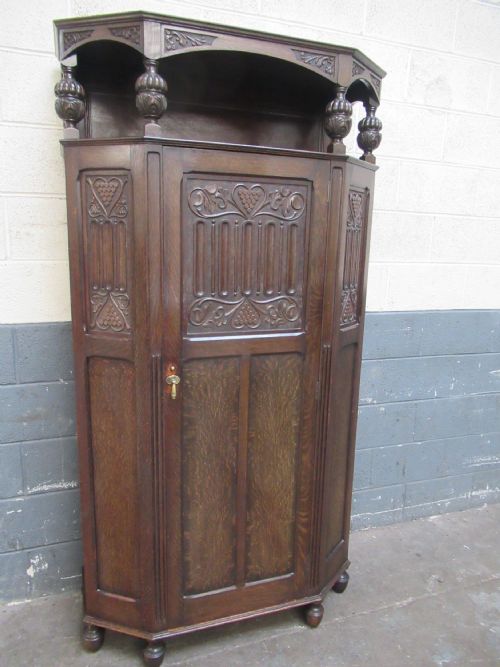
The versions you meet most often on this page date from the Georgian period through to the Edwardian era and the early twentieth century. They arrive in sturdy oak or rich mahogany, sometimes carrying satinwood inlay or glass panels to lighten the heavy timber silhouette.
Markers of quality
Quality rests in the choice of timber grain and the crispness of any inlay or carved detail across the front elevation. Pieces that use figured mahogany or well-matched oak panels show a maker who selected materials for visual depth rather than mere utility.
The integration of the corner angles and the smooth operation of the doors distinguish finer examples from standard workshop output. Superior pieces maintain tight mitres where the sides meet the wall and feature original brass hardware that fits the timber recesses precisely.
Listings feature oak and mahogany standing corner cupboards spanning the eighteenth, nineteenth, and early twentieth centuries, alongside satinwood and glass elements.
Edwards And Roberts
The Vintage Standing Corner Cupboard Glossary
- Bow front
- A convex curved front that swells outward from the corner angles. This shape softens the strict geometry of a room.
- Serpentine front
- A shaped front featuring a concave centre flanked by convex curves. It demands advanced woodworking skill to execute properly.
- Glazed door
- A door fitted with glass panes to display contents safely inside. These often appear on Edwardian and revival display cabinets.
- Inlay
- Contrasting wood or materials fitted flush into the primary timber surface to create decorative patterns. Satinwood frequently serves this purpose.
- Panelled
- Construction method where solid timber floating panels sit within a grooved frame. This allows the wood to expand and contract with humidity without splitting.
Vintage Standing Corner Cupboard: Frequently Asked Questions
How do I place a corner cupboard?
Position the unit directly into a ninety-degree room junction where the straight back panels can sit flush against both adjacent walls. Ensure the floor is reasonably level so the tall carcase stands square without rocking.
Keep the cabinet away from direct heat sources and strong sunlight to protect aged mahogany or oak surfaces from drying out and cracking over time.
What is the difference between Georgian and Edwardian versions?
Georgian examples rely on solid proportions, deep timber tones, and architectural mouldings built for utilitarian or formal country house display. They often feature fielded oak or plain mahogany panels.
Edwardian pieces frequently draw on Sheraton Revival styles, incorporating lighter satinwood inlay, delicate stringing, and glazed display doors designed to showcase decorative ceramics.
Can these cabinets hold heavy items?
The sturdy oak and mahogany carcases provide robust internal shelving capable of supporting heavy books, stoneware, or dense collections of porcelain. The solid floor-standing base distributes the weight directly to the ground rather than relying on wall fixings.
Check the internal shelf supports and wooden pegs to ensure they remain secure before loading heavier pieces onto upper tiers.
How do I care for antique timber?
Dust the exterior regularly with a soft, dry cloth and apply a quality beeswax sparingly to nourish the dry wood grain. Avoid modern silicone sprays that build up a sticky residue over time.
Maintain a stable indoor climate free from sudden dampness or dry heat to preserve the original polish and prevent warping in the antique panels.