

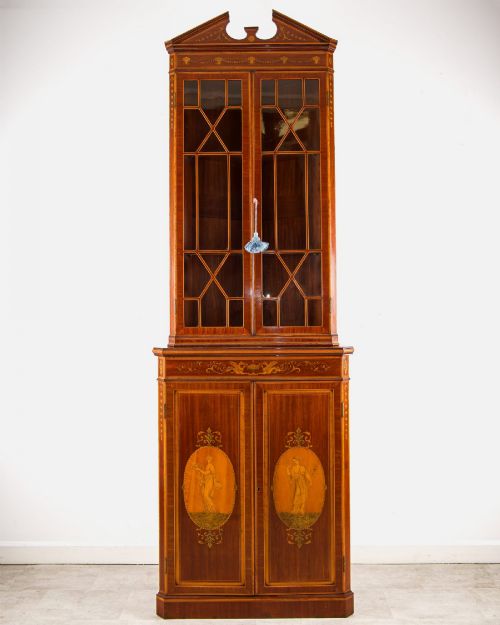
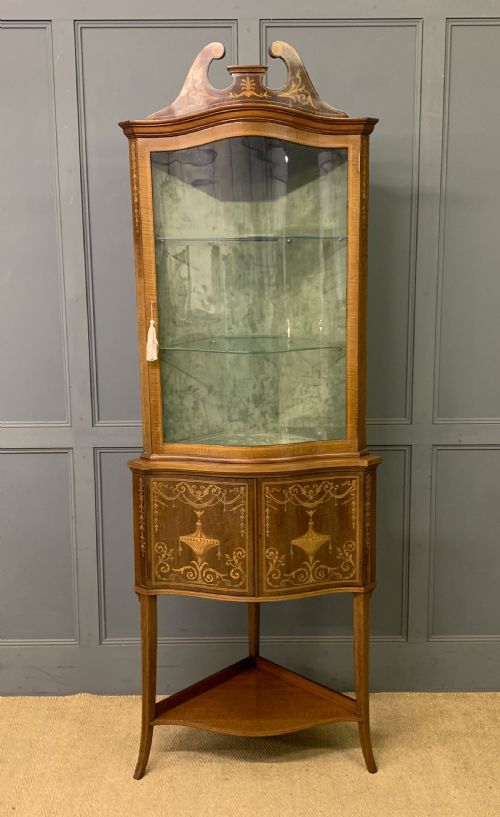


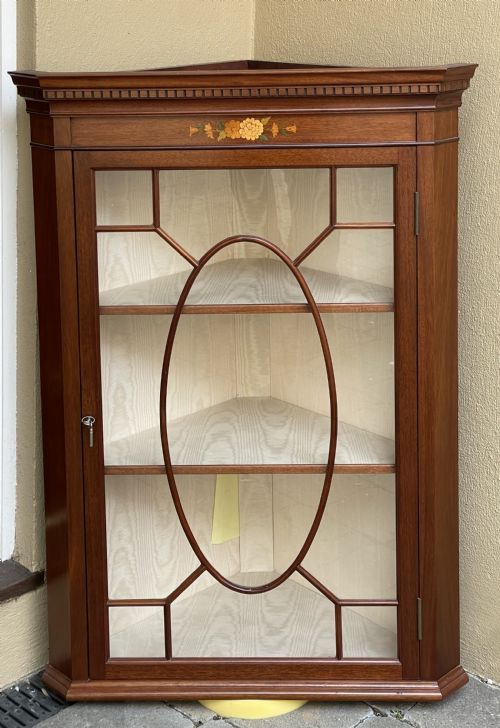

Inlaid Corner Display Cabinet
An inlaid corner display cabinet uses awkward room angles to hold collections behind glass while timber and contrasting lines draw the eye.
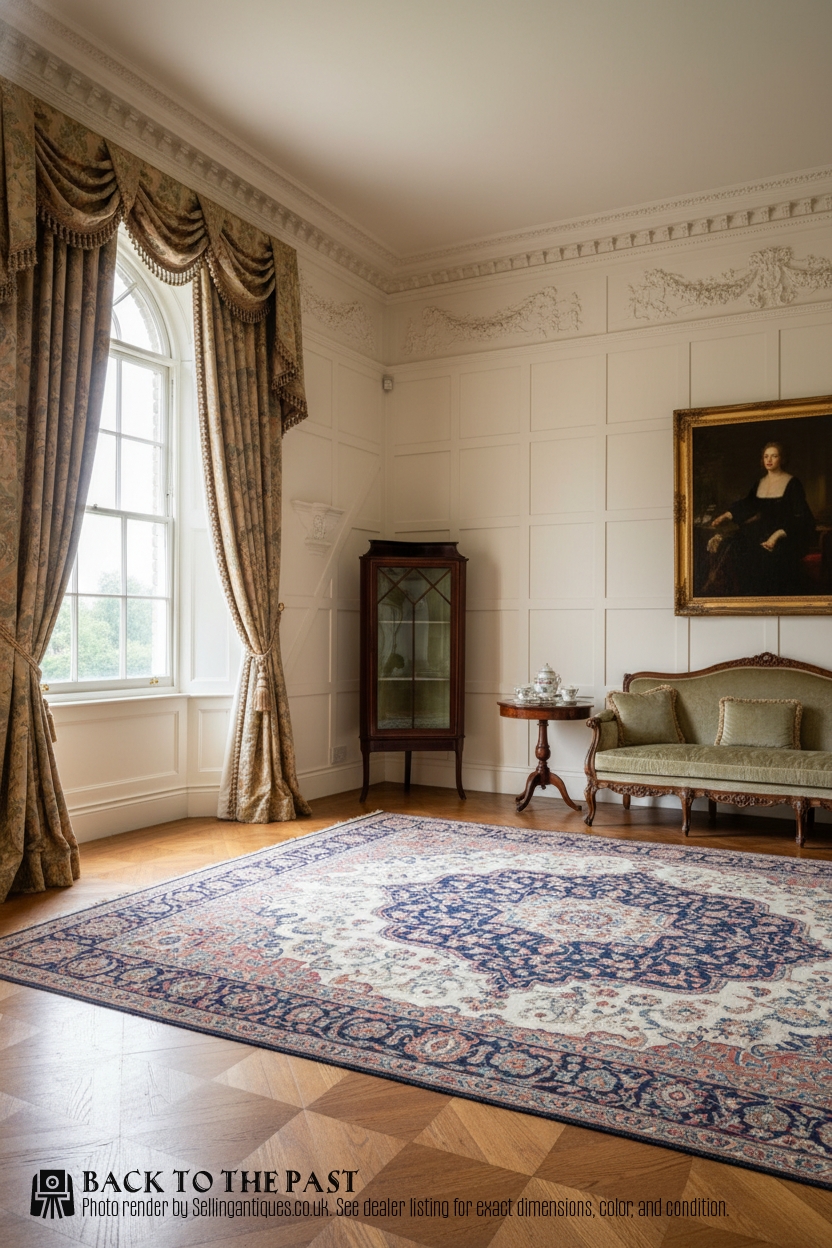
Inlaid Corner Display Cabinet
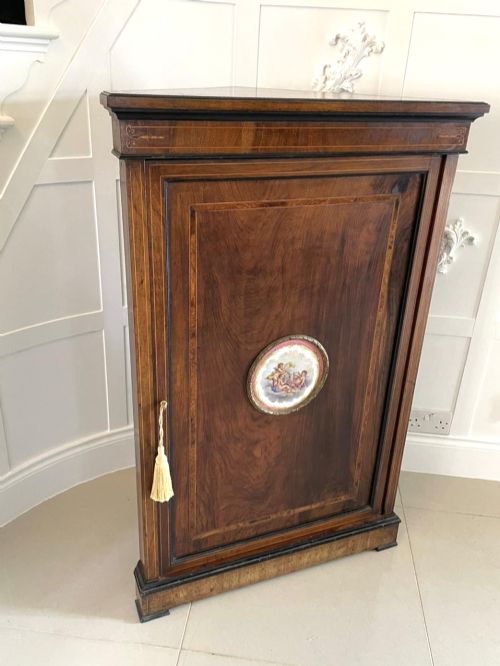
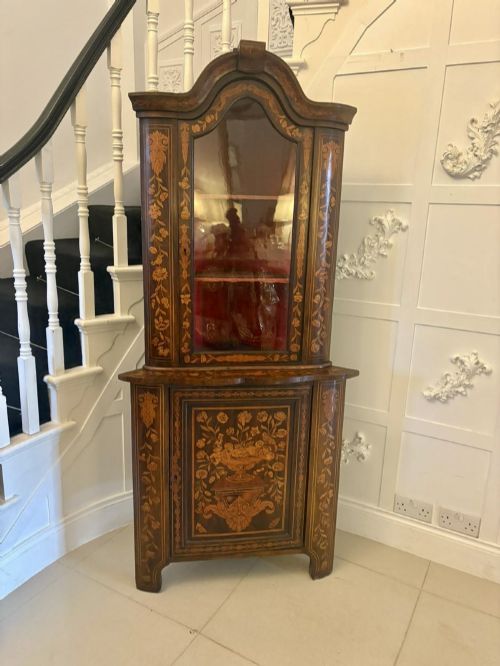
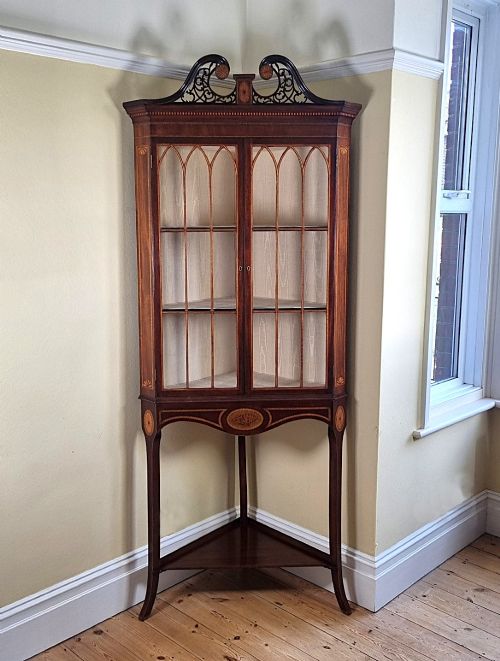
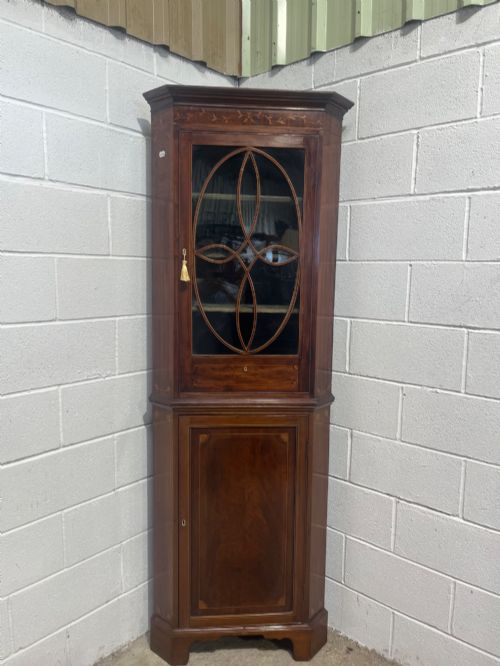
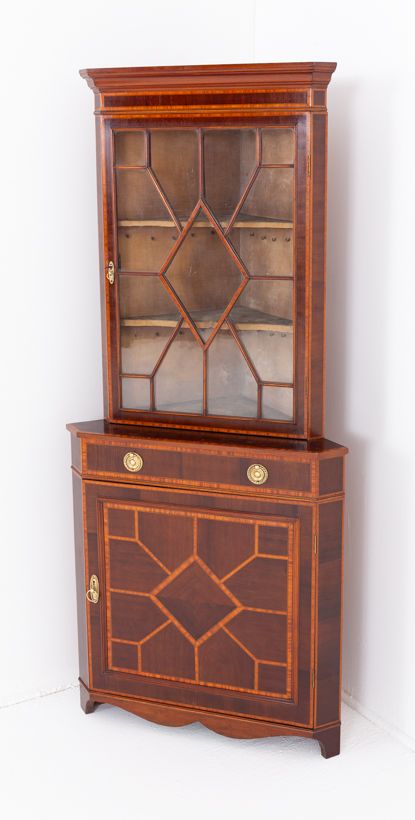
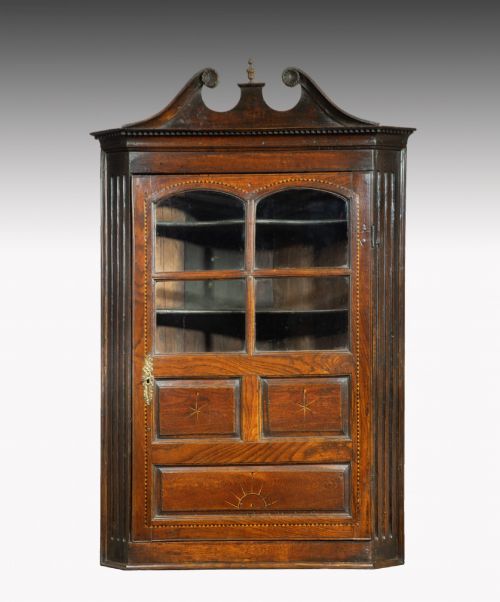
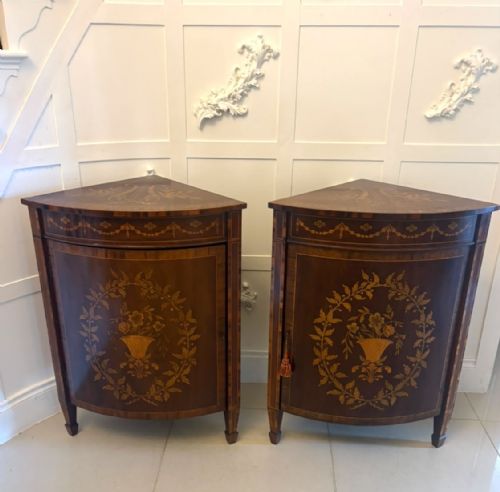
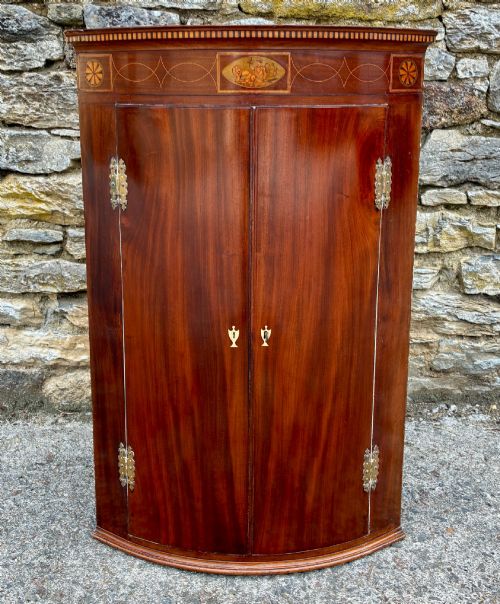
An inlaid corner display cabinet provides shelved storage inside domestic angles, taking the form of wall-hanging cupboards or floor-standing units.
Edwardian pieces dominate the selection alongside Georgian examples, utilising mahogany, walnut, and rosewood timbers.
The layout accommodates domestic rooms by fitting tightly into wall junctions while offering glazed doors for viewing contents.
Materials and construction
Cabinet makers built these carcasses chiefly in mahogany and walnut, occasionally employing satinwood or rosewood for contrast.
Marquetry and satinwood inlay supply the decorative surface detail, set into the primary timber alongside brass hardware.
Glazing takes various forms from simple panels to complex astragal bars and bowed glass doors.
These cabinets make brilliant hiding spots for mismatched tea sets.
Craftsmanship and proportion
Superior examples demonstrate tighter timber selection and more intricate marquetry work rather than basic geometric lines.
The proportion between the glazed display area and solid cupboard sections determines the visual balance of the piece.
Joinery execution around the curved bow fronts and corner joints separates standard utility work from finer cabinet making.
Edwards and Roberts
The Inlaid Corner Display Cabinet Glossary
- Astragal glazing
- Timber bars dividing glass panes into smaller geometric sections within the door frame.
- Marquetry
- Decorative veneer patterns assembled from various woods to create pictorial or symmetrical designs on the surface.
- Crossbanding
- A border strip of veneer laid with the grain running perpendicular to the main panel surface.
- Bow front
- A convex curved cabinet facade that projects outward from the corner angles.
Inlaid Corner Display Cabinet: Frequently Asked Questions
How do I hang a wall cabinet?
Wall-hanging corner cupboards require secure fixing to solid masonry or internal wall studs using appropriate brackets.
Weight distribution matters because heavy timber and glass doors place significant strain on the upper fixings.
What fits inside these cabinets?
Shelves accommodate smaller collections such as ceramics, glassware, and silver pieces behind the glazed doors.
Lower enclosed cupboards provide hidden storage for heavier items out of sight.
How do I date an Edwardian piece?
Edwardian cabinets date from the period around nineteen hundred to nineteen ten, often showing Sheraton Revival influence.
Lighter mahogany timbers and delicate satinwood inlay characterise these later constructions.
Are standing and hanging cabinets different?
Standing versions rest directly on the floor as single units or two-part double-height bookcases.
Hanging models mount directly to room walls to utilise vertical space without floor footprints.