

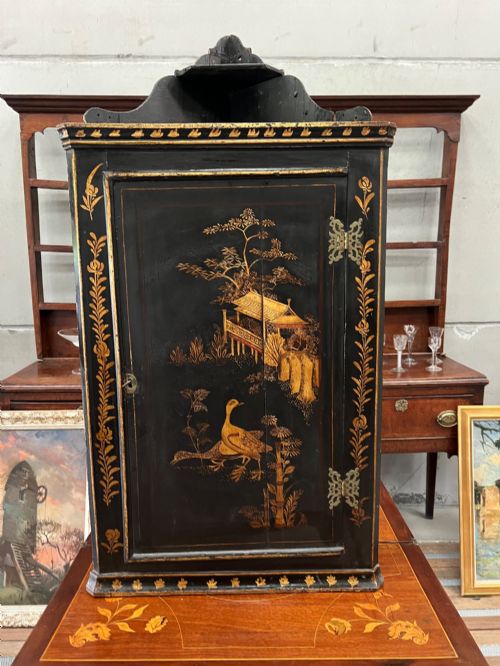
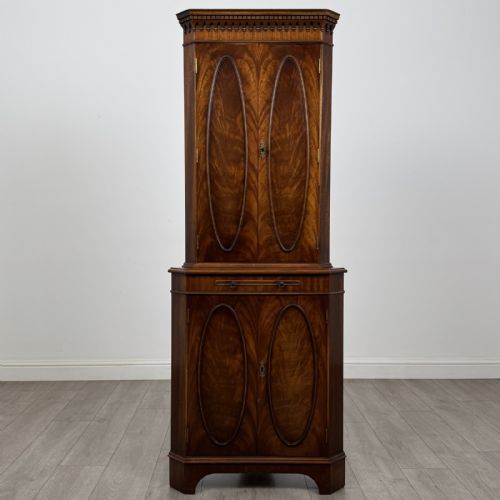
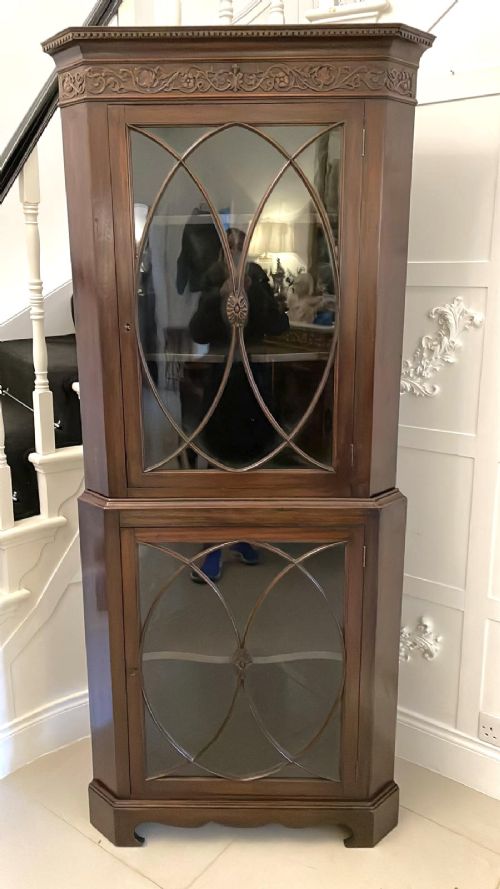
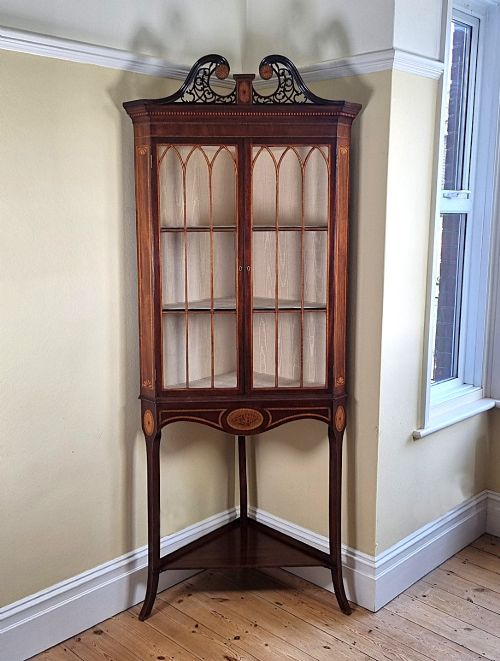
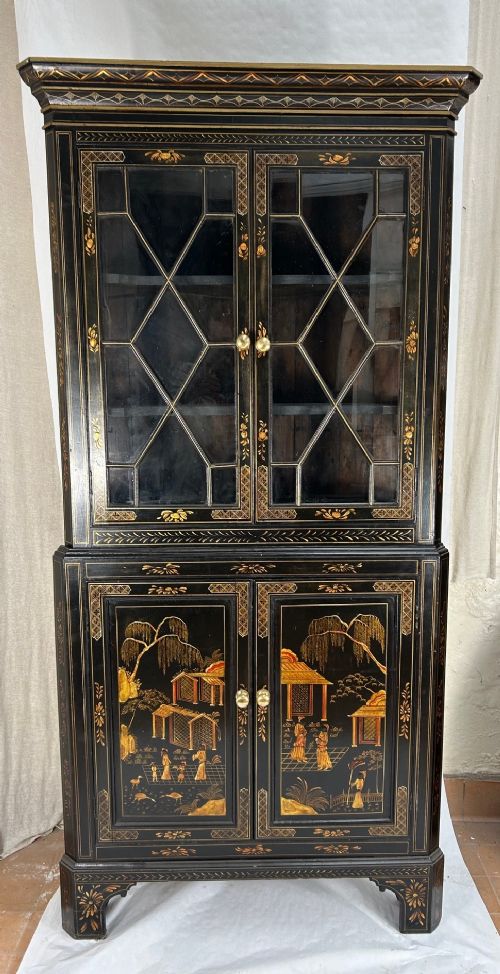
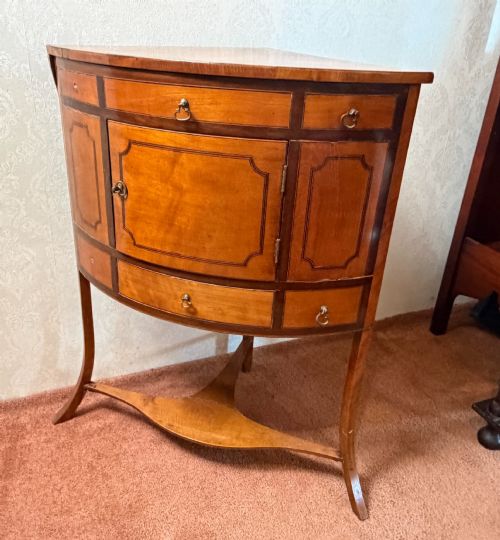
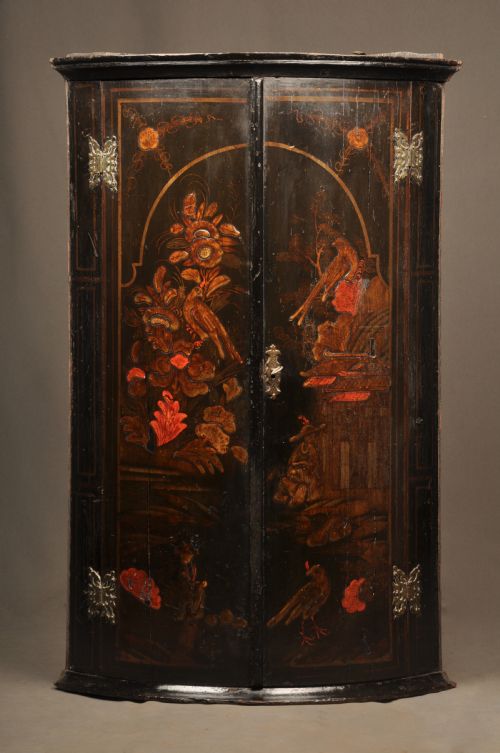
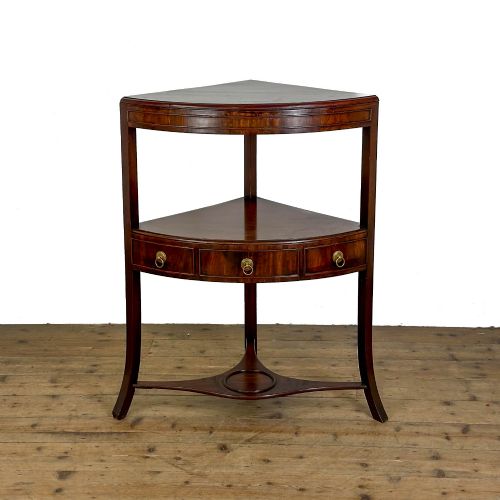




Georgian Style Corner Cabinet
A georgian style corner cabinet turns an awkward room junction into a focal point, bringing rich mahogany and clever display space to empty domestic angles.

Georgian Style Corner Cabinet
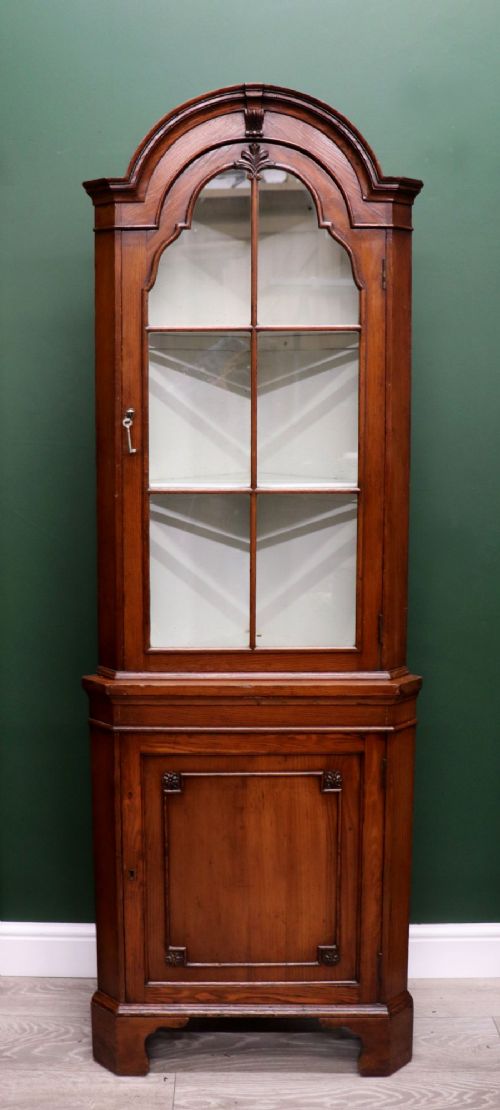
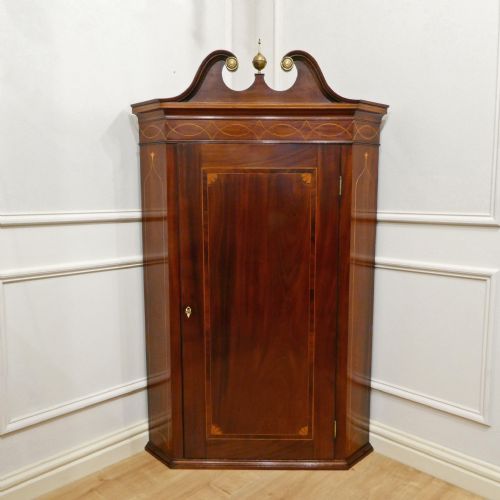
A georgian style corner cabinet makes efficient use of domestic floor space by slotting neatly into a ninety-degree angle, transforming dead room corners into useful storage and display areas. You will find these pieces spanning the eighteenth century through to later revival periods, built either as hanging cupboards or as floor-standing furniture.
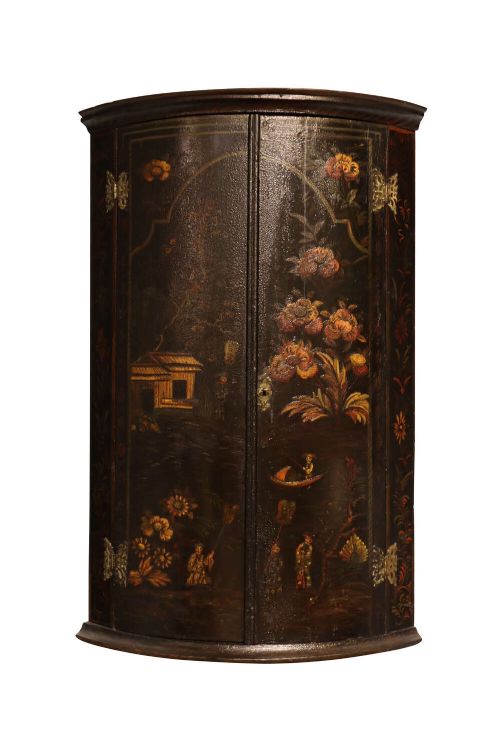
The selection here ranges from compact wall-mounted cupboards to tall, two-part standing cabinets with glass doors, alongside specialised forms like corner washstands. Mahogany remains the dominant timber, though walnut, satinwood, oak, and cherry appear alongside striking japanned lacquer finishes.
Makers across the eighteenth, nineteenth, and twentieth centuries returned repeatedly to these proportions, producing both utilitarian storage cupboards and refined display pieces with astragal glazing. Whether you encounter an authentic period piece or a later Edwardian interpretation, the core architecture remains designed specifically for room junctions.
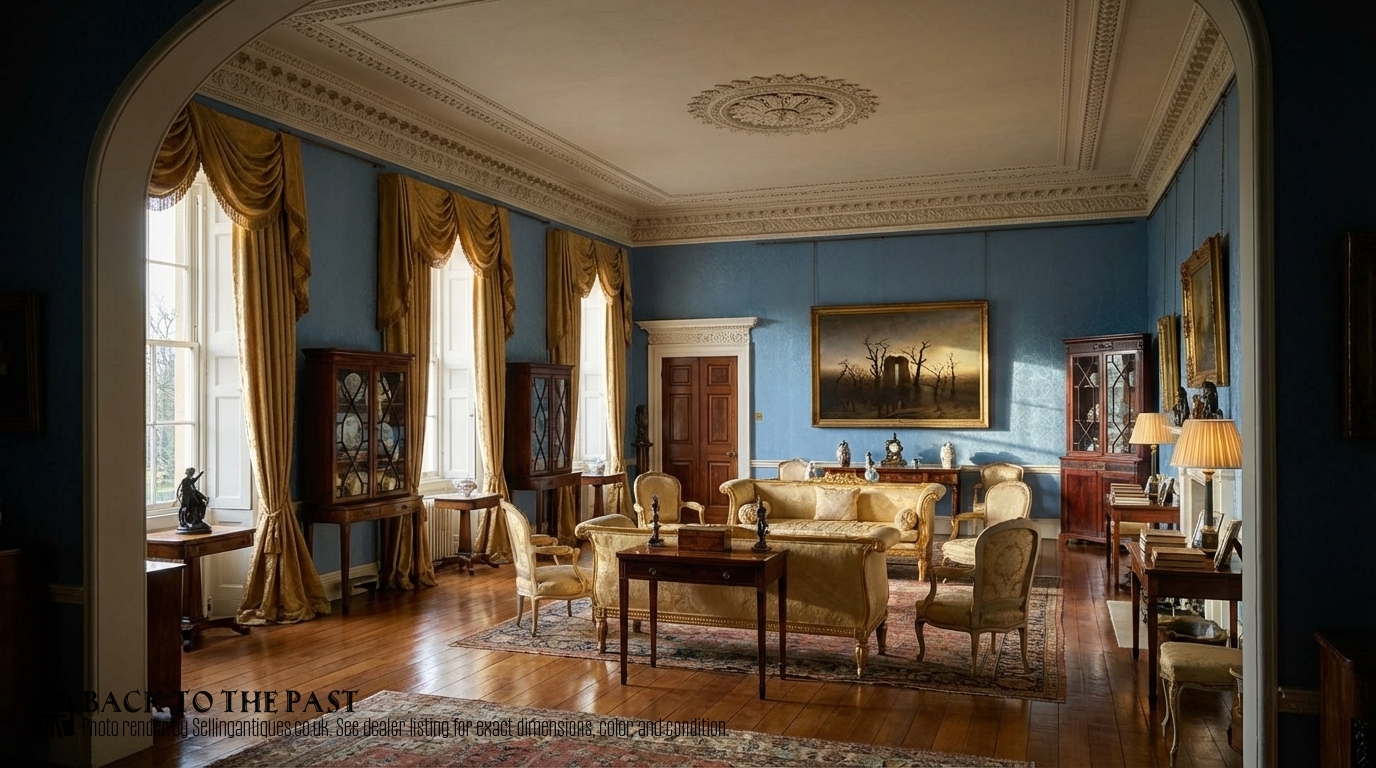
The markers of distinction
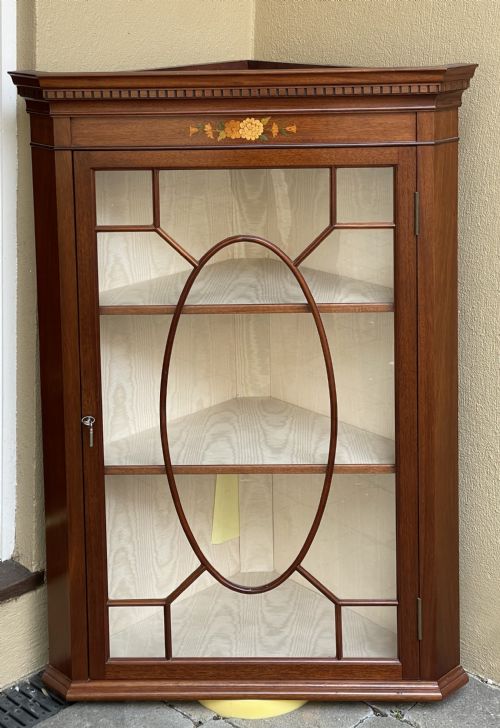
Quality in a georgian style corner cabinet rests upon the selection of timber figures and the crispness of the joinery where the cabinet meets the wall. Superior examples display carefully matched mahogany grains or meticulous marquetry and satinwood inlay rather than uniform, plain boards.
Finer pieces separate themselves through proportion, such as slender bow fronts, well-executed astragal glazing bars, and authentic brass hinges and escutcheons. The depth of hand-applied lacquer work and the intricacy of Chinoiserie detailing likewise divide standard storage cupboards from masterwork display cabinets.
Georgian Style Corner Cabinet Retail Price Guide 2026
Typical asking prices for georgian style corner cabinet among the pieces listed under this phrase on Sellingantiques today, from the lower quarter to the upper quarter. They describe what is for sale here now, not the wider market.
Listings feature timber varieties including mahogany, walnut, satinwood, oak, and cherry, alongside brass hardware and glass panels.

The Georgian Style Corner Cabinet Glossary
- Astragal glazed
- Descriptive term for glass doors divided into small panes by narrow wooden bars, often shaped in geometric or Gothic arches.
- Bow front
- A convex curved cabinet front that projects outward, softening the rigid angles typical of corner furniture.
- Japanned
- European imitation of East Asian lacquerwork, created by applying layers of varnish and metallic dust to wood surfaces.
- Marquetry
- Decorative veneer work formed by fitting together thin pieces of wood, shell, or ivory to create pictorial designs.
- Washstand
- A specialised piece of furniture designed to hold a basin and pitchers, sometimes adapted for corner placement.
Georgian Style Corner Cabinet: Frequently Asked Questions
How do I hang a wall cabinet?
Hanging corner cupboards require secure fixing directly into wall studs or masonry using appropriate brackets, as the solid timber construction carries considerable weight.
Because these pieces project outward from the corner, ensuring the wall mounts can bear the forward leverage is essential for safe installation.
Where should I place a corner cabinet?
These cabinets suit empty room junctions in dining rooms, living spaces, or hallways, where they utilise dead space without obstructing pathways.
Pairing a floor-standing model with surrounding seating or positioning a glazed hanging cabinet above a side table balances the room's proportions.
Are these pieces heavy?
Solid timber construction in dense woods like mahogany, walnut, and oak makes both hanging and standing versions surprisingly weighty.
Two people are usually required to safely lift and position larger two-part standing cabinets or dense hardwood cupboards.
How do I clean lacquer surfaces?
Japanned and lacquered finishes require gentle dusting with a soft, dry cloth to prevent scratching the delicate surface varnishes.
Avoid chemical polishes and damp cloths entirely, as moisture can penetrate hairline cracks and lift the decorative Chinoiserie layers.