
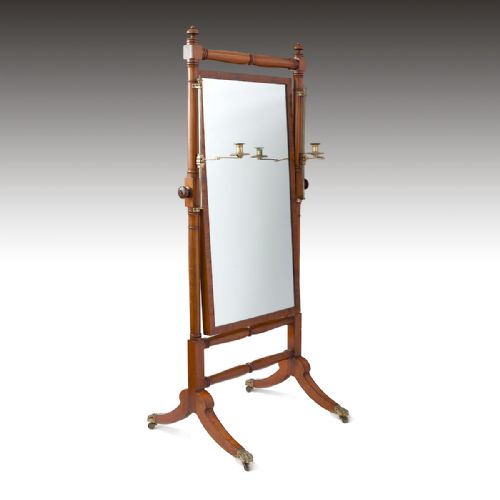
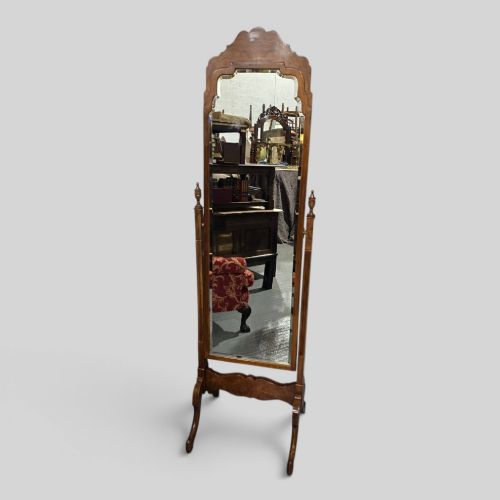
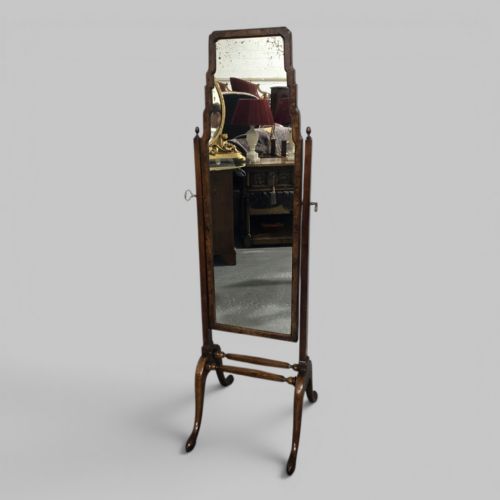
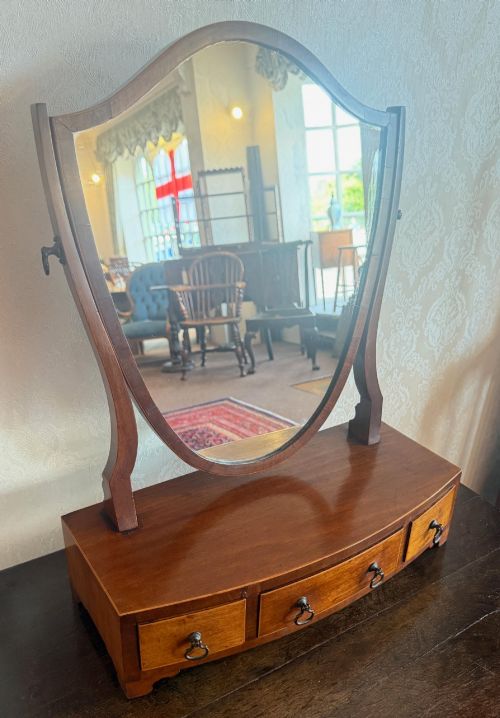


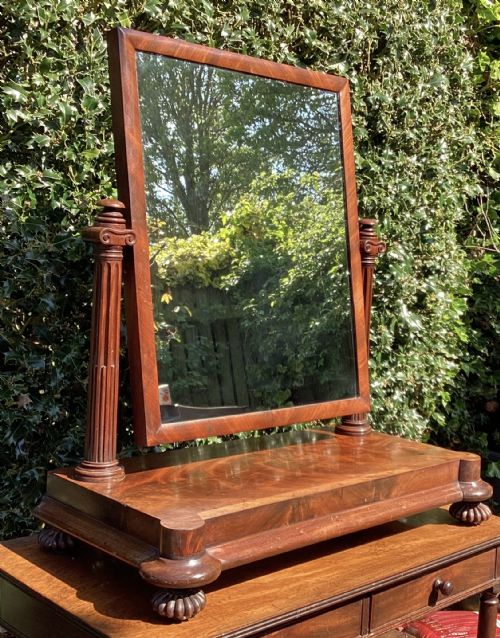


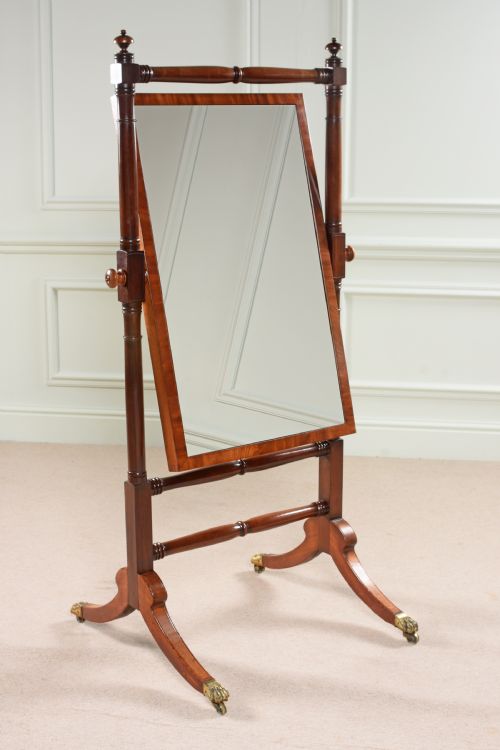

Georgian Style Cheval Mirror
These georgian style cheval mirror pieces are freestanding dressing glasses designed to tilt on floor frames, offering a full-length view for the bedroom.
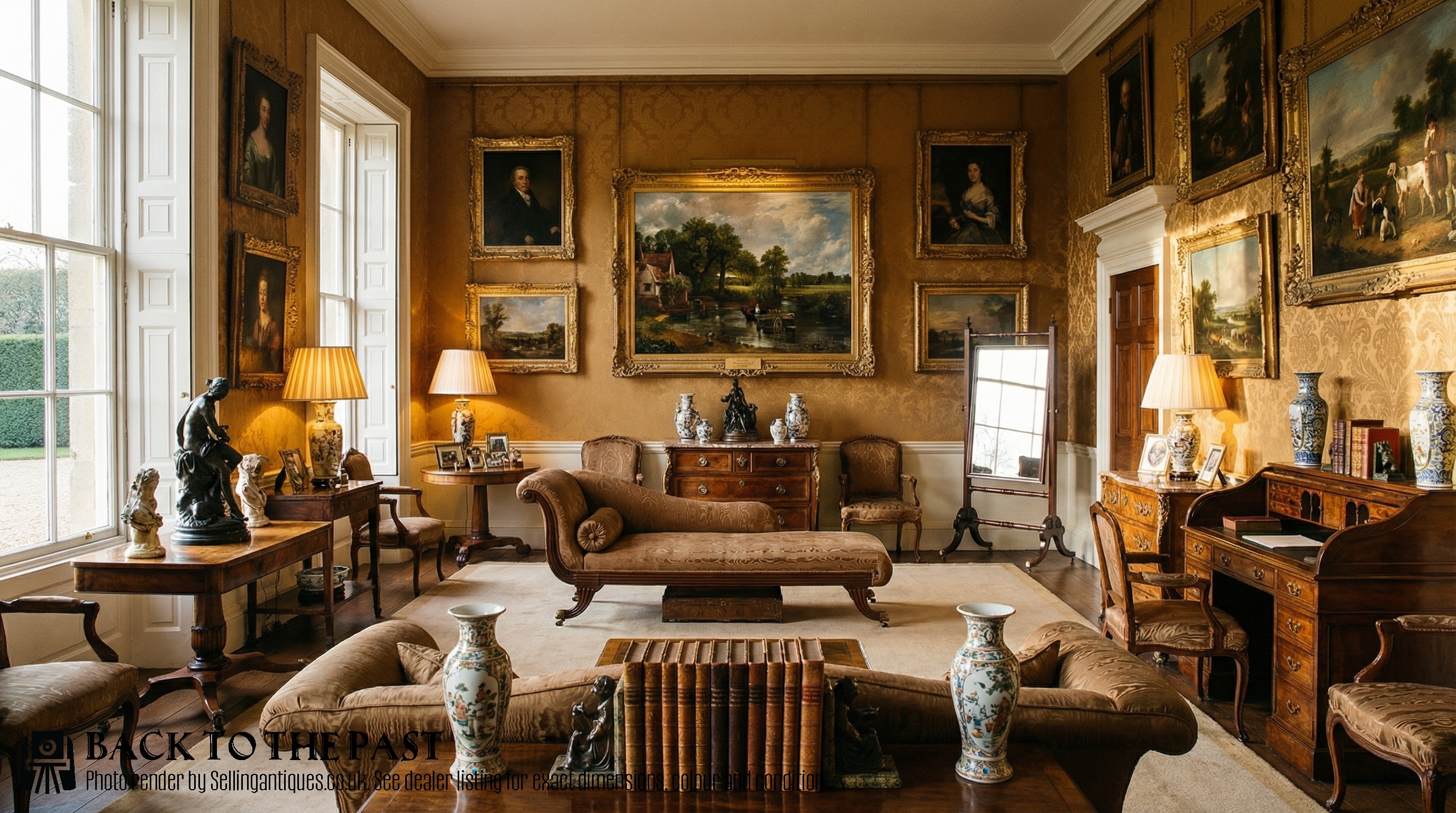
Georgian Style Cheval Mirror
A georgian style cheval mirror stands as a tall, adjustable floor-standing glass held within a supportive frame, allowing the user to angle the reflective surface. The form encompasses authentic period examples alongside later revivals spanning the nineteenth and twentieth centuries.
Most pieces seen here follow traditional proportions in mahogany or walnut, featuring upright pillars connected by a pivoting mechanism. Smaller dressing table variants and large robing mirrors also appear under this heading.
Originating to serve the bedroom or dressing room, these pieces combine practical utility with architectural timber framing. Collectors encounter both restrained rectilinear designs and more decorative marquetry or inlaid specimens.
How they were made
Cabinetmakers constructed these frames primarily in mahogany and walnut, occasionally incorporating satinwood inlay or burr veneers to enhance the surface appearance. Brass fittings such as sabots, castors, and pivoting hardware secure the swing glass and allow smooth movement.
The mirror glass itself sits within a secondary frame suspended between sturdy uprights, supported by either splayed legs, sabre legs, or robust trestle bases. Joinery techniques reflect the period of manufacture, from eighteenth-century cabinet work to later revival craftsmanship.
Georgian Style Cheval Mirror Retail Price Guide 2026
Typical asking prices for georgian style cheval mirror among the pieces listed under this phrase on Sellingantiques today, from the lower quarter to the upper quarter. They describe what is for sale here now, not the wider market.
Listings feature mahogany, walnut, and satinwood, spanning the Georgian, Regency, Victorian, and later revival periods.
What varies in quality
The distinction between standard examples and finer pieces lies in the choice of timber and the crispness of the carving or inlay work. Superior items display well-figured grain, such as burr walnut or select mahogany, matched with solid brass mounts.
Structural integrity of the pivoting mechanism and the weight of the timber frame dictate how steadily the glass holds its angle. Refined proportions and delicate stringing or marquetry separate workshop standards from simpler production.
Gillow
The Georgian Style Cheval Mirror Glossary
- Cheval mirror
- A freestanding floor-length dressing glass mounted on a pivoting frame. The term derives from the French word for horse, referencing the supporting trestle legs.
- Sabot
- A metal sleeve fitted to the foot of a furniture leg for protection and decoration. Brass versions appear frequently on nineteenth-century supports.
- Marquetry
- Decorative veneer patterns applied to furniture surfaces using various tinted woods. Dutch examples often display elaborate floral and bird motifs.
- Castor
- A small wheel attached to the base of a leg to aid movement. These allow the heavy mirror frame to be repositioned across the floor.
- Stringing
- Thin inlaid lines of contrasting wood used to outline panels and borders. This technique highlights the geometry of the frame.
Georgian Style Cheval Mirror: Frequently Asked Questions
How do I tilt the mirror?
The glass hangs on lateral pivot screws or pins set into the upright posts. Adjusting these tension fittings allows the mirror plate to tilt smoothly to the desired angle.
Over-tightening can strain the wooden frame, while loose fittings cause the glass to slip. Balanced tension keeps the mirror secure during daily use.
Where should I place a cheval mirror?
Position the piece near a natural light source in a bedroom or dressing area to maximise its reflective function. Ensure the floor surface is level so the heavy frame rests evenly on its feet or castors.
Allow sufficient clearance around the base for the swinging arc of the mirror plate. This prevents the frame from striking walls or furniture when tilted.
How do I date a mahogany frame?
Examine the timber grain, construction joints, and secondary woods used at the back of the frame. Georgian examples display dense, patinated mahogany with traditional hand-cut joinery.
Later revival pieces from the twentieth century often utilise machine-made components and brighter, more uniform timber finishes. The style of the brass castors and pivoting hardware also provides chronological clues.
Are these mirrors heavy to move?
Solid hardwood frames combined with heavy glass plates give these pieces substantial weight. Many examples feature original brass castors designed to assist with repositioning across carpeted or wooden floors.
When moving the mirror, support both the upper frame and the base simultaneously to avoid straining the pivot joints. Lifting rather than rolling across uneven thresholds protects the structural frame.