
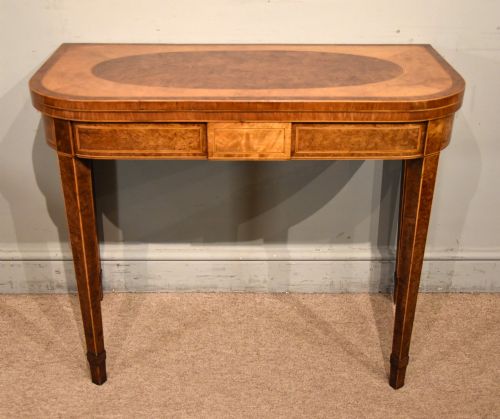
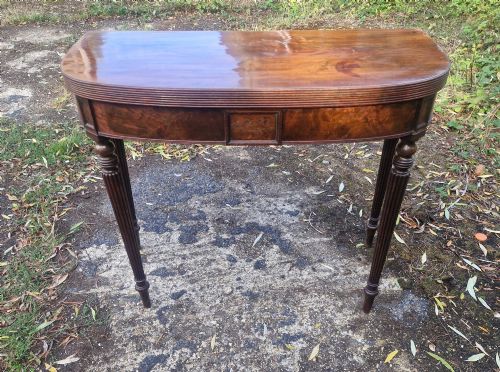
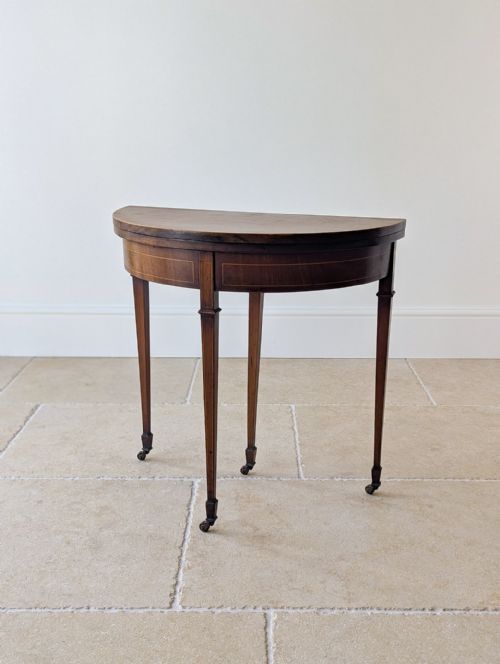
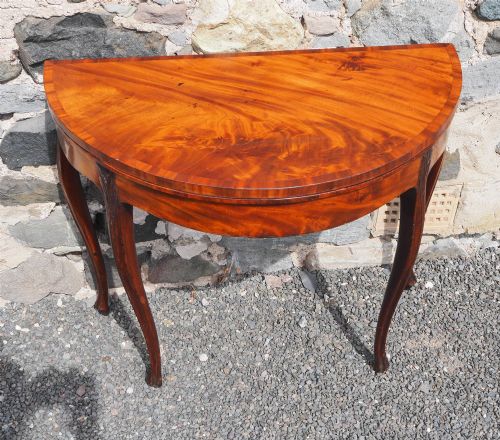


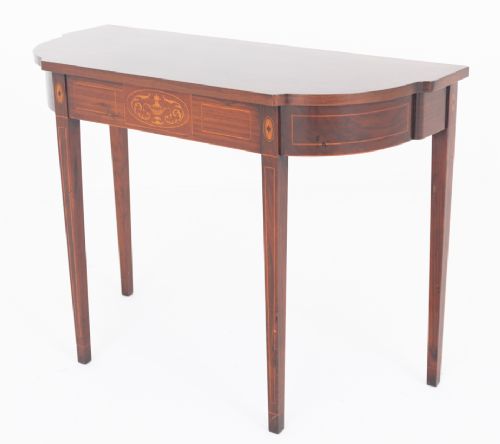

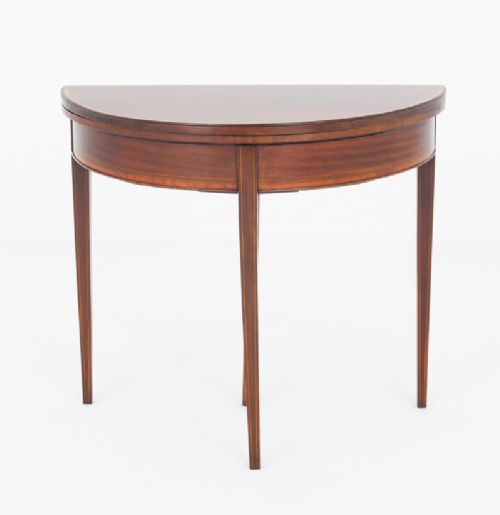

Georgian Style Card Table
A georgian style card table brings the versatile fold-over games surface of the eighteenth century into later revival interiors with elegance.
What these pieces are
A georgian style card table reproduces the folding game and console surfaces characteristic of earlier eras, built during the Victorian, Edwardian, and early twentieth-century periods. These pieces serve primarily as side or console furniture when closed, opening to reveal baize-lined surfaces designed for card games.
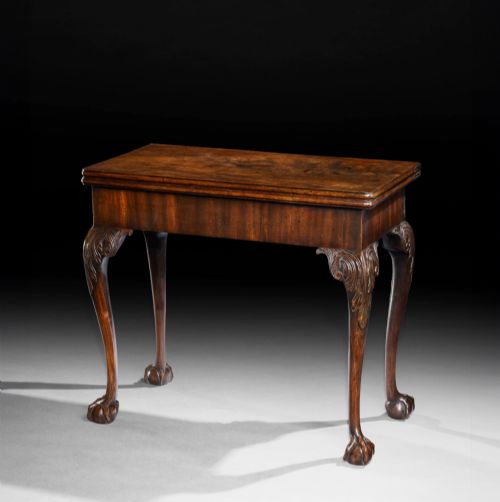
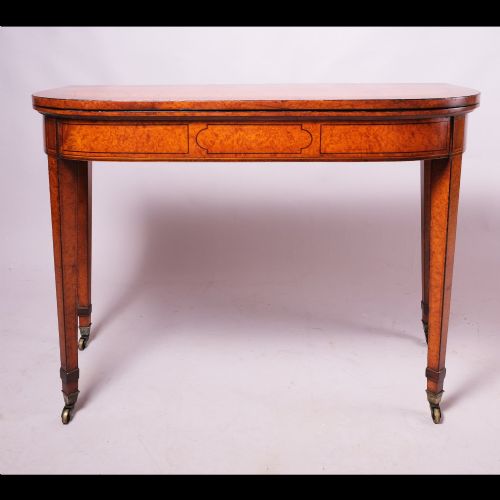
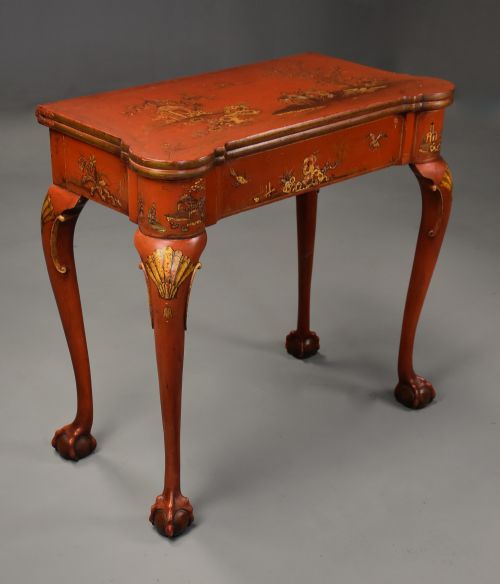
The versions most commonly met on this page date from around nineteen hundred to the nineteen-twenties, frequently adopting revival idioms such as Sheraton, Hepplewhite, and Chippendale designs. Mahogany and burr walnut dominate the forms, alongside painted timber and red lacquered Chinoiserie finishes.
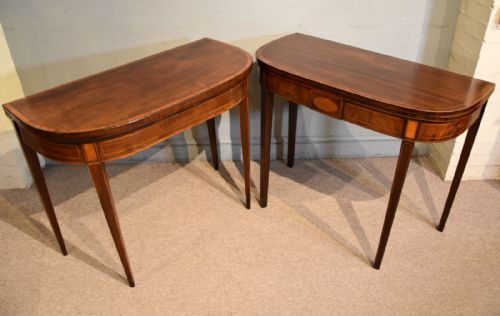
Makers of these revival pieces utilised demi-lune shapes and folding mechanisms that echo genuine eighteenth-century prototypes while supplying the sturdier timber frames favoured by later households. They offer the visual presence of earlier furniture combined with the structural reliability of Edwardian and Victorian manufacturing.
How they were made
Construction relies heavily on solid woods and veneered surfaces, with mahogany, satinwood, and burr walnut forming the primary structural and decorative elements. Craftsmen applied rosewood inlay and intricate marquetry to enhance the timber grain, while other examples received painted timber finishes or red lacquer for Chinoiserie aesthetics.
The folding tops operate on hinged wooden frameworks or pivoting mechanisms that transform a narrow console table into a square or demi-lune playing surface. Gilt highlights occasionally accent the carved wooden details and edges of the more decorative revival tables.
Retail Price Guide 2026
Typical UK retail prices for georgian style card table, calculated from the Sellingantiques database of over a million retail prices indexed since 2003. This retail price guide relies exclusively on Sellingantiques data; no external sources or auction records are used, so the figures do not describe the wider market.
Every card table hides a silent invitation to deal a hand, even if its modern destiny is simply holding a lamp.
What varies in quality
The distinction between standard production and finer execution lies in the choice of timber veneers and the precision of the inlay work. Burr walnut and satinwood surfaces demand expert selection to ensure harmonious grain patterns across the fold-over top.
Structural integrity in the hinge and pivot mechanisms dictates how smoothly the folding top operates and how securely the rear leg supports the extended leaf. Superior examples maintain tight joints and balanced proportions whether displayed closed against a wall or opened for play.
The Georgian Style Card Table Glossary
- Demi-lune
- A half-moon shape characteristic of tables designed to sit flush against a wall when closed. This form allows the furniture to occupy minimal space until unfolded for evening entertainment.
- Chinoiserie
- A decorative style employing European interpretations of Chinese motifs, often executed in red lacquer with painted figures and landscapes. It appears on revival pieces from the Edwardian era and the early twentieth century.
- Marquetry
- The art of applying pieces of veneer to a structure to form decorative patterns and pictures. In these tables, contrasting timbers create floral or geometric designs across the top surface.
- Fold-over top
- A hinged tabletop construction where the upper leaf swings open to double the surface area. This mechanism conceals the interior games well when the table functions as a console.
- Sheraton style
- A neoclassical design vocabulary named after the furniture maker Thomas Sheraton, defined by slender tapered legs and delicate inlay. Revival versions translate these lighter proportions into late nineteenth and early twentieth-century furniture.
Frequently Asked Questions
How do you open the top?
The top leaf lifts and swings on hinges or pivots outward to rest upon a pull-out or swinging rear leg. This movement uncovers a flat surface, often lined with baize or felt for playing cards.
Properly adjusted mechanisms move smoothly without binding against the frieze. Users should support the weight of the folding leaf rather than relying entirely on the hinge pins during movement.
Where should I place one?
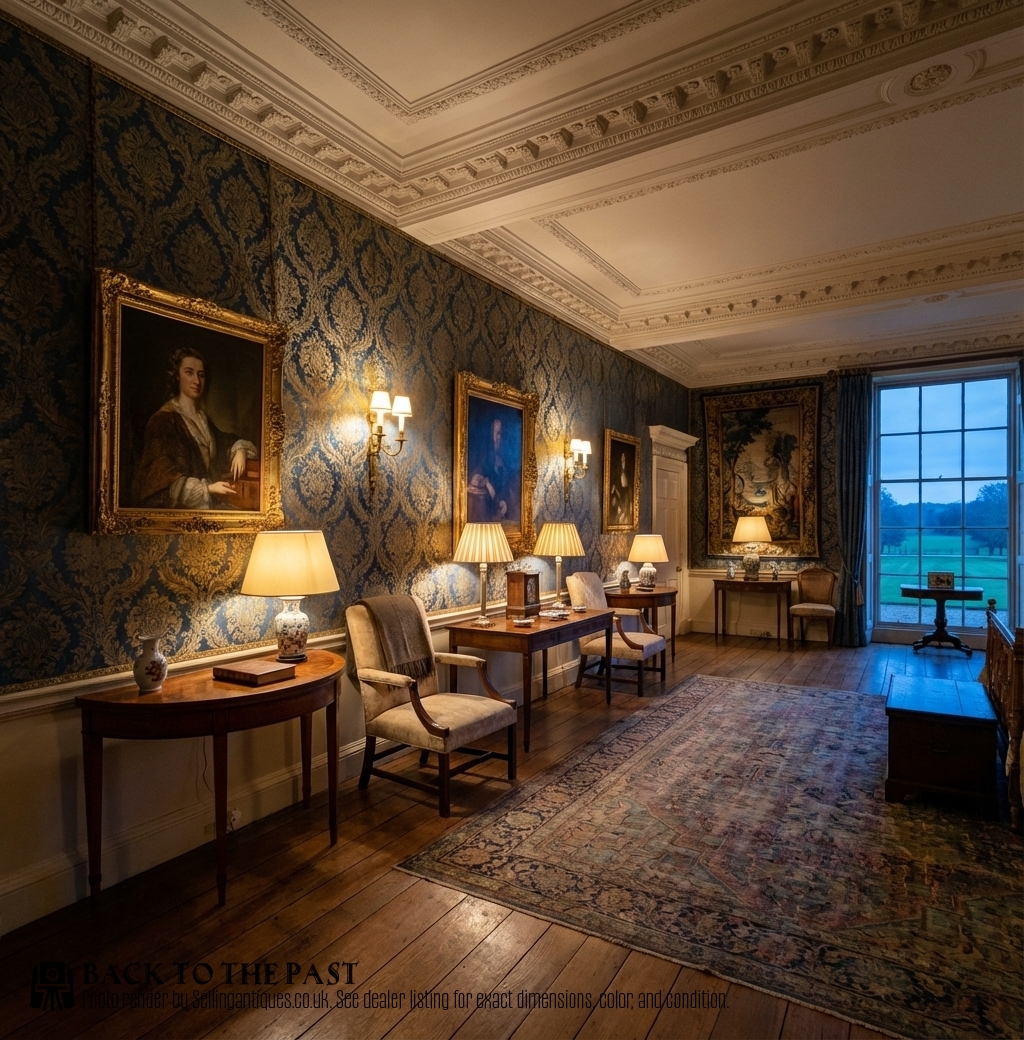
These tables suit hallways, living rooms, and dining spaces where a narrow console profile is useful against a wall. Because the back is often finished to match the front, they can also stand in open spaces.
Keeping them away from direct heat sources and strong sunlight protects the wood veneers and polished finishes. They function effectively as display surfaces for lamps and decorative objects when not in use for games.
How do I identify the period?
Dating relies on timber selection, construction methods, and revival styles visible in the piece. Tables showing Edwardian inlay or early twentieth-century lacquering reflect the manufacturing tastes of those specific decades rather than the eighteenth century.
Examining the secondary woods inside the frame and the wear on the hinges helps clarify when the piece was constructed. Revival furniture often incorporates heavier framing timber than authentic eighteenth-century examples.