

Georgian Style Bedside Tables
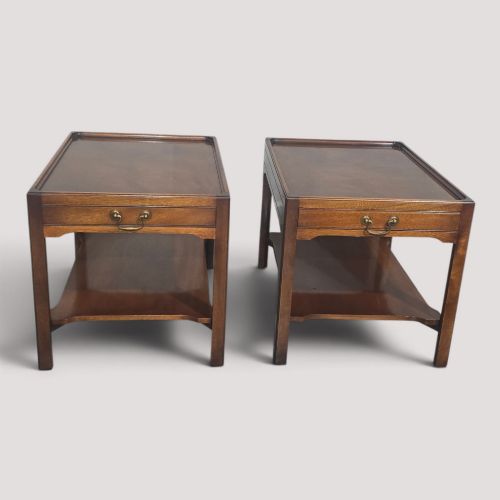
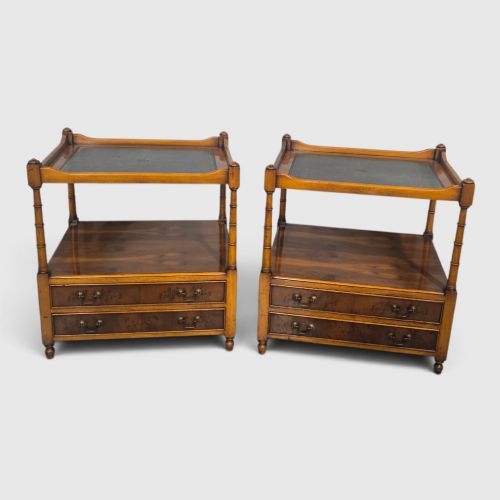
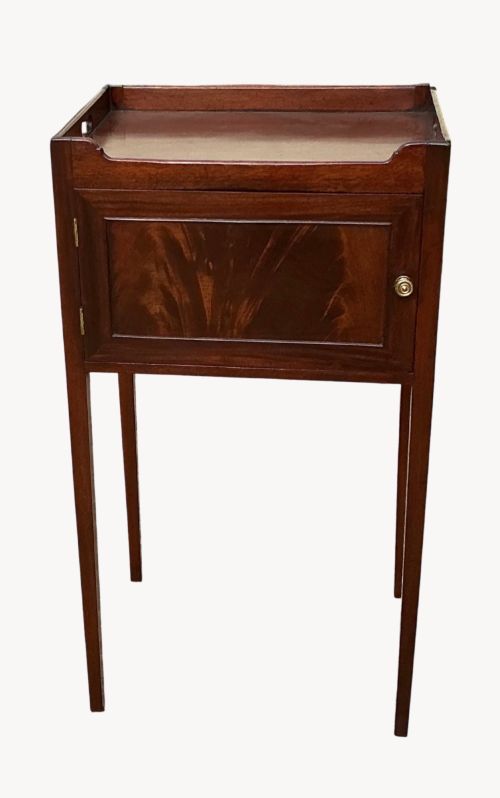
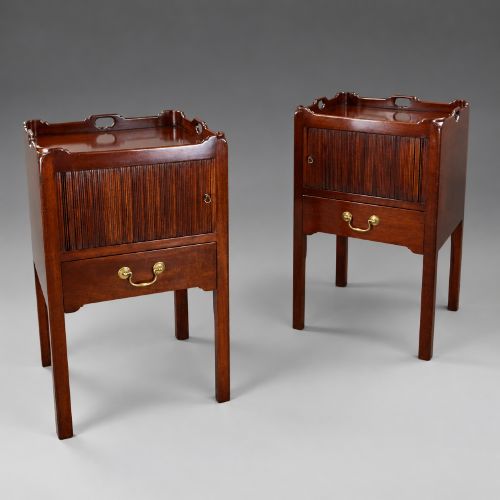
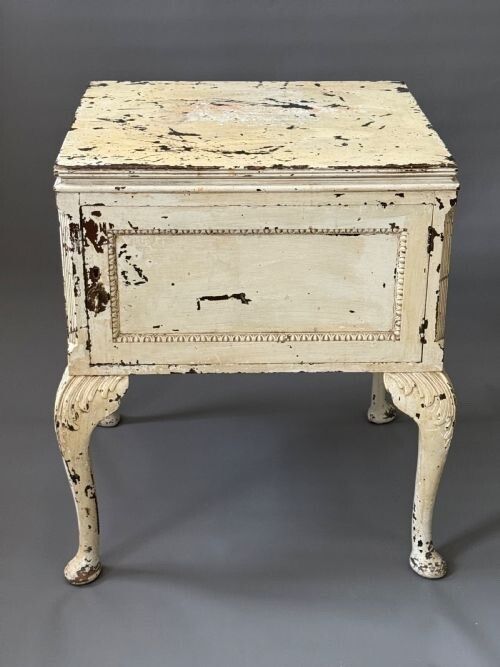
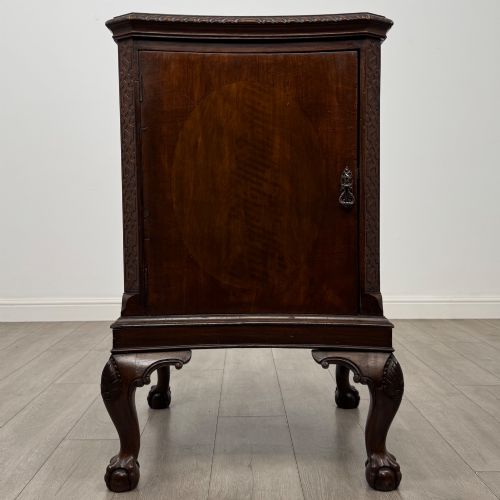
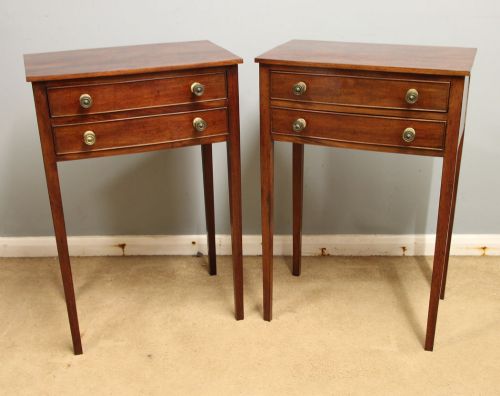
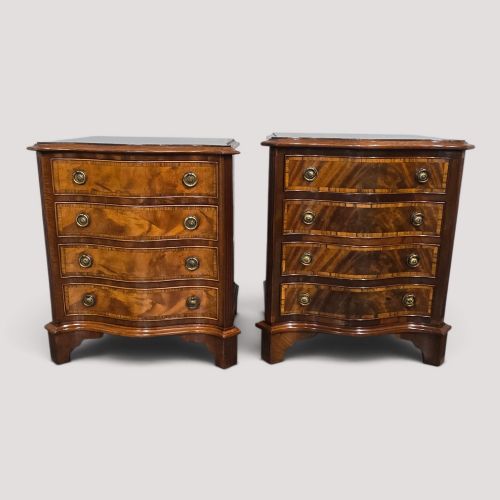
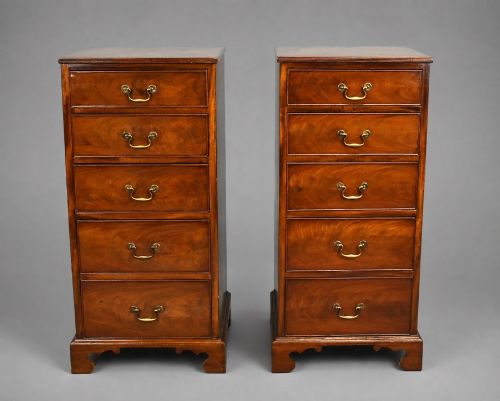
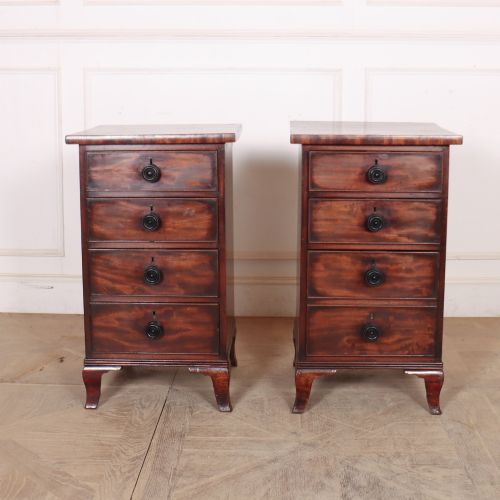
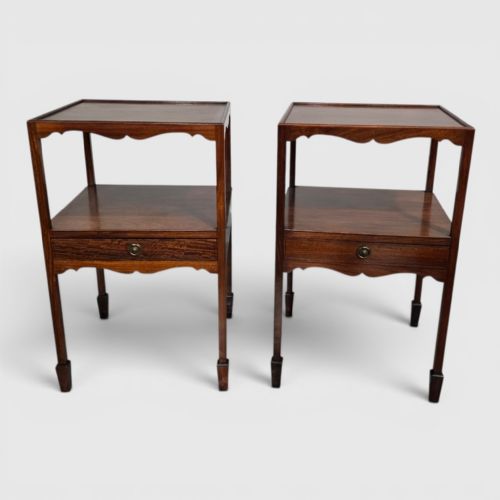
These georgian style bedside tables bring period proportion to the bedroom, appearing most frequently as matching pairs crafted in mahogany or walnut.
Georgian Style Bedside Tables
When you search for georgian style bedside tables, you encounter compact bedside cabinets, small chests of drawers, and lamp tables designed for the bedroom. The pieces originate from 18th Century workshops as well as later revival periods spanning the Edwardian era into the 1930s.
Most examples found here date from the early 20th Century, including pieces created during the Georgian Revival, Sheraton Revival, and Chippendale Revival movements. These later interpretations adopt the classic proportions and enclosed cupboard forms of earlier periods.
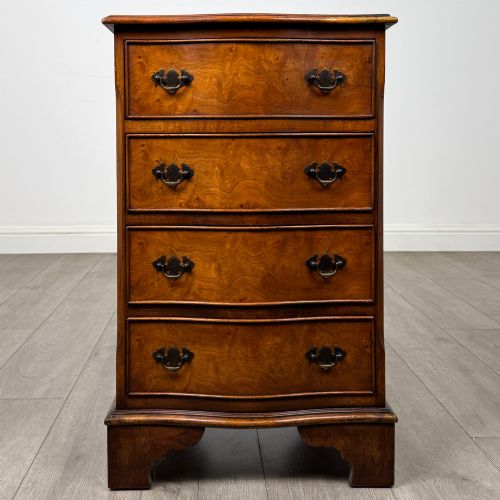
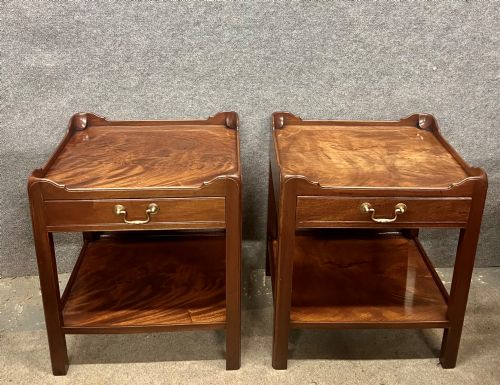
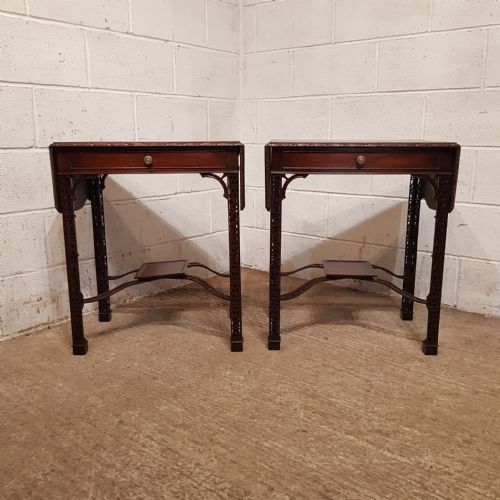
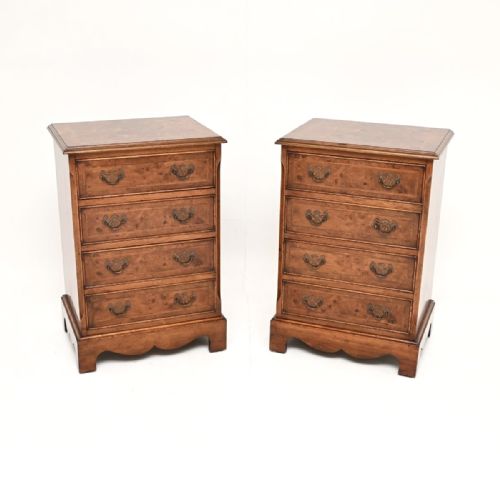
Makers produced these tables primarily as pairs or single occasional pieces intended to sit beside a bed. Their forms range from straight-sided cupboards and drop leaf side tables to serpentine chests of drawers.
Materials and technique
Cabinet makers relied heavily on solid timber and veneers, selecting mahogany, walnut, and burr walnut for their rich grain patterns. Workshops incorporated satinwood, boxwood, and brass hardware to provide contrast and structural detail.
Construction techniques include traditional joinery paired with fine inlay work and occasional leather top inserts. Surviving examples show craftsmen shaping timber into serpentine curves and pedestal configurations.
Georgian Style Bedside Tables Retail Price Guide 2026
Typical asking prices for georgian style bedside tables among the pieces listed under this phrase on Sellingantiques today, from the lower quarter to the upper quarter. They describe what is for sale here now, not the wider market.
Mahogany and walnut dominate the material palette, complemented by occasional use of satinwood, burr walnut, and leather tops.
Craftsmanship and proportion
The distinction between standard production and the finest pieces rests on timber selection and timber matching. Superior examples display carefully chosen burr walnut or figured mahogany across the entire surface rather than relying on plain secondary woods.
Attention to detail in the revival styles separates exceptional cabinets from ordinary ones. Well-executed string inlay, precise brass mounts, and balanced serpentine proportions elevate the finish of individual bedside chests.
Holland & Sons
The Georgian Style Bedside Tables Glossary
- Georgian Revival
- A design movement spanning the late 19th and early 20th Centuries that reinterpretd 18th Century architectural and furniture forms. Makers utilised traditional timber species to recreate historic aesthetics.
- Serpentine
- A furniture front or table edge curved in a wave-like shape, concave in the centre and convex at the ends. This profile requires skilled carpentry to execute cleanly.
- Burr Walnut
- Wood taken from a walnut tree growth or burl, yielding intricate, swirling grain patterns. Cabinet makers prized this veneer for high-end table tops and cabinet doors.
- Sheraton Revival
- An Edwardian style drawing inspiration from the late 18th Century designs of Thomas Sheraton. Pieces often feature delicate inlay, satinwood borders, and tapered legs.
Georgian Style Bedside Tables: Frequently Asked Questions
What defines a georgian style bedside table?
These tables draw design cues from 18th Century furniture, featuring classical proportions, bracket feet, and panelled doors. They are built primarily as enclosed cupboards or small chests.
While original 18th Century pieces exist, many available examples stem from 20th Century revival periods that faithfully replicated these traditional proportions.
Are these tables usually found in pairs?
Many listings consist of matched pairs designed to flank a bed symmetrically. Workshops often produced bedside cabinets in matching sets.
Single tables also appear frequently, serving as versatile lamp tables or occasional surfaces in smaller bedrooms.
Which woods were used for these cabinets?
Mahogany and walnut form the primary construction materials across the majority of pieces. Craftsmen utilised burr walnut and satinwood for decorative veneering.
Secondary woods and inlay details incorporate boxwood and brass accents to frame drawer fronts and cabinet doors.
How do I distinguish revival periods from older pieces?
Examining the interior construction, drawer linings, and secondary timbers reveals the manufacturing era. Edwardian and 1930s revival pieces often show machine-finished elements alongside traditional joinery.
Timber ageing and hardware fixings further help differentiate 18th Century originals from 20th Century interpretations.