



Queen Anne Bedside Cabinets
Queen anne bedside cabinets bring refined walnut timber and classic revival proportions to the bedroom.
Queen Anne Bedside Cabinets
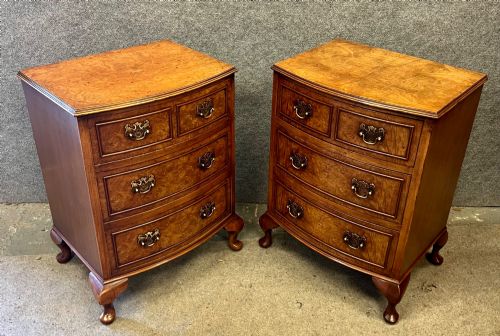
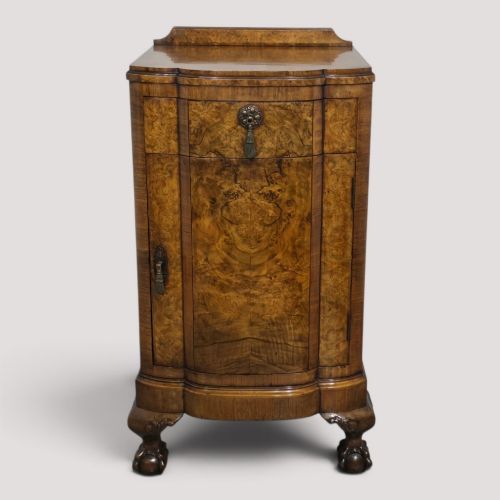
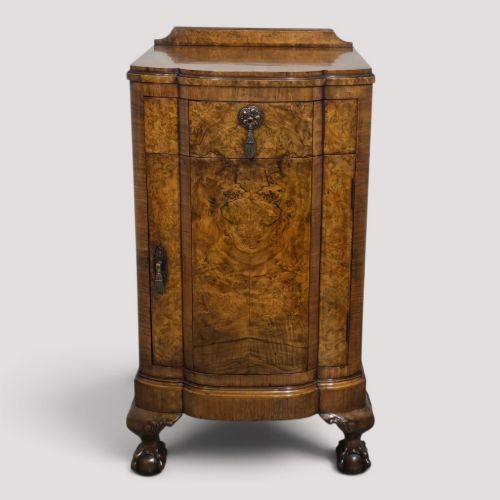
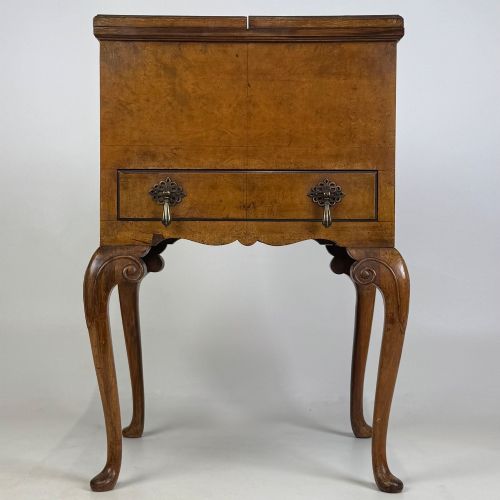
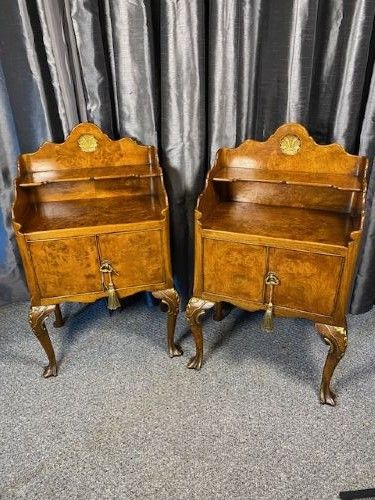
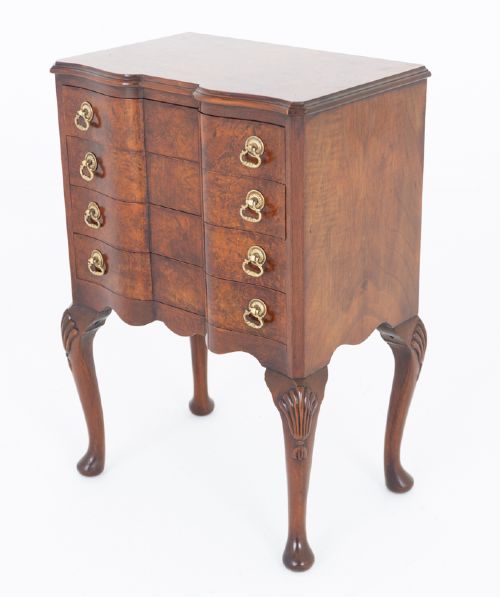
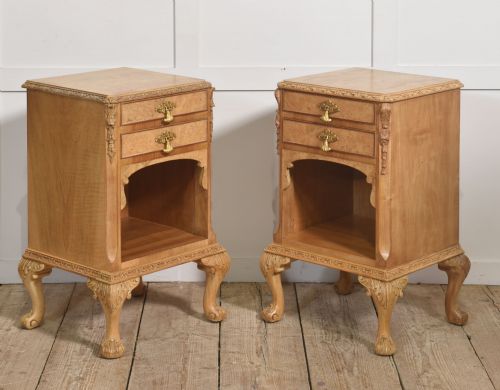
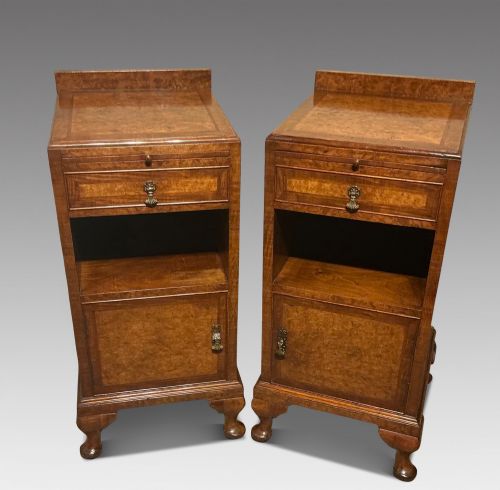
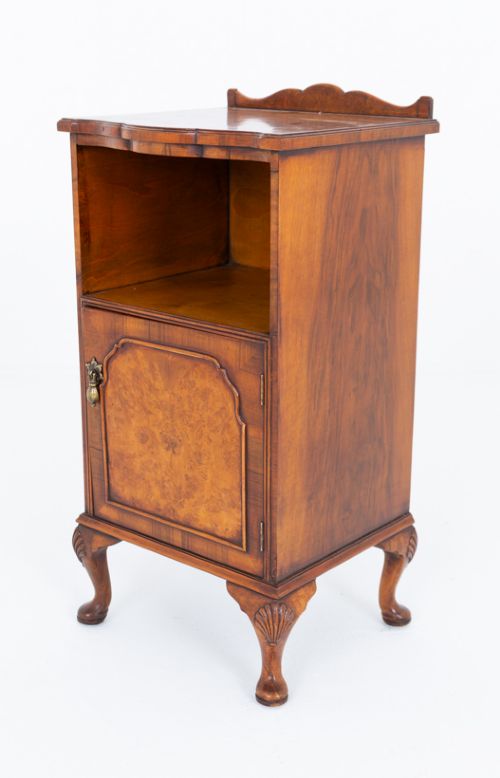
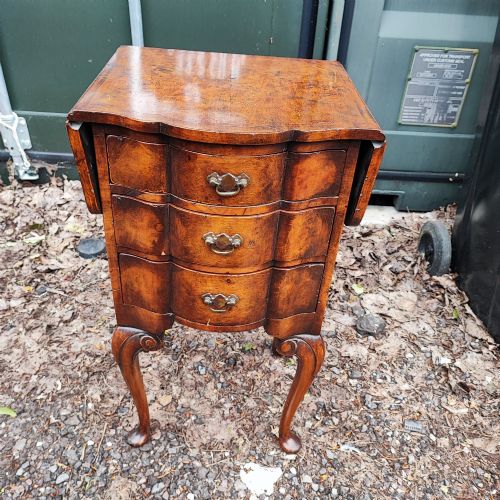
Queen anne bedside cabinets encompass compact storage pieces built in walnut, burr walnut, and mahogany, taking the form of bedside tables, chests of drawers, and small cupboards. When searching for queen anne bedside cabinets, buyers encounter revival interpretations spanning the Edwardian era through the nineteen-thirties.
The majority of these pieces adopt the queen anne style or revival aesthetic, characterised by proportions suited to period and traditional interiors. Formats vary from single cupboards and lamp tables to matched pairs of bedside chests.
Materials and Construction
Cabinet makers utilised solid walnut and mahogany as foundational timbers, frequently applying burr walnut veneer to drawer fronts and top surfaces to create figured grain patterns. Brass hardware such as drop handles and key escutcheons punctuate the dark and figured timber surfaces.
Construction methods rely on traditional cabinet-making techniques, joining carcases and drawers to house bedside storage securely. Surface finishing highlights the natural figuring of the wood without obscuring the grain.
The listings show walnut as the dominant material, appearing alongside burr walnut veneer, mahogany, and brass.
Assessing Quality and Execution
Quality in these pieces rests upon the choice of timber veneer and the crispness of the revival shaping, distinguishing standard production from finer workshop output. Matched pairs demonstrate greater consistency in grain alignment and proportions than solitary items.
The integration of brass fittings and the execution of shaped drawer fronts and surfaces reveal the level of care invested by the maker. Subtleties in proportion separate standard bedside cupboards from superior examples.
Maple and Co
The Queen Anne Bedside Cabinets Glossary
- Burr walnut
- A wood veneer taken from the wart-like growth on a walnut tree, prized for its swirling, intricate grain patterns. It provides a highly decorative surface on cabinet doors and tabletops.
- Queen Anne style
- A design aesthetic originating from early eighteenth-century English furniture, revived during the Edwardian period and the early twentieth century. It is known for clean lines and graceful proportions.
- Edwardian
- A historical period spanning the reign of King Edward VII, notable for furniture that looked back to earlier Georgian and eighteenth-century forms. Pieces from this era often feature lighter timbers like walnut and mahogany.
- Bedside cabinet
- A small enclosed piece of furniture designed to sit beside a bed, featuring a door, cupboard space, or drawers. These items provide practical storage for night-time essentials.
Queen Anne Bedside Cabinets: Frequently Asked Questions
What periods do these cabinets date from?
The pieces listed originate predominantly from the early twentieth century, spanning the Edwardian era through the nineteen-thirties. Makers during these decades frequently drew inspiration from earlier eighteenth-century designs.
This revival movement produced walnut and mahogany cabinets that replicate historical forms while serving modern domestic needs.
Are pairs common for these cabinets?
Many listings feature matched pairs of bedside cabinets, which are sought after for balancing twin beds or larger master bedroom layouts. Single tables and cabinets also appear frequently.
Buyers often look specifically for pairs to maintain symmetry on both sides of the bed.
What wood types should I expect?
Walnut and burr walnut dominate the selection, offering rich brown tones and decorative grain figures. Mahogany and general wood constructions also appear across the inventory.
Veneers are typically applied to top surfaces and drawer fronts to enhance the visual appeal.
How do these cabinets function in a modern bedroom?
These small chests and cupboards provide convenient surface space for lamps alongside enclosed storage for nighttime items. Their compact footprints suit contemporary bedroom layouts without dominating the room.
The traditional timber finishes complement both antique and transitional interior schemes.