

Traditional Bedroom Cabinets
Traditional bedroom cabinets provide solid timber storage spanning the Georgian, Victorian and Edwardian periods.
Traditional Bedroom Cabinets
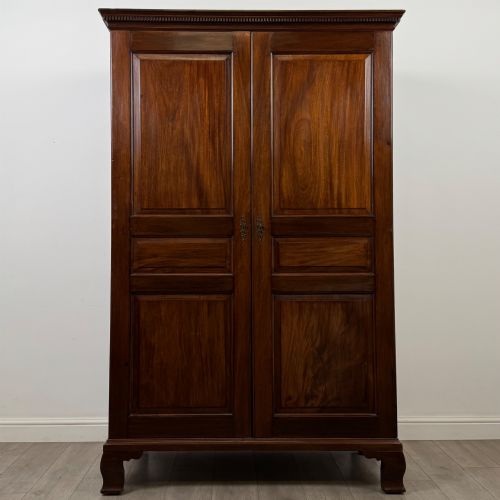
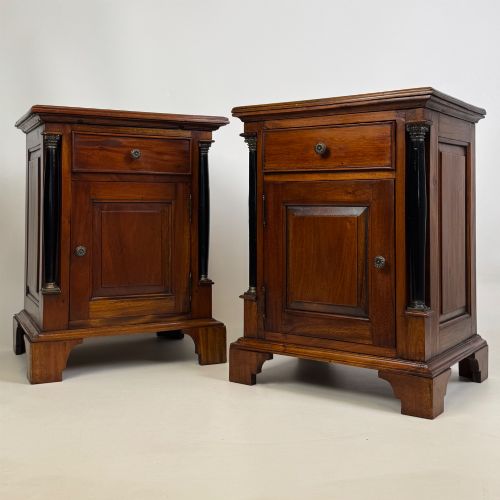
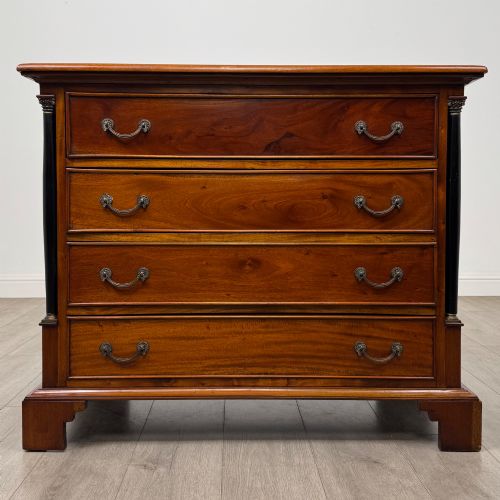
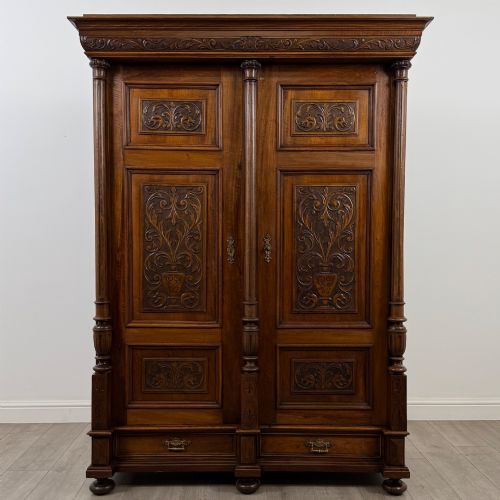
Traditional bedroom cabinets encompass a practical variety of case furniture designed for sleeping quarters, including chests of drawers, bedside tables, wardrobes and linen presses. These pieces originate from distinct historical eras ranging from the Georgian period through the Victorian and Edwardian years into the early twentieth century.
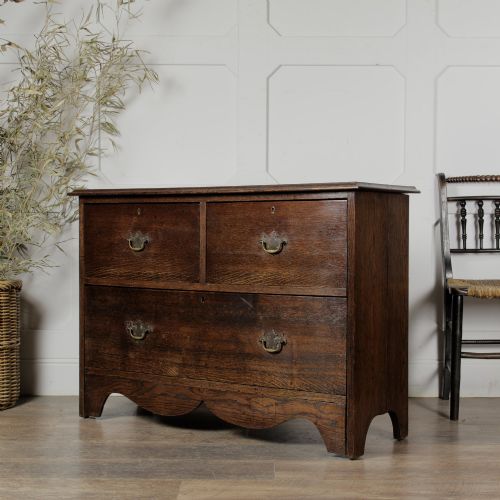
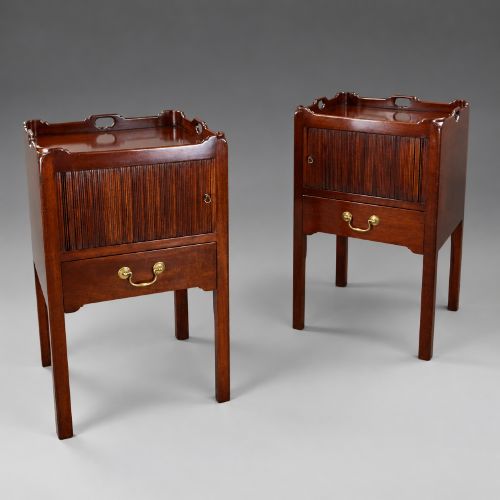
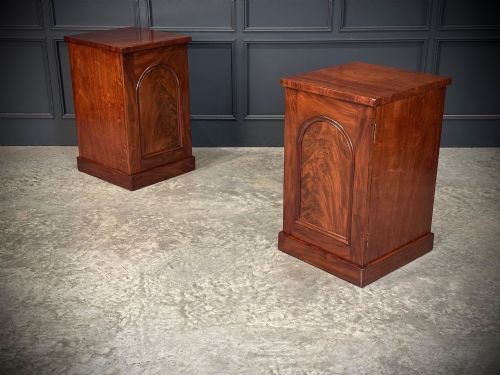
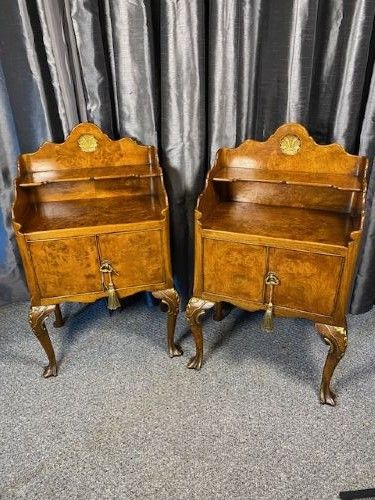
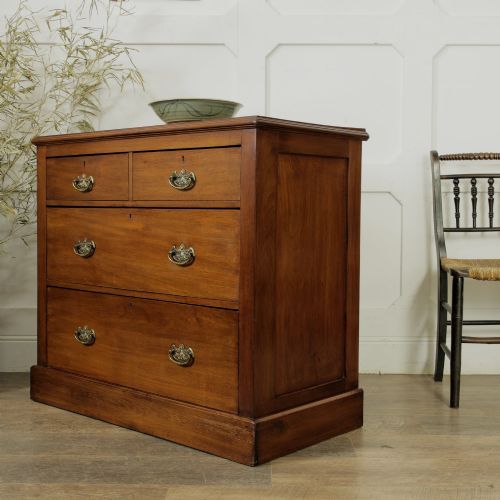
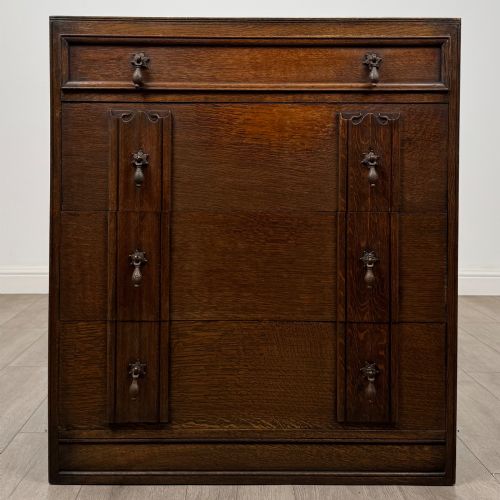
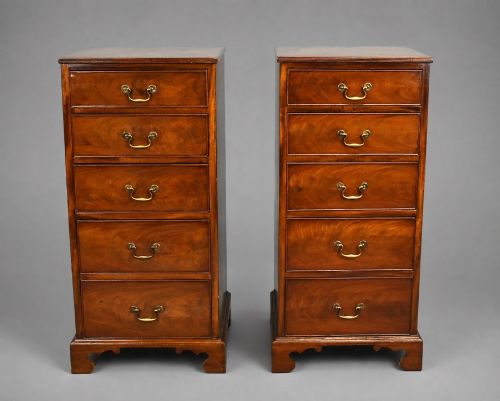
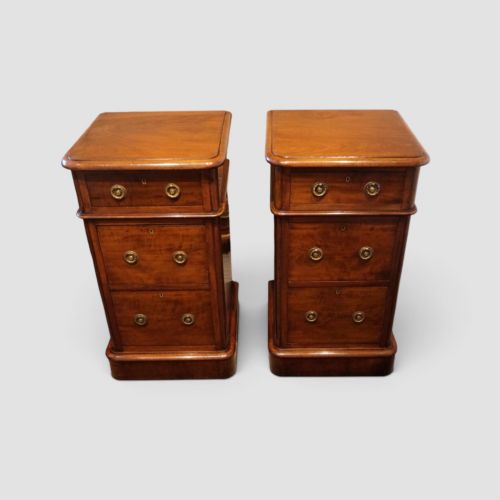
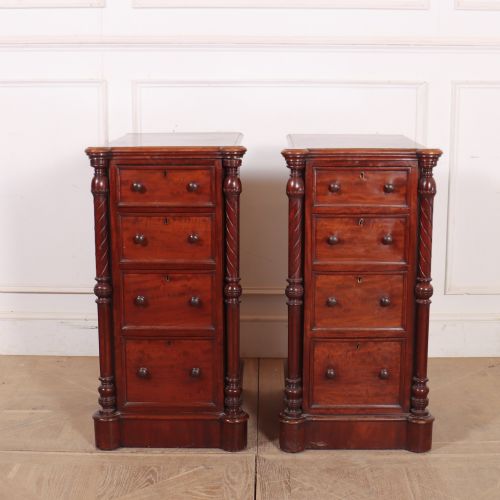
Chest of drawers configurations appear frequently across the selection, alongside matched pairs of bedside cabinets and larger wardrobes constructed for clothing storage. Buyers encounter both modest country pine examples and formal mahogany or walnut designs reflecting specific period revivals.
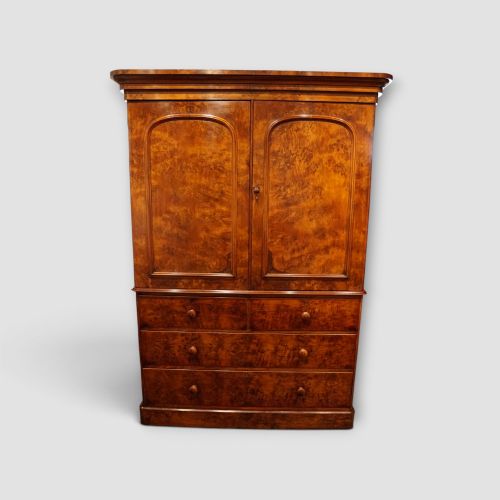
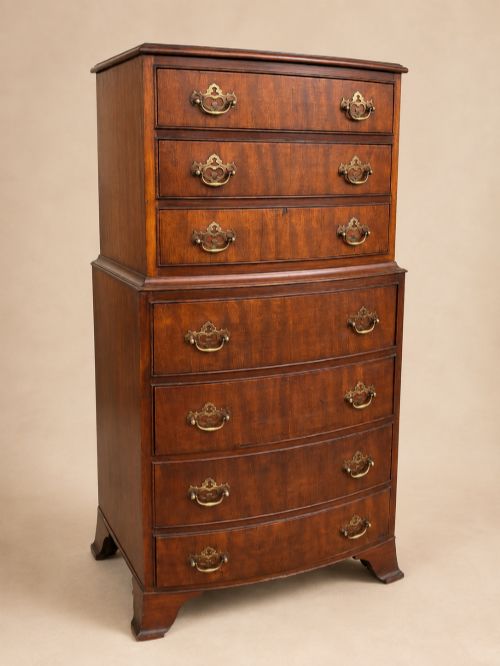
The selection ranges from tall press cupboards with lower drawer sections down to compact bedside tables suitable for smaller spaces. Regional vernacular pieces in stripped or waxed pine sit alongside polished hardwood items with detailed crossbanding and brass handles.
Materials and construction
Cabinet makers utilised dense hardwoods such as mahogany, walnut and burr walnut alongside durable domestic timbers like oak and pine. These woods were selected for structural integrity and finished with polished surfaces or traditional wax applications.
Drawer construction relies on traditional joinery methods, housing multiple drawers within solid frames and often incorporating decorative veneers like flame mahogany or satinwood crossbanding. Brass hardware and metal fittings provide functional closure and period detail.
Some nineteenth century pine chests carry decades of accumulated Hungarian wax that smells faintly of old libraries and timber workshops.
Evaluating quality and construction
Quality reveals itself in timber selection and the integrity of the secondary woods used for drawer linings and back panels. Superior examples employ choice veneers, figured grain patterns and careful matching across drawer fronts.
The precision of the drawer joints and the smooth operation of sliding surfaces distinguish finer workshops from simpler utilitarian pieces. Original brass handles, intact moulding and stable construction without excessive timber movement define better preserved items.
The Traditional Bedroom Cabinets Glossary
- Bowfront
- A convex curved front on a chest of drawers or cabinet. This design softens the rectangular profile of case furniture.
- Linen Press
- A tall wardrobe-style cabinet with upper shelving for textiles and lower storage drawers. These units served as primary clothes storage before fitted wardrobes became common.
- Crossbanding
- A decorative border of veneer laid around the perimeter of a drawer front or tabletop so the grain runs perpendicular to the central panel. This technique frames the primary timber.
- Ebonised Wood
- Timber treated with a dark stain or chemical process to imitate ebony. This finish appears on Victorian and later accent pieces.
- Linenfold
- A carved panel moulding resembling folded cloth. This decorative motif appears on oak furniture from various periods.
Traditional Bedroom Cabinets: Frequently Asked Questions
What is a linen press?
A linen press is a tall storage cabinet featuring upper sliding trays or shelves enclosed by doors, positioned above a base section fitted with practical drawers.
Historically, these pieces stored household textiles and linens before modern wardrobe designs replaced them in domestic bedrooms.
How do I identify Georgian style?
Georgian furniture typically displays classical proportions, symmetrical drawer arrangements and premium timber selections like mahogany or oak without excessive ornamentation.
Many later pieces also adopt these classical proportions under the Georgian Revival label during the Edwardian period and the early twentieth century.
Are bedside cabinets usually sold in pairs?
Bedside tables and cabinets frequently appear in matched pairs to flank a bed symmetrically. Single cabinets also occur when sourced independently or designed for specific alcove placements.
Matching pairs share identical timber figures, hardware styles and dimensions across both pieces.
What is burr walnut?
Burr walnut is a decorative wood veneer harvested from the gnarled growth or root of a walnut tree. It displays swirling, highly figured patterns that cabinet makers reserve for prominent drawer fronts and tabletops.
This timber requires skilled application to stabilise the grain and prevent splitting over time.