
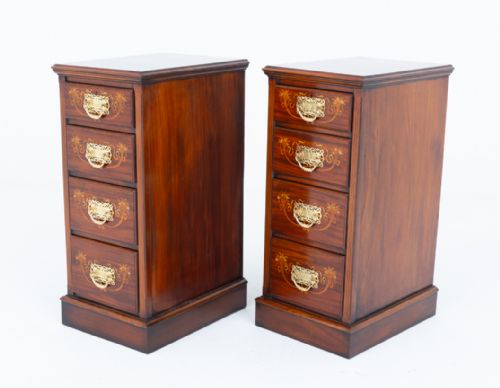


Georgian Style Bedside Chests
Georgian style bedside chests bring classic proportions and compact storage to a room, offering timeless timber surfaces alongside neat sets of drawers.
Georgian Style Bedside Chests
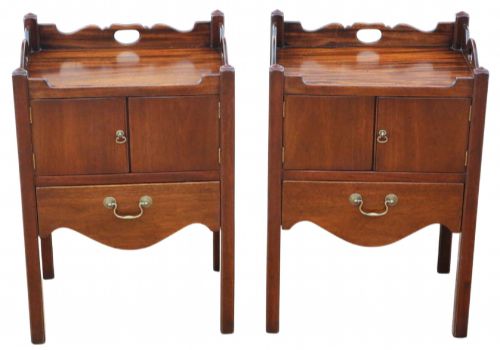
Georgian style bedside chests supply functional storage with traditional proportions, serving as compact tables beside a bed. When browsing georgian style bedside chests, buyers most frequently encounter pairs and single pieces dating from the nineteenth and early twentieth centuries.
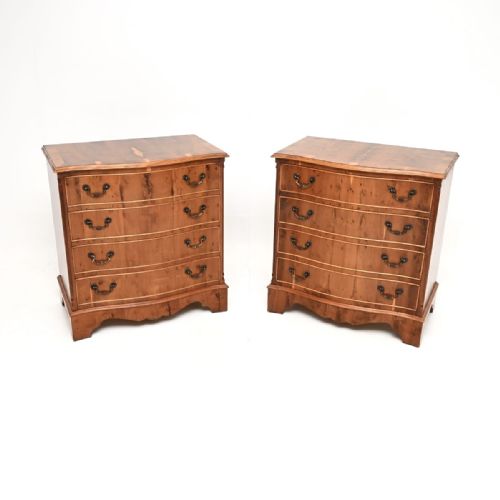
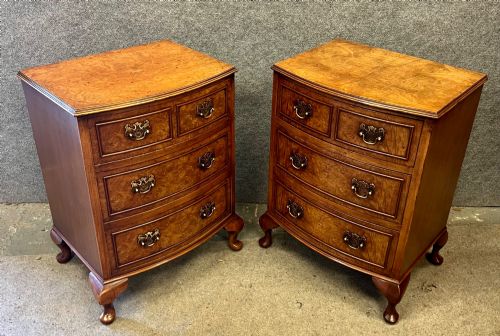
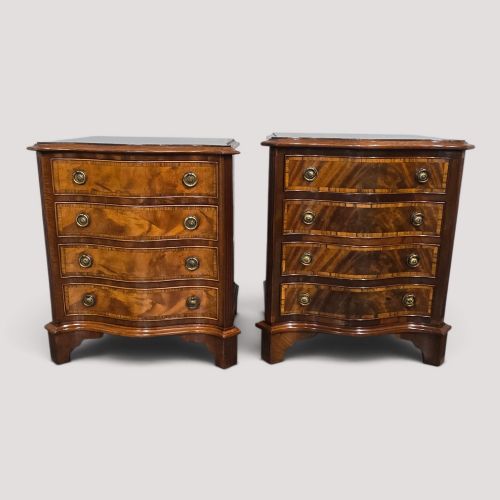
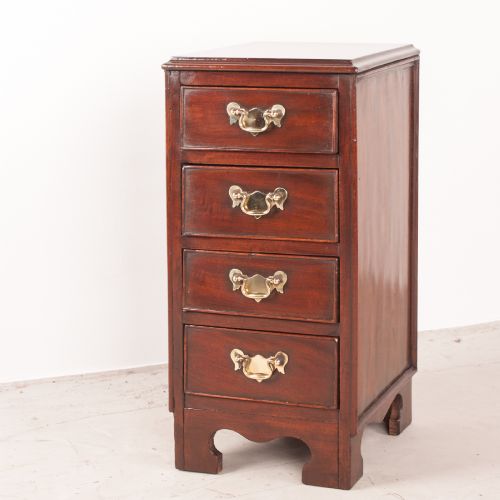
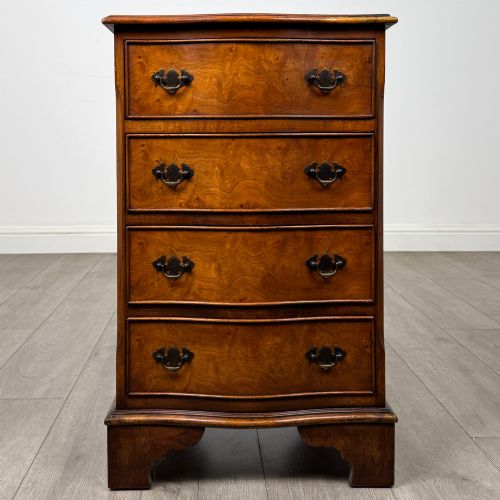
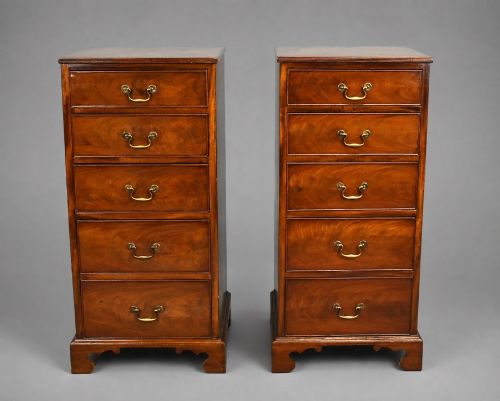
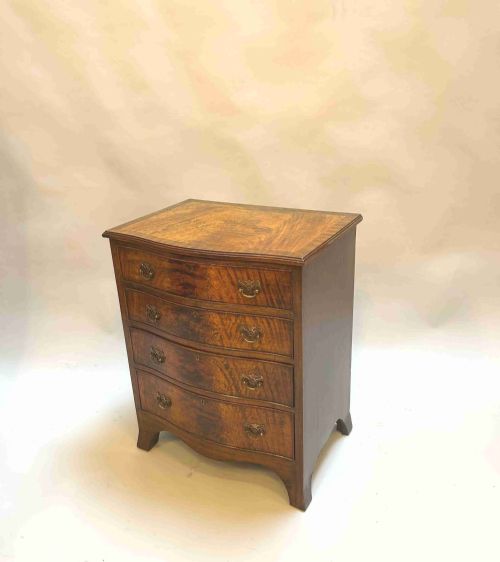
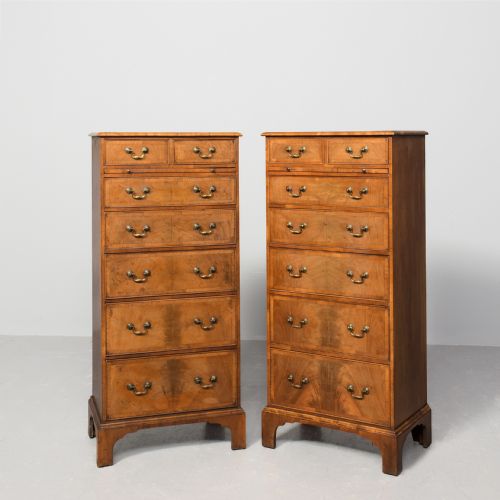
The selection ranges from tall mahogany lamp chests to small serpentine models and cabinets with brushing slides. These items appear in revival styles as well as nineteenth century productions, constructed primarily to hold small items while anchoring a bedroom scheme.
How They Were Made
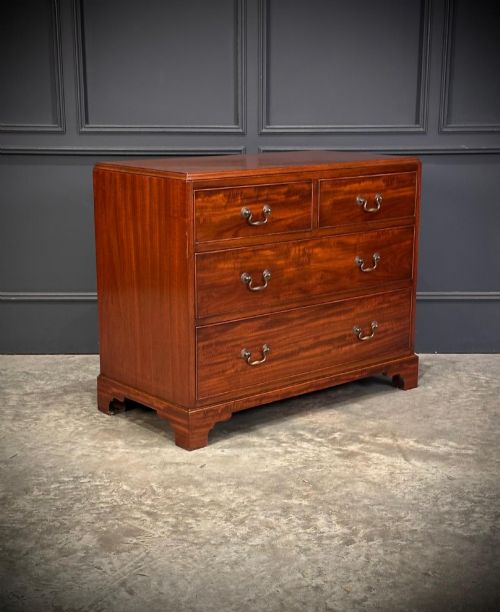
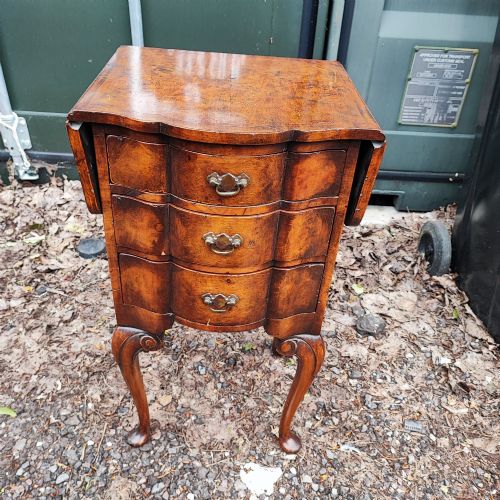
Cabinet makers built these pieces using solid timbers like mahogany and walnut, frequently applying burr walnut veneer or satinwood to exposed surfaces for decorative grain patterns. Brass handles and fittings complete the drawer fronts and cupboard doors.
Construction techniques include shaped serpentine and bowfront profiles, along with integrated brushing slides and inlaid details. Workshops shaped timber to mimic earlier eighteenth century designs during subsequent revival periods.
Several diminutive chests are built so neatly they look like miniature display models rather than full-sized bedside furniture.
What Varies in Quality
Quality rests in the choice of timber and the precision of the cabinet work, particularly where figured burr walnut veneer or detailed inlay meet the frame. Finer examples display crisp moulding lines and balanced proportions across matching pairs.
Construction integrity separates standard production items from superior pieces, showing in the smooth operation of drawers and the depth of the polished wood finish. The presence of original brass hardware and carefully matched grain patterns elevates the standing of a chest.
Edwards and Roberts·Whytock and Reid
The Georgian Style Bedside Chests Glossary
- Serpentine
- A curved front shape featuring a convex centre flanked by concave sides. This technique demands precise woodworking skills.
- Brushing slide
- A pull-out shelf positioned above the top drawer, traditionally used for dusting or folding garments. It sits flush when closed.
- Burr walnut
- Timber taken from a tree growth that yields intricate, swirling grain patterns. Cabinet makers prized this for decorative veneering.
- Bowfront
- A convex, outwardly curved front profile popular in nineteenth century case furniture. It softens the linear angles of a room.
- Pedestal chest
- A tall, narrow set of drawers designed to occupy minimal floor space. These units provide deep storage within a compact footprint.
Georgian Style Bedside Chests: Frequently Asked Questions
Are these chests genuine eighteenth century pieces?
Many examples date from later revival periods such as the Edwardian era and the nineteen-twenties or nineteen-thirties, adopting the aesthetic of earlier decades.
Craftsmen during these later periods utilised traditional timbers and methods to recreate classical proportions.
Do these chests come in matching pairs?
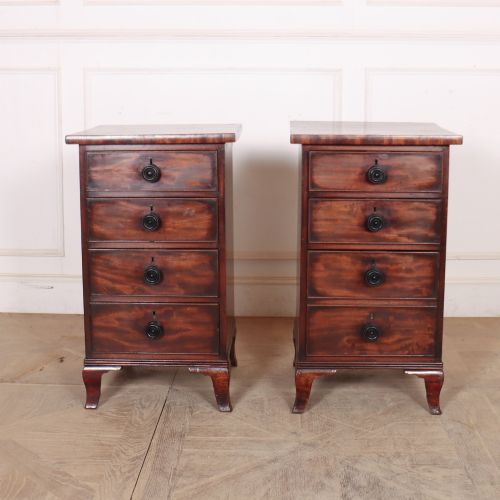
Several listings feature pairs of bedside chests or near pairs manufactured to flank a bed symmetrically.
Matching sets often share identical wood veneers, dimensions, and hardware configurations.
What is a brushing slide used for?
A brushing slide provides an extra pull-out surface above the primary drawers for temporary placement of items.
Historically, these surfaces served practical dressing functions in compact bedroom spaces.
Which woods are most common?
Mahogany and walnut appear frequently, often enhanced with burr walnut veneer or satinwood inlay.
Selected pieces also incorporate painted timber finishes alongside standard polished wood surfaces.