
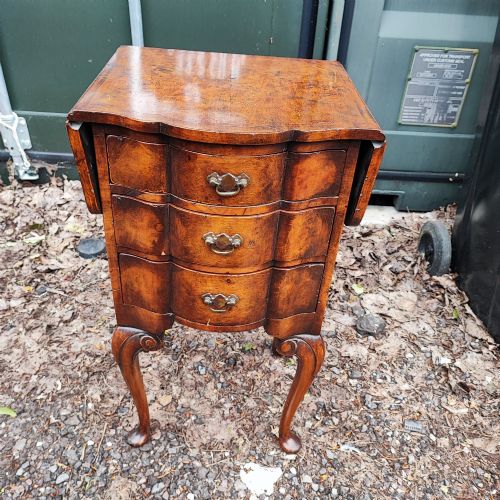


Serpentine Front Nightstands
Serpentine front nightstands are undulating bedside tables that bring elegance and movement to a bedroom, combining practical storage with sculptural form.
Serpentine Front Nightstands
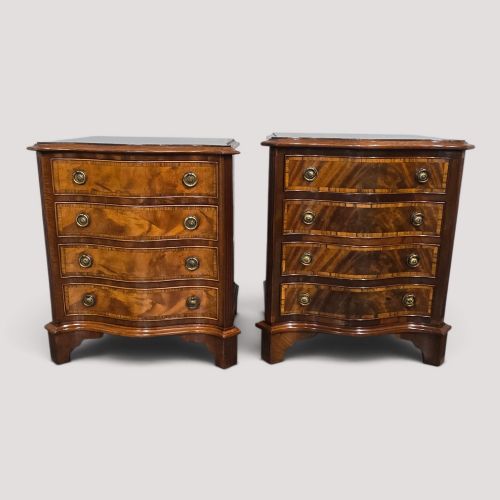
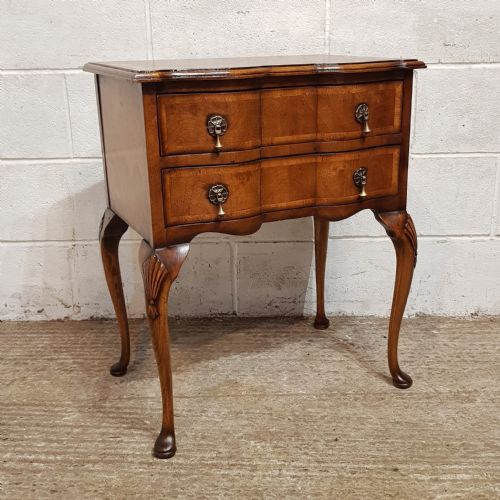
Serpentine front nightstands are bedside tables characterised by their distinctively curved, wave-like fronts that sweep outward at the centre and inward at the sides. When you search for serpentine front nightstands, you encounter pieces that function as bedside cabinets, lamp chests, and small chests of drawers.
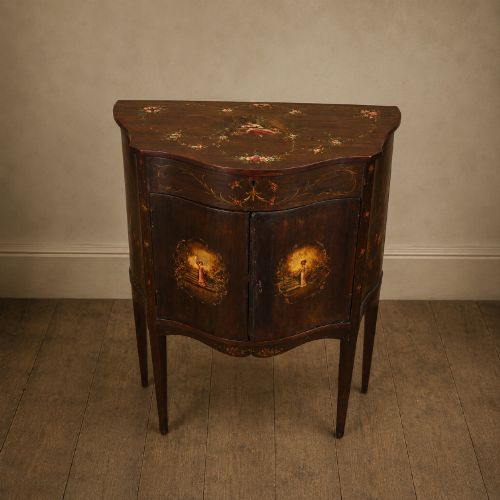
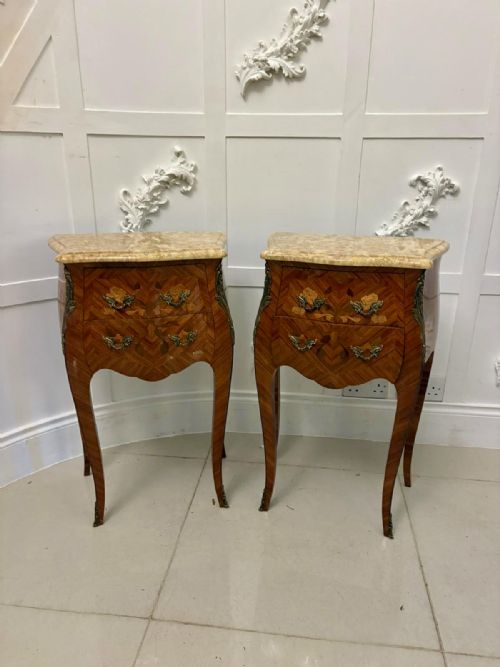
The selection ranges from George III mahogany examples and 18th-century Italian burr walnut pieces to Edwardian burr walnut side tables and later 1920s mahogany versions. You will also find pairs of French Louis XV style marquetry bedside cabinets and Venetian walnut and giltwood commodes sharing this undulating form.
Object types on this page include bedside tables, side cabinets, chests of drawers, commodes, bedside cabinets, and side tables. These variations offer diverse storage options while maintaining the signature serpentine silhouette beside the bed.
What varies in quality
The calibre of a serpentine front nightstand depends heavily on the choice and matching of timber veneers, such as burr walnut or figured mahogany. Superior examples display thoughtful grain alignment across the undulating drawers and cabinet doors, creating a continuous visual flow.
The precision of the joinery along the curved front defines the craftsmanship, as shaping a serpentine line demands exact hand-fitting. Finer pieces maintain crisp moulding profiles and smooth drawer operation within their complex contours.
Surface finishes and decorative elements like marquetry inlay or hand-painted details reveal the artisan's skill level. Original brass hardware and well-preserved marble tops also contribute to the distinction between standard production and exceptional examples.
Some little cabinets curve so playfully they look as though they might waltz right out of the bedroom.
The Serpentine Front Nightstands Glossary
- Serpentine front
- A furniture front characterised by a convex central section flanked by two concave curves, creating a wave-like profile. This shape requires advanced carpentry skills to execute successfully.
- Marquetry
- The art of applying decorative pieces of veneer to a structure to form intricate designs or pictures. It often incorporates various exotic and native woods to create tonal contrast.
- Commode
- A low chest of drawers or cabinet, typically ornate in style and originating from France. In British and European contexts, it frequently serves as a substantial bedside or reception room piece.
- Bombé
- A style of furniture featuring a strongly convex, bulging front and sides. This swollen contour adds substantial visual weight and sculptural presence to cabinets and chests.
- Veneer
- A thin layer of finely figured wood applied to a base timber of lesser quality. This technique allows makers to utilise expensive and visually striking woods efficiently.
Serpentine Front Nightstands: Frequently Asked Questions
What is a serpentine front?
A serpentine front is a shaped furniture face that curves outward in the middle and inward at the sides. This distinctive contour creates a sense of movement and visual interest.
Cabinet makers adopted this profile to elevate standard storage furniture into sophisticated statement pieces. It requires precise woodworking to ensure drawers and doors fit flush within the curves.
How do I style a bedside chest?
A bedside chest with a curved front works well paired with a simple lamp to highlight the undulating timber grain. The surface provides adequate space for nighttime essentials while adding character to the room.
Matching pairs create symmetry on either side of a bed, while single pieces serve as striking accent tables. Their decorative fronts allow them to function equally well as small side tables in living spaces.
What woods were used for these?
Makers constructed these pieces using timbers such as mahogany, walnut, burr walnut, and kingwood. These woods were chosen for their durability and rich grain patterns.
Many examples utilise veneers over a stable wood carcase to display decorative figuring. Additional materials like marble, brass, and paint appear across different periods and regional styles.
How do I identify the period?
Period identification relies on examining the construction methods, hardware, and stylistic revival cues. Pieces from the 18th century display distinct joinery and timber patination compared to later 19th-century or Edwardian revivals.
Stylistic markers such as Queen Anne Revival, Louis XV, or Sheraton Revival point toward specific design eras. Comparing the secondary woods and overall proportions helps clarify the date of manufacture.