





Georgian Stoneware
These georgian stoneware pieces bring dense bodies and salt glazes to the table, offering durable utility that collectors prize for everyday display.
Georgian Stoneware
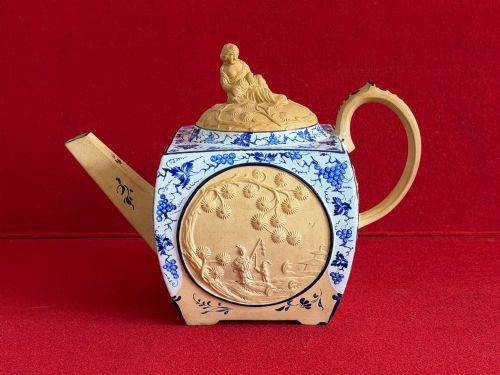
When you search for georgian stoneware, you meet robust pottery vessels designed for daily service across the eighteenth and nineteenth centuries. These utilitarian objects include jugs, pitchers, tankards, and teapots formed from heavy clay bodies.
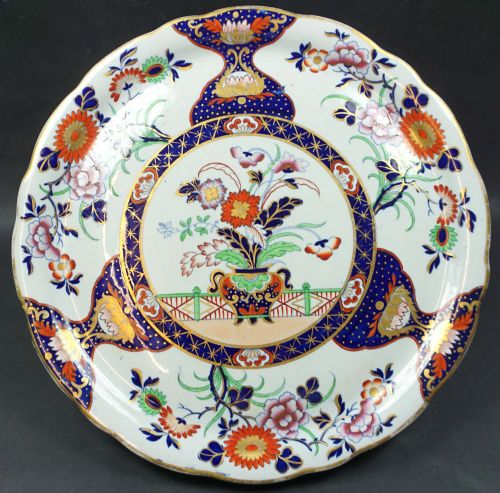
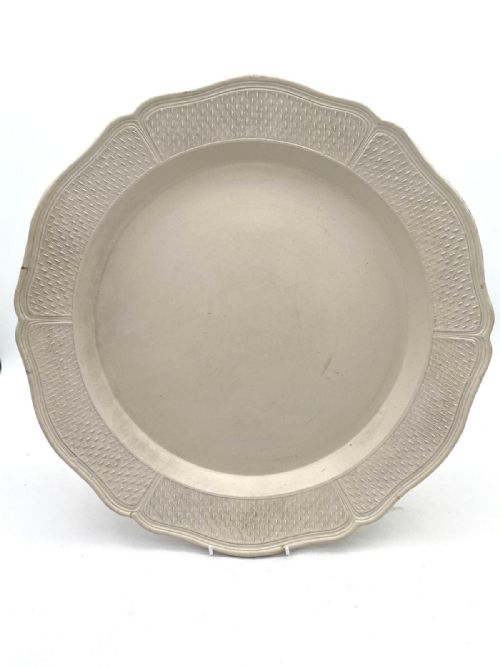
The selections on this page span the georgian and regency periods, alongside related examples from the nineteenth century. You encounter practical items such as mustard pots, cheese dishes, and wine coolers alongside decorative cache pots and chargers.
Origin points range from English country potteries to German production sites like Westerwald. These pieces showcase functional forms intended for heavy use in domestic kitchens and taverns.
How they were made
Potters shaped these dense bodies using durable stoneware and earthenware clays, often applying salt glazes that produced distinctive pitted surfaces during high-temperature firing. Enamel decoration and relief moulding added surface texture and colour to the hard ceramic bodies.
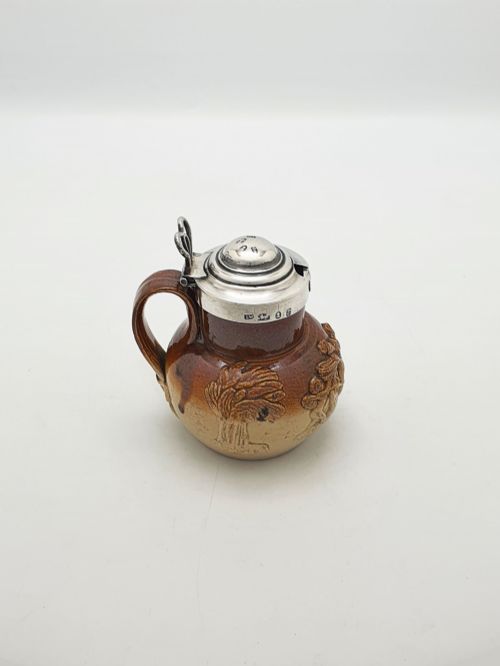
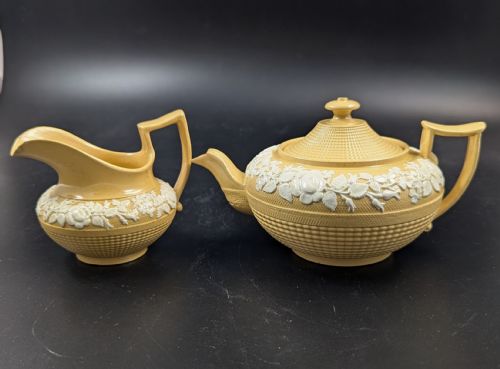
Specialised variations like caneware, jasperware, and drabware utilised specific clay body compositions to achieve characteristic buff, blue, or grey tones. Craftsmen fitted certain vessels with sterling silver collars, hinged lids, or silver-plated mounts to elevate their utility.
Georgian Stoneware Retail Price Guide 2026
Typical asking prices for georgian stoneware among the pieces listed under this phrase on Sellingantiques today, from the lower quarter to the upper quarter. They describe what is for sale here now, not the wider market.
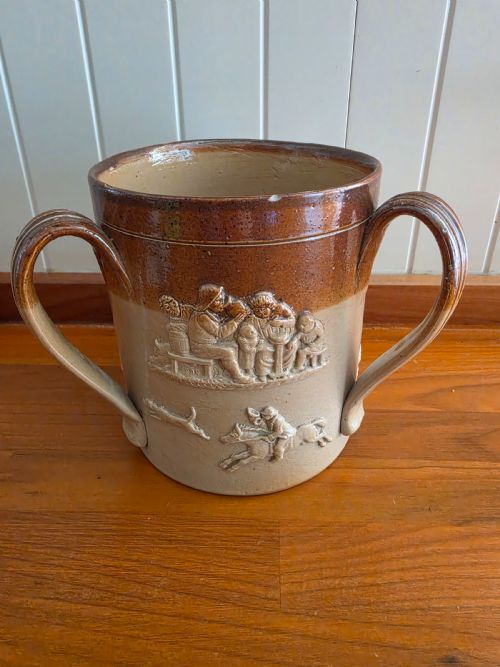
A three-handled drinking vessel lets three people hoist the same ale at once without spilling.
What varies in quality
Quality rests in the crispness of the relief moulding and the evenness of the salt glaze application across the clay body. Finer examples display sharp, detailed patterns and well-balanced forms without distortion from the kiln firing.
The presence of precious metal mounts, such as sterling silver collars and hinged lids, separates standard utilitarian wares from elevated pieces. Maker attribution and the complexity of decorative techniques like Chinoiserie painting further distinguish the range.
Spode·Hicks & Meigh·Enoch Wood & Sons·Wedgwood·W. Hackwood·J. & R. Clews·Adams
The Georgian Stoneware Glossary
- Salt glaze
- A vitreous coating formed by throwing common salt into the hot kiln during firing, creating an orange-peel texture on the stoneware body.
- Caneware
- A fine earthenware resembling the colour of bamboo or unpolished cane, popular during the late eighteenth and early nineteenth centuries.
- Jasperware
- A fine-grained, unglazed vitreous stoneware developed by Wedgwood, typically featuring white relief ornaments applied against a coloured ground.
- Tyg
- A large drinking vessel with three or more handles, designed to be passed around a group of people.
- Westerwald
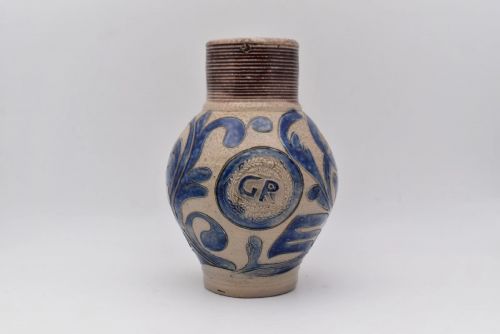
- A German ceramic region known for grey stoneware salt-glazed vessels decorated with cobalt blue incisions and royal ciphers.
Georgian Stoneware: Frequently Asked Questions
What is georgian stoneware?
Georgian stoneware encompasses dense, durable ceramic vessels produced during the Georgian era, including jugs, teapots, and tankards.
These pieces often feature salt glazes or relief moulding designed for practical domestic use.
How were these vessels used?
People utilised these pots, jugs, and tankards for storing and serving ale, wine, water, and mustard in homes and taverns.
Their robust construction made them suitable for daily handling and heavy domestic tasks.
How do I identify the period?
Period identification relies on form, glaze characteristics, and decorative styles such as neoclassicism or regency motifs.
Evidence like royal ciphers and specific manufacturing techniques also help narrow down the date of creation.
Can I use them daily?
Many of these pieces remain structurally sound for display and gentle functional use in a modern home.
Careful handling is necessary, particularly for items with silver mounts or delicate relief decoration.