

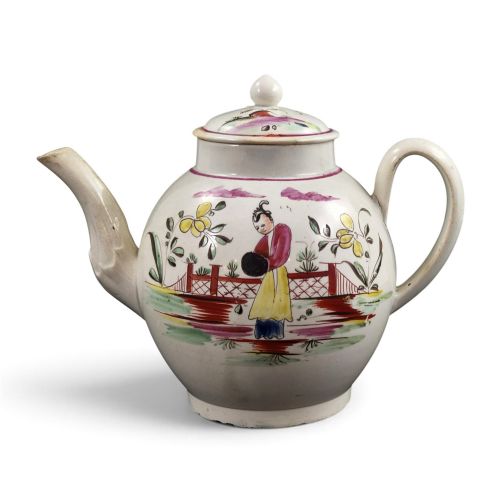
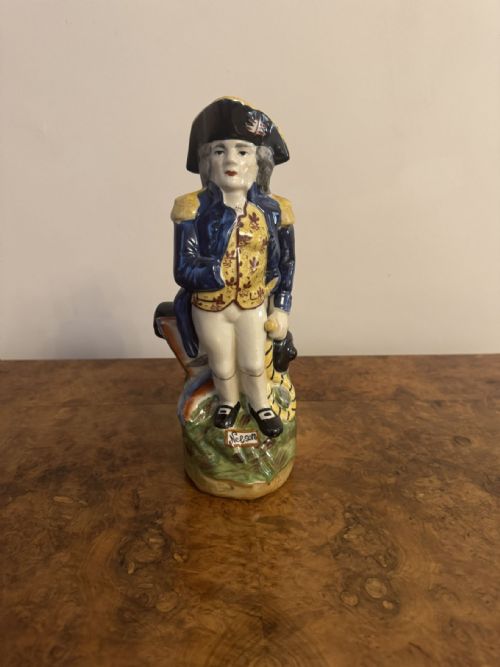


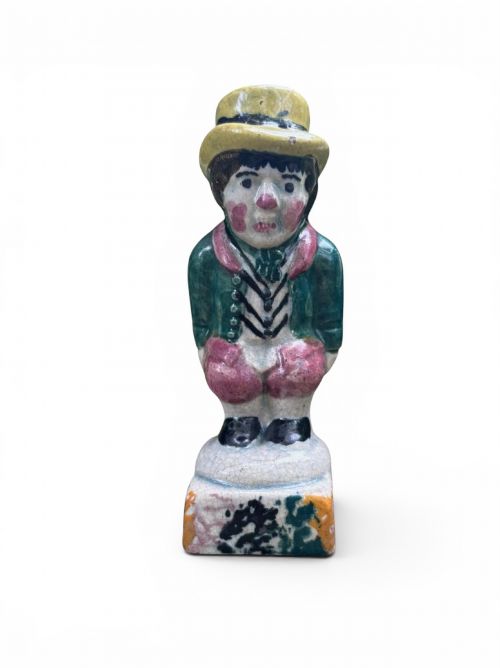


Georgian Staffordshire Figure
A georgian staffordshire figure brings pottery animals, lions, and pastoral groups into a room with directness and painted charm.
Georgian Staffordshire Figure
When you search for a georgian staffordshire figure, you encounter earthenware and pearlware ceramic pieces spanning the eighteenth and nineteenth centuries. These decorative objects depict lions, leopards, sheep, dogs, and biblical or theatrical groups.
The most common examples on this page are pearlware figures and figure groups from the early nineteenth century. These include spillholders, pairs of animals, and literary or religious scenes on flat bases.
The materials range from creamware and pearlware to prattware and enamel. Production extends across pottery centres in Staffordshire, Yorkshire, and Longton Hall.
How they were made
Potters shaped these figures in clay, often using moulds for the bodies and adding details by hand. Earthenware and pearlware bodies provided a smooth surface for painting.
Painters applied metallic oxides under or over the glaze to achieve blues, greens, and ochres. Clear lead or pearlware glaze sealed the surface and gave the ceramic a soft, pooling sheen.
Georgian Staffordshire Figure Retail Price Guide 2026
Typical asking prices for georgian staffordshire figure among the pieces listed under this phrase on Sellingantiques today, from the lower quarter to the upper quarter. They describe what is for sale here now, not the wider market.
What varies in quality
Glaze application also separates pieces, with finer figures showing an even spread that enhances rather than obscures the modelled details beneath.
Walton·Lakin & Poole·Enoch Wood factory·Minton·Longton Hall·Ralph Wood
The Georgian Staffordshire Figure Glossary
- Pearlware
- A refined earthenware developed by Josiah Wedgwood that used a small amount of cobalt in the glaze to create a pale bluish tint. This finish mimics Chinese porcelain.
- Creamware
- A fine earthenware with a warm, cream-coloured glaze created in the mid-eighteenth century. It served as the canvas for early Staffordshire and Yorkshire pottery.
- Spillholder
- A hollow ceramic figure incorporating a small cylindrical vase meant for holding wooden spills used to light candles or fires. These combine utility with ornament.
Georgian Staffordshire Figure: Frequently Asked Questions
Were these figures meant for display?
Most of these ceramic pieces served as chimney ornaments and tabletop decorations in homes. Their bright oxide colours were chosen to catch the flickering light of candles and fires.
Some variations, such as spillholders and creamers, also carried practical household uses alongside their decorative presence.
What is a figure group?
A figure group depicts two or more characters or animals interacting on a single ceramic base. Common subjects include biblical scenes, literary pairs, and pastoral companions.
These compositions required more complex moulding and careful arrangement by the potter to maintain balance.
How do I care for antique earthenware?
Keep these ceramic pieces away from direct sunlight and dust them gently with a soft, dry brush. Moisture can penetrate old glazes and unglazed areas, so avoid using water for cleaning.
Stable indoor conditions prevent stress on the historic earthenware body and the painted surfaces.