
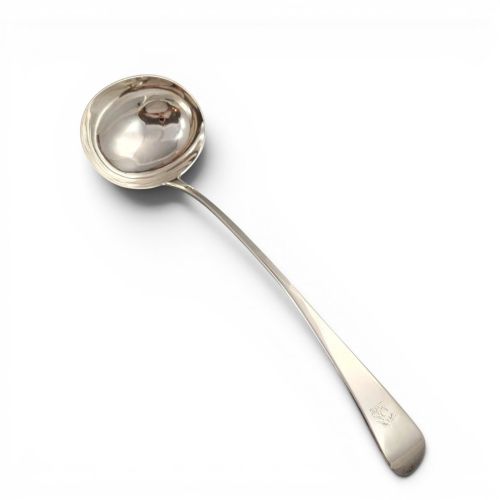
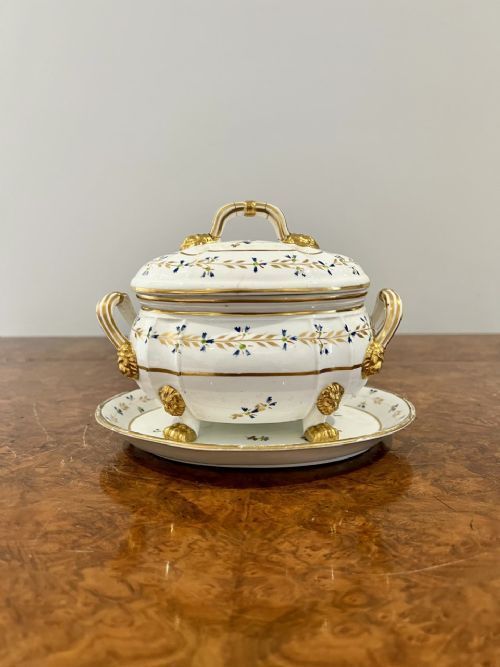
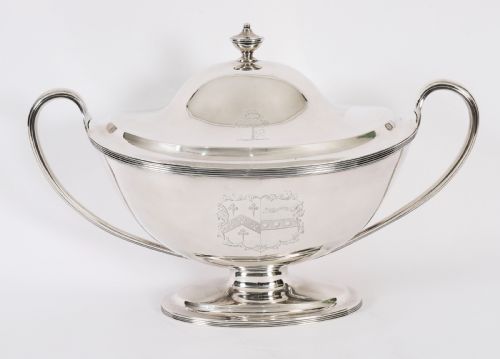
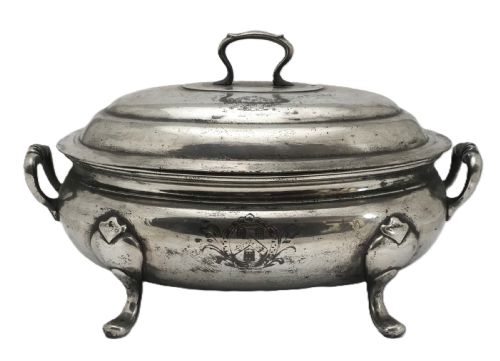


Georgian Soup Tureen
A georgian soup tureen brings dramatic presence to the dining table, combining grand scale with the refined craftsmanship of the late eighteenth and early nineteenth centuries.
Georgian Soup Tureen
A georgian soup tureen is a substantial serving vessel designed to hold and present broth or soup at formal dining tables during the Georgian and Regency periods. These pieces often arrive with matching covers and occasionally stands, forming an impressive centrepiece for large gatherings.
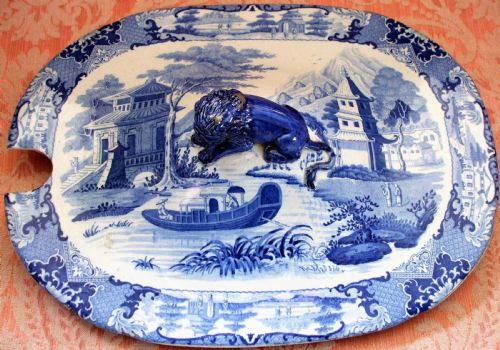
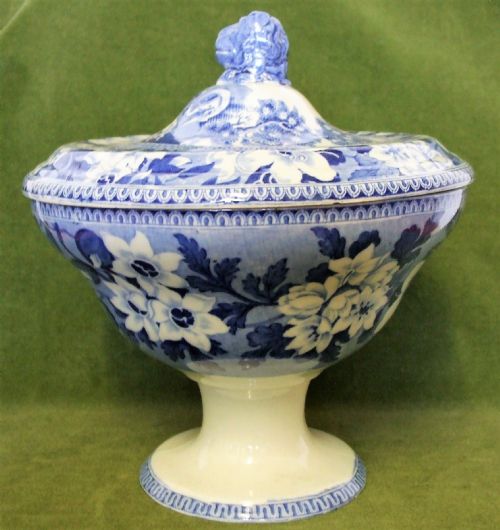
The selections found here span earthenware, ironstone, porcelain, and sterling silver, alongside Old Sheffield plate. Forms range from classical pedestal designs to transfer-printed earthenware decorated with scenic patterns like Canton River views and castle landscapes.
Materials and Methods
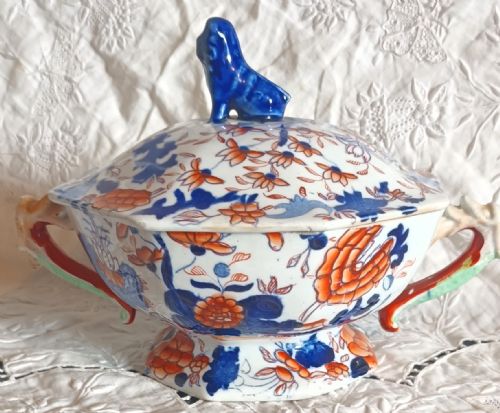
Potters utilised earthenware, ironstone, and fine porcelain bodies, applying cobalt blue transfer prints or hand-painted enamels such as Imari palettes and gilt handles. Earthenware and ironstone versions frequently feature moulded details and rich underglaze decoration.
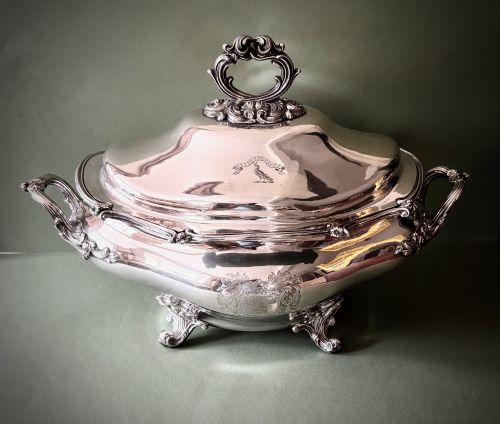
Silversmiths constructed sterling silver pieces through hammering and raising techniques, often adding cast handles and engraved family crests. Old Sheffield plate combined a thin layer of silver fused to a copper core, providing the lustre of solid silver through skilled metallurgy.
Styles represented across the pieces include George III, Regency, William IV, and Indian Colonial designs.
Markers of Quality
Quality in these vessels rests upon the crispness of the moulded or cast ornament and the balance of the overall form. Silversmith-made examples derive distinction from deep, legible hallmarks and finely chased armorial engravings, whilst ceramic pieces depend on the clarity of the transfer print and the brilliance of the glaze.
The presence of matching covers and original stands elevates a piece considerably, as do well-preserved fire gilding and intact enamel colours. Maker attributions, whether through impressed ceramic marks or silversmith stamps, further separate standard utilitarian production from exceptional works.
Robert Hamilton·John Rogers and Son·William Bennett·William Grundy·Flight Barr and Barr·J and R Clews·Ralph Stevenson of Cobridge
The Georgian Soup Tureen Glossary
- Old Sheffield plate
- A composite material made by fusing a sheet of silver to a copper ingot, developed in the eighteenth century to create luxury tableware.
- Transfer printing
- A method of applying intricate engraved designs to ceramics by pressing paper transfers inked with metallic pigments onto the biscuit or glazed body.
- Ironstone
- A dense, durable type of earthenware patented in the early nineteenth century to imitate Chinese porcelain while offering robust utility.
- Imari
- A decorative style inspired by Japanese export porcelain, characteristically combining underglaze blue with iron red, green, and gilt overglaze highlights.
- Hallmark
- A stamped official mark on silver objects indicating the assay office, metal purity, and date of manufacture.
Georgian Soup Tureen: Frequently Asked Questions
How were soup tureens used historically?
These vessels were filled in the kitchen and brought to the dining table for formal service, where the host or hostess would ladle soup directly into individual bowls.
Their substantial size and decorative covers helped keep the contents warm during long multicourse meals.
Can I use an antique tureen for serving food today?
Many ceramic and silver examples remain structurally sound for serving dry foods or modern dining use, though silver plate and antique porcelain require careful hand washing.
Due to age and historic repairs, collectors often treat them purely as decorative display pieces.
How do I distinguish between porcelain and ironstone?
Porcelain is typically translucent when held to the light and rings clearly when tapped, whereas ironstone is opaque and heavier in weight.
Ironstone was engineered for everyday durability, resulting in a thick, utilitarian body.
What is the difference between silver and Old Sheffield plate?
Solid sterling silver consists entirely of precious metal and bears standard assay hallmarks denoting its purity.
Old Sheffield plate comprises a layer of silver fused over a copper base, which may occasionally reveal a reddish copper tint where the outer silver layer has worn thin.