




Georgian Sofa Table Castors
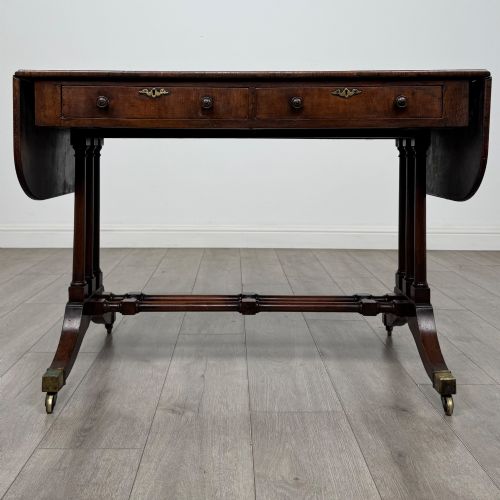
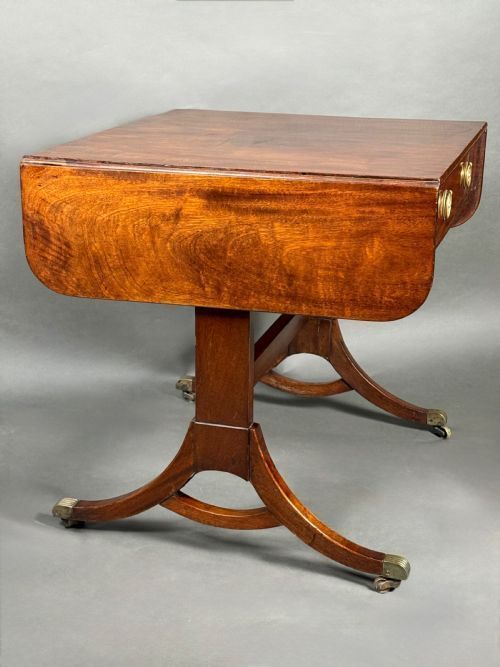
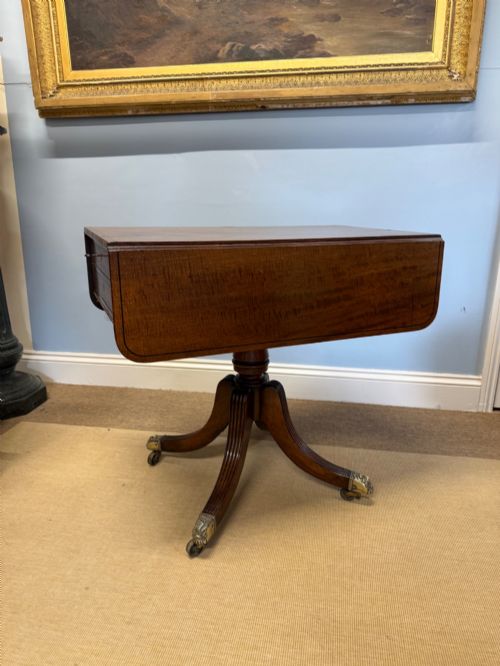
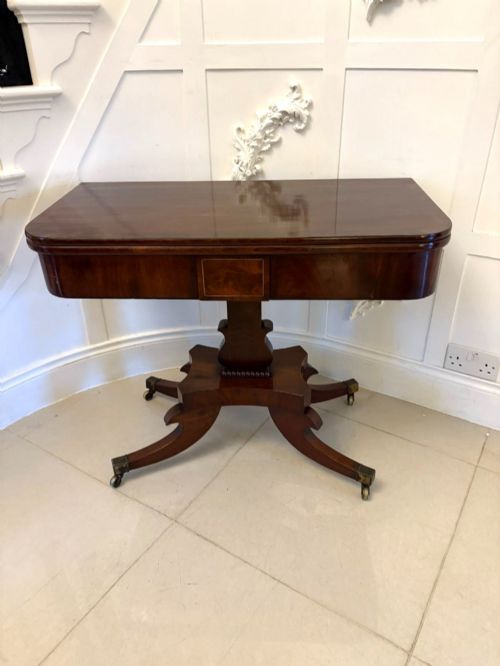
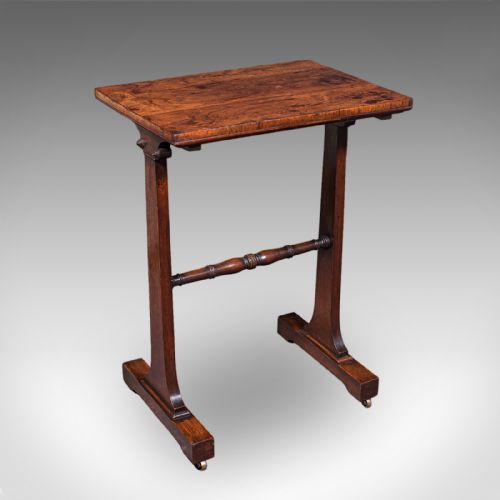
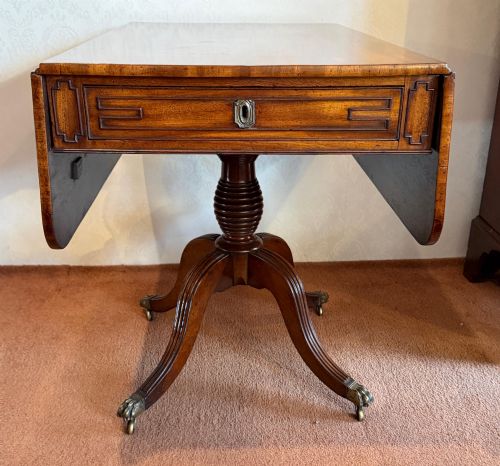
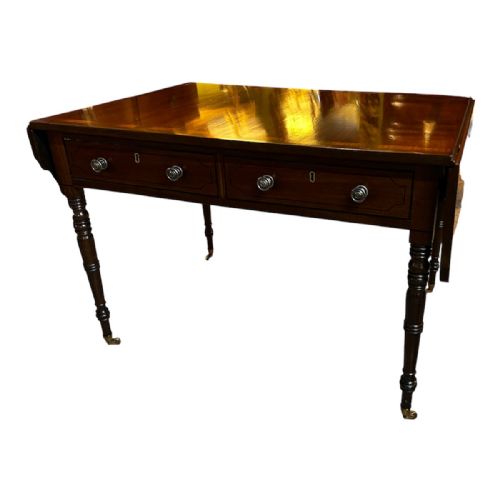
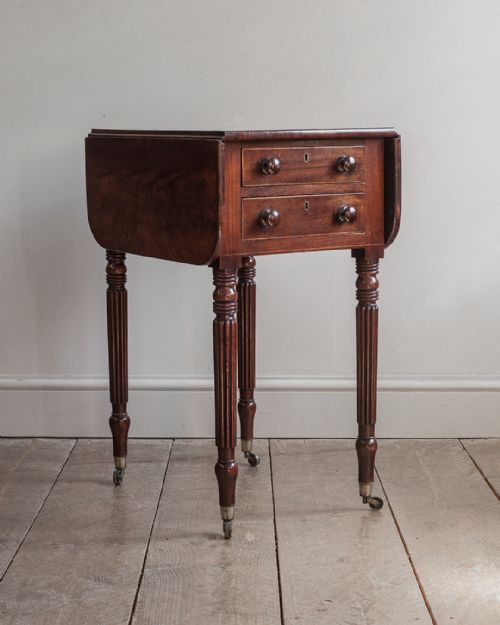
Georgian sofa table castors anchor the feet of drop-leaf tables designed to sit before a sofa, moving smoothly on small brass wheels.
Georgian Sofa Table Castors
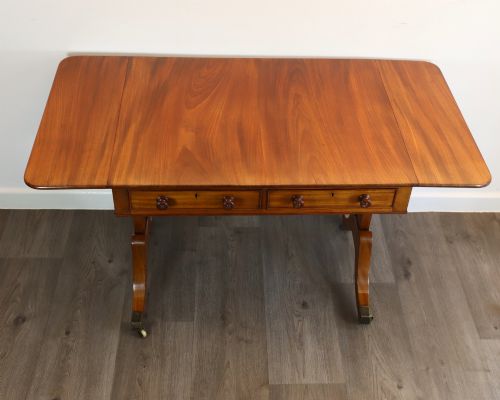
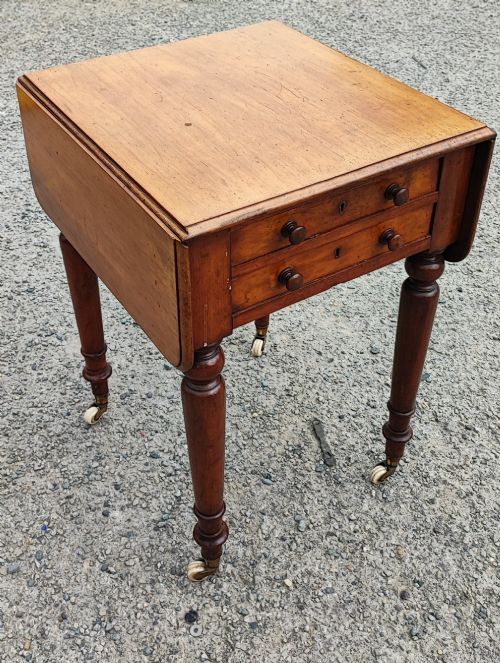
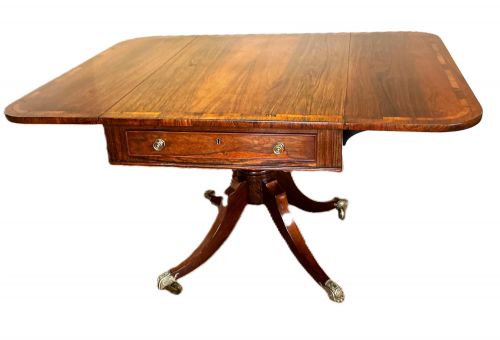
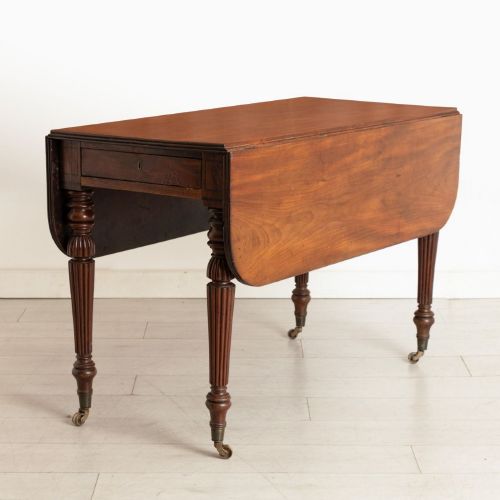
When you search for georgian sofa table castors, you find fittings attached to the legs of versatile drop-leaf tables that originated in the late eighteenth and early nineteenth centuries. These pieces appear frequently in Regency and Georgian styles, alongside side tables and Pembroke tables.
The tables themselves typically feature double drop leaves, pedestal bases or pillar supports, and stretcher or stretcher-less frames with small drawers. The castors beneath them allowed these heavy serving and writing tables to glide across carpets without damaging timber floors.
Materials and construction
Cabinet makers built these tables primarily in dense timbers such as mahogany, flame mahogany, rosewood, and yew wood, often incorporating satinwood inlay and fine wood inlay. These hardwoods provided the structural stability needed to support folding flaps and heavy pillar mounts.
Metalworking skills dictated the quality of the brass fittings and castors attached to the feet, sometimes paired with ceramic elements or gilt brass details. Joinery relied on precise dovetails for the drawers and robust framing for the drop leaves.
The object forms include Pembroke tables, side tables, console tables, and library tables alongside traditional sofa tables.
Assessing quality and craftsmanship
The distinction between ordinary workshop pieces and exceptional examples rests in the selection of figured timber, such as strongly marked flame mahogany or rich rosewood. Grain alignment across table tops and drop flaps demonstrates the care taken by the original maker.
Fine craftsmanship shows in the crispness of any inlaid woodwork, the weight and finish of the brass castors, and the smooth operation of the drop-leaf hinges and drawer runners.
The Georgian Sofa Table Castors Glossary
- Castor
- A small wheel mounted on a swivel assembly attached to the bottom of a table leg to permit rolling movement. They are commonly cast from brass and sometimes feature ceramic rollers.
- Sofa table
- A rectangular drop-leaf table designed during the Regency and Georgian periods to stand directly in front of a sofa. They typically include two small drawers on the frieze.
- Pembroke table
- A small table with hinged drop leaves on either side, often fitted with a single drawer and supported on slender legs with castors. This form dates from the eighteenth century onwards.
- Flame mahogany
- A decorative veneer cut from mahogany logs where the branch meets the trunk, producing a distinctive flickering flame pattern. Cabinet makers used this on prominent surfaces.
- Drop leaf
- A hinged flap on a table top that can be raised to extend the surface area or lowered when space is constrained. Brass hinges secure these leaves to the main fixed top.
Georgian Sofa Table Castors: Frequently Asked Questions
What is a sofa table?
A sofa table is a small drop-leaf table designed to stand immediately behind or in front of a sofa during the Georgian and Regency periods. They generally feature two narrow drawers and proportions well suited to domestic sitting rooms.
Unlike standard dining tables, these pieces were constructed to be freestanding in a room, with finished backs and polished timber throughout. Their castors enabled servants to reposition them easily for tea or writing.
How do I identify a Regency table?
Regency tables typically display classic architectural proportions, dark dense timbers like mahogany and rosewood, and brass detailing. They often incorporate pillar supports, swept legs, and prominent brass castors.
Cabinet makers working in this period favored clean lines, occasionally accented with brass inlay or gilt mounts, drawing inspiration from classical Greek and Roman design.
Why do these tables have castors?
Castors were fitted to allow heavy timber tables to move smoothly across thick carpets and heavy floorboards without scraping the wood. This mobility mattered in formal rooms where furniture layout changed frequently between entertaining and daily life.
The inclusion of brass castors also protected the delicate feet of the table legs from moisture and impact during floor cleaning.