
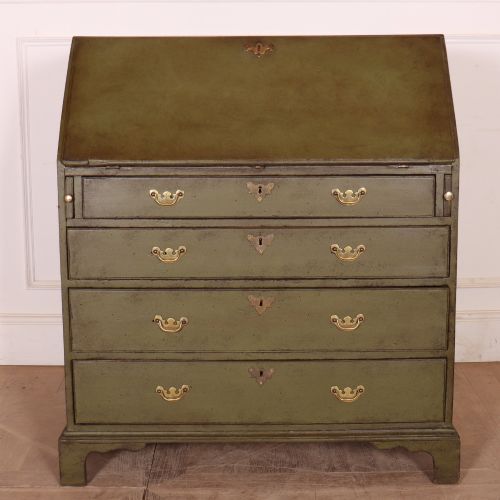
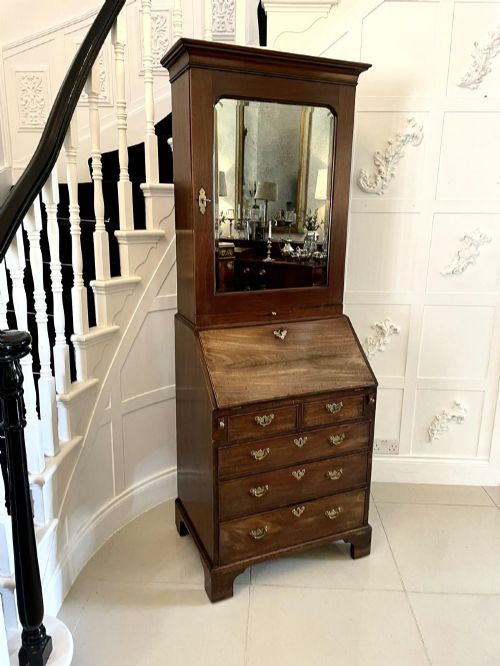


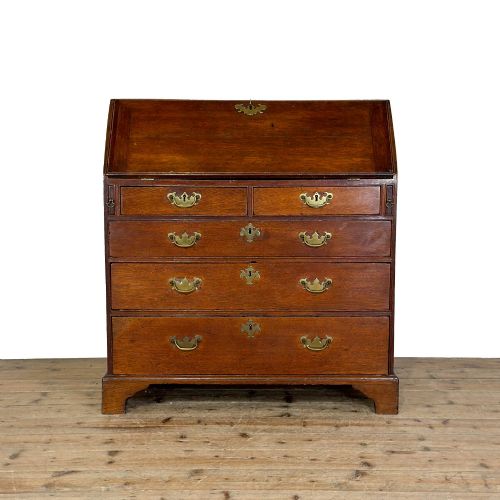
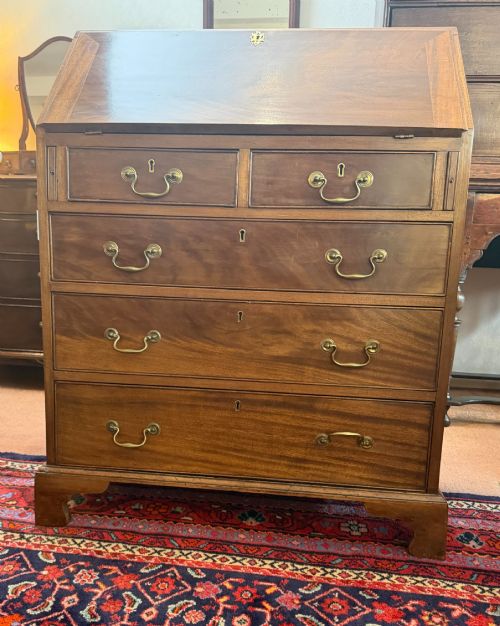
Georgian Slant Bureau
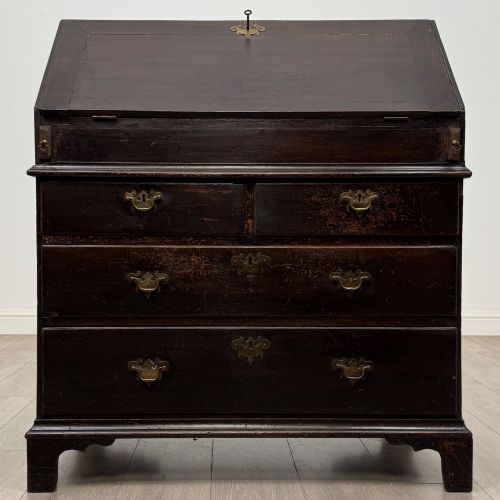
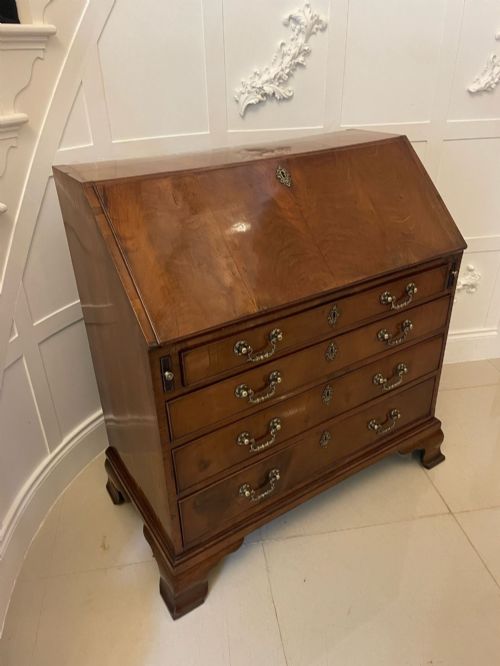
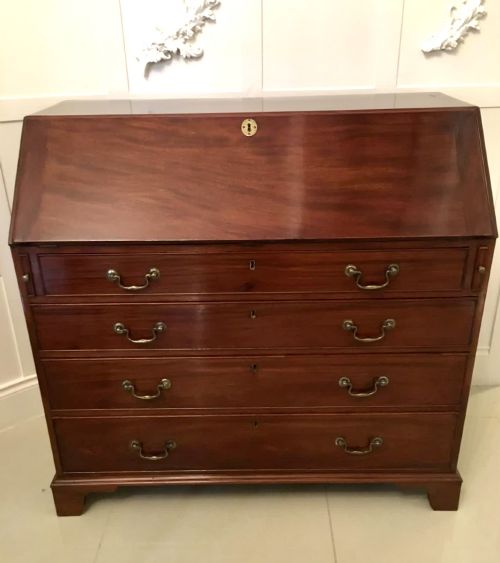
A georgian slant bureau is a domestic writing cabinet with a sloping fall front, combining a private desk with deep drawers.
Georgian Slant Bureau
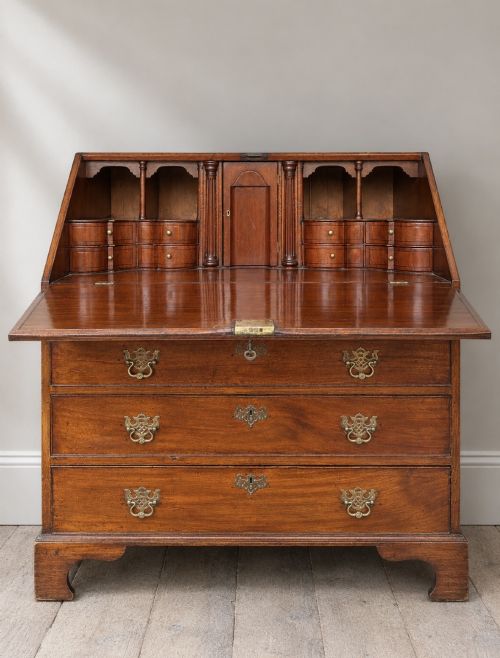
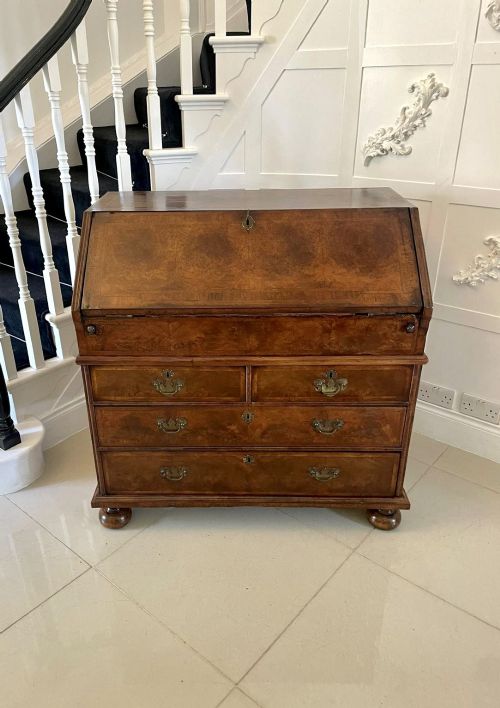
A georgian slant bureau serves as a primary writing cabinet featuring a sloping fall front that conceals a fitted interior of small drawers and pigeonholes. When exploring options for a georgian slant bureau, buyers frequently encounter mahogany and walnut timbers spanning the eighteenth century and the Georgian period.
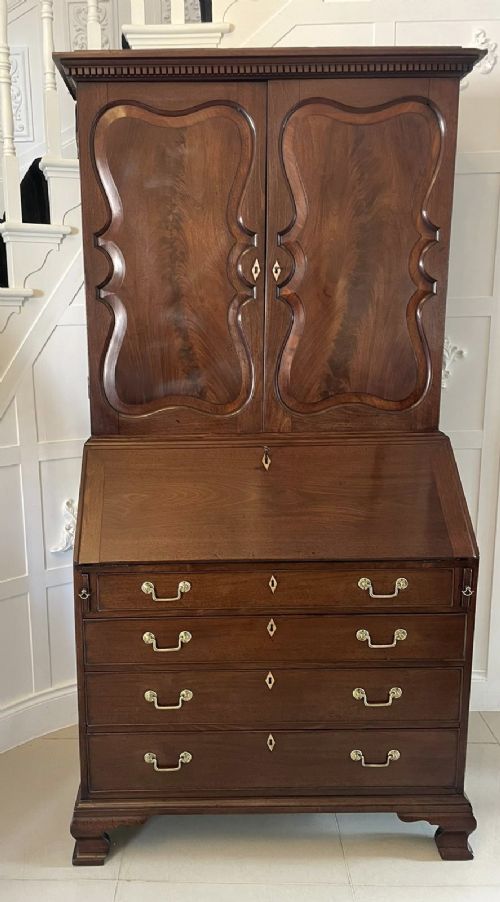
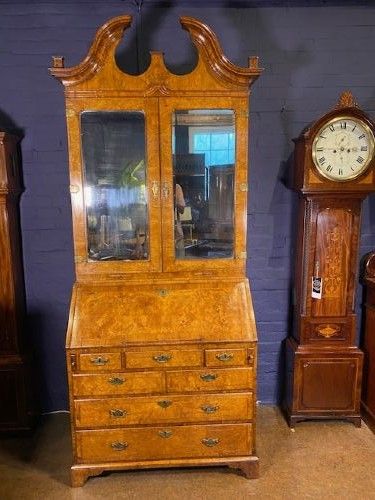
The selection ranges from compact oak and fruitwood examples to towering bureau bookcases topped with glazed doors and candle slides. Variations also appear on stands or legs, alongside painted and yew wood versions from later revival periods.
Materials and Technique
Cabinetmakers constructed these pieces primarily using solid and veneered timbers such as mahogany, oak, walnut, and burr walnut, often enhanced by herringbone inlay and brass hardware.
The fall front opens on hinges to reveal stepped interior drawers, while lower sections utilise bracket feet or plain bases to support the chest of drawers beneath the writing slope.
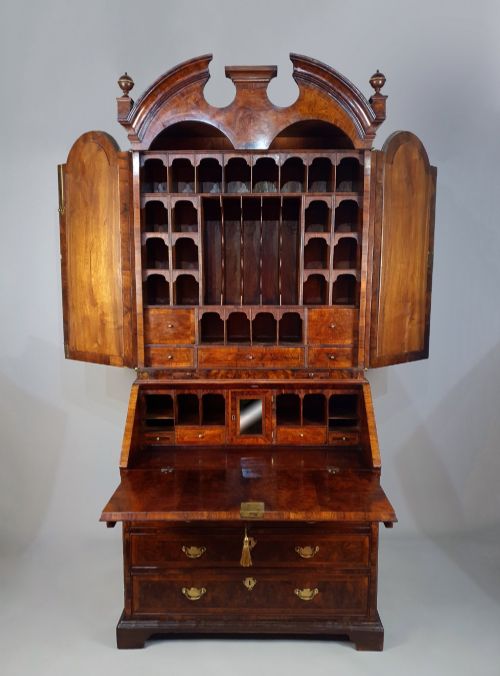
Some slant bureaux include ingenious hidden compartments operated by secret release buttons within the interior stationery nest.
Judging Quality
The distinction between average and superior pieces lies in the choice of figured timber, the complexity of the internal arrangement, and the crispness of the drawer construction. Master craftsmen selected rich burr walnut or figured mahogany, ensuring the grain flows continuously across the fall front.
Proportion and secondary woods also dictate standard, where secondary timbers like cedar and oak are cleanly finished and brasses remain original to the piece.
Chippendale
The Georgian Slant Bureau Glossary
- Fall front
- The hinged sloping panel that drops forward to form the writing surface of the bureau.
- Fitted interior
- The arrangement of small drawers, pigeonholes, and secret compartments concealed behind the fall front.
- Bracket feet
- The simple, architectural foot style commonly found supporting the bottom corners of eighteenth-century case furniture.
- Bureau bookcase
- A two-part form combining a slant desk base with an upper shelving or cabinet section.
- Candle slides
- Small pull-out wooden boards positioned beneath the upper doors of a bookcase to hold lighting.
Georgian Slant Bureau: Frequently Asked Questions
What is inside a slant bureau?
Opening the fall front reveals a fitted interior consisting of multiple small drawers, pigeonholes, and occasionally central cupboard doors or hidden compartments.
These compartments served to organise correspondence, documents, and valuables securely within the private desk space.
How do you use a slant bureau?
The hinged writing flap lowers to a horizontal position, supported by automated wooden lopers or the drop of the lid itself, creating a stable writing surface.
Users sit before the fall front to write letters or manage papers, utilising the interior compartments for stationery before closing and locking the sloping lid.
How do I identify walnut pieces?
Walnut furniture from the early periods often displays rich, swirling grain patterns, particularly when burr walnut or figured veneers are applied to the exterior surfaces.
These pieces typically date from the late seventeenth through the mid-eighteenth centuries, frequently incorporating herringbone stringing and brass escutcheons.
What is a bureau bookcase?
A bureau bookcase is a tall, two-part piece of furniture that pairs a lower slant-front writing desk with an upper cabinet enclosed by wooden or glazed doors.
This combination provided both enclosed workspace and prominent display or storage space for books and household valuables in Georgian homes.