


Georgian Silver Plate Bucket
A georgian silver plate bucket brings stately presence to a dining room, offering the thermal properties needed to chill wine in style.
Georgian Silver Plate Bucket
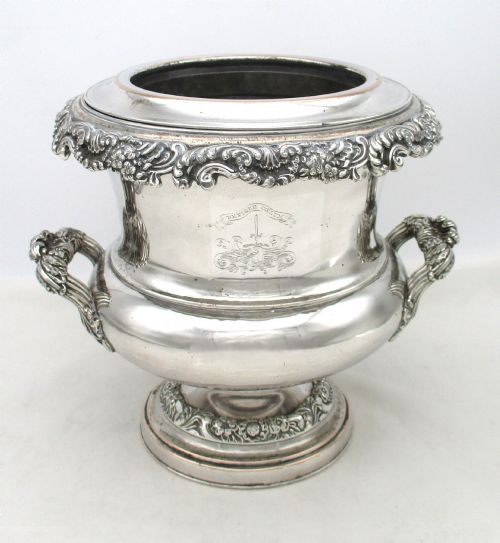
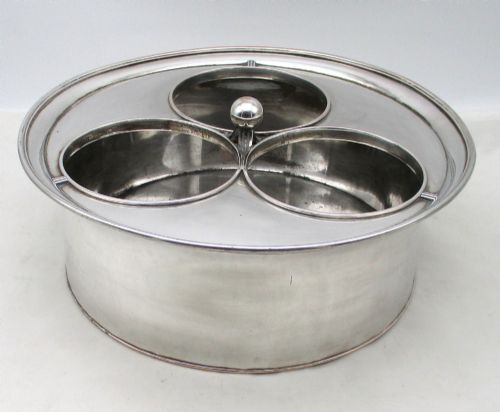
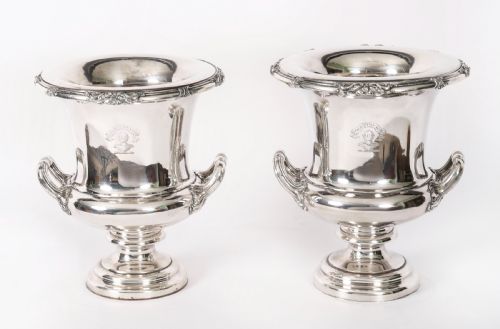
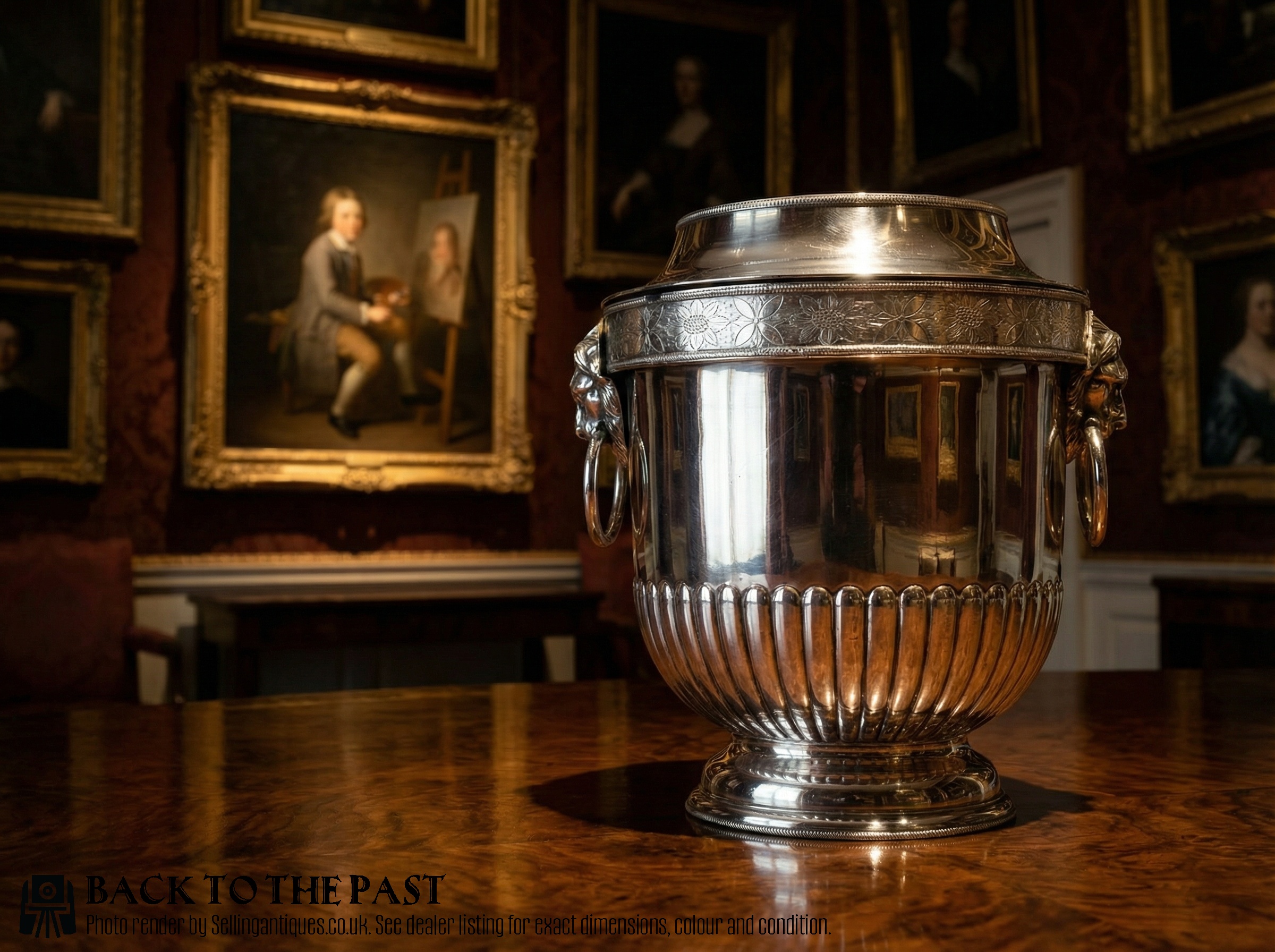
A georgian silver plate bucket typically takes the form of a wine cooler or ice bucket designed for formal dining tables. The pieces available span the Georgian, Regency, and William IV periods, capturing the refined tastes of the late eighteenth and early nineteenth centuries.
Most examples found on this page are fashioned as wine coolers, often featuring the classic campana urn silhouette. These vessels were essential for keeping bottles at the proper temperature during extended banquets and gatherings.
Makers utilised copper fused with silver to create durable yet lustrous display pieces for wealthy households. Surviving items frequently exhibit heraldic crests or engraved coats of arms that reflect their original aristocratic owners.
How they were made
Old Sheffield plate involves fusing a thin sheet of silver to a thicker copper core, a technique that requires immense skill to bond the metals permanently without melting the precious exterior. Craftsmen then shaped the resulting composite sheets into deep vessels and applied heavy silver wire to reinforce the rims.
Makers incorporated cast silver handles, borders, and feet onto the hammered body of the bucket, providing tactile contrast and structural integrity. Engravers added crests and coats of arms by hand, cutting shallow lines into the silver surface to reveal the warmer copper tone beneath where desired.
Listings feature items from the 18th century, Georgian, Regency, and William IV periods, predominantly constructed from Old Sheffield Plate and copper.
What varies in quality
The crispness of cast ornamentation and the depth of hand-chased detail distinguish finer vessels from standard production items. Superior examples retain substantial silver fusing over the copper core, whereas inferior pieces reveal extensive wear where the base metal shows through from decades of polishing.
Proportion and weight dictate the overall presence of a bucket, with heavier gauge metal providing greater stability and thermal mass. The integration of handles and the precision of heraldic engraving indicate the skill of the workshop that produced the piece.
Matthew Boulton and Co
The Georgian Silver Plate Bucket Glossary
- Old Sheffield Plate
- A composite material formed by fusing silver to a copper ingot before rolling them into sheets together. This technique preceded modern electroplating and produces a warm, deep lustre.
- Campana
- An inverted bell shape with a flaring rim and a footed base. This classical silhouette was highly popular for wine coolers during the Regency period.
- Crest
- A specific heraldic device belonging to a family, often engraved onto the body of a silver plated vessel. It personalised the dining equipment for the original owner.
- Regency
- An English design style spanning the early nineteenth century. It draws heavily on classical Greek and Roman motifs.
Georgian Silver Plate Bucket: Frequently Asked Questions
How do I clean old sheffield plate?
Cleaning requires a soft cloth and a gentle, non-abrasive silver polish formulated for plated items. Vigorous rubbing must be avoided to protect the thin layer of silver.
Regular dusting and minimal polishing preserve the underlying copper foundation and prevent the plating from wearing away over time.
Were these buckets used for ice?
Dining arrangements of the period required vessels to hold ice or cold water alongside wine bottles. The thick metal walls helped maintain low temperatures.
Many examples function equally well today as decorative cachepots or distinctive champagne coolers for modern entertaining.
How do I date a piece?
Dating relies on stylistic clues such as the campana shape, rim design, and the presence of cast silver mounts typical of the Regency era. The method of fusing silver to copper also points towards specific manufacturing windows.
Historical crests and engraving styles provide further clues that help narrow down the decade of production.