
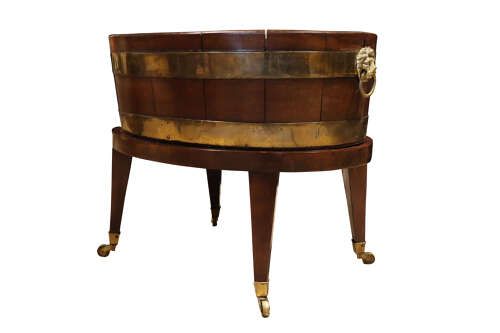
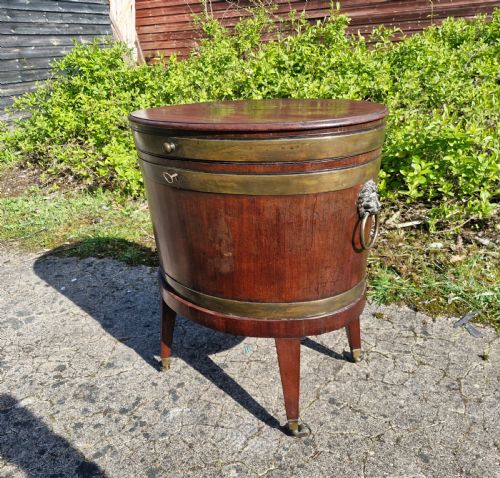


Early 19th Century Cooler
These early 19th century coolers are robust vessels designed to chill wine or water at the dining table, combining practical utility with fine period craftsmanship.
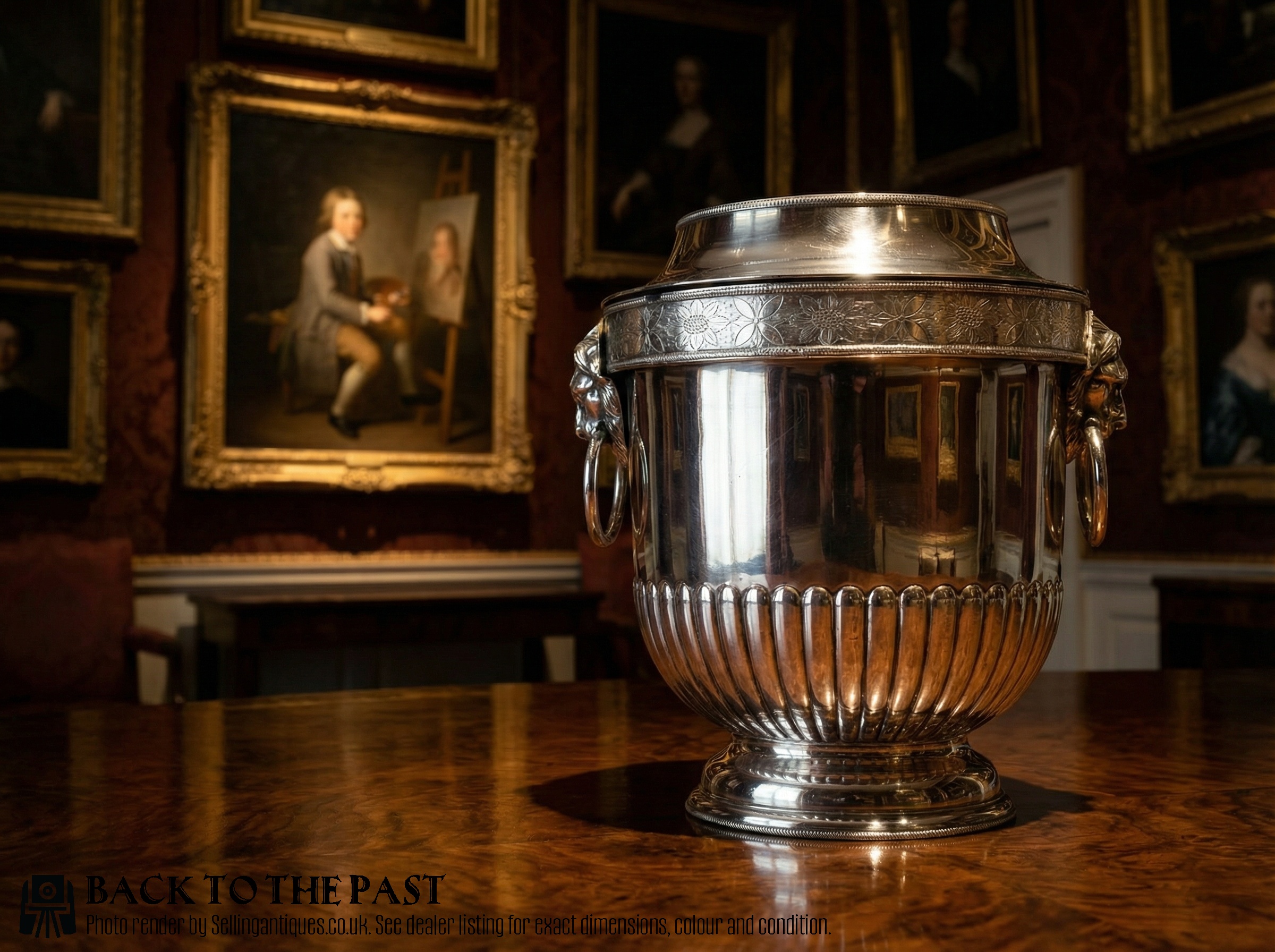
Early 19th Century Cooler
An early 19th century cooler encompasses wine coolers, cellarettes, jardinières, and buckets designed to hold bottles and ice during meals. These objects originate primarily from the Regency and Georgian eras, spanning the early decades of the 1800s.
The most common forms on this page are mahogany wine coolers and cellarettes, often shaped as sarcophagi, oval tubs, or elliptical buckets. Many pieces feature distinctive brass or metal banding and retain their internal linings for service.
Beyond standard dining room wine service, the selection includes related forms such as Dutch teestoof buckets, decorative japanned tinware, campana design plate vessels, and occasional teapoys or jardinières adapted for plants.
How they were made
Cabinetmakers utilised rich timbers such as flame mahogany, constructing bodies through traditional coopering with tight staves or through panelled joinery. Metal elements like brass bands, swing handles, and paw feet were cast and applied to secure and ornament the wooden vessels.
Metal coolers relied on Old Sheffield Plate, silver plating, copper, zinc, and japanned tin-ware to create waterproof vessels of campana or bucket form. These metalwork pieces demanded skilled smithing, soldering, and surface decoration such as lacquering or plating.
Some Dutch teestoof buckets started life keeping Dutch toes warm under heavy skirts before finding a second career chilling claret.
What varies in quality
Quality rests in the depth of figure in the mahogany, the crispness of brass mounts, and the integrity of the original construction rather than mere decorative additions. Finer examples display well-matched timber grains, substantial metalwork, and untouched surfaces with rich patination.
Utility also dictates distinction, where pieces retaining original zinc liners, internal divisions, or sturdy stands with paw feet command greater interest. The harmony of proportions between the body and any accompanying base separates standard utility vessels from high Regency cabinetmaking.
Gillows of Lancaster and London
The Early 19th Century Cooler Glossary
- Cellarette
- A lockable container used for holding bottles of wine near the dining table. They frequently mirror the architectural motifs of larger furniture.
- Sarcophagus
- A coffin-shaped burial chest style adopted by Regency designers for grand cellarettes. These pieces typically rest on substantial feet.
- Old Sheffield Plate
- A composite material formed by fusing a thin sheet of silver to a thicker copper base. This technique preceded modern electroplating.
- Teestoof
- A Dutch foot warmer or small heating vessel often repurposed as a bucket. They exhibit distinctive pierced or wooden-staved construction.
- Jandinière
- An ornamental pot or stand designed to hold growing plants or flowers. In this period, they shared forms with wooden wine buckets.
- Coopered
- Built from curved wooden staves bound together with metal hoops, much like a traditional barrel. This method ensured watertight integrity for ice and bottles.
Early 19th Century Cooler: Frequently Asked Questions
What is an early 19th century cooler used for?
These vessels were created to keep wine bottles cool during formal dining by packing them with ice alongside the bottles. Today, buyers utilise them as decorative cellarettes, plant jardinières, or distinctive storage pieces in living spaces.
Their sturdy waterproof linings and compartmented interiors make them practical for holding modern items while retaining their original historic character and presence in a room.
How do I tell Regency coolers apart from Georgian ones?
Georgian coolers often display restrained classical lines, simple oval shapes, and straightforward brass banding suited to mid to late 18th century dining rooms. Regency pieces tend toward bolder architectural statements, incorporating paw feet, carved lion masks, and sarcophagus forms.
The Regency examples also lean heavily into exotic woods like flame mahogany and draw inspiration from classical antiquity, reflecting a shift in taste during the early decades of the 1800s.
Are metal coolers different from wooden ones?
Metal coolers on this page utilise materials such as Old Sheffield Plate, copper, zinc, and japanned tin-ware formed into campana urns or buckets. Wooden coolers rely on coopering or cabinetry in mahogany, often reinforced with brass bands.
While wooden vessels functioned as floor-standing cellarettes beside the dining table, metal plate coolers sat directly upon tables or sideboards for more immediate service.
How do I care for a mahogany cellarette?
Keep wooden coolers away from direct heat sources and drastic humidity changes to prevent the mahogany staves or panels from splitting. Feed the timber with appropriate wax periodically to maintain the surface condition and depth of patina.
If utilising the piece for plants or actual cooling, protect the interior lining and avoid standing water directly on vulnerable dry wood.