





Georgian Silver Pitcher
A georgian silver pitcher brings tactile weight and domestic history to the table, taking the form of cream jugs, water vessels, and ewers.

Georgian Silver Pitcher
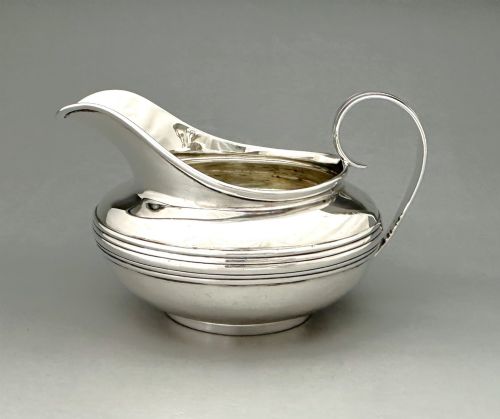
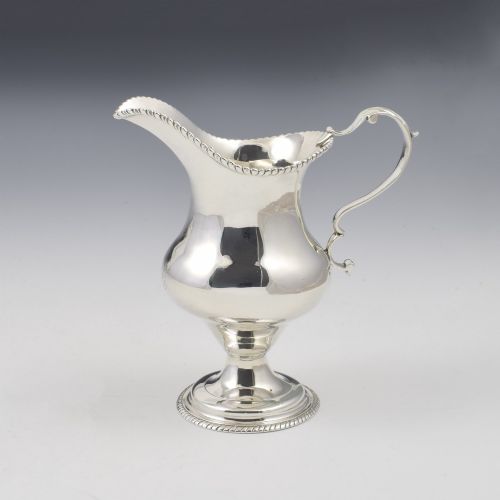
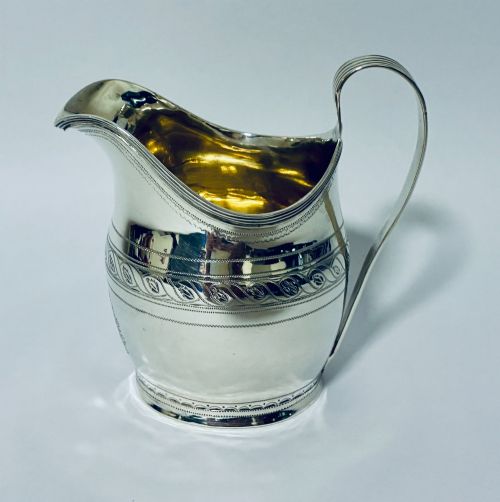
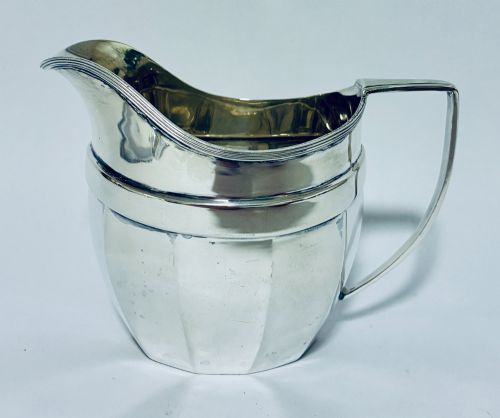
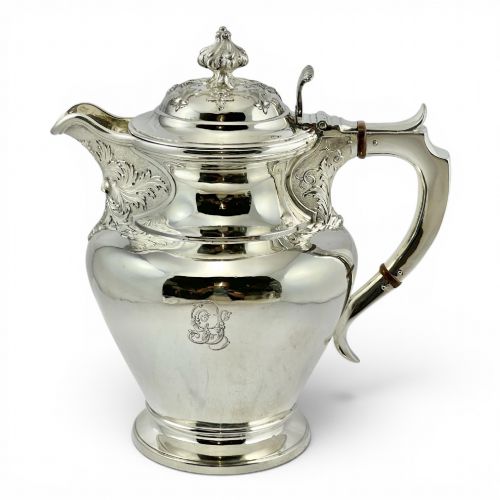
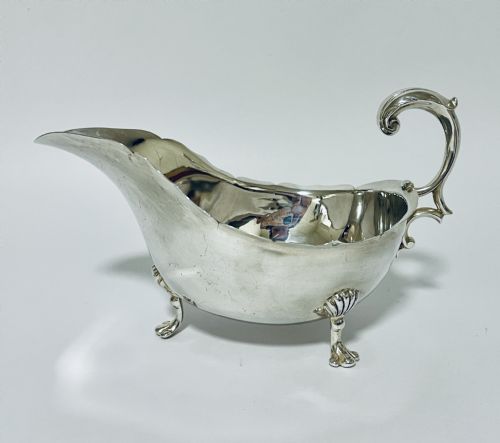
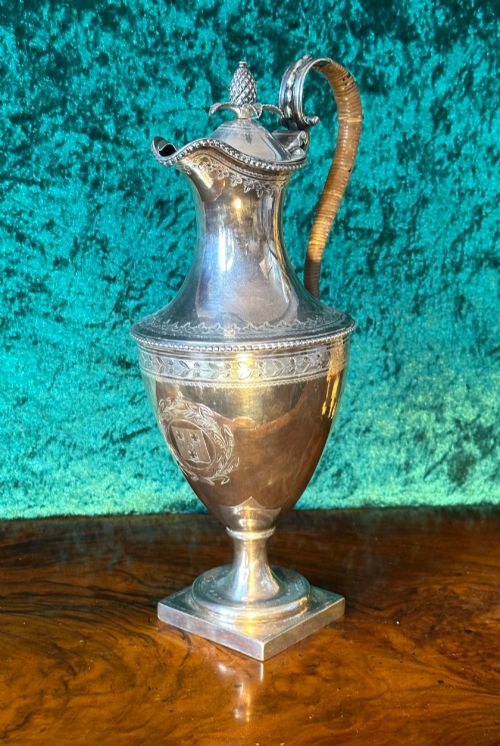
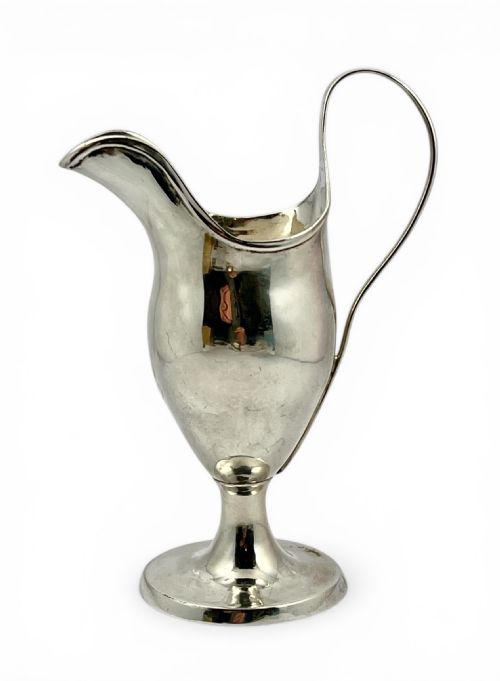
When you search for a georgian silver pitcher, you encounter holloware spanning the eighteenth and early nineteenth centuries, alongside later revivals of the style. The forms on this page run from small sparrow beak cream jugs and helmet creamers to substantial milk jugs, water pitchers, and coffee pots.
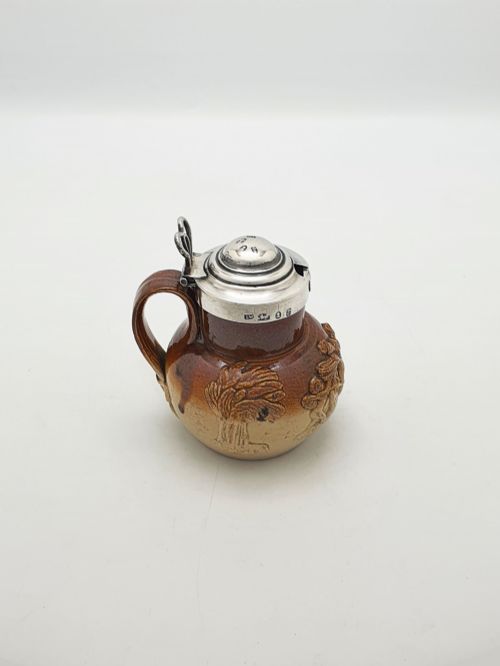
Most items meeting this description serve dairy functions at the tea table, such as cream jugs and milk jugs. Alongside solid sterling silver examples, you find Old Sheffield Plate, stoneware bodies with silver collars, and pewter ale jugs from the same period.
Materials and construction
Makers shaped sterling silver and silver plate through hammering, raising, and soldering, often incorporating cast handles and applied rims. Stoneware bodies and glass vessels received sterling silver collars, mounts, and hinged lids.
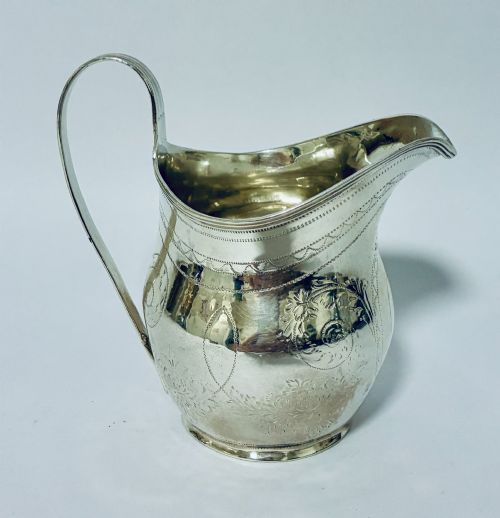
Old Sheffield Plate combined a thin layer of silver fused to a copper base, visible where the underlying metal shows through at high points or edges. Bright cut engraving, chasing, and crests added surface decoration to the metal body.
Georgian Silver Pitcher Retail Price Guide 2026
Typical asking prices for georgian silver pitcher among the pieces listed under this phrase on Sellingantiques today, from the lower quarter to the upper quarter. They describe what is for sale here now, not the wider market.
One hefty pewter ale jug holds a full gallon, ensuring nobody ran dry during a Georgian evening.
Quality factors in silver pitchers
The crispness of the chasing and the precision of bright cut engraving separate standard production from superior pieces. Hand-formed handles and sturdy gauge silver indicate better workshops.
Condition of hallmarks, original gilding on the interior, and the integrity of soldered joints dictate desirability. Wear to Old Sheffield Plate revealing excessive copper alters the visual balance of the piece.
Stalker & Mitchison·James Gordon·John Emes·Peter & Ann Bateman·George Unite·Robert Pringle & Sons·William Hunter
The Georgian Silver Pitcher Glossary
- Sparrow beak jug
- An eighteenth-century small cream jug featuring a narrow, protruding spout resembling a bird beak. These early forms often rest on three pad feet.
- Old Sheffield Plate
- A composite material made by fusing a sheet of silver to a copper ingot before rolling them into sheets. This technique predates electroplating.
- Bright cut engraving
- A surface decoration technique using faceted cuts made with a sharp graving tool to catch the light. It creates geometric and floral borders popular on Georgian silver.
- Helmet jug
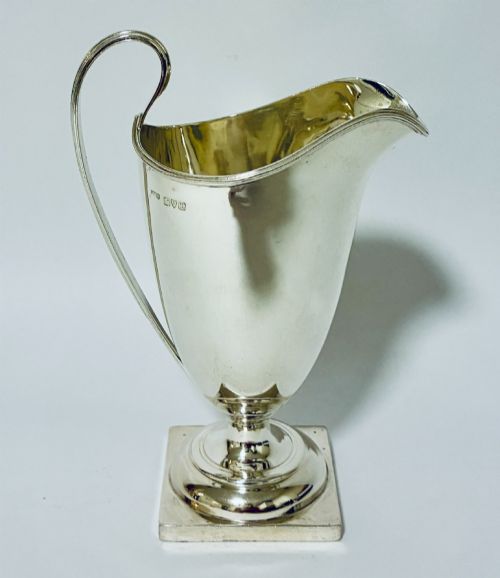
- A cream jug with a flared foot and a rim shaped like a classical helmet. The form includes an elevated spout and a flying handle.
- Holloware
- Tableware items such as jugs, pots, and bowls that possess volume and capacity. This category distinguishes vessels from flatware.
Georgian Silver Pitcher: Frequently Asked Questions
How do I clean a georgian silver pitcher?
Use a soft cloth and a specialised silver polish formulated to remove tarnish without being overly abrasive. Avoid harsh chemical dips that strip away the natural patina accumulated over centuries.
Wash the vessel in warm soapy water and dry thoroughly after polishing. Take care around engraved lines and hinged lids where residue can accumulate.
Were these pitchers used for water or cream?
The smaller vessels function as cream jugs or milk jugs for the tea service. Larger forms act as water pitchers, wine ewers, or beer jugs depending on their capacity and period.
Examining the scale and spout shape reveals the intended liquid. Sparrow beak and helmet forms suit pouring cream, while larger handled vessels hold water or ale.
How can I tell the date of a silver pitcher?
English silver carries hallmarks indicating the assay office, date letter, and maker's mark stamped directly into the metal. These small punches provide the exact year of manufacture for pieces bearing official marks.
Stylistic shifts, such as the transition from plain Queen Anne curves to Neoclassical bright cut engraving, help narrow down unmarked or plated items.