



Georgian Silver Hot Water Jug
A georgian silver hot water jug brings the weight and bright gleam of the eighteenth and nineteenth centuries straight to your table.
Georgian Silver Hot Water Jug
When you search for a georgian silver hot water jug, you encounter serverware and coffee pots spanning the eighteenth and nineteenth centuries, alongside pieces from the Regency and William IV periods. These vessels often appear alongside related descriptions such as coffee pots, ewers, and pitchers, reflecting the varied terminology used by dealers across the centuries.
The pieces on this page lean heavily toward sterling silver and Old Sheffield Plate, with makers utilising materials like wood, wicker, and hardwood for insulated handles. You are most likely to meet substantial silver vessels bearing Georgian hallmarks or the characteristic fused plating of eighteenth-century workshops.
How they were made
Silversmiths constructed these vessels using sterling silver or through the Old Sheffield Plate technique, fusing a thin layer of silver onto a copper base. This plating method requires considerable skill to wrap the metals without exposing the underlying copper along edges or seams.
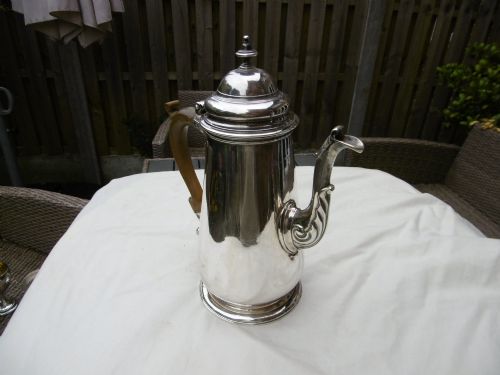
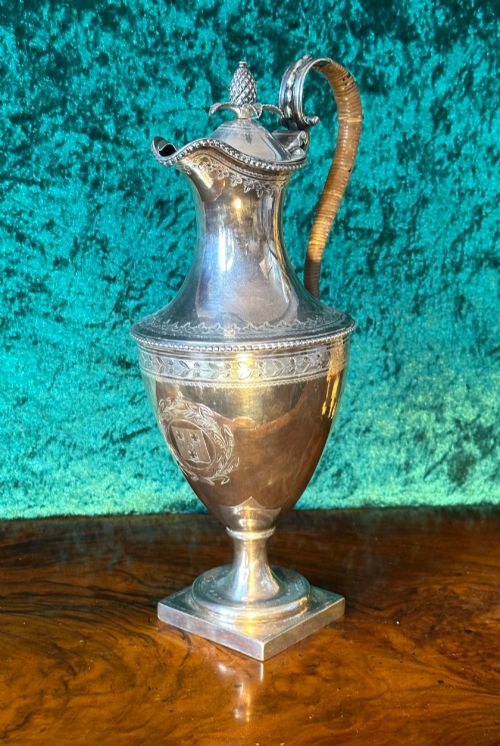
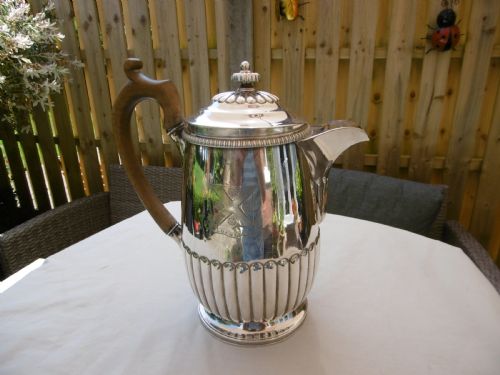
Makers incorporated wood, hardwood, and wicker into handles to insulate against boiling water during service. These organic elements were pinned or socketed into metal mounts, creating a secure grip that remains intact on surviving examples.
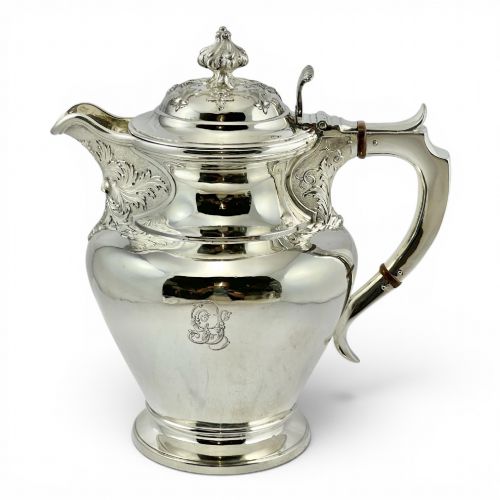
Several pieces arrive bearing centuries-old family crests, meaning your tea table might share space with an anonymous 1814 Scottish landowner's armorial bearings.
What varies in quality
The standard of a georgian silver hot water jug rests largely on the crispness of its chased or engraved ornamentation and the integrity of its original mounts. Pieces by notable silversmiths often display heavier gauge metal and more refined proportions in the body and spout.
Preservation of the plating on Old Sheffield pieces distinguishes superior examples from heavily worn alternatives where the copper base shows through. The balance of the vessel, the snugness of the lid hinge, and the retention of insulated handle elements further separate the top tier of pieces.
Richard Gurney·Matthew Boulton·John Hoyland·John Scofield
The Georgian Silver Hot Water Jug Glossary
- Old Sheffield Plate
- A fused metal composite made by sandwiching a sheet of copper between two thinner sheets of silver and rolling them together under heat. This technique predates electroplating and creates a distinctive edge where the copper core shows.
- Sterling Silver
- An alloy consisting of silver and other metals, typically copper, standardised to a high purity for durable domestic plate. It forms the primary metal for the solid silver jugs in these listings.
- Ewer
- A large pitcher with a wide spout and a handle, traditionally used for holding and pouring water. In these records, the term often overlaps with coffee pots and hot water jugs.
- Hallmark
- An official stamp applied to precious metals to indicate purity, the maker, and the year of assay. These marks provide the primary evidence for dating sterling silver pieces.
- Regency
- A period in British history spanning the early nineteenth century, known for neoclassical influence in design and decorative arts. Pieces from this era often feature clean lines and classical vase shapes.
Georgian Silver Hot Water Jug: Frequently Asked Questions
How do I use a hot water jug?
These vessels were designed to hold and pour hot water at the tea or coffee table, often complementing a matching service.
Today, they function primarily as decorative display pieces, though solid silver examples remain entirely usable for serving hot water if handled with care.
What is Old Sheffield Plate?
Old Sheffield Plate is an early method of fusing a thin sheet of silver to a copper core by heating and rolling the metals together.
This technique produces a durable material that predates modern electroplating, often revealing a thin line of copper at the exposed rims or worn high points.
How do I date these jugs?
Dating relies heavily on official hallmarks stamped into sterling silver pieces, which record the assay office and year letter.
For plated items without hallmarks, dating depends on stylistic cues, construction methods, and maker marks recorded from the period.
Why do some jugs have wooden handles?
Makers attached wooden or wicker grips to prevent heat transfer from the boiling water inside to the hand of the person pouring.
These organic materials were shaped and fitted into metal sockets, providing both thermal insulation and a comfortable grip.