
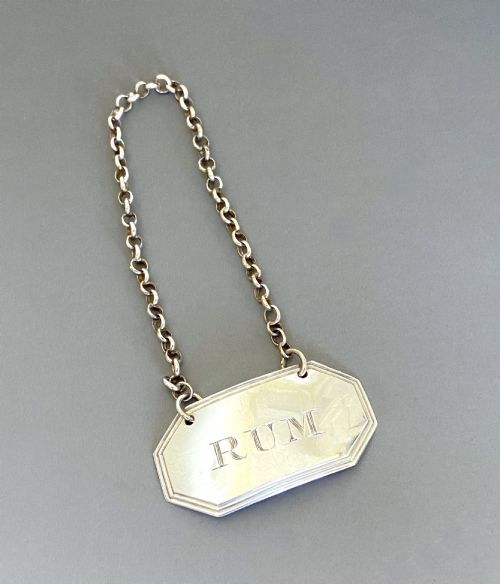
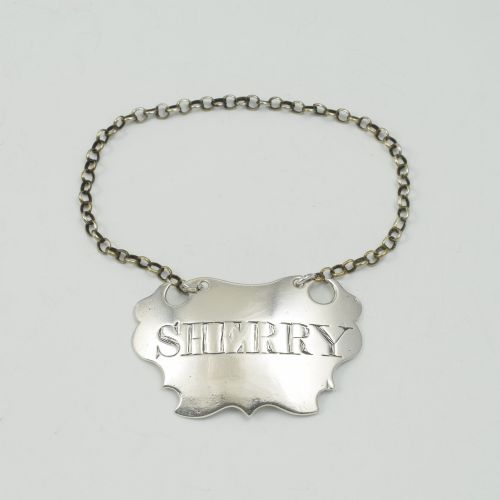
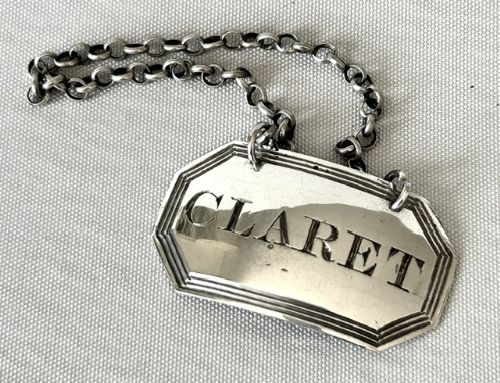
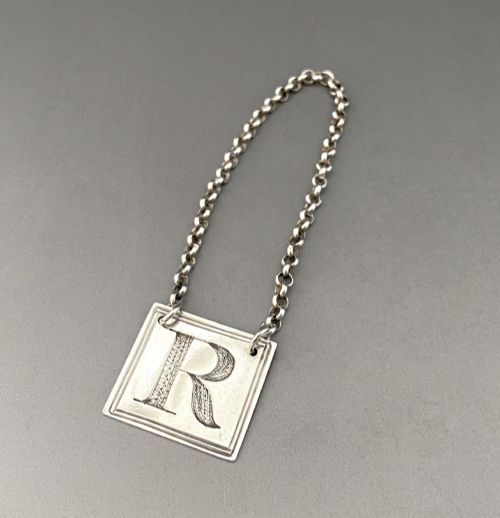



Georgian Silver Decanter Ticket
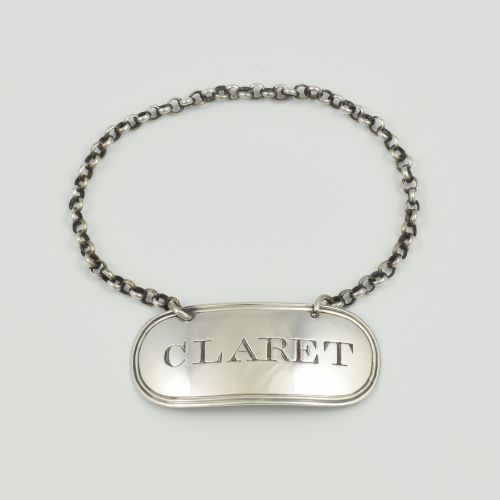
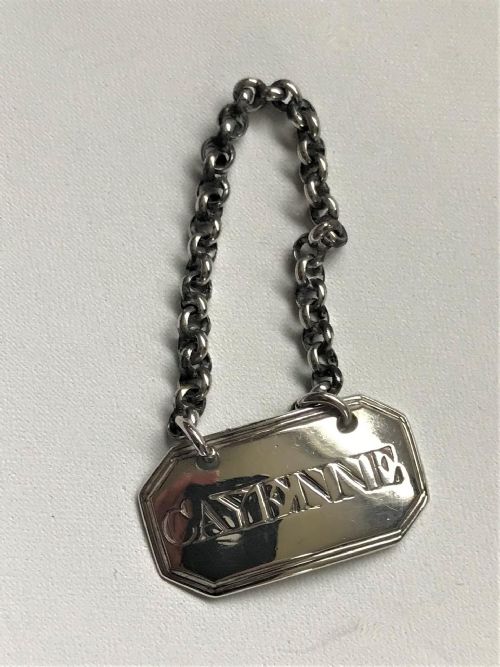
A georgian silver decanter ticket identifies the contents of a bottle with small elegance, hanging neatly from the neck of a decanter.
Georgian Silver Decanter Ticket
When you search for a georgian silver decanter ticket, you encounter small hanging labels designed to distinguish beverages such as sherry, port, claret, rum, Madeira, gin, hock, and moselle. The examples found here predominantly span the Georgian and Regency periods, alongside occasional Victorian and 18th-century pieces, reflecting long-standing dining traditions.
These items take various forms, including escutcheon shapes, vine leaf designs, and individual bottle tickets for specific spirits like cayenne or single portions. Most pieces originate from English makers in London, while others bear provincial Scottish marks from places like Edinburgh and Peterhead.
A buyer examining this selection will find both individual labels and matched sets, offering flexibility for a traditional dining table or a barware collection. They serve to label decanted wines and spirits accurately while adding period charm to antique glassware.
Materials and construction
The materials recorded in these listings consist of sterling silver, solid silver, and silver gilt. Silversmiths utilised durable metal sheets to shape the tickets, ensuring they could hang securely from bottle necks without bending.
Techniques ranged from plain piercing and engraving to elaborate embossed vine leaf motifs and Rococo Revival styling. Makers applied punchwork and cast elements to achieve distinct lettering for drink names such as sherry and claret.
Listings feature sterling silver, solid silver, and silver gilt materials across Georgian, Regency, William IV, and Victorian styles.
Judging quality in silver tickets
Quality in a georgian silver decanter ticket rests upon the clarity of the maker's mark and the crispness of the engraved or cast lettering. Sharply defined details on vine leaves or escutcheon borders distinguish superior examples from simpler production.
The reputation of the silversmith also shapes the standing of a piece, with recognised makers commanding attention from collectors. Additionally, the presence of original suspension chains and well-preserved gilding adds distinction to individual labels and sets.
Elizabeth Morley·John Reily·Thomas Wallis II·William Sharp·Peter and Anne Bateman
The Georgian Silver Decanter Ticket Glossary
- Decanter label
- A small piece of silver hung around the neck of a decanter to name the beverage inside. It is also frequently referred to as a bottle ticket.
- Escutcheon
- A shield-shaped form commonly used for the body of a decanter label. This shape allows space for engraved lettering naming the wine or spirit.
- Silver gilt
- Silver that has been coated with a thin layer of gold on its surface. This finish provides a rich yellow tone seen on specific Victorian and Georgian labels.
- Provincial mark
- A hallmark applied outside the main assay offices, indicating regional manufacture. Scottish provincial examples from towns like Peterhead appear in these listings.
- Vine leaf
- A decorative motif shaped like grapevine foliage, often pierced or embossed. It serves as a popular framework for labels identifying hock and sherry.
Georgian Silver Decanter Ticket: Frequently Asked Questions
What is a decanter ticket used for?
A decanter ticket hangs around the neck of a glass bottle to name the wine or spirit held within. This prevents confusion at the dining table when multiple decanters are in use.
Historically, they ensured guests and hosts could easily distinguish between fortified wines like port and sherry, or spirits like rum and gin.
How do I hang a silver label on a decanter?
These labels typically feature a small link or a chain made of silver that slips directly over the bottleneck. The ticket then rests against the glass.
When pouring, the label simply stays in place or lifts slightly with the tilt of the decanter.
How do I identify a Georgian silver label?
Georgian silver labels often feature hallmarks that indicate the date of assay and the silversmith's mark. Stylistic cues like Rococo Revival curves or simple shield forms also point to this era.
Examining the lettering style helps confirm whether a piece dates from the 18th century or the Regency period.
Are these labels sold as sets?
Some listings offer matched sets of multiple labels, while others provide individual pieces. Sets allow collectors to label several matching decanters uniformly.
Individual labels are often bought to complete an existing group or to match a specific single decanter.