
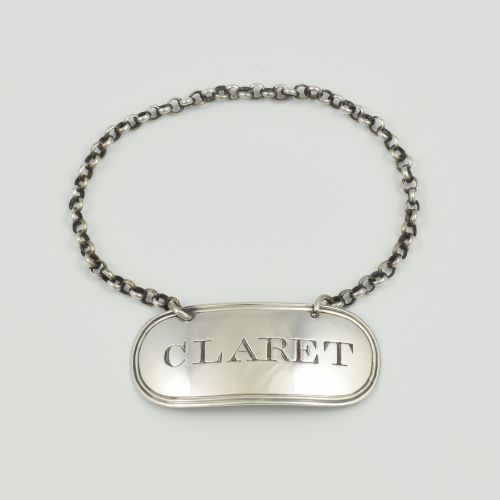


Georgian Silver Wine Tag
A georgian silver wine tag sits on the neck of a decanter, naming the contents with quiet grace.
Georgian Silver Wine Tag
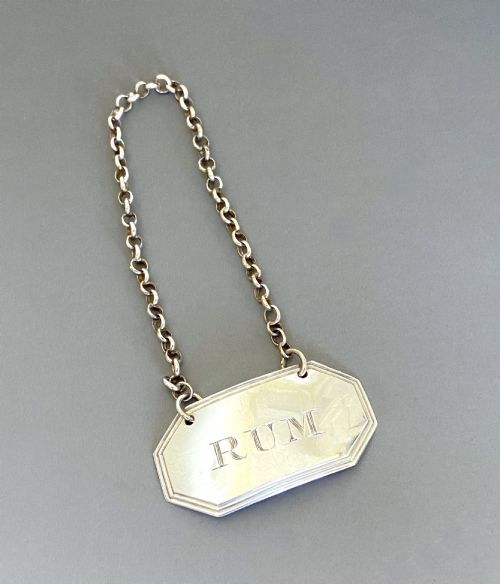
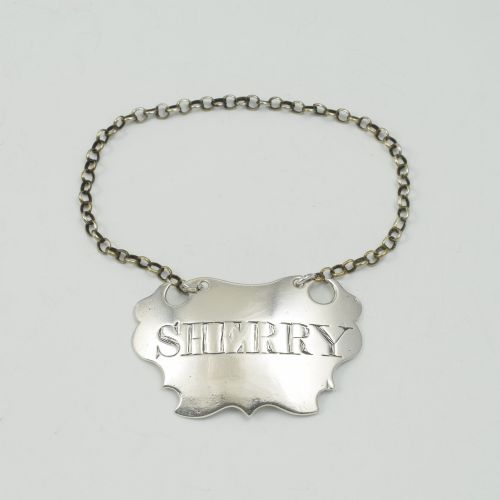
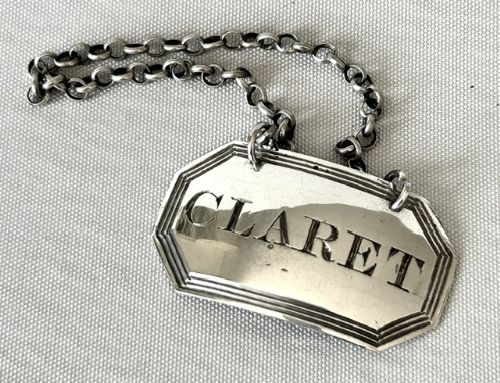
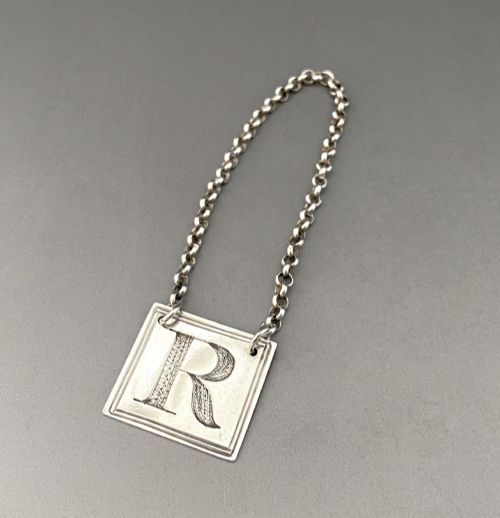
A georgian silver wine tag is a small piece of barware designed to identify bottles and decanters containing port, sherry, claret, madeira, rum, hock, or moselle. These decanter accessories hang from chains or collars around the bottleneck, ensuring guests know the vintage without pouring.
Most examples found here belong to the Georgian and Regency periods, spanning the eighteenth and early nineteenth centuries. Forms range from simple escutcheon shapes and crescent plates to naturalistic vine leaves cast in solid silver or silver gilt.
Makers produced these markers across English and Scottish workshops, utilising traditional techniques of piercing, engraving, and stamping. Collectors encounter individual labels as well as matched sets intended for formal dining.
Materials and construction
Silversmiths constructed these tags primarily from sterling silver and solid silver, occasionally applying a gold wash known as silver gilt to the surface. Metal was rolled, cut to shape, and pierced or engraved with the beverage name.
Decoration often involved hand-chased vine leaves, rococo revival motifs, or simple reeded borders soldered to the main body. Suspension came via sturdy silver chains or rigid collars fitted directly to the decanter neck.
Some miniature rum labels bear the inscription One Go, designed strictly for a single, uncompromising measure of spirit.
Judging workmanship
Quality rests in the crispness of the piercing and the depth of the engraving that names the wine. Finer examples display sharp lettering and deliberate detailing in motifs like vine leaves rather than shallow, rushed incisions.
The reputation of the maker and the clarity of the hallmarking stamps significantly influence the standing of a piece. Well-preserved chains and original suspension hardware also separate standard items from superior survivals.
Elizabeth Morley·John Reily·Thomas Wallis II·William Sharp·Peter and Anne Bateman
The Georgian Silver Wine Tag Glossary
- Escutcheon
- A shield-shaped plate used for naming contents or displaying heraldry. This form is common among early decanter labels.
- Silver gilt
- Silver covered with a thin layer of gold. This finish protected the metal and added a rich warm tone.
- Piercing
- The technique of cutting decorative openings through the silver sheet. Silversmiths used saws and files to create openwork borders and lettering.
- Hallmark
- A set of official marks stamped on precious metals indicating purity, maker, and year of assay. These marks help date the silver accurately.
Georgian Silver Wine Tag: Frequently Asked Questions
What is a wine tag?
A wine tag is a small silver label hung around the neck of a decanter to identify the drink inside. They prevent confusion at the dining table when serving different vintages.
Historically, hosts used them to distinguish between heavy fortified wines and lighter table drinks before paper labels became common.
How do I date a Georgian silver label?
Dating relies heavily on the hallmarks stamped into the silver, which reveal the assay office, year letter, and maker's mark. Stylistic clues such as shield shapes, rococo engraving, or vine leaf motifs also point to specific decades.
Consulting standard silver reference books helps match the assay office symbols to exact years of production.
Did these labels come in matched sets?
Silversmiths produced both individual labels and matched sets intended for multiple decanters on the sideboard. Sets often shared identical borders, lettering styles, and maker marks.
Finding a complete set with consistent design remains a notable discovery for collectors.
How do I care for antique silver tags?
Antique silver requires gentle cleaning with a soft cloth and dedicated silver polish to preserve the original engraving and hallmarks. Avoid harsh chemical dips that strip away the natural patina accumulated over centuries.
Storing them in dry conditions prevents tarnish and protects delicate chains from bending.