



Georgian Silver Decanter Label
These small Georgian silver decanter label pieces hang from decanter necks to name the bottle's contents with elegance.
What They Are
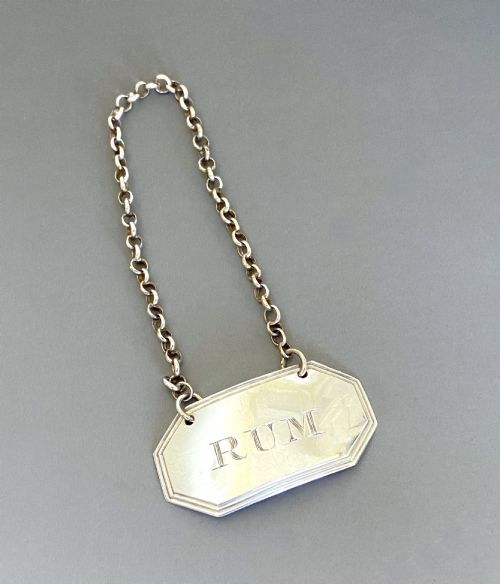
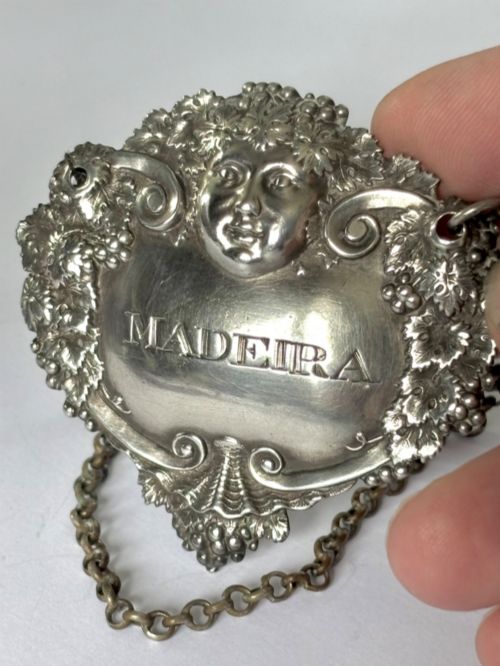
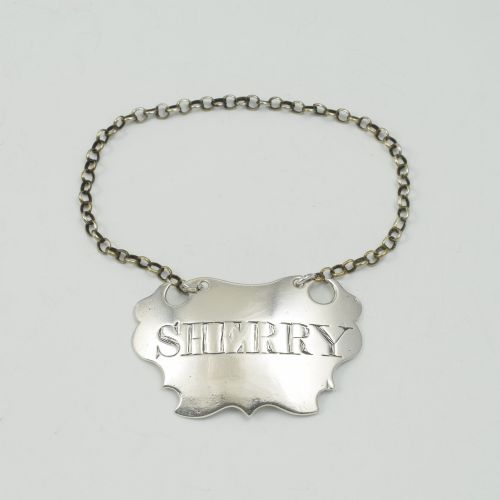
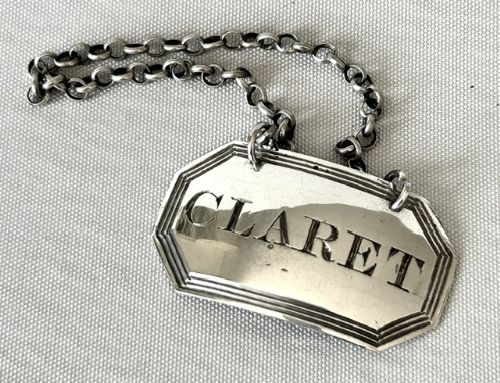
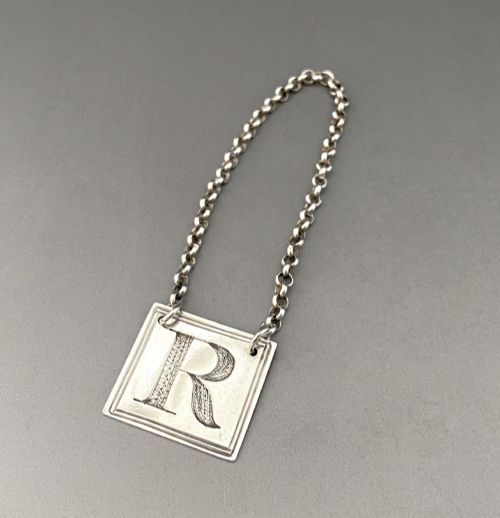
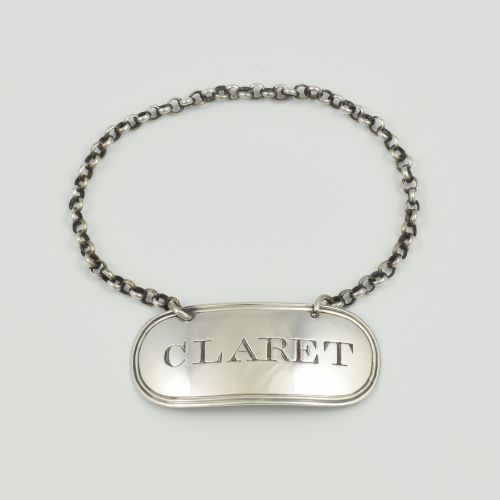
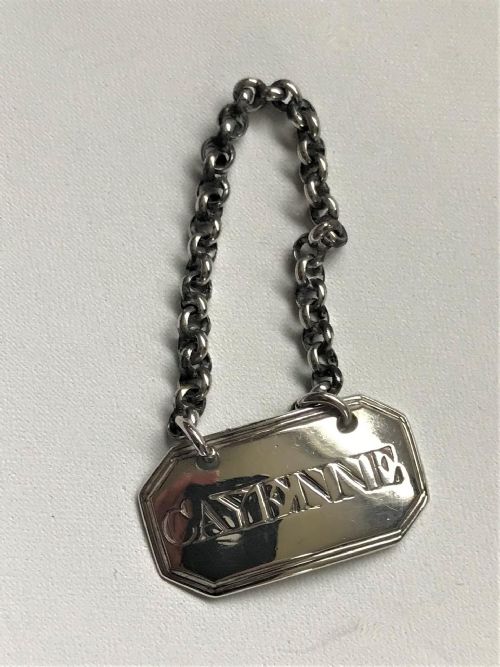
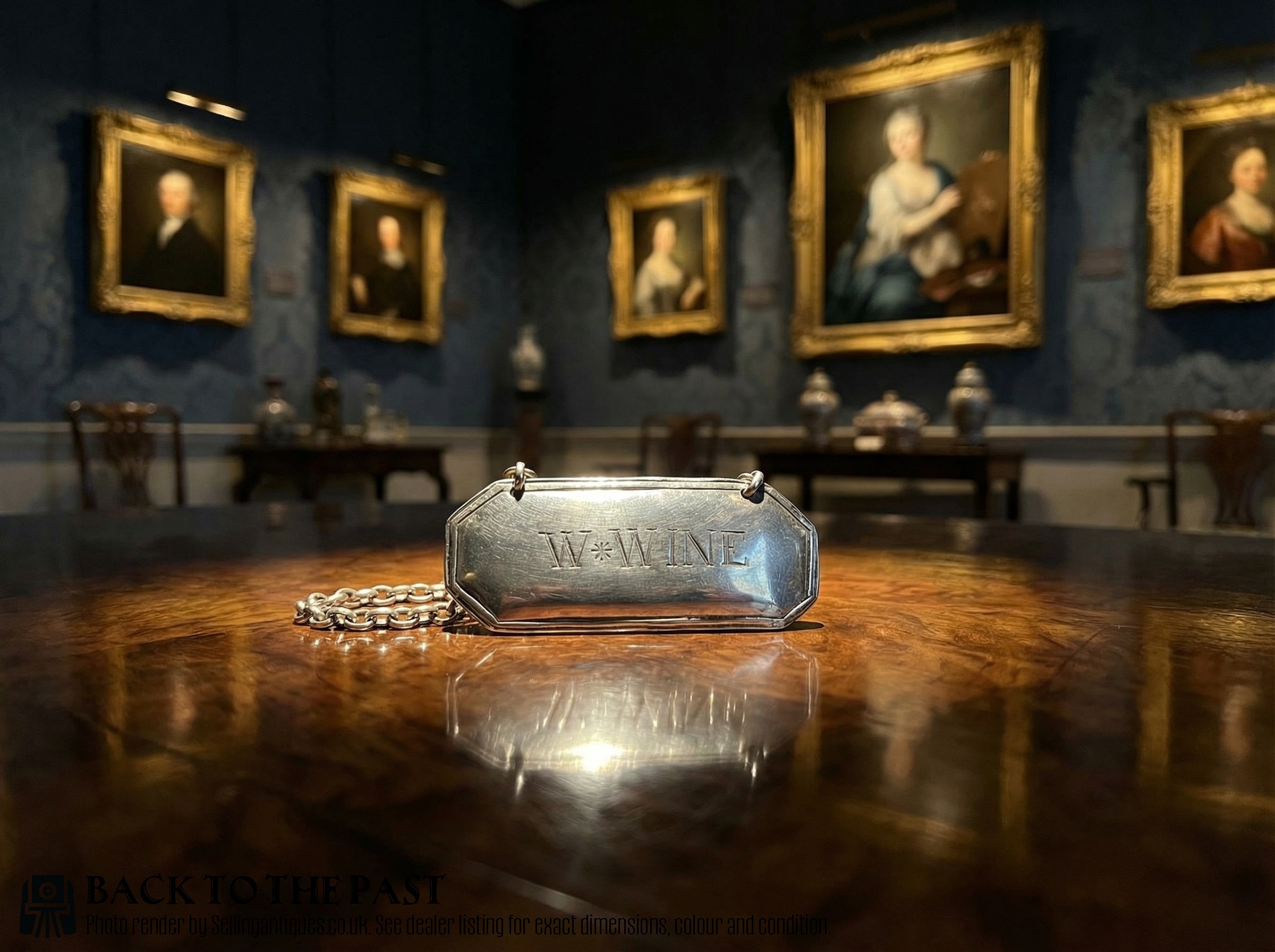
A georgian silver decanter label hangs from the neck of a decanter by a chain or ring to identify the beverage inside. When searching for this phrase, a buyer meets small metal tags bearing named drinks such as Sherry, Port, Madeira, Claret, Brandy, Rum, Whisky, Hock, Hollands, Bucellas, and Orange.
The versions met most often on this page take familiar geometric and figurative forms from the Georgian period. Escutcheon shapes, crescent shapes, and kidney shapes appear alongside simpler pierced plates produced by prominent silversmiths.
Origin points span London workshops as well as Scottish provincial centres like Peterhead and Edinburgh. These small accessories form part of the broader category of decanter accessories used at the dining table.
How They Were Made
Silversmiths formed these pieces from sterling silver and silver using sheet metal cutting and piercing techniques. Makers cut the metal into shields, crescents, and escutcheons before hand-engraving or piercing the name of the wine or spirit.
Makers added suspension chains, jump rings, and bright-cut borders to finish the edges of each label. Hallmarks stamped directly into the silver surface recorded the maker, city, and year of production.
Retail Price Guide 2026
Typical UK retail prices for georgian silver decanter label, calculated from the Sellingantiques database of over a million retail prices indexed since 2003. This retail price guide relies exclusively on Sellingantiques data; no external sources or auction records are used, so the figures do not describe the wider market.
What Varies In Quality
Quality in a georgian silver decanter label rests on the crispness of the pierced or engraved lettering and the distinction of the maker. Pieces by known workshops demonstrate sharper chased decoration and more balanced proportions than anonymous examples.
The survival of original suspension chains and clear, legible hallmarks elevates an example. The depth of the script and the sharpness of the decorative border separate standard workshop output from finer productions.
John Reily·Thomas Wallis II·Peter and Anne Bateman·Phipps and Robinson·Hester Bateman·William Sharp·Charles Rawlings·George McHattie·Susannah Barker·John Ziegler·Samuel Godbehere and Edward Wigan
The Georgian Silver Decanter Label Glossary
- Escutcheon
- A shield-shaped plate used as the base for engraving names and crests. This form remains common among surviving Georgian wine labels.
- Bright-cut engraving
- A faceted cutting technique that creates shallow, light-reflecting grooves in the silver. This method formed popular decorative borders on Georgian labels.
- Duty dodge
- An informal term for a silver piece bearing hallmarks applied in a manner intended to evade taxation. Collectors prize these historical anomalies for their scarcity.
- Scottish provincial
- Silverwork produced in towns outside the major assay offices of Edinburgh and Glasgow. Marks from makers in places like Peterhead carry distinct regional appeal.
- Piercing
- The technique of cutting decorative openings through the silver sheet to form letters or ornate borders. This method required steady handwork with a jeweller's saw.
Frequently Asked Questions
How were decanter labels used?
These labels hung around the necks of glass decanters using short chains or wire rings. They served to identify the specific spirit or fortified wine contained within the bottle during dining.
Hosts used them to prevent confusion among guests when decanting multiple similar-looking ports, sherries, and Madeiras from matching glassware.
How do I display them?
Collectors often hang these pieces on miniature display stands or mount them within shallow shadow boxes to appreciate the engraving. Others attach them to antique decanters matching the period of manufacture.
Proper display protects the thin silver chain and highlights the pierced or engraved details against a neutral background.
How do I identify periods?
Dating relies heavily upon the stamped hallmarks found on the reverse or edge of the silver plate. Maker marks, date letters, and assay office symbols provide the exact year and place of creation.
Stylistic cues such as bright-cut borders and specific shield contours also help align a piece with late eighteenth or early nineteenth manufacturing norms.