




Sterling Silver Bottle Label
These sterling silver bottle labels identify the contents of decanters and barware across Georgian, Victorian, and later periods.
Sterling Silver Bottle Label
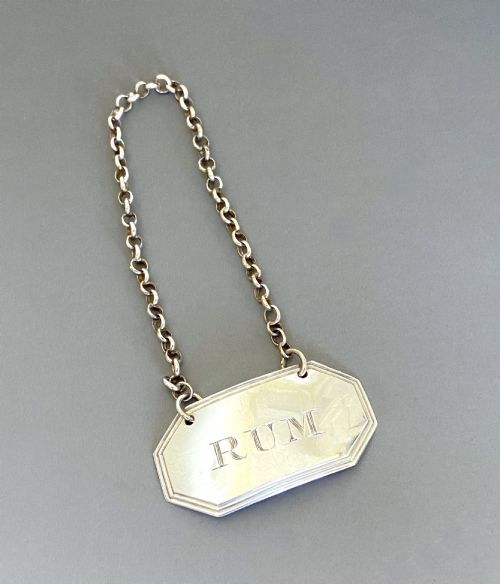
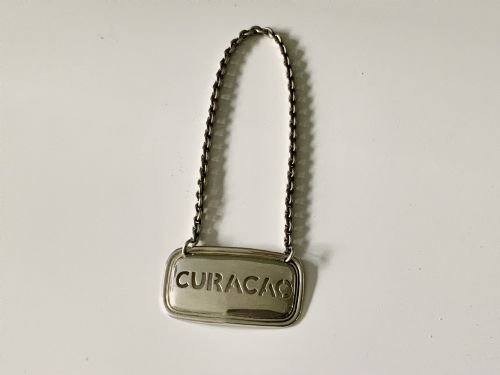
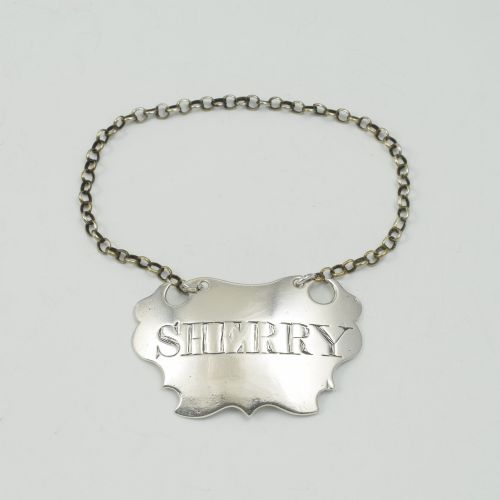
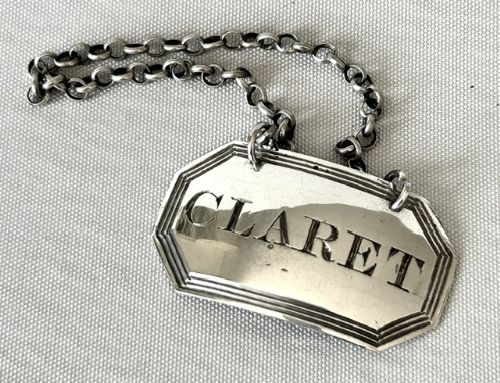
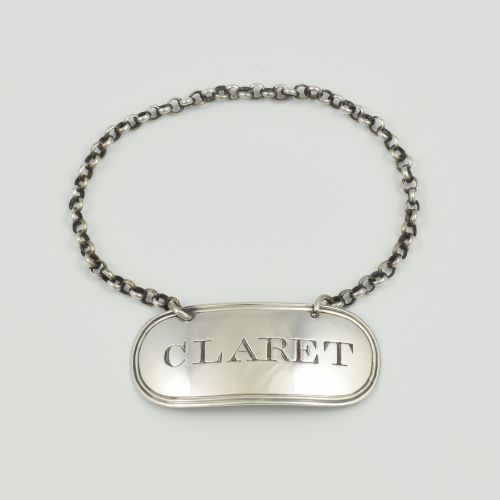
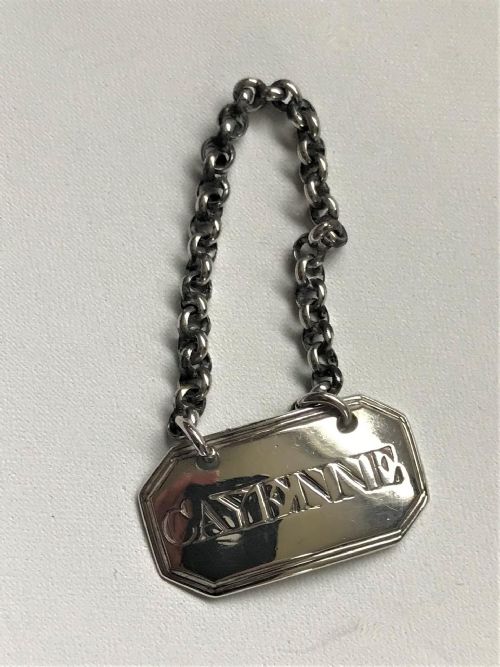
A sterling silver bottle label serves to name individual wines, spirits, and condiments such as sherry, port, madeira, claret, rum, brandy, and cayenne.
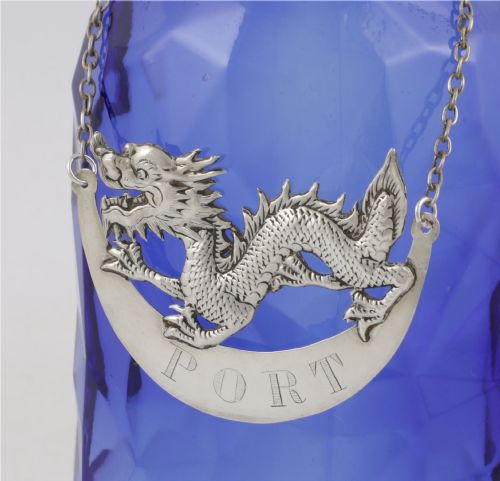
The pieces on this page span Georgian, Regency, Victorian, Edwardian, and later periods, including George III, George V, and Chinese export examples.
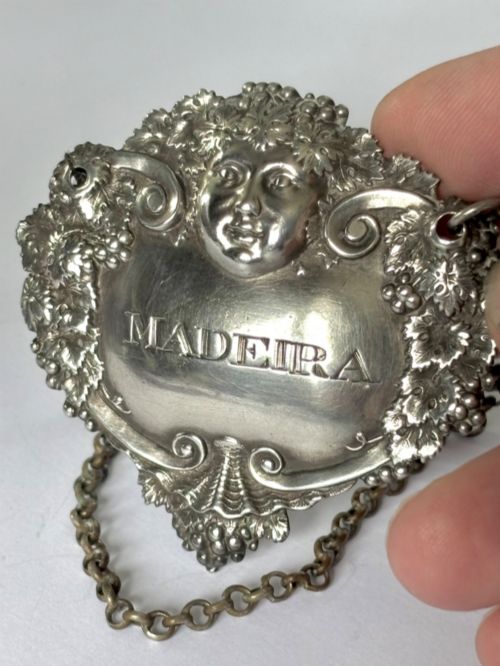
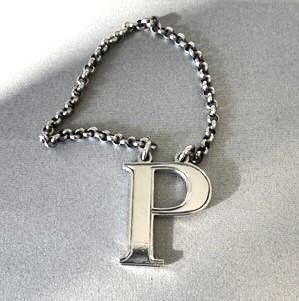
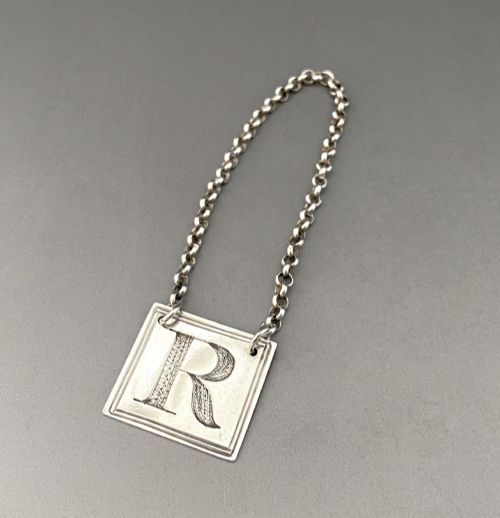
Forms include escutcheon shapes, vine leaf designs, miniature labels, bottle collars, and matching sets suspended on silver chains.
Materials and technique
Silversmiths constructed these pieces primarily from solid sterling silver, frequently employing techniques of piercing, stamping, and engraving.
Certain examples incorporate enamel accents or feature glass elements alongside the metal work to create distinctive barware accessories.
Object types include decanter labels, bottle collars, barware accessories, and whisky jugs with matching tags.
Quality variations
Distinctions in quality arise from the crispness of the chased or pierced decoration, such as vine leaves and scrollwork, and the clarity of the engraved beverage titles.
The reputation of the silversmith, including notable makers like Elizabeth Morley, John Reily, Thomas Wallis II, or Mappin and Webb, influences the standing of individual labels.
Elizabeth Morley·Digby Scott Benjamin Smith·John Reily·Thomas Wallis II·William Sharp·Peter And Anne Bateman·Mappin And Webb·Sampson Mordan
The Sterling Silver Bottle Label Glossary
- Escutcheon
- A shield-shaped piece often used as the primary body for Georgian wine labels. This form provides a traditional surface for engraved titles.
- Decanter label
- A small metal tag hung around the neck of a bottle or decanter by a chain. It designates the specific spirit held within.
- Bottle collar
- A rigid ring-shaped label that fits directly around the bottleneck of a decanter rather than hanging on a chain.
- Hallmark
- An official stamp indicating the metal standard, assay office, and date of manufacture. These marks help verify the period of British silver.
Sterling Silver Bottle Label: Frequently Asked Questions
How were sterling silver bottle labels used?
These labels hung by chains around the necks of decanters and bottles on dining tables and sideboards. They ensured guests and hosts could easily distinguish between dark red wines and various spirits.
Their primary function was practical, yet they also served as decorative accessories that reflected the owner's taste and hospitality standards during formal meals.
How can I tell a Georgian label from a Victorian one?
Georgian labels often feature bright-cut engraving, escutcheon or vine leaf outlines, and maker marks from prominent silversmiths of the late eighteenth and early nineteenth centuries. They carry specific London, Edinburgh, or provincial hallmarks.
Victorian pieces frequently display heavier cast ornament, different framing styles, and mid-nineteenth-century date letters stamped into the solid silver reverse.
What do unusual titles on bottle labels indicate?
Unusual titles designate contents beyond standard port and sherry, such as cayenne, moselle, teneriffe, gin, or specific rum designations. These labels catered to specialised dining and drinking habits of the period.
Labels naming rarer contents often reflect the specific purchasing preferences of households acquiring bespoke barware sets.
Are matching sets of labels common?
Matching sets appear across various periods, ranging from pairs to larger groups intended for multiple decanters. These collections usually share uniform lettering styles, chains, and silversmith hallmarks.
Assembled sets also occur, where individual labels of similar eras are brought together to serve a complete barware collection.