
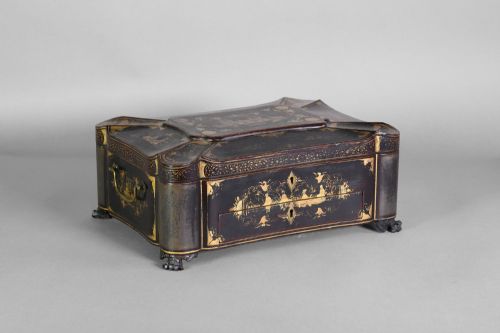


Georgian Sewing Casket
A georgian sewing casket is a fitted receptacle for needlework tools, combining compact craftsmanship with period elegance.
Georgian Sewing Casket
A georgian sewing casket represents the refined domestic storage used during the Georgian, Regency, and early Victorian periods for needlework, threads, and personal trinkets. Buyers searching this phrase encounter various forms, most commonly described as workboxes, sewing boxes, and needlework boxes.
The objects span multiple stylistic influences including Anglo-Indian production and traditional English cabinetmaking. Pieces emerge from periods such as Regency, 1800, and 19th Century, reflecting the prevailing design sensibilities of their era.
Primary object types functioning within this category include decorative boxes, jewellery boxes, and necessaires alongside standard workboxes. Each version provides tailored interior compartments for implements such as bobbins, bodkins, and pins.
Materials and construction
Cabinetmakers utilised timber foundations of mahogany, rosewood, satinwood, and birdseye maple, often applying decorative veneers or penwork surface decoration. Some examples employ exotic materials such as tortoise shell, ivory, and yellow japanned lacquer.
Surface detailing frequently incorporates mother of pearl inlay, brass hardware, boxwood stringing, and engraved leather bindings such as red Russia-leather. Interiors often feature original silk linings and fitted gold or bone accessories.
Listings feature woods including rosewood, satinwood, mahogany, and birdseye maple alongside bone, leather, and silk.
Evaluating quality and execution
Superior examples distinguish themselves through the precision of their timber selection and the complexity of their surface embellishments, such as intricate mother of pearl inlay or delicate penwork. The integrity of internal fittings and original silk linings also separates standard production from finer cabinetmaking.
Material rarity plays a definitive role, with tortoiseshell, ivory, and exotic export woods like Vizagapatam or Anglo-Indian pieces representing elevated craftsmanship compared to straightforward domestic timber constructions.
The Georgian Sewing Casket Glossary
- Workbox
- A portable container fitted with compartments and trays specifically designed to hold sewing implements, threads, and needlework accessories.
- Penwork
- A decorative technique using fine ink drawing on a prepared wooden surface, often sealed with varnish to create detailed pictorial or geometric designs.
- Necessaire
- A small fitted case containing essential personal items such as miniature scissors, tweezers, and bodkins, often lined in silk.
- Japanned
- A European imitation of East Asian lacquerwork, created by applying layers of resin or varnish and curing them to a glossy finish.
Georgian Sewing Casket: Frequently Asked Questions
What is inside a sewing casket?
These boxes typically contain fitted compartments, small trays, and specialised slots designed to organise threads, needles, and personal trinkets. Many retain original silk linings and delicate gold or bone fittings.
The layout reflects the meticulous nature of needlework during the period, keeping tools secure and separated during transport or storage on a table top.
How do I date a sewing box?
Dating relies on identifying timber choices, construction techniques, and decorative styles such as Regency brass inlay or penwork. Reference to periods like Georgian or early 19th Century provides a chronological anchor.
Material trends also assist, as specific finishes like yellow japanned lacquer or specific veneers align with distinct manufacturing decades.
Were these boxes used for jewellery?
Many workboxes doubled as storage for personal ornaments, rings, and small valuables alongside traditional needlework supplies. Interiors often feature partitioned sections adaptable for multiple uses.
Makers frequently designed versatile compartments to accommodate the varied requirements of a lady dressing table.
What is Anglo-Indian work?
Anglo-Indian items refer to pieces manufactured in India by local artisans using regional materials like ivory for the British export market. These objects often display intricate carving and distinct aesthetic traditions.
They represent a specific cross-cultural exchange in furniture and decorative box production during the colonial era.