

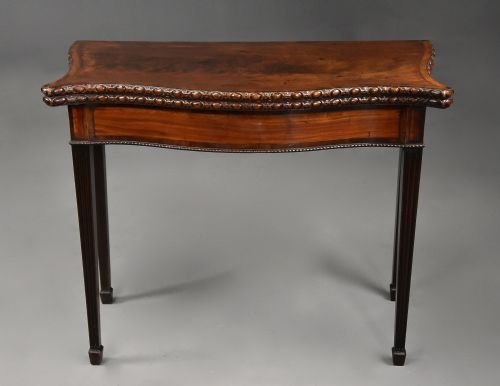
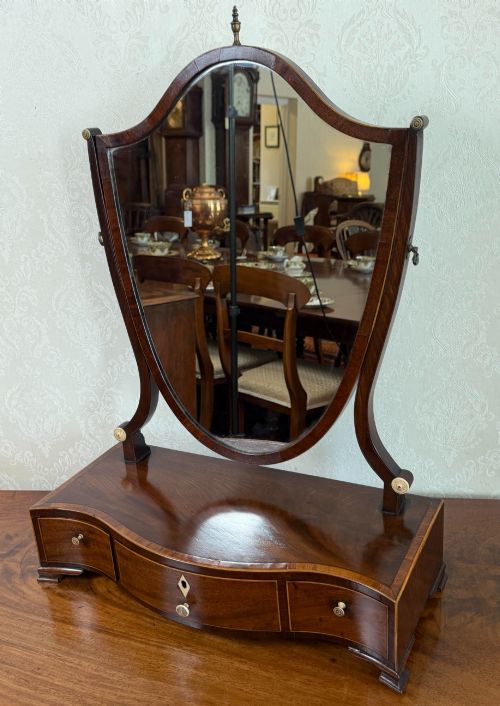
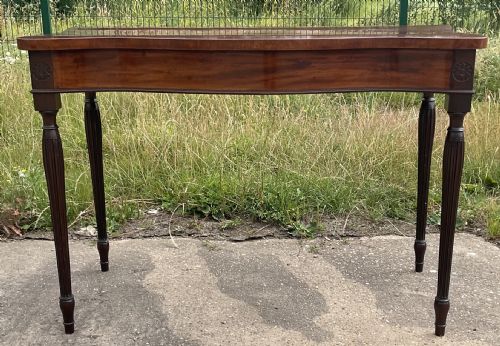
Georgian Serpentine Table
A georgian serpentine table brings flowing curves to formal rooms, uniting the architectural symmetry of the period with the organic sweep of a serpentine front.
Georgian Serpentine Table
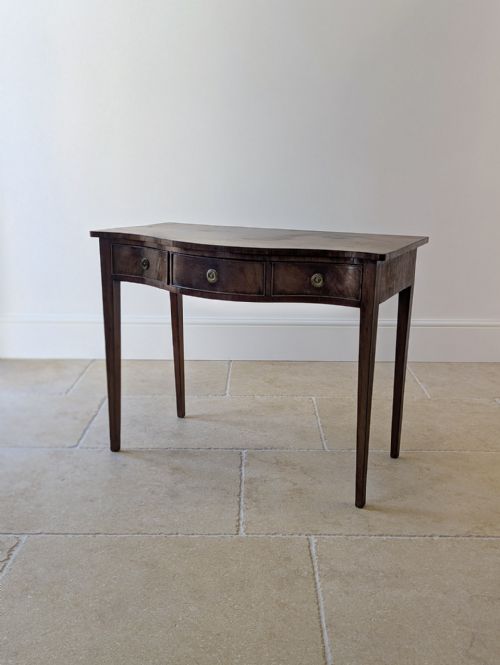
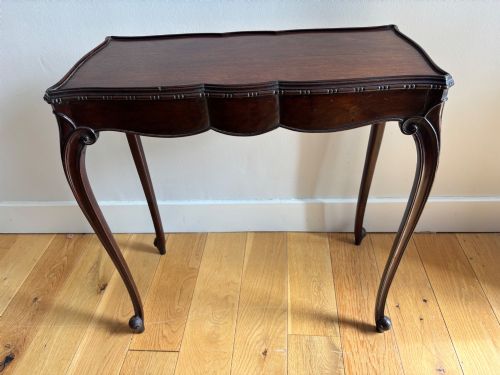
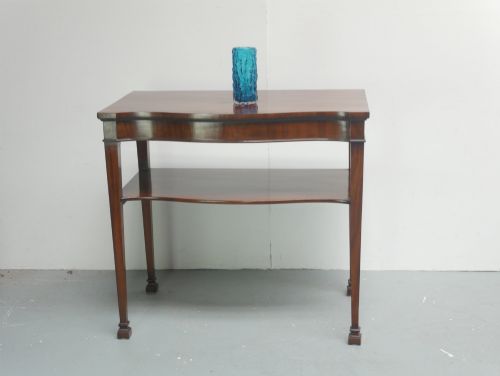
A georgian serpentine table most commonly appears as a side table, card table, or serving piece designed with a distinctive undulating front. These pieces emerge primarily from the eighteenth century, alongside later revival interpretations spanning into the twentieth century.
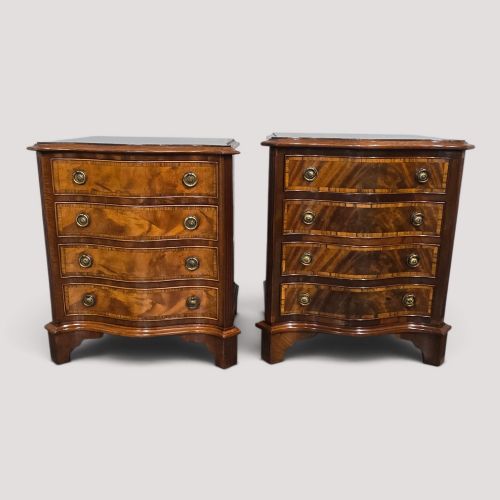
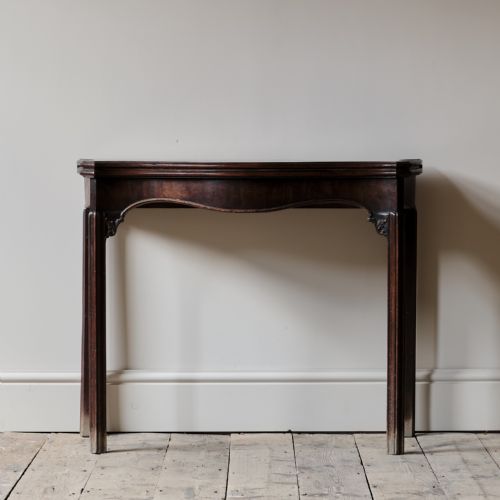
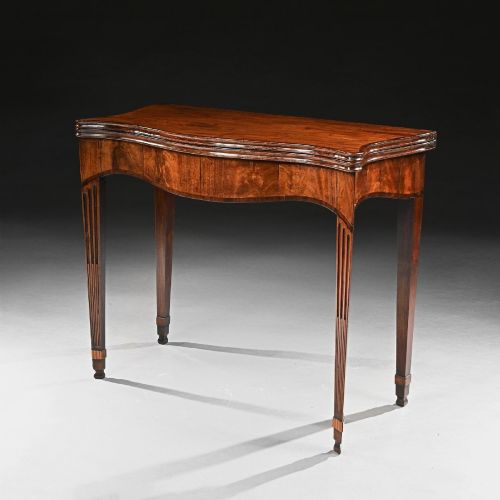
Makers shaped these surfaces into folding tea tables, console tables, and compact bedside pieces. The form demands precise joinery to follow the convex and concave contours without losing structural integrity.
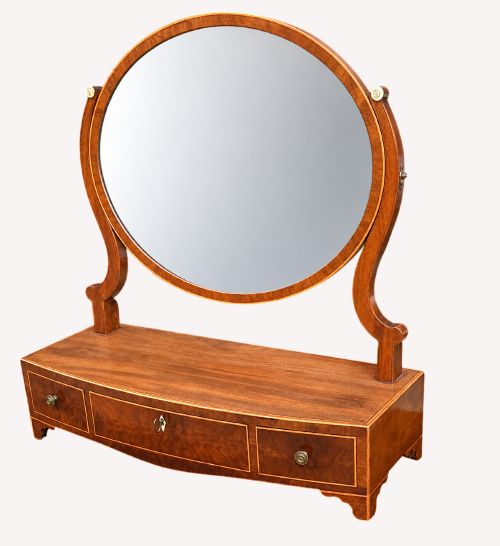
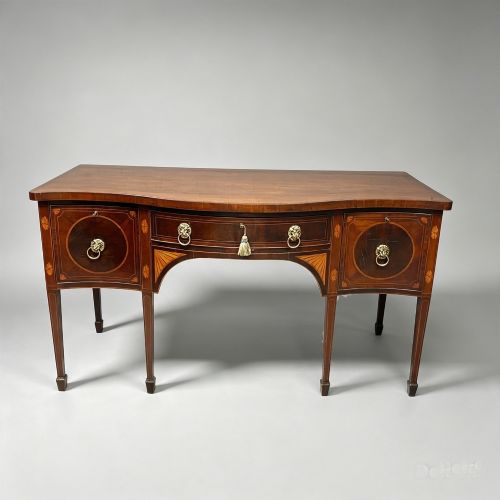
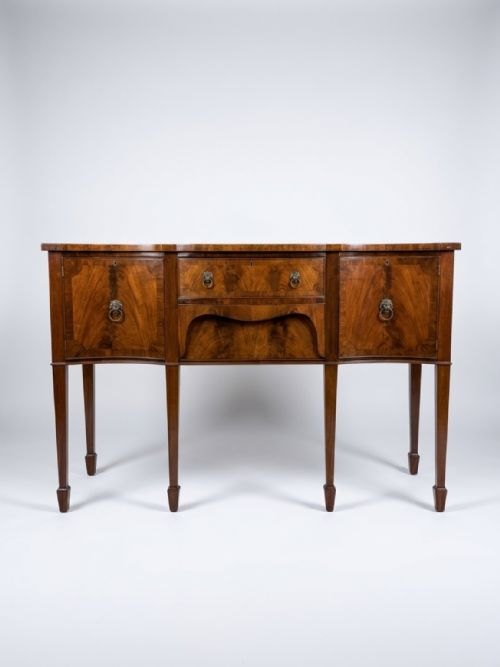
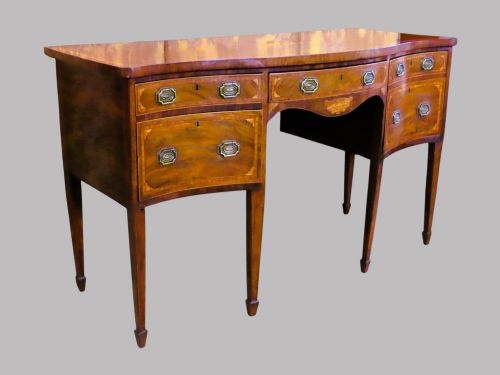
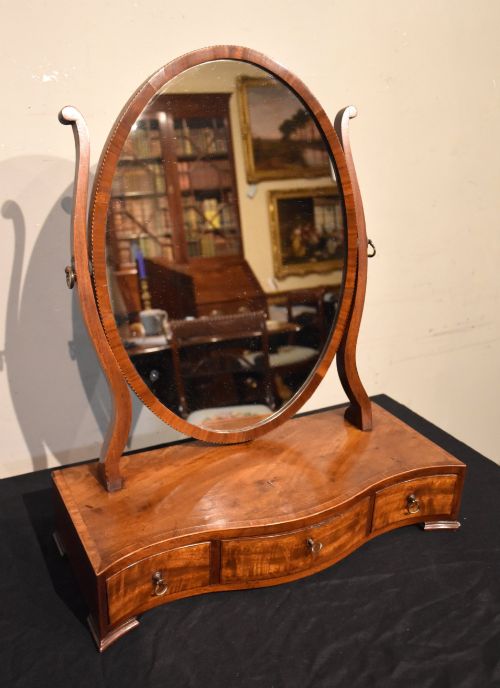
Sideboards and serving tables with serpentine profiles represent the grander scale of the type. Smaller occasional tables and dressing mirrors adapt the same sweeping lines for more intimate spaces.
Materials and Construction
Cabinetmakers relied heavily on solid and veneered mahogany, often selecting figured grain to accentuate the compound curves of the front. Walnut and burr walnut appear alongside satinwood and mahogany with boxwood stringing.
Constructing a serpentine front required steaming or carefully sawing solid timber to shape, or laying fine veneers across laminated pine or oak cores. Brass hardware, such as escutcheons and drop handles, completed the joinery.
Secondary timbers like oak and pine served for drawer linings and internal frames, while leather and baize provided surfaces for writing and card tables.
Judging Quality and Execution
Quality rests in the harmony of the undulating line and the depth of the timber's grain. Finer examples display continuous figure across drawer fronts and crisp edge moulding that follows every curve without distortion.
The sophistication of the internal framing and the retention of original brass handles distinguish superior pieces. Subtle inlay, such as boxwood and satinwood banding, separates standard production from exceptional cabinetwork.
The Georgian Serpentine Table Glossary
- Serpentine
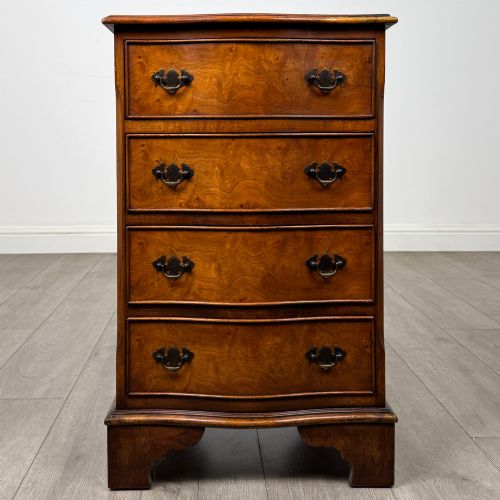
- A front edge that curves outward in the centre and inward at the sides, forming a gentle wave. This shape requires advanced woodworking skill to execute properly.
- Tea table
- A small folding table designed to hold tea service equipment. Many examples feature a hinged top that opens against a plain backboard.
- Card table
- A table with a folding top meant for indoor games. The interior surface often retains baize or leather lining.
- Sideboard
- A large dining room serving piece. These forms frequently incorporate serpentine fronts with multiple drawers and cupboards.
- Stringing
- Thin lines of contrasting wood inlaid into the primary surface. Cabinetmakers used boxwood stringing to frame mahogany panels.
Georgian Serpentine Table: Frequently Asked Questions
How do I identify a true period piece?
Examine the secondary woods inside the drawers and look at the hand-cut dovetails, which should show slight irregularities typical of early manufacture. The patination on the timber develops a soft lustre over generations of polishing that modern finishes cannot replicate.
Check for consistency in the wear around the handles and feet, as well as the construction methods used for the curved front frame. Later revival pieces from the Edwardian era or the twentieth century often utilise more uniform machine-cut elements.
Where should I place a serpentine table?
These pieces suit entrance halls, living rooms, and dining spaces where the curved front can catch sidelight. Because the profile projects outward and inward, they work well against flat walls to break up rigid architectural lines.
Card tables and console tables function effectively as pier tables beneath mirrors. Smaller bedside versions fit neatly beside period or contemporary beds.
What is the difference between a console and a side table?
A console table traditionally relied on wall fixings or decorative legs for support against a surface. Side tables stand independently on four legs and offer more versatile placement options around a room.
Both forms utilise the serpentine front profile to add movement and visual depth to interior spaces.
How should I care for the wood surface?
Maintain the finish by applying natural beeswax sparingly and buffing it with a soft cloth. Avoid placing these tables in direct sunlight or near heat sources that might dry out old mahogany and walnut veneers.
Keep leather and baize inserts free from moisture and dust using a dry brush. Gentle handling preserves the original patination and historic integrity of the piece.